Showing posts with label Big Brother. Show all posts

Friday, April 27, 2007

Echoes of Terror Case Haunt California Pakistanis

April 27, 2007

LODI, Calif., April 24 — Khalid Farooq has shunned the low-slung yellow bungalow that serves as the Pakistani community’s mosque here for nearly two years, ever since a father and son who worshiped there were arrested on suspicion of being foot soldiers for Al Qaeda.

If he runs an errand at someplace like Wal-Mart, away from the neat, tree-lined streets that constitute the heart of Lodi’s Pakistani neighborhood, Mr. Farooq trades his traditional baggy clothes for standard American attire, he said, as often as four times in one day.

“Something has changed in the air; it’s a scary time,” said Mr. Farooq, who first arrived to work in the flat, black fields that surround this town 25 years ago. “We don’t want to talk; we’re all afraid.”

The tide of fear rolled in and has never quite receded after an informant incriminated two Lodi men, Umer Hayat, an ice cream truck driver, and his son Hamid, who were arrested in June 2005. Their trial ended a year ago with the younger Mr. Hayat, 24, convicted of providing material support for terrorism by attending a training camp in Pakistan. His lawyers recently began seeking a new trial based on arguments that the jury was tainted.

Members of the Pakistani community here distrust one another almost as much as they do outsiders. Even now, residents with evidence of sudden wealth, like a new car, are immediately rumored to be on the F.B.I.’s payroll. Anything connected to the government is inherently suspect.

By NEIL MACFARQUHAR

--MORE--

Monday, April 9, 2007

CCTV cameras that shout at you? All very well, but I have a much scarier idea. Trust me, you'll love it ...

I can see you, citizen

Charlie Brooker
Monday April 9, 2007
The Guardian


In case you missed it, last week police in Middlesbrough unveiled a startling new weapon in the ongoing war against crime: CCTV cameras that shout at you whenever you do something wrong. Currently, they are chiefly used to warn drunken revellers hell-bent on stealing traffic cones, or to dish out virtual bollockings to litterbugs. "Respect tsar" Louise Casey says it "nips problems in the bud", while home secretary John Reid praised the scheme on the grounds that rather than being "secret surveillance", it was "very public", and most importantly, "interactive".

Of course, the word "interactive" is regularly wheeled out to make any old bullshit sound exciting and modern. Hey, it's not a humiliating infringement of civil liberties - it's interactive! You, know - a bit of democratic fun, just like The X Factor or MySpace! Woo hoo! Now put that in the bin or I'll blow your head off.

There are two major problems with justifying the bellowing CCTV cameras on the grounds that they're "interactive". Firstly, just because something's "interactive", that doesn't automatically make it right. Coprophilia is interactive, and that doesn't belong in the street either.

Secondly, they're not interactive at all. They're faceless electronic scrutinisers that scream when you break the rules. What John Reid has done here is confuse the word "interactive" with the word "nightmarish".

And wait, it gets worse. As if the scheme wasn't already unsettling enough, according to news reports, "children's voices are to be used initially to make the encounter less confrontational".

This would be a brilliantly disturbing twist in a dystopian sci-fi movie in which the traditional adult-child relationship has been thrown into reverse, and misbehaving grownups are publicly scolded by eerie, disembodied infant voices, but unfortunately it's not happening in a dystopian sci-fi movie at all, but in Middlesborough. And, later this year, in Southwark, Barking and Dagenham, Reading, Harlow, Norwich, Ipswich, Plymouth, Gloucester, Derby, Northampton, Mansfield, Nottingham, Coventry, Sandwell, Wirral, Blackpool, Salford, South Tyneside and Darlington.

Incidentally, it's not yet clear whether the children's voices will address miscreants using formal language ("Attention, citizen: you are committing a felony; you have 20 seconds to desist") or in "kid speak" ("You're a bad man and I'm telling on you and my dad's going to tear your head off"). Perhaps they could also allow kids to control the cameras and decide what constitutes a crime. And, rather than mounting the cameras on poles, why not make them mobile and more kid-friendly by placing them inside full-size, remote-controlled Daleks, which can patrol the streets dishing out near-fatal electric shocks to those who disobey?

Actually, using the Daleks would be a masterstroke. Everyone loves Doctor Who - who wouldn't be thrilled by the sight of a real-life Dalek squadron rolling down the high street, glinting in the sun? The sheer excitement would genuinely make the accompanying loss of liberty seem worthwhile.

To liven things up even more, our rasping pepperpot overlords could be colour-coded. Blue Daleks would deal with minor infractions, and would spend most of their time issuing warnings and administering minor shocks - but they'd also be chummy and approachable, and willing to pose for photographs with your nephew. Red Daleks, on the other hand, would be emotionless killing machines.

Imagine the atmosphere outside a pub on a hot summer's day: a Red Dalek trundles past, and the convivial hubbub suddenly fades to a whisper. Everyone stiffens. And then he turns the corner and a communal sigh of relief goes up, and the drinking continues and the jukebox plays louder and louder ... community spirit lives again. Admit it: it'd be fantastic.

Of course, to maximise the psychological impact of the Red Daleks, they'd have to be fewer in number than the Blues. Ten per citizen, tops.

If anyone from the Home Office is reading this, incidentally, it's absolutely imperative that you license the actual, 100% official, BBC Daleks, as seen on TV. Don't just try to create some sort of rip-off close-as-dammit lookalike and hope we'll start calling them "Daleks". We're not idiots. And if you draw a blank with Terry Nation's estate, don't bother negotiating for the rights to the Cybermen instead. It won't be the same. Daleks or nothing. Pull that off and I guarantee we'll willingly accept it. Even Shami Chakrabarti, denouncing the plan on Question Time, would have to start her complaint by saying, "Obviously I love the idea of Daleks as much as anyone, but ..."

So come on, Reid. Stop pissing about with twittering cameras on sticks. The technology for an army of wirelessly controlled mobile CCTV spybots already exists - and it's interactive. There's nothing stopping you. Show some balls for once in your poxy life. Give us the Daleks.

Government Predicts 'Millions to Rebel' in Britain Over ID Cards

From
April 8, 2007

‘Millions to rebel’ over ID cards

The government is predicting that some 15m people will revolt against Tony Blair’s controversial ID card scheme by refusing to produce the new cards or provide personal data on demand.

The forecast is made in documents released by the Home Office under the Freedom of Information Act. The papers show ministers expect national protests similar to the poll tax rebellions of the Thatcher era, with millions prepared to risk criminal prosecution.

Opposition MPs said the new documents proved their case that the programme would never work. David Davis, the shadow home secretary, said: “This will cripple the system. Fifteen million is a massive number. What the Home Office is accepting in private, but refuses to accept in public, is that a massive number of ordinary law-abiding citizens simply will not go along with their scheme.”

Davis, whose party’s policy is to scrap the cards, added: “This will render it completely useless as a security or check mechanism of any sort.”

The documents, quietly released during parliament’s Easter break, also show that the government is planning to make ID cards compulsory in 2014, despite the expected revolt.

The first cards are due in 2009, alongside new passports. Labour has said it will make the scheme compulsory if it wins the next election.

EU: Shopping list could make you 'a terror suspect'

Related
27 April 2002: Eurofile: £33m budget passed for Euro-CIA
---
By Bruno Waterfield in Brussels

Last Updated: 1:10am BST 09/04/2007

The European Union's privacy watchdog has given warning that new access for Europol to personal data could lead to individuals being labelled as terror suspects based on hearsay or records of their shopping habits.

The warning, from the head of the European Data Protection supervisor, comes amid moves to allow the EU police agency to process so-called "soft data" in search of relevant information for its criminal investigations.

Peter Hustinx said that moves to give Europol the power to gather intelligence on "people who have not (yet) committed a crime" are without privacy safeguards.

He told The Daily Telegraph: "The proposal does not specify what data could be used in criminal investigations. It could be everything. It could be a vital detail such as an insurance company about a stolen car. But it could also be soft data, behavioural data."

The information could include statements of hearsay given to a local police force or data on personal shopping habits from a supermarket loyalty card, he said.

Under the new Europol rules, expected to be agreed by governments later this year, people will be unable to find out what information is held on them unless all 27 EU police forces unanimously grant permission.

Sayed Kamall, the Conservative Euro-MP, shares the watchdog's fears and is concerned that "behavioural data" will lead to ethnic profiling.

"For example, someone who purchases kosher meat and never shops on the sabbath, or who buys halal meat but not alcohol, can easily be

categorised and every purchase scrutinised, no matter how innocent it may be," he said.

Mr Hustinx, a Dutchman with decades of experience as a national privacy watchdog and data protection at the European level, is worried at the absence of proper safeguards to ensure the reliability of "soft data".

He said that individuals could easily be identified as suspects, giving the example of someone seen standing next to a terror suspect at a bus stop and becoming labelled "a facilitator for terrorism".

Max-Peter Ratzel, Europol's director, said that European law enforcers needed to update and extend the scope of intelligence gathering - which is unchanged since the EU police agency was set up in the early 1990s.

"Our databases are on organised or serious international crime so I would assume that ordinary citizens would not have any possibility of being there," he said.

Sunday, April 8, 2007

Secret paper reveals Labour's lies over ID cards

By JASON LEWIS

Last updated at 21:45pm on 7th April 2007

The Government faces damaging claims of misleading voters over ID cards after documents revealed it always planned to make the controversial scheme compulsory.

Whitehall papers, which the Government has fought for two years to suppress, disclose that Labour intended to force the public to sign up to the programme.

They appear to contradict commitments given by Labour in its 2005 Election manifesto, which pledged that the cards, and the national identity register containing people's names, addresses, fingerprints and other information, would be 'on a voluntary basis'.

The briefing notes, released under the Freedom Of Information Act, show that civil servants had already been told ID cards would be compulsory for everyone by 2014.

Opposition MPs said the papers proved the Government had 'purposely set out to mislead the public and politicians about their plans'.

The Department For Work And Pension's (DWP) 'ID Fraud Benefit Profile' was produced in October 2004 and was designed to show how the project would cut benefit fraud.

In a table illustrating the predicted yearly savings expected by the department it states that from 2014 - Year 7 of the project - 'The identity card scheme is now compulsory'.

But 18 months later, the then Home Secretary Charles Clarke insisted the scheme was voluntary. He told MPs: "In accordance with the Labour party's Election manifesto...we will introduce ID cards...initially on a voluntary basis."

The papers also undermine claims by Ministers that the scheme would halve the £50million lost to benefit cheats. The internal briefing reveals that the much-quoted savings were purely guesswork by officials.

It says: "NOTE: DWP perceive losses to identity fraud to be between £25-£50million per annum, due to the nature of our business processes and recording of monetary value of fraud and error the figures are unreliable therefore DWP can only sign up to a maximum saving in the area of £25million per annum."

The first ID cards are due to be issued in 2009 to anybody who applies for a passport. Britons will be required to give fingerprints, biometric details such as a facial scan and a wealth of personal details - including second homes, driving licence and insurance numbers.

While the ID Cards Bill was going through Parliament, peers and Ministers agreed an 'opt-out' for people who needed a passport but did not want to join the ID cards scheme. But to get a passport, ID card objectors will now still have to hand over all personal details to the ID cards register.

Former Liberal Democrat home affairs spokesman Mark Oaten, who successfully fought to get the internal documents published, said: "They show Ministers had no basis to claim the cards would combat benefit fraud, that from the very beginning the cards were going to be compulsory and that Ministers were consistently not telling the truth about their true intentions."

The DWP said the details in the papers 'are no longer valid'.

A Home Office spokesman said the documents were 'incredibly out of date'.

Thursday, April 5, 2007

Talking surveillance - What would Orwell say today?

Related

Big Brother: CCTV cameras chastize anti-social Brits

---

Thursday, April 05, 2007

What would Orwell say today?

It is truly staggering, I think, the manner in which creeping surveillance and the infrastructure for a genuine Orwellian nightmare is so casually implemented by the Government. The news that the experiment of CCTV systems which have operators that can talk to you through speaker systems is coming to London from Middlesborough is such an example.

We are told by the politicians and Home Secretary that our fears about civil liberties are unfounded. That it is only people who have done things wrongs that should fear the move. This fallacy is now the standard line in fact from anyone in Government. Nothing to fear, nothing to hide.

The problem, as I have said before, is that the argument misrepresents the matter of civil liberties. The issue against these systems is actually about autonomy over ourselves. Where we are, and where we go, is something that we decide as individuals. Crucially though the state exists because of us, not despite of us. The widespread use of CCTV - which has made us the most watched country in the world - has shifted that relationship in a fundamental way.

The increase now of CCTV systems in which operators can talk to those they are watching with a booming voice on loud speakers, introduces another shift in our relationship with the state. More importantly it is another piece of technology pitched in the isolation of its supposed benefits without consideration of the total infrastructure we are building.

Democracy is a delicate thing, simply because we have managed to maintain it here does not mean that we cannot possibly become something else which is much darker in a moment. A piece of bad legislation, like the Regulatory Powers Act which was proposed a year or so ago could still be introduced which would provide some future - yet to be determined tyrant - with the ability to take over.

John Reid may say that these CCTV systems will help fight crime, but before we mess with our liberties we should make them always subject to the Stalin test. Would Stalin have liked the technology we are implementing? Would he have found it useful? If the answer is yes then to proceed anyway whilst saying "it could never happen here" is simply folly.

How long is it before we find ourselves being told that in order to tackle obesity we must all take part in physical exercise organised by those in CCTV control centres watching and counting our aerobics? When the reality starts to imitate the dystopian world of literature we should start to worry and be very vocal about it.

Monday, April 2, 2007

I'm gagged too, says Terry Hicks

By Verity Edwards
April 03, 2007 01:00am


DFAT gagged me, claims Mr Hicks
'This is Big Brother'

Mr Hicks's claims have been denied

THE father of admitted terrorist David Hicks claimed yesterday he had been gagged from revealing facts about his son's five-year incarceration in the US military prison at Guantanamo Bay.

Terry Hicks said the Department of Foreign Affairs and Trade had written to him outlining the 12-month gag order issued to his son as part of his plea bargain to serve only nine more months in jail, mostly in Australia.

Mr Hicks said the letter - outlining how his son could not be interviewed, write a book or make a film about his time as an enemy combatant - detailed the restrictions on what the Hicks family could reveal about their conversations with David.

"This is Big Brother and because the Americans and the Australian Government coalesce on David's charges, at this point in time we're ruled by them," Mr Hicks said from his Adelaide workplace yesterday.

"If David tells us something, we can't pass it on.

"But I could still talk about the signing of his charges, things like he hasn't been abused."

A DFAT spokesman "adamantly and vehemently" denied Mr Hicks's claims. "We have not written to Terry Hicks since the verdict," the spokesman said.

"We communicated via email to his sister and provided two publicly available documents."

It is understood DFAT emailed Mr Hicks's daughter Stephanie, providing a statement of facts and a copy of Hicks's pre-trial agreement.

Mr Hicks said his son's legal team was examining the contents of the letter.

Hicks's Adelaide-based lawyer, David McLeod, did not return calls.

Mr Hicks said he would continue to speak to the media but did not want to jeopardise the Australian jail term imposed on his son. He rejected suggestions that his son could pose a threat to national security when released in late December.

"David wouldn't hurt a bloody fly at the moment," he said. "David never did any harm to anyone when he was over there anyway. He wasn't armed, he hadn't fired a shot at any coalition forces.

"The only danger David is to anyone is to come back to Australia and probably have to go on the dole because he might find it hard to get a job."

The 31-year-old Australian pleaded guilty in a plea bargain with US authorities last Monday to providing material support to terrorists.

The federal Attorney-General's Department has notified the South Australian Correctional Services department that Hicks has applied to be transferred to Adelaide.

Under the International Transfer of Prisoners Act, Attorney-General Philip Ruddock must ask for supporting documents from US authorities before seeking approval from state Correctional Services Minister Carmel Zollo.

Mr Hicks is yet to hear whether the federal Government will apply for a control order to govern his son's release.

An Australian Federal Police spokesman said it would be inappropriate to comment "on someone who may or may not be subject to control orders".

The South Australian Liberal Party released plans yesterday to introduce a private member's bill to prevent convicted terrorists from profiting from their stories.

"David Hicks, who has admitted his guilt, has a right to tell his story and the media have every right to ask for it," Liberal frontbencher Martin Hamilton-Smith said.

"But if money is involved, the victims of terrorism should be the recipients, not Mr Hicks."

A spokesman for state Attorney-General Michael Atkinson said it was an issue for the federal Government to consider, not the state.

Saturday, February 17, 2007

Terrorists Chip In

February 12, 2007 Issue
Copyright © 2006 The American Conservative

Implanting radio ID tags in U.S. passports makes stealing personal data easier than ever.

by William Norman Grigg

Information-security expert Lukas Grunwald is not reluctant to share his opinion of the radio frequency identification (RFID) technology that is now a mandatory security feature of American passports.

“This whole design is totally brain damaged,” Grunwald told Wired magazine. “From my point of view all of these RFID passports are a huge waste of money. They’re not increasing security at all.”

RFID chips or tags are tiny data storage units, generally the size of a grain of rice, equipped with radio transmitters. The new “e-passports” issued by the U.S. government have a passive RFID chip embedded in the back containing personal information, including a digitized photograph and, in the future, a fingerprint. The chip is activated by passing it in front of a reading mechanism that transmits the appropriate radio signal.

Under a U.S. law passed in 2002, the 27 countries participating in the Visa Waiver Program—most of them European—are required to install RFID chips in their passports. U.S. citizens returning from abroad must now present a passport to customs officers, and since Jan. 1, 2007, the U.S. government has issued e-passports to Americans renewing travel documents or obtaining them for the first time. The State Department insists that the new digitized passports are more secure. Experts like Lukas Grunwald strongly beg to differ.

During last August’s Black Hat security conference in Las Vegas, Nevada, Grunwald, a consultant with DN-Systems Enterprise Solutions in Germany, demonstrated the ease with which the RFID-enhanced e-passports can be hacked and cloned. Along with an associate named Christian Bottger, Grunwald developed a cloning program that can duplicate an e-passport’s digital information in roughly five minutes using an RFID reader he purchased on eBay. The cloned passport chip is completely indistinguishable from the genuine article.

Grunwald was neither the first nor the only techie to expose the vulnerabilities of e-passports. In January 2006, the Dutch security firm Riscure conducted a similar experiment for “Nieuwslicht,” a television news program in the Netherlands. Using a personal computer and a commercially available radio receiver, Riscure was able to read the digital information of a prototype Dutch e-passport (which uses the same RFID chip and encryption scheme as the new U.S. passports) from a distance of about 30 centimeters. With that information, Riscure cracked the e-passport’s password in roughly two hours and thus gained full access to the RFID chip’s contents, including a digital picture, fingerprint, and other personal information.

“Nearly every country issuing this passport has a few security experts who are yelling out … ‘This is not secure,’” Grunwald points out. “This is not a good idea to use this technology.’” British computer security expert Adam Laurie of Bunker Secure Hosting expresses that view in more colorful terms, comparing the supposedly ultra-secure e-passport system to “installing a solid steel front door to your house and then putting the key under the mat.”

Laurie himself has rigged a device that can swipe an e-passport’s information from a distance of slightly less than eight centimeters. That distance is “enough if your target subject is sitting next to you on the London Underground or crushed up against you on the Gatwick Airport monorail, his pocketed passport next to the reader you have hidden in a bag,” writes Steven Boggan of London’s Guardian.

A technical study performed in 2005 demonstrated that it’s possible to eavesdrop on an RFID passport from greater distances. Using an electronic “leech,” researchers were able to read personal data from about 50 centimeters and then relay it to a second device called a “ghost” up to 50 meters away. A relay system of this sort in a crowded travel node—an airport, bus station, or subway—would make it possible for information thieves to harvest countless digital profiles from e-passports.

What use could be made of a cloned e-passport? Wouldn’t it be easier to simply steal a physical passport, as defenders of the new system maintain?

According to Grunwald, the biometric features that supposedly make the RFID-enhanced passport more secure may actually benefit terrorists, smugglers, and others in the market for phony travel documents, in large part because those features make stealing physical passports unnecessary.

Although a cloned chip cannot be altered to add new biometric information, such as a new fingerprint, Grunwald contends that there are “established ways of making forged fingerprints” that can fool automated security systems. And electronically stored photographs would pose only minor obstacles to terrorists. As the Guardian’s Steve Boggan points out, “if a terrorist bore a slight resemblance to you—and grew a beard, perhaps—he would have a good chance of getting through a border. Because his chip is cloned, with the necessary digital signatures, and because you have not reported your passport stolen—you still have it!—his machine-readable travel document will get him wherever he wants to go, using your identity.”

The potential usefulness of e-passports to terrorists goes well beyond merely making identity theft easier. Some privacy advocates and business groups are concerned that the new U.S. passports will leave Americans more vulnerable to violent crime abroad—from petty theft to kidnapping to murder.

The Business Travel Coalition worries that the RFID-equipped passports “will put American business travelers at risk of identity theft and physical harm.” Greeley Koch, president of the Association of Corporate Travel Executives, seconds that criticism. “The thought that your travel documents could be broadcasting your nationality to those with an interest in harming U.S. citizens is bad enough,” states Koch. “But it could also be pinpointing likely targets for pickpockets, thieves, and even providing information to steal.”

In a paper submitted to the State Department two years ago, information security experts Ari Jules, David Molnar, and David Wagner describe some terrifying potential uses for stolen e-passport data. One possibility is that captured data would “enable the construction of ‘American-sniffing’ bombs, since U.S. e-passports [do] not use encryption to protect confidentiality of data.” Another “unpleasant prospect,” as the authors put it, is the advent of an “‘RFID-enabled bomb,’ an explosive device that is keyed to explode at [a] particular individual’s RFID reading.”

In an April 4, 2005 submission to the State Department’s Office of Passport Policy, representatives of six privacy and cyber-security advocacy groups protested that “the proposed RFID passport unjustifiably endangers passport holders’ privacy and creates substantial security and other problems.” They also pointed out that the State Department had no statutory authority to issue the e-passport. The Enhanced Border Security and Visa Entry Reform Act of 2002 mandates that the countries participating in the Visa Waiver Program upgrade their passports with RFID technology, but as the State Department admits, “the United States is not mandated to comply” with that provision.

So in addition to making American citizens and their travel documents less secure, the e-passport program is technically illegal. Why did Washington make the program’s creation such an urgent priority? At least part of the answer is corrupt corporatist profiteering.

The watchdog group Consumers Against Supermarket Privacy Invasion and Numbering (CASPIAN) obtained a December 2004 memo from the General Services Administration urging federal agency heads to engage in something akin to what the film industry calls “product placement” advertising on behalf of RFID technology.

The GSA, which administers federal procurement policies, instructed agency heads “to consider action that can be taken to advance the [RFID] industry by demonstrating the long-term intent of the agency to adopt RFID technological solutions. … [A]gencies need to determine how to best implement RFID technology on current or proposed contracts, grants, and cooperative agreements.”

Since that time, notes CASPIAN, “major RFID initiatives have been publicized by a number of government agencies, including Social Security, NASA, the Postal Service, and the Department of Homeland Security, among others.” “Buying needed equipment is one thing,” observes CASPIAN founder Katherine Albrecht, co-author of the RFID exposé Spychips. “Finding excuses to purchase and promote controversial technology at taxpayer expense is another.”

Former Homeland Security Czar Tom Ridge embodies the nexus between the growing RFID industry and the thriving federal Homeland Security apparatus. In April 2005, Ridge joined the board of directors at Savi Technology, a Silicon Valley RFID firm. A few months later, Tommy Thompson, who had been George W. Bush’s first-term Secretary of Health and Human Services, joined the board of Applied Digital, which manufactures human-implantable “VeriChip” RFID tags containing medical information and other personal data. Thompson did his part to promote the technology by “getting chipped” in his arm.

In countries like Mexico and Brazil, where kidnapping is rampant, thousands of people have been chipped as a personal security measure. Colombian President Alvaro Uribe, among others, has suggested that laborers migrating to the United States for seasonal work should be implanted with microchips, a suggestion that found favor with some immigration reformers on Capitol Hill. Two years ago, Brittain Elementary School in Sutter, California, mandated that all its students carry an RFID tag.

All of these developments and proposals may herald an era of what the Scientific American calls “Human Inventory Control,” an inescapable worldwide system of digital surveillance and pervasive personal insecurity. The architects of that system are already positioning themselves to cash in.
________________________________________________

William Norman Grigg is editor-at-large for the website, The Right Source. (therightsourceonline.com).

Sunday, February 11, 2007

Loss of privacy threatens civilization

Privacy or protection?

Sunday, February 11, 2007

While probably more often remembered for his prescient warning that America must beware the too-powerful "military-industrial complex," former five-star general and president of the United States, Dwight D. Eisenhower, also possessed a deep understanding of the folly of over-reliance on government power to deliver security to a populace.

In 1949, three years before his election to the presidency and while serving as president of Columbia University, Eisenhower dryly remarked that if security were the ultimate goal of Americans, then "prison ... [where] they'll have enough to eat, a bed and a roof over their heads," should be their abode of choice. While not as memorable as Patrick Henry's "give me liberty or give me death" speech in 1775 that helped spark a revolution in freedom that echoed through the ages, Eisenhower, too, clearly understood that complete security -- if it ever might be secured -- could only be attained at the cost of freedom itself.

America, for its first two and a quarter centuries, inherently understood that a measure of the price paid for freedom is a certain lack of security -- a degree of risk, as it were. While in prior times of peril our nation back slid in its understanding of this principle of liberty, and allowed government to seize power to the extent fundamental freedom was threatened -- the Alien and Sedition Acts early in the 19th century, the suspension of habeas corpus in the Civil War era, the "Red Scare" and the "Palmer Raids" in the time of World War I, the internment of Japanese Americans in World War II -- in each instance, corrective action was taken.

The terrorist attacks of 2001 and the resulting and unprecedented power grab by the federal government in its drive to bring "security" to an America frozen with fear over another such attack, for the first time in our nation's history threatens to permanently enshrine the notion that security trumps freedom.

In no sense is the big hand of government power more apparent than in the incessant drive by Washington to abolish any vestige of privacy enjoyed by our citizens. The mantra is a familiar one: "you must be prepared to give up a little privacy in order to have security." The question is often posed, "if you have nothing to hide, why should you be concerned if the government listens in to your phone calls or reads your e-mails?" Ultimately, the administration falls back on the refrain that "we are fighting a new and dangerous enemy, of the sort never contemplated by those who drafted the Fourth Amendment many decades ago, and we need new powers to do meet these grave threats."

The fact is, of course, our Founding Fathers, those geniuses in gray wigs, knew exactly what they were doing. They knew that power corrupts and that the power of the government to invade a person's property, belongings and beliefs constitutes the power to control. They understood that if government enjoyed absolute power to invade or take away a person's privacy, then the government enjoyed absolute control over that person, who therefore had no liberty or freedom. It's that simple.

At the time the Bill of Rights was being debated and adopted, and in the first few years thereafter, the United States faced a threat far greater than that posed by potential terrorist cells today. We faced invasion and conquest by the most powerful nation on the face of the Earth: Great Britain.

Yet, in the face of such a threat, our framers deliberately and knowingly limited the ability of the government to invade people's privacy and gather evidence against them. The Fourth Amendment allows government to do so only in those instances in which it has good reason to suspect the person of criminal acts (yes, that includes suspected "terrorist" conduct). To claim that the limitations in the Fourth Amendment do not apply in the year 2007 because the threat we face is somehow different from or worse than the threat we faced two and a quarter centuries ago is at odds with historical reality; it is mere sophistry.

Why is this so important? Is it simply because we don't want the government to learn our bank account balance ... or our medical history ... or our travel patterns ...or whatever? Yes, but not really. It is vitally important that we rectify this frightening erosion of our constitutional underpinning because, as philosopher Ayn Rand correctly concluded in her 1943 novel, "The Fountainhead," privacy is the very foundation of freedom. "Civilization," she said, is the "progress toward a society of privacy." It is after all, "the process of setting man free from men."

Our Founding Fathers understood that. The Bill of Rights and the Fourth Amendment protects it. This administration disdains it. And the American people truly must re-establish it, if our very notion of a society based on freedom is to survive.

Bob Barr formerly represented the Seventh Congressional District of Georgia in the U.S. House of Representatives.

This article appeared on page C - 5 of the San Francisco Chronicle

Monday, February 5, 2007

U.S. Set to Begin a Vast Expansion of DNA Sampling

New rules will allow the collection of DNA from most people arrested or detained by federal authorities.
---
February 5, 2007

The Justice Department is completing rules to allow the collection of DNA from most people arrested or detained by federal authorities, a vast expansion of DNA gathering that will include hundreds of thousands of illegal immigrants, by far the largest group affected.

The new forensic DNA sampling was authorized by Congress in a little-noticed amendment to a January 2006 renewal of the Violence Against Women Act, which provides protections and assistance for victims of sexual crimes. The amendment permits DNA collecting from anyone under criminal arrest by federal authorities, and also from illegal immigrants detained by federal agents.

Over the last year, the Justice Department has been conducting an internal review and consulting with other agencies to prepare regulations to carry out the law.

By JULIA PRESTON

--MORE--

Wednesday, January 24, 2007

Off the Rails: Big Oil, Big Brother Win Big in the State of the Union

by Greg Palast
Tuesday, 23 January, 2006

There was that tongue again. When the President lies he’s got this weird nervous tick: He sticks the tip of his tongue out between his lips. Like a little boy who knows he’s fibbing. Like a snake licking a rat.

In his State of the Union tonight the President did his tongue thing 124 times — my kids kept count.

But it wasn’t all rat-licking lies.

Most pundits concentrated on Iraq and wacky health insurance stuff. But that’s just bubbles and blather. The real agenda is in the small stuff. The little razors in the policy apple, the nasty little pieces of policy shrapnel that whiz by between the appearances of the Presidential tongue.

First, there was the announcement the regime will, “give employers the tools to verify the legal status of their workers.” In case you missed that one, the President is talking about creating a federal citizen profile database.

There’s a problem with that idea. It’s against the law. The law in question is the United States Constitution. The Founding Fathers thought the government had no right to keep track on a citizen unless there is evidence they have committed, or planned to commit, a crime.

But the Founding Fathers didn’t imagine there were millions and billions of dollars to be made by private contractors ready to perform this KGB operation for the Department of Homeland Security, tracking each and every one of us to keep tabs on our “status.”

These work databases will tie into “voter verification” databases required by the Help America Vote Act. And these will tie to the databases on citizenship and so on.

Will Big Brother abuse these snoop lists? The biggest purveyor of such hit lists is Choice Point, Inc. – those characters who, before the 2000 election, helped Jeb Bush purge innocent voters as “felons” from Florida voter rolls. Will they abuse the new super-lists? Does Dick Cheney shoot in the woods?

There were several other little IEDs (improvised execrable policy devices) planted in the State of the Union. Did you catch the one about doubling the Strategic Petroleum Reserve? If you’re unfamiliar with the SPR, it is supposed to be the stash of oil we keep in case the price of crude gets too high.

Well, the price of oil has been horribly high but Dick Cheney, the official who sits on the Reserve’s spigots, has refused to release the oil into the market.

Instead of unleashing the Reserve and busting Big Oil’s price gouging Bush will double the Reserve, which will require buying three-quarters of a billion barrels of oil. This is a nice $40 billion pay-out to Big Oil from the US Treasury. Compare this to the President’s health insurance plan which will be “revenue neutral” — that is, have a net investment of zero.

But the $40 billion in loot the oilmen will get from us taxpayers for doubling the Reserve is nothing compared to the boost in the worldwide price of crude caused by this massive, mad purchase. While the Congressional audience didn’t even bother polite applause for the reserve purchase plan, there’s no doubt they were whooping it up in Saudi Arabia. Clearly, the state of the Saudi-Bush union is still pretty good.

But why end on a cynical note? I must admit I was moved by the President’s praise of Wesley Autrey, a New Yorker who, last month, threw himself on top of a man who had fallen on subway tracks — and held him between the track rails as the train passed over them.

While the President properly acknowledged Autrey’s courage in saving the man who fell on the subway tracks, Mr. Bush still did not explain why Dick Cheney pushed the man in the first place.

Greg Palast is the author of the New York Times bestseller: Armed Madhouse: Dispatches from the Front Lines of the Class War. The subscribe to Palast’s investigative reports, go to www.GregPalast.com

Monday, January 22, 2007

Letter to the editor earns 81-year-old Pa. man a visit from Secret Service agents

Monday, January 22, 2007
Last modified Sunday, January 21, 2007 8:20 PM PST

By: Associated Press Wire Reports

BETHLEHEM, Pa. (AP) -- An elderly man who wrote in a letter to the editor about Saddam Hussein's execution that "they hanged the wrong man" got a visit from Secret Service agents concerned he was threatening President Bush.

The letter by Dan Tilli, 81, was published in Monday's edition of The Express-Times of Easton, Pa. It ended with the line, "I still believe they hanged the wrong man."

Tilli said the statement was not a threat. "I didn't say who -- I could've meant (Osama) bin Laden," he said Friday.

Two Secret Service agents questioned Tilli at his Bethlehem apartment Thursday, briefly searching the place and taking pictures of him, he said.

The Secret Service confirmed the encounter. Bob Slama, special agent in charge of the Secret Service's Philadelphia office, said it was the agency's duty to investigate.

The agents almost immediately decided Tilli was not a threat, Slama said

"We have no further interest in Dan," he said.

Tilli said the agents appeared more relaxed when he dug out a scrapbook containing more than 200 letters that he has written over the years, almost all on political topics.

"He said, 'Keep writing, but just don't make no threats,"' Tilli said of one of the agents.

It wasn't Tilli's first run-in with the federal government over his letter writing. Two FBI agents from Allentown showed up at his home last year about a letter he wrote advocating a civil war to unseat Bush, he said.

Wednesday, January 17, 2007

Petro-Power and the Nuclear Renaissance: Is Big Brother in Your Energy Future?

Tomgram: Klare, Is Big Brother in Your Energy Future?

For the last two weeks, Tomdispatch has been concentrating on the way Pentagon strategists have taken possession of our future and are writing their own dystopian science fiction scenarios about the world we are soon to enter -- and the weapons systems that are meant to go with it. Five years ago, Michael Klare, a military and energy expert, wrote a prophetic book, Resource Wars: The New Landscape of Global Conflict. Its title caught the embattled nature of our emerging resource future moment better than any Pentagon fantasy. His most recent book, Blood and Oil: The Dangers and Consequences of America's Growing Dependence on Imported Petroleum, was no less on the mark. Now, for Tomdispatch, he continues to peer ahead in the second of a two-part series on our militarized energy future.

While the Bush administration and its neocon supporters have long been offering up a vision of a vast imperial enemy-in-the-making that they call "Islamo-fascism," Klare, in part 1, discovered quite another, more realistic and chilling set of possibilities that he dubbed "Energo-fascism" -- or the militarization of the global struggle over ever-diminishing supplies of energy. There, he focused on the Pentagon's changing role in global energy politics. Now, he moves on to energy blackmail in a great-power world and the Big-Brother-style dangers of making nuclear power a major future alternative source of energy. Tom

Petro-Power and the Nuclear Renaissance

Two Faces of an Emerging Energo-fascism (Part 2)
By Michael T. Klare

Not "Islamo-fascism" but "Energo-fascism" -- the heavily militarized global struggle over diminishing supplies of energy -- will dominate world affairs (and darken the lives of ordinary citizens) in the decades to come. This is so because top government officials globally are increasingly unwilling to rely on market forces to satisfy national energy needs and are instead assuming direct responsibility for the procurement, delivery, and allocation of energy supplies. The leaders of the major powers are ever more prepared to use force when deemed necessary to overcome any resistance to their energy priorities. In the case of the United States, this has required the conversion of our armed forces into a global oil-protection service; two other significant expressions of emerging Energo-fascism are: the arrival of Russia as an "energy superpower" and the repressive implications of plans to rely on nuclear power.

Energy Haves and Have-nots

With global demand for energy constantly rising and supplies contracting (or at least failing to keep pace), the world is being ever more sharply divided into two classes of nations: the energy haves and have-nots. The haves are the nations with sufficient domestic reserves (some combination of oil, gas, coal, hydro-power, uranium, and alternative sources of energy) to satisfy their own requirements and be able to export to other countries; the have-nots lack such reserves and must make up the deficit with expensive imports or suffer the consequences.

From 1950 to 2000, when energy was plentiful and cheap, the distinction did not seem so obvious as long as the have-nots possessed other forms of power: immense wealth (like Japan); nuclear weapons (like Britain and France); or powerful friends (like the NATO and Warsaw Pact countries). Needless to say, for poor countries possessing none of these assets, being a have-not state was a burden even then, contributing mightily to the debt crisis that still afflicts many of them. Today, these other measures of power have come to seem less important and the distinction between energy haves and have-nots correspondingly more significant -- even for wealthy and powerful countries like the United States and Japan.

Surprisingly, there are very few energy haves in the world today. Most notable among these privileged few are Australia, Canada, Iran, Kazakhstan, Kuwait, Nigeria, Qatar, Russia, Saudi Arabia, Venezuela, Iran, Iraq (if it were ever free of conflict), and a few others. These countries are in an envious position because they do not have to pay stratospheric prices for imported oil and natural gas and their ruling elites can demand all sorts of benefits -- political, economic, diplomatic, and military -- from the foreign leaders who come calling to procure copious quantities of their energy products. Indeed, they can engage in the delicious game of playing one foreign leader against another, as Kazakhstan's President, Nursultan Nazarbayev -- a regular guest in Washington and Beijing -- has become so adept at doing.

Pushed even further, this pursuit of favors can lead to a quest for political domination -- with the sale of vital oil and natural gas supplies made contingent on the recipient's acquiescing to certain political demands set forth by the seller. No country has embraced this strategy with greater vigor or enthusiasm than Vladimir Putin's Russia.

The Rising Energy Superpower

At the end of the Cold War, it appeared as if Russia was a forlorn, wasted ex-superpower, impoverished in spirit, treasure, and influence. For years, it was treated with disdain by American officials. Its leaders were forced to swallow humiliating agreements like the expansion of NATO to Moscow's former satellites in Eastern Europe and the abrogation of the Anti-Ballistic Missile Treaty. To many in Washington, it must have seemed as if Russia was little more than a relic of history, a has-been never again slated to play a significant role in world affairs.

Today, Moscow, not Washington, seems to be enjoying the last laugh. With control over Eurasia's largest reserves of natural gas and coal as well as enormous supplies of petroleum and uranium, Russia is the new top dog -- an energy superpower rather than a military one, but a superpower nonetheless.

First, a look at the big picture. Russia is the absolute king of natural gas producers. According to BP (the former British Petroleum), it alone possesses 1.7 quadrillion cubic feet of proven gas reserves, or 27% of the total world supply. This is even more significant than it might appear because Europe and the former USSR rely on natural gas for a larger share of their total energy -- 34% -- than any other region of the world. (In North America, where oil is the dominant fuel, natural gas accounts for only 25% of the total.) Because Russia is by far the leading supplier of Eurasia's gas, it enjoys a position of supply dominance unmatched by any energy provider -- except Saudi Arabia in the petroleum field. Even in that realm, Russia is the planet's second leading producer, falling just 1.4 million barrels short of Saudi Arabia's 11.0 million barrels per day at the start of 2006. Russia also possesses the world's second largest reserves of coal (after the United States) and is a major consumer of nuclear energy, with 31 operational reactors.

Soon after assuming power as president in 1999, Vladimir Putin set out to convert this superabundance of energy -- the economic equivalent of a nuclear arsenal -- into the sort of political clout that would restore Russia's great-power status. By controlling the flow of energy to other parts of Eurasia from Russia and former Soviet republics like Kazakhstan and Turkmenistan (whose energy is exported through Russian pipelines), he reasoned, he could exercise the sort of political influence enjoyed by Soviet officials during the heyday of the Cold War. To accomplish this, however, he would have to reverse the wide-ranging privatization of the oil and gas industry that occurred in the early 1990s after the breakup of the USSR and bring vital elements of Russia's privately-owned energy industry back under state control. Since there was no legitimate way to do this under Russia's post-Communist legal system, Putin and his associates turned to illegitimate and authoritarian methods to de-privatize these valuable assets. Here, we see another emerging face of Energo-fascism.

Remarkably, Putin himself had long before spelled out the rationale for concentrating control over Russia's energy resources in the state's hands. In a 1999 summary of his Ph.D. dissertation on "Mineral Raw Materials in the Strategy for Development of the Russian Economy," he asserted that the Russian state must oversee the utilization of the country's mineral raw materials -- including oil fields in private hands -- for the good of the Russian people. "The state has the right to regulate the process of the acquisition and the use of natural resources, and particularly mineral resources, independent of on whose property they are located," he wrote. "In this regard, the state acts in the interests of society as a whole." No better justification for Energo-fascism can be imagined.

The most famous expression of this outlook has been the so-called Khodorkovsky Affair. In 2003, Mikhail Khodorkovsky, the CEO of Yukos, then Russia's top oil producer, was arrested on fraud and tax-evasion charges. He had run afoul of Putin by pursuing all sorts of energy deals independent of the state, including possible joint ventures with Exxon Mobil, and by supporting anti-Putin political forces inside Russia -- either of which would have alone been sufficient to earn him the Kremlin's wrath.

However, it is now apparent that Putin's ultimate goal in engineering the arrest was to seize control of Yuganskneftegaz, Yukos' prime asset, accounting for about 11% of Russia's oil output. With Khodorkovsky and his top associates in prison awaiting trial, the government auctioned Yuganskneftegaz to a secretive shell company, which then resold it to state-owned Rosneft at a below-market price. In one fell swoop, Putin had managed to dismember Yukos and turn Rosneft into the country's leading oil producer.

The Russian president has also sought to extend state control over the distribution and export of oil and gas by blocking any effort by private firms to build pipelines that would compete with those owned and operated by Gazprom, the state-owned natural gas monopoly, and Transneft, the state oil-pipeline monopoly. The United States and other consuming nations have long pushed for the construction of privatized oil and gas pipelines in Russia to increase the outflow of energy to Europe and other foreign markets as well as to dilute the power of Gazprom and Transneft. The Kremlin has, however, systematically foreclosed all such efforts.

If the concentration of ownership of energy assets in the state's hands through legally dubious means is one dimension of emerging Energo-fascism in Russia, a second is the utilization of this power to intimidate have-not states on Russia's periphery. The most notable expression of this to date was the cutoff of natural gas supplies to Ukraine on January 1, 2006. Ostensibly, Gazprom stopped the flow in a dispute over the pricing of Russian gas, but most observers believe that the action was also intended as a rebuke to Ukraine's Western-leaning president, Victor A. Yushchenko. Remember, this was in the dead of winter, and natural gas is the main source of heat in Ukraine, as in much of Eastern Europe and the former USSR. Gazprom resumed the flow after a last-minute pricing compromise and following vociferous complaints from Western European customers who were suffering their own losses (as the Ukrainians diverted Europe-bound gas for their own use). This was the moment when it became clear to all that Moscow was fully prepared to open and close the energy spigot as a tool of foreign policy.

Since then, Moscow has employed this tactic on several occasions to intimidate other neighboring states in what it terms its "near abroad" (as the U.S. used to speak of Latin America as its "backyard"). On July 29, 2006, claiming a leak, Transneft halted oil shipments to the Mazeikiu refinery in Lithuania after its owners announced its sale to a Polish firm, not a Russian one. Observers of the move speculate that Russians officials intended to force a Russian takeover of the refinery.

In November, Gazprom threatened to more than double the price of natural gas to its former Georgian SSR from $110 to $230 per 1,000 cubic meters. The alternative offered was a cessation of deliveries. Again, political pressure was believed to be at least part of the motive as Georgia's pro-Western government has defied Moscow on a wide range of issues. In December, Gazprom pulled the same sort of trick on Belarus, demanding a major readjustment of prices from a close (and impoverished) ally that had recently been showing mild signs of independence.

This, then, is another face of Energo-fascism in Russia: the use of its energy as an instrument of political influence and coercion over weak have-not states on its borders. "It is not that energy is the new atomic weapon," Cliff Kupchan of the Eurasia Group consultancy told the Financial Times, "but Russia knows that petro-power, aggressively and cleverly applied, can yield diplomatic influence."

Big Brother and the Nuclear Renaissance

The last face of Energo-fascism to be discussed here is the inevitable rise in state surveillance and repression attendant on an expected increase in nuclear power. As oil and natural gas become scarcer, government and industry leaders will undoubtedly push for a greater reliance on nuclear power to provide additional energy. This is a program likely to gain greater momentum from rising concerns over global warming -- largely a result of carbon-dioxide emissions created during the combustion of oil, gas, and coal. President Bush has repeatedly spoken of his desire to foster greater reliance on nuclear power and the administration-backed Energy Policy Act of 2005 already provides a variety of incentives for electrical utilities to build new reactors in the United States. Other countries including France, China, Japan, Russia, and India also plan to up their reliance on nuclear power, greatly adding to the global spread of nuclear reactors.

Many problems stand in the way of this so-called renaissance, not least the mammoth costs involved and the fact that no safe system has yet been devised for the long-term storage of nuclear wastes. Furthermore, despite many improvements in the safety of nuclear power plants, worries persist about the risk of nuclear accidents such as those that occurred at Three Mile Island in 1979 and Chernobyl in 1986. But this is not the place to weigh these issues. Let me instead focus on two especially worrisome aspects of the future growth of the nuclear power industry: the possible federalization of nuclear reactor placement in the U.S. and the repressive implications globally of the greater availability of nuclear materials open to diversion to terrorists, criminals, and "rogue" states.

Currently, America's municipalities, counties, and states still exercise considerable control over the issuance of permits for the construction of new nuclear power plants, giving citizens in these jurisdictions considerable opportunity to resist the placement of a reactor "in their backyard." For decades, this has been one of the leading obstacles to the construction of new reactors in the U.S., along with the costly and time-consuming legal process involved in winning over state legislatures, county boards, and environmental agencies. If this practice prevails, we are never likely to see a true "renaissance" of nuclear power here, even if a few new reactors are built in poor rural areas where citizen resistance is minimal. The only way to increase reliance on nuclear power, therefore, is to federalize the permit process by shunting local agencies aside and giving federal bureaucrats the unfettered power to issue permits for the construction of new reactors.

Unlikely, you say? Well consider this: The Energy Policy Act of 2005 established a significant precedent for the federalization of such authority by depriving state and local officials of their power to approve the placement of natural gas "regasification" plants. These are mammoth facilities used to reconvert liquified natural gas, transported by ship from foreign suppliers, into a gas that can then be delivered by pipeline to customers in the United States. Several localities on the East and West coasts had fought the construction of such plants in their harbors for fear that they might explode (not an entirely far-fetched concern) or become targets for terrorists, but they have now lost their legal power to do so. So much for local democracy.

Here's my worry: That some future administration will push through an amendment to the Energy Policy Act giving the federal government the same sort of placement authority for nuclear reactors that it now has for regasification plants. The feds then announce plans to build dozens or even hundreds of new reactors in or near places like Boston, New York, Chicago, San Francisco, Los Angeles, Denver, and so on, claiming an urgent need for additional energy. People protest en masse. Local officials, sympathetic to the protestors, refuse to arrest them in droves. But now we're speaking of defiance of federal, not state or municipal, ordinances. Ergo, the National Guard or the regular Army is called up to quell the protests and protect the reactor sites -- Energo-fascism in action.

Finally, there's another danger in the spread of nuclear power: that it will require a systematic increase in state surveillance of everyone even remotely connected with commercial nuclear energy. After all, every uranium enrichment facility, nuclear reactor, and waste storage site -- and any of the linkages between them -- is a potential source of fissionable materials for terrorists, black-market traffickers, or rogue states like Iran and North Korea. This means, of course, that all of the personnel employed in these facilities, and all their contractors and sub-contractors (and all their families and contacts) will have to be constantly vetted for possible illicit ties and kept under strict, full-time surveillance. The more reactors there are, the more facilities and contractors who will have to be subjected to this sort of oversight -- and the more the security staff itself will have to be subjected to ever higher levels of surveillance by state security agencies. It's a formula for Big Brother on a very large scale.

And then there's the special problem of "breeder reactors." These plants produce ("breed") more fissionable material than they consume, often in the form of plutonium, which can, in turn, be burned in power reactors to generate electricity but can also be used as the fuel for atomic weapons. Although such reactors are currently banned in the United States, other countries, including Japan, are building them so as to diminish their reliance on fossil fuels and natural uranium, itself a finite resource. As the demand for nuclear energy grows, more countries (even, possibly, the USA) are bound to build breeder reactors. But this will vastly increase the global supply of bomb-grade plutonium, requiring an even greater increase in state supervision of the nuclear power industry in all its aspects.

The State's Iron Grip

All the phenomena discussed in this two-part series -- the transformation of the U.S. military into a global oil-protection service, the growth of the energy equivalent of a major-power arms race, the emergence of Russia as an energy superpower, and the need for increased surveillance over the nuclear power industry -- are expressions of a single, overarching trend: the tendency of states to extend their control over every aspect of energy production, procurement, transportation, and allocation. This, in turn, is a response to the depletion of world energy supplies and a shift in the locus of energy production from the global north to the global south -- developments that have been under way for some time, but are bound to gain greater momentum in the years ahead.

Many concerned citizens and organizations -- the Apollo Alliance, the Rocky Mountain Institute, and the Worldwatch Institute, to name but a few -- are trying to develop sane, democratic responses to the problems brought about by energy depletion, instability in energy-producing areas, and global warming. Most government leaders, however, appear intent on addressing these problems through increased state controls and a greater reliance on the use of military force. Unless this tendency is resisted, Energo-fascism could be our future.

Michael T. Klare is a professor of peace and world security studies at Hampshire College and the author of Blood and Oil: The Dangers and Consequences of America's Growing Dependence on Imported Petroleum (Owl Books).

[Note: For the last two weeks, Tomdispatch has focused special attention on the Pentagon and militarization-related pieces. At the end of this month, Chalmers Johnson will return to this website with a capstone piece for this series on militarization and the fate of our republic. Look for it.]

Copyright 2007 Michael T. Klare

Monday, January 15, 2007

Is Energo-fascism in Your Future? : : The Pentagon Energy-Protection Racket

Tomgram: Klare, The Pentagon as an Energy-Protection Racket

This January, Tomdispatch has been focusing on the Pentagon, the imperial path, and militarization. Last week, Nick Turse explored the way Pentagon strategists, having taken possession of our future, are writing their own dystopian science fiction scenarios about how to fight in Baghdad 2025 and other urban megaslums of the planet (as American troops may soon be doing in Baghdad's huge Shiite slum of Sadr City). Then, Frida Berrigan considered the massively profitable business operation the Pentagon was running off fictional futures and the all-too-real weapons systems that will result from it.

Today, Michael Klare, an expert on resource wars and the author of the indispensable Blood and Oil: The Dangers and Consequences of America's Growing Dependence on Imported Petroleum, offers a startling vision of the grim energy future that the Pentagon is actually helping to create -- as well as the ruthless scrambles for energy resources, the Great Power energy races, and the kind of Big Brotherhood that may lie in our near future. This is the first of a major two-part Tomdispatch series on the possible emergence of a new phenomenon in our world that Klare dubs "Energo-fascism." Tom

Is Energo-fascism in Your Future?

The Global Energy Race and Its Consequences (Part 1)
By Michael T. Klare

It has once again become fashionable for the dwindling supporters of President Bush's futile war in Iraq to stress the danger of "Islamo-fascism" and the supposed drive by followers of Osama bin Laden to establish a monolithic, Taliban-like regime -- a "Caliphate" -- stretching from Gibraltar to Indonesia. The President himself has employed this term on occasion over the years, using it to describe efforts by Muslim extremists to create "a totalitarian empire that denies all political and religious freedom." While there may indeed be hundreds, even thousands, of disturbed and suicidal individuals who share this delusional vision, the world actually faces a far more substantial and universal threat, which might be dubbed: Energo-fascism, or the militarization of the global struggle over ever-diminishing supplies of energy.

Unlike Islamo-fascism, Energo-fascism will, in time, affect nearly every person on the planet. Either we will be compelled to participate in or finance foreign wars to secure vital supplies of energy, such as the current conflict in Iraq; or we will be at the mercy of those who control the energy spigot, like the customers of the Russian energy juggernaut Gazprom in Ukraine, Belarus, and Georgia; or sooner or later we may find ourselves under constant state surveillance, lest we consume more than our allotted share of fuel or engage in illicit energy transactions. This is not simply some future dystopian nightmare, but a potentially all-encompassing reality whose basic features, largely unnoticed, are developing today.

These include:

* The transformation of the U.S. military into a global oil protection service whose primary mission is to defend America's overseas sources of oil and natural gas, while patrolling the world's major pipelines and supply routes.

* The transformation of Russia into an energy superpower with control over Eurasia's largest supplies of oil and natural gas and the resolve to convert these assets into ever increasing political influence over neighboring states.

* A ruthless scramble among the great powers for the remaining oil, natural gas, and uranium reserves of Africa, Latin America, the Middle East, and Asia, accompanied by recurring military interventions, the constant installation and replacement of client regimes, systemic corruption and repression, and the continued impoverishment of the great majority of those who have the misfortune to inhabit such energy-rich regions.

* Increased state intrusion into, and surveillance of, public and private life as reliance on nuclear power grows, bringing with it an increased threat of sabotage, accident, and the diversion of fissionable materials into the hands of illicit nuclear proliferators.

Together, these and related phenomena constitute the basic characteristics of an emerging global Energo-fascism. Disparate as they may seem, they all share a common feature: increasing state involvement in the procurement, transportation, and allocation of energy supplies, accompanied by a greater inclination to employ force against those who resist the state's priorities in these areas. As in classical twentieth century fascism, the state will assume ever greater control over all aspects of public and private life in pursuit of what is said to be an essential national interest: the acquisition of sufficient energy to keep the economy functioning and public services (including the military) running.

The Demand/Supply Conundrum

Powerful, potentially planet-altering trends like this do not occur in a vacuum. The rise of Energo-fascism can be traced to two overarching phenomena: an imminent collision between energy demand and energy supplies, and the historic migration of the center of gravity of planetary energy output from the global north to the global south.

For the past 60 years, the international energy industry has largely succeeded in satisfying the world's ever-growing thirst for energy in all its forms. When it comes to oil alone, global demand jumped from 15 to 82 million barrels per day between 1955 and 2005, an increase of 450%. Global output rose by a like amount in those years. Worldwide demand is expected to keep growing at this rate, if not faster, for years to come -- propelled in large part by rising affluence in China, India, and other developing nations. There is, however, no expectation that global output can continue to keep pace.

Quite the opposite: A growing number of energy experts believe that the global output of "conventional" (liquid) crude oil will soon reach a peak -- perhaps as early as 2010 or 2015 -- and then begin an irreversible decline. If this proves to be the case, no amount of inputs from Canadian tar sands, shale oil, or other "unconventional" sources will prevent a catastrophic liquid-fuel shortage in a decade or so, producing widespread economic trauma. The global supply of other primary fuels, including natural gas, coal, and uranium is not expected to contract as rapidly, but all of these materials are finite, and will eventually become scarce.

Coal is the most plentiful of the three; if consumed at current rates, it can be expected to last for perhaps another century and a half. If, however, it is used to replace oil (in various coal-to-liquid schemes), it will disappear much more rapidly. This does not, of course, address coal's disproportionate contribution to global warming; if there is no change in the way it is burned in power plants, the planet will become inhospitable long before the last coal mine is exhausted.

Natural gas and uranium will outlast petroleum by a decade or two, but they too will eventually reach peak output and begin to decline. Natural gas will simply disappear, just like oil; any future scarcity of uranium can to some degree be overcome through the greater utilization of "breeder reactors," which produce plutonium as a byproduct; this substance can, in turn, be used as a reactor fuel in its own right. But any increased use of plutonium will also vastly increase the risk of nuclear-weapons proliferation, producing a far more dangerous world and a corresponding requirement for greater government oversight of all aspects of nuclear power and commerce.

Such future possibilities are generating great anxiety among officials of the major energy-consuming nations, especially the United States, China, Japan, and the European powers. All of these countries have undertaken major reviews of energy policy in recent years, and all have come to the same conclusion: Market forces alone can no longer be relied upon to satisfy essential national energy requirements, and so the state must assume ever-increasing responsibility for performing this role. This was, for example, the fundamental conclusion of the National Energy Policy adopted by the Bush administration on May 17, 2001 and followed slavishly ever since, just as it is the official stance of China's Communist regime. When resistance to such efforts is encountered, moreover, government officials only wield the power of the state more regularly and with a heavier hand to achieve their objectives, whether through trade sanctions, embargoes, arrests and seizures, or the outright use of force. This is part of the explanation for Energo-fascism's emergence.

Its rise is also being driven by the changing geography of energy production. At one time, most of the world's major oil and natural gas wells were located in North America, Europe, and the European sectors of the Russian Empire. This was no accident. The major energy companies much preferred to operate in hospitable countries that were close at hand, relatively stable, and disinclined to nationalize private energy deposits. But these deposits have now largely been depleted and the only areas still capable of satisfying rising world demand are located in Africa, Asia, Latin America, and the Middle East.

The countries in these regions were nearly all subject to colonial rule and still harbor deep distrust of foreign involvement; many also house ethnic separatist groups, insurgencies, or extremist movements that make them especially inhospitable to foreign oil companies. Oil production in Nigeria, for example, has been sharply curtailed in recent months by an insurgency in the impoverished Niger Delta. Members of poor tribal groups that have suffered terribly from the environmental devastation wrought by oil-company operations in their midst, while receiving few tangible benefits from the resulting oil revenues, have led it; most of the profits that remain in-country are pilfered by ruling elites in Abuja, the capital. Combine this sort of local resentment with lack of security and often shaky ruling groups, and it's hardly surprising that the leaders of the major consuming nations have increasingly been taking matters into their own hands -- arranging preemptive oil deals with compliant local officials and providing military protection, where needed, to ensure the safe delivery of oil and natural gas.

In many cases, this has resulted in the establishment of oil-driven, patron-client relations between major consuming nations and their leading suppliers, similar to the long-established U.S. protectorate over Saudi Arabia and the more recent U.S. embrace of Ilham Aliyev, the president of Azerbaijan. Already we have the beginnings of the energy equivalent of a classic arms race, combined with many of the elements of the "Great Game" as once played by colonial powers in some of the same parts of the world. By militarizing the energy policies of consuming nations and enhancing the repressive capacities of client regimes, the foundations are being laid for an Energo-fascist world.

The Pentagon: A Global Oil-Protection Service

The most significant expression of this trend has been the transformation of the U.S. military into a global oil-protection service whose primary function is the guarding of overseas energy supplies as well as their global delivery systems (pipelines, tanker ships, and supply routes). This overarching mission was first articulated by President Jimmy Carter in January 1980, when he described the oil flow from the Persian Gulf as a "vital interest" of the United States, and affirmed that this country would employ "any means necessary, including military force" to overcome an attempt by a hostile power to block that flow.

When President Carter issued this edict, quickly dubbed the Carter Doctrine, the United States did not actually possess any forces capable of performing this role in the Gulf. To fill this gap, Carter created a new entity, the Rapid Deployment Joint Task Force (RDJTF), an ad hoc assortment of U.S-based forces designated for possible employment in the Middle East. In 1983, President Reagan transformed the RDJTF into the Central Command (Centcom), the name it bears today. Centcom exercises command authority over all U.S. combat forces deployed in the greater Persian Gulf area including Afghanistan and the Horn of Africa. At present, Centcom is largely preoccupied with the wars in Iraq and Afghanistan, but it has never given up its original role of guarding the oil flow from the Persian Gulf in accordance with the Carter Doctrine.

The greatest danger to the Persian Gulf oil flow is now said to emanate from Iran, which has threatened to choke off all oil shipments through the vital Strait of Hormuz (the narrow passageway at the mouth of the Gulf) in the event of an American air assault on its nuclear facilities. In possible anticipation of such a move, the Pentagon recently ordered additional air and naval forces into the Gulf and replaced General John Abizaid, the Centcom Commander, who favored diplomatic engagement with Iran and Syria, with Admiral William Fallon, the Commander of the Pacific Command (Pacom) and an expert in combined air and naval operations. Fallon arrived at Centcom just as President Bush, in a nationally televised speech on January 10, announced the deployment of an additional carrier battle group to the Gulf and warned of harsh military action against Iran if it failed to halt its support for insurgents in Iraq and its pursuit of uranium-enrichment technology.

When first promulgated in 1980, the Carter Doctrine was aimed principally at the Persian Gulf and surrounding waters. In recent years, however, American policymakers have concluded that the United States must extend this kind of protection to every major oil-producing region in the developing world. The logic for a Carter Doctrine on a global scale was first spelled out in a bipartisan task force report, "The Geopolitics of Energy," published by the Washington-based Center for Strategic and International Studies (CSIS) in November 2000. Because the United States and its allies are becoming increasingly dependent on energy supplies from unstable overseas suppliers, the report concluded, "[T]he geopolitical risks attendant to energy availability are not likely to abate." Under these circumstances, "the United States, as the world's only superpower, must accept its special responsibilities for preserving access to worldwide energy supply."

This sort of thinking -- embraced by senior Democrats and Republicans alike -- appears to have governed American strategic thinking since the late 1990s. It was President Clinton who first put this policy into effect, by extending the Carter Doctrine to the Caspian Sea basin. It was Clinton who originally declared that the flow of oil and gas from the Caspian Sea to the West was an American security priority, and who, on this basis, established military ties with the governments of Azerbaijan, Georgia, Kazakhstan, Kyrgyzstan, and Uzbekistan. President Bush has substantially upgraded these ties -- thereby laying the groundwork for a permanent U.S. military presence in the region -- but it is important to view this as a bipartisan effort in accordance with a shared belief that protection of the global oil flow is increasingly not just a vital function, but the vital function of the American military.

More recently, President Bush has extended the reach of the Carter Doctrine to West Africa, now one of America's major sources of oil. Particular emphasis is being placed on Nigeria, where unrest in the Delta (which holds most of the country's onshore petroleum fields) has produced a substantial decline in oil output. "Nigeria is the fifth largest source of U.S. oil imports," the State Department's Fiscal Year 2007 Congressional Budget Justification for Foreign Operations declares, "and disruption of supply from Nigeria would represent a major blow to U.S. oil security strategy." To prevent such a disruption, the Department of Defense is providing Nigerian military and internal security forces with substantial arms and equipment intended to quell unrest in the Delta region; the Pentagon is also collaborating with Nigerian forces in a number of regional patrol and surveillance efforts aimed at improving security in the Gulf of Guinea, where most of West Africa's offshore oil and gas fields are located.

Of course, senior officials and foreign policy elites are generally loath to acknowledge such crass motivations for the utilization of military force -- they much prefer to talk about spreading democracy and fighting terrorism. Every once in a while, however, a hint of this deep energy-based conviction rises to the surface. Especially revealing is a November 2006 task force report from the Council on Foreign Relations on "National Security Consequences of U.S. Oil Dependency." Co-chaired by former Secretary of Defense James R. Schlesinger and former CIA Director John Deutsch, and endorsed by a slew of elite policy wonks from both parties, the report trumpeted the usual to-be-ignored calls for energy efficiency and conservation at home, but then struck just the militaristic note first voiced in the 2000 CSIS report (which Schlesinger also co-chaired): "Several standard operations of U.S. regionally deployed forces [presumably Centcom and Pacom] have made important contributions to improving energy security, and the continuation of such efforts will be necessary in the future. U.S. naval protection of the sea-lanes that transport oil is of paramount importance." The report also called for stepped up U.S. naval engagement in the Gulf of Guinea off the coast of Nigeria.

When expressing such views, U.S. policymakers often adopt an altruistic stance, claiming that the United States is performing a "social good" by protecting the global oil flow on behalf of the world community. But this haughty, altruistic posture ignores crucial aspects of the situation:

* First, the United States is the world's leading gas guzzler, accounting for one out of every four barrels of oil consumed daily around the world.

* Second, the pipelines and sea lanes being protected by American soldiers and sailors at risk of life and limb are largely those oriented toward the United States and close allies like Japan and the NATO countries.

* Third, it is often specifically American-based corporations whose overseas operations are being protected by U.S. forces in turbulent areas abroad, again at significant risk to the military personnel involved.

* Fourth, the Pentagon is itself one of the world's great oil guzzlers, consuming 134 million barrels of oil in 2005, as much as the entire nation of Sweden.

So while it is true that other countries may obtain some benefits from the activities of the American military, the primary beneficiaries are the American economy and giant U.S. corporations; the primary losers are the American soldiers who risk their lives every day to protect the pipelines and refineries, the poor of these countries who see little or no benefit from the extraction of their natural resources, and the global environment as a whole.

The cost of this immense undertaking, in both blood and treasure, is enormous and it's still on the rise. There is, first of all, the war in Iraq, which may have been sparked by a variety of motives, but cannot in the end be separated from the historic mission first laid out by President Carter of eliminating any potential threat to the free flow of oil from the Persian Gulf. An assault on Iran would also have a number of motives, but it, too, would be tied to this mission in the final analysis -- even if it had the perverse effect of closing off oil supplies, driving up energy prices, and throwing the global economy into a tailspin. And there are sure to be more wars over oil after these, with more American casualties and more victims of American missiles and bullets.

The cost in dollars will also be great. Even if the war in Iraq is excluded from the tally, the United States spends about one-fourth of its defense budget, or some $100 billion per year, on Persian Gulf-related expenses -- the approximate annual price-tag for enforcement of the Carter Doctrine. One can argue about what percentage of the approximately $1 trillion cost of the war in Iraq should be added to this tally, but surely we are minimally talking about many hundreds of billions of dollars with no end in sight. Protection of pipelines and tanker routes in the Indian Ocean, the Pacific, the Gulf of Guinea, Colombia, and the Caspian Sea region adds additional billions to this figure.

These costs will snowball in the future as the United States becomes predictably more dependent on energy from the global south, as resistance to Western exploitation of its oil fields grows, as an energy race with newly ascendant China and India revs up, and as American foreign-policy elites come to rely increasingly on the U.S. military to overcome this resistance. Eventually, the escalation of these costs will require higher domestic taxes or diminished social benefits, or both; at some point, the growing need for manpower to guard all these overseas oil fields, refineries, pipelines, and tanker routes could entail resumption of the military draft. This will generate widespread resistance to these policies at home -- and this, in turn, may trigger the sorts of repressive government crackdowns that would throw an ever darkening shadow of Energo-fascism over our world.

Michael T. Klare is a professor of peace and world security studies at Hampshire College and the author of Blood and Oil: The Dangers and Consequences of America's Growing Dependence on Imported Petroleum (Owl Books).
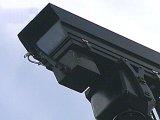
[Note: Look for part two of Michael Klare's "Is Energo-fascism in Your Future?" -- "Petro-power and the Nuclear Renaissance" -- later this week.]

Copyright 2007 Michael T. Klare