Showing posts with label foreign policy. Show all posts

Wednesday, May 2, 2007

US Wanted Visas Based On Skin Color, Ethnicity

US 'wants British Pakistanis to have entry visas'

Matt Weaver
Wednesday May 2, 2007
Guardian Unlimited


The American government wants to impose travel restrictions on British citizens of Pakistani origin because of concerns about terrorism, according to a report today.

In talks with the British government, the US homeland security secretary, Michael Chertoff, called for British Pakistanis to apply for a visa before travelling to the US, according to the New York Times.

The newspaper claimed that US officials were concerned about the number of terrorist plots in Britain involving citizens with ties to Pakistan.

But today the Foreign Office made it clear would resist the idea. It said it would oppose any attempt to exclude particular ethnic groups from the US visa waiver scheme that allows citizens from 27 countries, including the UK, to travel to the US without a visa for up to 90 days.

A spokesman said: "We are in close touch with the US about entry clearance, and they are aware of our view that changes to the visa waiver programme could cause economic damage to both our countries without materially enhancing the security controls over immigration."

He added: "The Muslim community in the UK, including those of Pakistani origin, are an important part of our society and we would oppose strongly any proposal to single them out in response to the actions of terrorists. Furthermore, we will oppose any measure based on broad categories of religious, ethnic or other criteria, and will continue to emphasise the importance of the current risk-based approach."

Mohammad Sarwar, the Labour MP for Glasgow Central, described the proposal as "unbelievable and shocking. Every British citizen must have the same rights. I don't think America has any right to interfere in this way."

Mr Sarwar, who was born in Pakistan and became Britain's first Muslim MP in 1997, urged ministers to reject the idea.

Ahmed Versi, the editor of Muslim News, agreed. He said: "They [the Americans] are trying to paint the whole Muslim community with the same brush. It's racist. There would be a huge outcry from all Muslims whether they are Pakistani or not."

He pointed out that many British Muslims were already put off from the travelling to the US for fear of the unwelcome reception they would receive.

The report of America's concerns follows the conviction earlier this week of five British men for planning a series of attacks across the UK. Four of them were of Pakistani origin. But according to the New York Times, talks on travel restrictions for British Pakistanis have been taking place for some "months".

Last month, Mr Chertoff held talks with the home secretary, John Reid. It is believed they discussed the visa waiver scheme that allows citizens from 27 countries, including the UK, to travel to the US without a visa for up to 90 days.

In an interview with the Daily Telegraph on the eve of the talks, Mr Chertoff said: "We need to build layers of protection, and I don't think we totally want to rely upon the fact that a foreign government is going to know that one of their citizens is suspicious and is going to be coming here."

At the time he did not mentioned restrictions on British Pakistani, but he expressed concern that the terrorist such as the July 7 bombers, three of whom were of Pakistani origin, could have used the visa waiver scheme to enter America.

Tuesday, May 1, 2007

Neocons love Obama

Obama's foreign policy speech

by Jerome a Paris
jeromeguillet@yahoo.fr

Tue May 1st, 2007 at 08:42:00 AM EDT


Barack Obama's speech on foreign policy is attracting strange supporters:

Robert Kagan: Obama the Interventionist

Andrew Sullivan: The Re-Branding of America

The Washington Post Editorial Board: Mr. Obama's Worldview - An encouraging start to talking policy

And they are quite clear as to why they love what they heard:

America must "lead the world in battling immediate evils and promoting the ultimate good." With those words, Barack Obama put an end to the idea that the alleged overexuberant idealism and America-centric hubris of the past six years is about to give way to a new realism, a more limited and modest view of American interests, capabilities and responsibilities.

(...)

Obama talks about "rogue nations," "hostile dictators," "muscular alliances" and maintaining "a strong nuclear deterrent." He talks about how we need to "seize" the "American moment." We must "begin the world anew." This is realism? This is a left-liberal foreign policy?

Kagan is literally gleeful. More military, more interventionism, more "values", more preemptive attacks. Sullivan is not far behind:

Obama's speech (...) is emphatically not against the use of military force when necessary; it is emphatically pro-military in its call for many more troops. On the critical issue of Iraq, Obama has taken a stand - a clear one for withdrawal, with the possibility of a strike-force over the horizon. This is a very difficult call, and the timing and execution of withdrawal will be dispositive. But one core strength of Obama's candidacy is that he got this war right when many of us got it wrong. He deserves more of a listening than many of us do.

Ditto with the Washington Post:

As an opening statement of Mr. Obama's philosophy, there is much that we found significant -- and encouraging -- in the Chicago speech. Acknowledging that "many Americans may find it tempting to turn inward" after the failures in Iraq and elsewhere, the senator quoted Franklin Roosevelt in saying the United States nevertheless must continue to "lead the world in battling immediate evils and promoting the ultimate good." Mr. Obama called for a sizable increase in the size of the Army and for the reinforcement of NATO forces in Afghanistan. He said that "no president should ever hesitate to use force -- unilaterally if necessary -- to protect ourselves and our vital interests when we are attacked or imminently threatened."

To be fair, the WaPo does see him as a bit weak, or at least uncommitted, on the War on Terror:

Still, Mr. Obama ought to explain more directly how he views jihadism. Is it an ideological challenge comparable to communism and fascism, as Mr. Bush contends, or merely an esoteric dogma held by bands of criminals, like the anarchism of the early 20th century? Is terrorism the central threat of the early 21st century, or, as some Democratic strategists argue, merely one of a panoply of challenges that include global warming, pandemics and the rise of China?

And when you read the speech, it's hard not to note the multiple references to the military, how it must be supported, increased in size, and used, preemptively if necessary (as quoted above). Even his bits about diplomacy focus on military alliances (NATO is lenghthily mentioned, but not the EU), and his examples of how the US should conduct "hearts and minds" operations in various countries are, again, run by the military.

The WaPo's note that he does not explicit his position on the "war on terra" is strange, considering that most of the places mentioned in his speech are in the Muslim world, and most of the threats seem to come from there. The only non-Muslim threat he also focuses on is loose Russian storage of nuclear material, but that's also part of the 'war on terra' - indeed, it is its signature threat, the one that has been used to justify most of the excesses of the past few years, and the attacks at home on civil rights - let us protect you from the mushroom cloud.

Basically, his proposal is to accept the goals of the George Bush administration, use the same tools, but run the policy competently and less boneheadedly. To his credit, he is not proposing that for Iraq itself, which he explicitly states the US must leave (well, except for a "few troops"), but in the wider picture, it's still about bringing democracy to others, and in particular to the Muslim world, and about having the biggest, most ass-kicking military force in the world.

:: ::

Now, in the interest of fairness, I'll add this second quote from Andrew Sullivan:

The simple existence of Obama as a new president in a new century would in itself enhance America's soft power immeasurably, just as a clear decision to leave Iraq would provide much greater leverage for diplomacy and military force in a whole variety of new ways. Obama would mean the rebranding of America, after a disastrous eight years. His international heritage, his racial journey, his middle name: these are assets for this country, not liabilities.

This is the hope that with a decent, competent president, things will go back to normal, the idea of the USA will shine brightly again, and it will be able once again to fulfill its international policy objectives by leading instead of by bullying.

Barck Obama says it thus:

But if the next President can restore the American people’s trust – if they know that he or she is acting with their best interests at heart, with prudence and wisdom and some measure of humility – then I believe the American people will be ready to see America lead again.

They will be ready to show the world that we are not a country that ships prisoners in the dead of night to be tortured in far off countries. That we are not a country that runs prisons which lock people away without ever telling them why they are there or what they are charged with. That we are not a country which preaches compassion and justice to others while we allow bodies to float down the streets of a major American city.

That is not who we are.

The problem is that yes, this is precisely who America is today in the eyes of most of the world - whether the genuinely aghast or the hypocritically gleeful to have a kettle to hide their pot.

Finally stopping the most atrocious behaviour will not eliminate the fact that it took place, that it took place for a long time, and that it was supported by a surprisingly high proportion of the population - and an higher, and even more terrifying, proportion of the punditry, which should have known better than fall for the nasty propaganda and fearmongering of the Bush administration. These were policies of a big chunk of the elite in Washington, as kossacks all know (and despair about).

But I am also struck about Obama's description of the world as a source only of threats for America - most related to terrorism one way or another, with a nod to global warming. Opportunity is only what America can bring to the world, not the other way around. In a word, just like with the current administration, the world has only headaches to bring to the USA. Thus the need for a big army to wage two wars at the same time. Thus the need to be everywhere to engage would-be terrorists before they actually turn into ones. Thus the need to lead alliances. The methods will be different: the relevant countries will need to be convinced rather than coerced, but the only goal is still to get them aligned behind US objectives.

And yet America will not be in a position to lead until it has atoned. You don't eliminate such a stain, such a loud precedent (which many others will be all too happy to use as an excuse for their own abuses for a long time) just by not doing it anymore. The credibility to talk about values, about democracy, about cooperation, about peace - just isn't there. And talking about a stronger military, more interventionism in other countries (even of the humanitarian or modest kind), and bringing the American model back to the world is not going to work, because it is yet more meddling.

Oh, sure, the weak and weasely leaders of Europe will be all too happy to be seduced rather than bludgeoned into submission, and the 'international community' will be all too happy to pretend that adults are in charge again, and that we can all go back to normal. Cooperation between secret services. Joint military/humanitarian missions (like the failing Afghanistan occupation, maybe?). More police coordination - with more uncontrolled data swapping between governments? After all, there are still evil terrrists out there. We cannot let the guard down too much. But at least we are all defenders of human rights and democracy again, for real this time.

Nah. As the quote from Obama's speech above suggests, this is a discourse for Americans, not for the rest of the world. They don't get to elect their overlords.

:: ::

Maybe it is too much to expect anything different, and, without the Bush/Iraq precedent, the speech would be mostly uncontroversial. After all, anything less intervention-prone would be shot down as "weak", "defeatist", etc... the whole gamut of Republican smears. The fact is that political discourse is still dominated by the need to appear 'strong' and to support the military without any restriction, and by the conviction that it is America's absolutely legitimate right to intervene in any other country's affairs because it is a model for the world and if only everybody else were in its image, all would be well.

Peddling to these deep strands in America's psyche may be smart politics, but it is not going to change policy - and current policy is creating more threats by the minute, via the preference for 'might is right' logic, the refusal to contemplate any leadership by example where it matters (energy consumption and carbon emissions - Obama only talks about demanding "equal efforts" from the USA and much poorer China or India), and the bizarre need to turn a small band of nasty gangsters with grievances into an apocalyptic threat.

So yeah, I understand why the neocons love Obama. He's not really challenging the reckless policy logic they have successfully instilled in your govenrment. Getting out of Iraq is not a proof of sanity, it's just an absence of proof that you are insane or deluded or both. That this is seen as progress only goes to show how low the standards have be brought down by this administration.


Be sure to see the comments section!

Foreign policy challenge: see world as it really is

Published: 04.30.2007
ONLINE EXCLUSIVE

ROBERT ROBB

The neoconservative hubris that the United States can and should reshape the world has been a casualty of the Iraq war, both substantively and politically.

The practical limitations on the ability of the United States to direct the destiny of other peoples and cultures, and the cost of such ambitions, have been exposed.

Nevertheless, the three leading Republican candidates for president in 2008 - Rudy Giuliani, John McCain and Mitt Romney - cling to some version of the neoconservative vision.

This gives Democrats the chance to forge a new direction and consensus on foreign policy. However, if Barack Obama's speech last week to the Chicago Council on Global Affairs is illustrative, and it probably is, they aren't really up to the task.

The foreign policy challenge for the United States is figuring out how to operate in a world less and less interested in U.S. leadership.

Europe already has an economy roughly as large as that of the United States. The major Asian-Pacific economies (Japan, China, South Korea, India, Australia and Taiwan) are now about three-quarters as large. So, while obviously still a very important market, the United States is no longer a dominant economic force.

The United States does still have the only military with truly global reach. However, this yields considerably less influence than it used to, particularly after Iraq.

For the most part, other global powers see the U.S. military as a force not so much to be feared, as to be harnessed for sanctioned international missions or in response to international calamities, such as tsunamis and earthquakes.

In his speech, Obama acknowledged that the willingness to accept U.S. leadership has waned. However, he seems to think that it is just because George Bush is such a boor.

With nice and skillful American diplomacy, he maintains, the United Nations can be effective, the countries of Europe will spend more on defense, and NATO can assume more of the military burden.

There's no objective basis for this belief. The U.N. is structurally dysfunctional and its members like it that way. No amount of skilled diplomacy by the U.S. is going to overcome the lack of domestic support for increased military spending in Europe.

And Afghanistan has demonstrated that, while NATO may be useful for peace-keeping missions, it is ineffective as a fighting force.

The harsh reality is that if there are tough things that have to be done in the world, the United States is not going to have much company or support in taking them on.

Bush believes that, to protect the country against terrorism, the United States has to be an active agent of democratic change around the world.

Obama seems to believe that, to protect the country against terrorism, the United States has to be an active agent helping to provide clean water, food, medicine, shelter and education around the world. He would increase foreign and developmental aid to $50 billion a year and establish a $2 billion "Global Education Fund."

The track record on foreign aid is abysmal. Countries with sound governance don't need it. It doesn't do any good in countries without sound governance. Nor is there any indication that it can lead to sound governance, a conceit Obama shares with Bush.

Obama says he supports a strong military, but apparently wants to turn it into a sort of international WPA. He quotes with great approbation a Djibouti U.S. base commander who said that "our mission is at least 95 percent civil affairs."

According to Obama, the United States "must lead the world, by deed and example."
The essence of Obama's foreign policy perspective, then, is this: If the United States tries hard enough to do good and be nice, the rest of the world will be impressed and grateful and accept U.S. leadership.

That's not the world as it really is.

Obama's delusion, widely shared by Democrats, isn't nearly as dangerous as the neoconservative delusion still being served up by the Republicans. It's still a delusion, nonetheless.

Saturday, March 10, 2007

Neocons Are Down But Might Not Be Out

March 9, 2007

(CBS) By CBSNews.com's David Miller


The political cost of the war in Iraq has already been high: President Bush's approval ratings have plummeted as opposition to the conflict has grown, and Republicans lost their majorities in the House and Senate when war-weary voters sent them home last November.

The war has also dealt a serious blow to an entire political philosophy: neoconservatism.

Born out of former Democrats disaffected by their party's embrace of the anti-war left in the 1960s, neoconservatism for decades operated as one of many intellectual cliques in American politics. Placing relatively little emphasis on domestic policy, it counted hawkish Democrats and Republicans among its followers.

But not until President Bush took office in 2001 did neoconservatives see their philosophy become the guiding force of U.S. foreign policy.

The tenets of neoconservatism — using pre-emptive military force, spreading democracy, rebuffing international organizations and acting unilaterally — were hallmarks of the run-up to the Iraq war.

Once seen as bold action in the face of terrorism, it has, in the eyes of many, become associated with hubris, arrogance and foolhardiness. Even the word "neocon" has taken on the connotations of a slur.

The neoconservatives who once helped guide policy at the Pentagon have since gone on to other things. Former Deputy Defense Secretary Paul Wolfowitz now heads the World Bank. Douglas Feith, who led the Pentagon's Office of Special Plans, teaches at Georgetown University. Richard Perle, former chair of the Defense Policy Board Advisory Committee, now focuses on think tanks and writing.

Even those who are still working in politics have taken on a different tone. Marshall Wittmann, a spokesman for Sen. Joe Lieberman and a prominent neoconservative who has a reputation among reporters for being a human sound-bite machine, merely wrote, "I will have to take a pass" in an e-mail when asked for comment.

Other "neocons" — Wolfowitz, Feith, Bill Kristol and David Tell of the Weekly Standard magazine, a favorite of hawkish wonks — declined comment or did not return calls or e-mail.

Perle did talk to CBSNews.com, but said he rejects the entire idea that the war in Iraq, much less American foreign policy, was guided by neoconservatism — or any other overriding philosophy.

"These are not questions of philosophy; they're questions of how you deal with specific situations at the time," he said. "A great deal is attributed to neoconservatives or neoconservative thinking that I don't recognize. It became a label used by opponents of bringing down Saddam Hussein's regime."

"Neoconservative" is now is a label no one is embracing. But it is unclear if this political philosophy is on its way to the dustbin of history, or whether it could have surprising staying power, even if the faces associated with it are long gone from the upper echelons of government.

Some have already delivered a death sentence. "I don't see neoconservative ideas playing out very strongly," said David Brady, a political science professor at Stanford University. "They're in disrepute."

But Jonathan Clarke, a scholar at the CATO Institute, a libertarian think tank who co-authored "America Alone: The Neo-Conservatives and the Global Order," believes American foreign policy will continue to be based on some neoconservative ideas, even if they aren't labeled as such. "Military strength as an instrument of American foreign policy is very embedded," he said. "It's not if you should use military force, but where."

However, there are some signs that neoconservatism, if not dead, is on the wane.

North Korea's nuclear ambitions were dealt with through multilateral diplomacy. The White House also recently announced that Syria and Iran would be included in talks among Iraq's neighbors over bringing stability to the Middle East. All of these moves represent a shift from a previous foreign policy known for such terms as "with us or against us" and "axis of evil."

An increased reliance on diplomacy reflects practical realities and the post-Iraq political environment, said Peter Beinart, a senior fellow at the Council on Foreign Relations who once supported the Iraq invasion but has since changed his mind.

"I think you're clearly seeing, in public opinion, much more skepticism among most Americans about America trying to remake societies in our image," he said. "America's ability to resort to military force is going to be severely restrained in years to come. … You can thump your chest as much as you want, but the only opportunity America has is the opportunity to eat crow and do things diplomatically."

The rhetoric of the 2008 presidential hopefuls may offer a further glimpse at neoconservatism's future. Leading Democrats have put criticism of the Iraq war at the center of their campaigns, yet they also refuse to rule out the use of pre-emptive military force against Iran. Republicans are quick to attack the Bush administration's execution of the war, but none say the actual invasion was a mistake.

While candidates will still employ tough talk on terrorism, they are unlikely to articulate a foreign policy that seeks to change the world — especially Republicans seeking to distance themselves from President Bush, Brady said

New York Mayor Rudy Giuliani — who, perhaps more than any other candidate, comes closest to holding neoconservative views on foreign policy — would be better off, Brady said, advocating a greater role for diplomacy and international cooperation.

"You could back off on that and just say, 'Look, what we're doing here is not giving up those policies, but we're going to be more multilateral,' " he said. "There's got to be an easing off of that notion and the notion of democracy as the driver of all of this."

However, Brady is not advising Giuliani or any other candidate, and he said many neoconservatives are still active as advisers and consultants, particularly in the Republican Party, which could give the philosophy some staying power. "Most of the stars in the Republican array are still neoconservative," he said.

That situation does not apply to the Democrats, even though their party and neoconservatism have not always been mutually exclusive — the late Democratic Sen. Henry "Scoop" Jackson is a hero within the movement. But Democratic success in the 2006 elections and the anti-war leanings of the party's primary voters will force candidates to adopt a less aggressive stance, Beinart said.

"I think you're going to find that in the Democratic Party, even the talk is not going to be as tough as it once was," said Beinart, who predicted a similar leftward shift for the general election. "It's going to be more about diplomacy, more about improving America's image. I think it's going to be a more dovish debate."

Whether the foreign policy debate in the election will predict the behavior of the next president is impossible to predict — in the 2000 campaign, Bush spoke of a "humble" foreign policy and rejected nation-building. Perle said whoever succeeds Bush, regardless of party, will likely be driven by circumstances, not abstractions.

"Will people make independent judgments about the Iranian situation, or will they take the view that because things went bad in Iraq, we will never again use military power? I'd be surprised if we stopped judging specific situation in terms of the merits of those situations," he said. "By and large, we tend to elect presidents who are at the center of American thinking. They tend to be pretty centrist and pragmatic."

Politics Lite: No Sacrifice, No Substance, No Success: RORY STEWART

THE COMPLETE ARTICLE
THE NEW YORK TIMES
GUEST COLUMNIST

Politics Lite: No Sacrifice, No Substance, No Success

By RORY STEWART
Published: March 10, 2007

It is patronizing to assume that voters can’t handle demanding, imaginative and risky policies.


The accepted wisdom in British political circles is that Tony Blair won three elections by giving the British voters charisma and energy unfettered by dull or controversial policies. The Tories have now taken the lesson to heart. They are fighting back with feel-good, idea-light campaigns of their own, and it seems to be working. They are now significantly ahead in the polls.

This is not just electoral strategy. Many of them believe that we live in a postideological age, that there are no great questions anymore and that there can be no new solutions for domestic poverty or problems with immigration, energy or the economy.

But why do people stand as politicians if they have no policies? Many politicians claim privately that they are simply concealing their policies until they are elected. It is more likely that when the winds of office change in their favor, they will find their faces frozen into an expression of affable inaction. The role of a modern politician is apparently to be likable, to tinker with existing institutions and to manage occasional crises.

Churchill has been replaced by Bertie Wooster.

In Iraq, hundreds of thousands have died over the last few years and hundreds of billions of dollars have been spent by the U.S.-led coalition. The international system is fractured; the Islamic world is angry.

--MORE

Thursday, March 8, 2007

The Scandal at Walter Reed

HON. RON PAUL OF TEXAS
Before the U.S. House of Representatives

March 7, 2007

The scandal at Walter Reed is not an isolated incident. It is directly related to our foreign policy of interventionism.

There is a pressing need to reassess our now widely accepted role as the world’s lone superpower. If we don’t, we are destined to reduce our nation to something far less powerful.

It has always been politically popular for politicians to promise they will keep us out of foreign wars, especially before World War I. That hasn’t changed, even though many in Washington today don’t understand it.

Likewise it has been popular to advocate ending prolonged and painful conflicts like the wars in Korea and Vietnam, and now Iraq.

In 2000, it was quite popular to condemn nation building and reject the policy of policing the world, in the wake of our involvement in Kosovo and Somalia. We were promised a more humble foreign policy.

Nobody wins elections by promising to take us to war. But once elected, many politicians greatly exaggerate the threat posed by a potential enemy-- and the people too often carelessly accept the dubious reasons given to justify wars. Opposition arises only when the true costs are felt here at home.

A foreign policy of interventionism costs so much money that we’re forced to close military bases in the U.S., even as we’re building them overseas. Interventionism is never good fiscal policy.

Interventionism symbolizes an attitude of looking outward, toward empire, while diminishing the importance of maintaining a constitutional republic.

We close bases here at home-- some want to close Walter Reed-- while building bases in Arab and Muslim countries like Saudi Arabia. We worry about foreign borders while ignoring our own. We build permanent outposts in Muslim holy lands, occupy territory, and prop up puppet governments. This motivates suicide terrorism against us.

Our policies naturally lead to resentment, which in turn leads to prolonged wars and increased casualties. We spend billions in Iraq, while bases like Walter Reed fall into disrepair. This undermines our ability to care for the thousands of wounded soldiers we should have anticipated, despite the rosy predictions that we would be greeted as liberators in Iraq.

Now comes the outrage.

Now Congress holds hearings.

Now comes the wringing of hands. Yes, better late than never.

Clean it up, paint the walls, make Walter Reed look neat and tidy! But this won’t solve our problems. We must someday look critically at the shortcomings of our foreign policy, a policy that needlessly and foolishly intervenes in places where we have no business being.

Voters spoke very clearly in November: they want the war to end. Yet Congress has taken no steps to defund or end a war it never should have condoned in the first place.

On the contrary, Congress plans to spend another $100 billion or more in an upcoming Iraq funding bill-- more even than the administration has requested. The 2007 military budget, $700 billion, apparently is not enough. And it’s all done under the slogan of “supporting the troops,” even as our policy guarantees more Americans will die and Walter Reed will continue to receive casualties.

Every problem Congress and the administration create requires more money to fix. The mantra remains the same: spend more money we don’t have, borrow from the Chinese, or just print it.

This policy of interventionism is folly, and it cannot continue forever. It will end, either because we wake up or because we go broke.

Interventionism always leads to unanticipated consequences and blowback, like:

A weakened, demoralized military;

Exploding deficits;

Billions of dollars wasted;

Increased inflation;

Less economic growth;

An unstable currency;

Painful stock market corrections;

Political demagoguery;

Lingering anger at home; and

Confusion about who is to blame.

These elements combine to create an environment that inevitably undermines personal liberty. Virtually all American wars have led to diminished civil liberties at home.

Most of our mistakes can be laid at the doorstep of our failure to follow the Constitution.

That Constitution, if we so desire, can provide needed guidance and a roadmap to restore our liberties and change our foreign policy. This is critical if we truly seek peace and prosperity.

Tuesday, March 6, 2007

When a Leader Missteps, a World Can Go Astray

March 6, 2007
Books of The Times

SECOND CHANCE

Three Presidents and the Crisis of American Superpower

By Zbigniew Brzezinski

234 pages. Basic Books. $26.95.

In the months before the American invasion of Iraq, Zbigniew Brzezinski, former national security adviser to President Jimmy Carter, was one of the few members of the foreign policy establishment (along with Brent Scowcroft, former national security adviser to President George H. W. Bush) to speak out strongly about the dangers of going to war unilaterally against Saddam Hussein, and to warn, presciently it turns out, of the possibly dire consequences of doing so without a larger strategic plan.

In August 2002, as the current Bush administration was already hurrying toward an invasion, Mr. Brzezinski cautioned that war “is too serious a business and too unpredictable in its dynamic consequences — especially in a highly flammable region — to be undertaken because of a personal peeve, demagogically articulated fears or vague factual assertions.” In February 2003, just weeks before the invasion, he added that “an America that decides to act essentially on its own regarding Iraq” could “find itself quite alone in having to cope with the costs and burdens of the war’s aftermath, not to mention widespread and rising hostility abroad.”

In his compelling new book, “Second Chance: Three Presidents and the Crisis of American Superpower,” Mr. Brzezinski not only assesses the short- and long-term fallout of the Iraq war, but also puts that grim situation in perspective with the tumultuous global changes that have taken place in the last two decades. He dispassionately analyzes American foreign policy as conducted by the last three presidents — George W. Bush, Bill Clinton, and George H. W. Bush — and he gives the reader a sobering analysis of where these leaders’ cumulative decisions have left the United States as it now searches for an exit strategy from Iraq, faces potentially explosive situations in Iran and North Korea and copes with an increasingly alienated Europe and an increasingly assertive China.

Mr. Brzezinski’s verdict on the current president’s record — “catastrophic,” he calls it — is nothing short of devastating. And his overall assessment of America’s current plight is worrying as well: “Though in some dimensions, such as the military, American power may be greater in 2006 than in 1991, the country’s capacity to mobilize, inspire, point in a shared direction and thus shape global realities has significantly declined. Fifteen years after its coronation as global leader, America is becoming a fearful and lonely democracy in a politically antagonistic world.”

By MICHIKO KAKUTANI

--MORE--

Monday, February 26, 2007

Will Surge Hurt US More Than Sanctions Hurt Iran?

POLITICS:

Analysis by Trita Parsi*

WASHINGTON, Feb 26 (IPS) - The winds of fortune in the Iranian nuclear stand-off seem to have shifted, judging by the U.S.'s new confidence. But in Washington's apparent quest to get an upper hand, misreading the causes of the backlash against President Mahmoud Ahmadinejad in Iran may cause the U.S. to lose rather than gain leverage.

Over the past few months, Iran's hard-line president has suffered several political defeats at home. The most important of these were the Dec. 15 municipal elections last year where candidates allied with the president fared miserably, while centrist conservatives close to former President Hashemi Rafsanjani -- a key rival of Ahmadinejad -- made significant gains.

Ahmadinejad's defeat, coupled with increased criticism against him at home over his economic policies and his failure to evade U.N. Security Council Sanctions, have left Washington with the impression that its efforts to squeeze Iran's access to international finance has borne fruit at a surprising rate.

Washington's euphoria over this perceived success has been used as an argument with its European allies that the pressure is working and that if only Europe joins the U.S., Iran will eventually be brought down to its knees.

This argument is likely to be repeated today when the U.S., Britain, France, Russia, China and Germany meet to discuss how to respond to Iran's refusal to suspend its uranium enrichment activities, as requested by U.N. Security Council Resolution 1737.

But Washington's reading of developments in Iran is severely flawed. Most importantly, there is likely no significant causality between the U.S.'s recently imposed unilateral financial sanctions and Ahmadinejad's dwindling popularity.

The George W. Bush administration seems to be confusing its sanctions policies with Ahmadinejad's incompetent economic policies. The push-back against Ahmadinejad has, according to observers of Iran's domestic political scene, far more to do with his failed economic policies and his populist promises, which have created exaggerated expectations among the Iranian populace, than with Tehran's nuclear posturing or Washington's financial sanctions.

A key trigger of the anti-Ahmadinejad sentiments has been rising inflation, which has been caused by an influx of liquidity into the Iranian economy rather than a shortage of it.

Still, Washington is right in pointing out that Tehran has been thrown off course and that divisions within the Iranian government regarding the nuclear file are growing. But the impetus for this rift is likely the psychological shock Tehran suffered when the U.N. Security Council passed Resolution 1737 in December of last year rather than any economic pain resulting from Washington's pressure.

Tehran seemed to have thought that it could evade sanctions throughout 2006, and then face a potentially more lenient Council in 2007 with the entrance of states such as South Africa into the U.N.'s highest body.

The problem for the West, though, is that Tehran will recuperate from a psychological shock much faster than it would had the shock been economic in nature. As a result, the West's perceived advantage over Iran may prove transitory and short-lived.

If the Bush administration is really seeking negotiations, that is, if its policy of seizing and releasing Iranian diplomats in Iraq and its military build-up in the Persian Gulf are geared towards gaining leverage over Iran to be used in a future negotiation rather than to produce a pretext to start a war with Tehran, then Washington would be wise to start those negotiations sooner rather than later.

Furthermore, whatever difficulties Iran may find itself in currently, and whatever pain additional economic and financial sanctions may incur on Tehran, these costs must be measured against Washington's intensifying predicament in Iraq once the Bush administration's surge strategy has run it course.

The White House is virtually alone in believing that the surge will change Iraq for the better. Tehran is in agreement with the U.S. Congress and Washington's European allies in predicting that the Bush administration cannot reverse the negative trends in Iraq through a moderate increase in U.S. troop levels, while refusing to engage Iran diplomatically or pressure the Saudi government to clamp down on elements within its territory who are supporting the Iraqi insurgency with funds and arms.

Still, the State Department is pressing on with its twin policy of surging troop levels in Iraq and reducing diplomatic activity with Iran. The idea of punishing Iran by imposing new and stricter sanctions is also attractive to hawkish Democratic members of Congress who feel a political need to differentiate themselves from the Bush administration and its perceived war plans, while at the same time remaining tough and hostile towards Iran.

By late summer 2007, however, the U.S. public's patience with the surge policy will likely dry up. Public and Congressional opposition to the Bush administration's Iraq policy will cross a new threshold and the White House will be pressed to either show positive results or accept a significant shift in its Middle East policy.

This is where the underlying flaws with Washington's faulty reading of internal developments in Iran in which causalities are seen where none exist may become devastating to the U.S.

If no success in Iraq has been produced by this summer, Iran will likely be in a stronger position vis-à-vis the West than it is now, even if Washington succeeds in imposing robust sanctions on Tehran. However stringent the next round of U.N. sanctions on Iran may be, they will likely not impose enough damage on Iran to offset the damage the failure of the surge will do to the U.S.'s position.

As a result, in a bid to find leverage against Iran by increasing pressure but without boosting diplomacy, Washington -- and its European fellow-travelers -- may end up squandering the little leverage they have left.

*Dr. Trita Parsi is the author of "Treacherous Alliances -- The Secret Dealings of Israel, Iran and the United States" (Yale University Press, 2007). He is also president of the National Iranian American Council (http://www.niacouncil.org/).

Wednesday, February 21, 2007

Scooter Libby and World War III

February 21, 2007

How the Libby trial could impact US foreign policy
by Justin Raimondo

Cowed into funding a war neither they nor the majority of Americans believe in, congressional Democrats are taking the line that what's needed are some "benchmarks" – well-defined criteria by which to assess whether our efforts are paying off. The idea is to make continued U.S. support contingent on the Iraqis measuring up to these benchmarks. Hillary Clinton even says we should withdraw aid providing for the security of elected Iraqi political leaders if they fail to make the grade. Now that's a way to kill someone off without leaving any fingerprints! (And a good lesson to any other would-be U.S. sock puppets who think they can take the money and run.)

The big problem with this approach, however, is that it fails to understand the dynamics of our continued presence in Iraq. In testimony before the Senate Foreign Relations Committee given on Feb. 1, Zbigniew Brzezinski, the hawkish former national security adviser to Jimmy Carter, made a statement that should have set off alarm bells and sent everyone rushing for the lifeboats:

"If the United States continues to be bogged down in a protracted bloody involvement in Iraq, the final destination on this downhill track is likely to be a head-on conflict with Iran and with much of the world of Islam at large. A plausible scenario for a military collision with Iran involves Iraqi failure to meet the benchmarks; followed by accusations of Iranian responsibility for the failure; then by some provocation in Iraq or a terrorist act in the U.S. blamed on Iran; culminating in a 'defensive' U.S. military action against Iran that plunges a lonely America into a spreading and deepening quagmire eventually ranging across Iraq, Iran, Afghanistan, and Pakistan."

Every moment we stay in Iraq increases the likelihood of war with Iran – that, in my view, is the most powerful argument, aside from this one, for a rapid withdrawal. No sooner had Brzezinski uttered these words than the administration began a concerted campaign to blame the Iranians for U.S. failure in Iraq, and accused Tehran of having a direct hand in the killing of American troops.

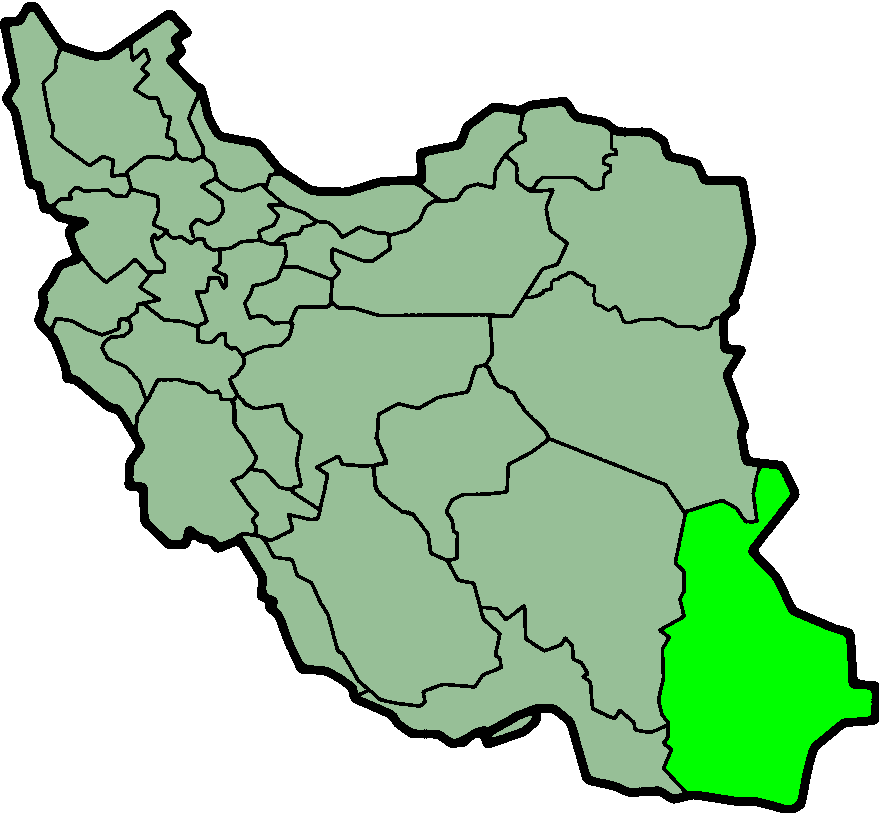
We hear much about these accusations on the front pages of American newspapers, but what we don't hear about are acts of terrorism directed at both civilian and military targets by Iranian "dissidents," who are reportedly receiving covert U.S. assistance. These groups include the Jundallah organization in Baluchistan, said to be affiliated with al-Qaeda, and the sinister, cult-like Mujahideen-e-Khalq (MEK), a shadowy Marxoid group that was supported by Saddam Hussein and still maintains a presence at Camp Ashraf [.pdf] in Iraq, as well as enjoying a wide array of bipartisan support in Congress.

Jundallah recently struck southeastern Iran, in Sistan-Baluchistan, with a series of attacks, including a car bomb in the provincial capital of Zahedan. The Iranians claim that the Jundallah militants are trained in Pakistan, and Iran has displayed samples of alleged captured armaments with "Made in USA" stamped all over them. The leader of Jundallah reportedly announced the attacks on MKO-TV, the satellite television station run out of Great Britain by the MEK, a few minutes before they started.

In an interview with the Telegraph, a Jundallah guerrilla fighter sounded very much like he was advertising his services to U.S. policymakers:

"Asked whether the satellite telephone he was holding might not lead to his being located, he allowed himself a smile. 'We are not fighting against America,' he said. Support for Jundallah was growing, he said. 'There are hundreds of others who are desperate to sign in, but we ask them to wait because we do not have enough weapons or camps.'"

That was last year: surely by this time the Jundallah "freedom fighters" have more than enough weapons and camps, courtesy of Uncle Sam. Scott Ritter, in his book Target Iran: The Truth About the White House's Plans for Regime Change, has described CIA-MEK cross-border operations, in which the Americans – and the Israelis – are conducting provocations that could lead to an open conflict with Iran. The focus of these efforts, he says, is on Baluchistan and Khuzestan.

With strong bipartisan support, Congress recently appropriated millions of dollars in aid to Iranian "resistance" groups, with practically no oversight as to how that money is being used – and the scramble for American gold is on. The American front group for the MEK, the National Council of Resistance, has plenty of high-level contacts in Washington, just as Ahmed Chalabi did in the run-up to war with Iraq. The MEK and other Iranian exile groups are busily lobbying for a similar gig as the administration escalates its plans for "regime change" in Tehran.

The Iraqi government has recently reiterated its position that the MEK is a terrorist organization, an opinion shared by the European Union and the U.S. Department of State. However, not everyone in the U.S. administration agrees. And what are we to make of the near-total redaction of a mysterious document that came to light in the Libby trial – a memo to Libby from John Hannah detailing "views of MEK leaders on continuing role in Iraq"? That's all we're allowed to know: aside from a reference to MEK briefing slides, the rest is blanked out.

The Office of the Vice President (OVP), which sponsored Chalabi, is just as intimately connected to the campaign to gin up a war with Iran as it was with the effort to lie us into war with Iraq. It is reasonable to assume the OVP is just as supportive of the MEK, and may even be directing its activities in collusion with its allies in the Pentagon.

Given that U.S. foreign policy is, to a large degree, driven by domestic politics, the motive on the part of the administration to escalate provocative covert actions inside Iran has never been greater. With Scooter Libby likely to be convicted and Fitzgerald's sights increasingly turned on Cheney, the War Party, cornered, has every reason to lash out in one last desperate bid to save its political skin.

Fitzgerald, by all indications, is coming for Cheney. After the trial but before the sentencing, Fitz will make a strenuous effort to "flip" Scooter and use his testimony to target the vice president. Murray Waas reports in the National Journal that Cheney wasn't taken in with Libby's Tim Russert fabrication for a moment:

"At the time that Libby offered his explanation to Cheney, the vice president already had reason to know that Libby's account to him was untrue, according to sources familiar with still-secret grand jury testimony and evidence in the CIA leak probe."

The Fitzgerald probe is a dagger pointed at the dark heart of the administration, the OVP, and the climactic moment of this epic battle is fast approaching. In the early days of the investigation, left-liberal bloggers were exulting in the possibility that they would see Karl Rove frog-marched out of the White House, but the trial has shown that Rove and Libby were antagonists rather than allies. Before it's all over we may yet see the vice president frog-marched out of the White House – at least metaphorically, in the form of an indictment with Dick Cheney's name on it.

What better way to distract attention away from this coming political bombshell than by dropping some real bombs on Iran?

In the midst of the regional conflagration feared by Brzezinski, prosecuting the Vice President for obstruction of justice and/or perjury would be problematic, at best. In any case, the widening of the war would drive the story off the front pages – think of this as a grand-scale version of Clinton's bombing of the Sudanese pharmaceutical factory just as the Monica Lewinsky was returning to the grand jury.

U.S. war plans against Iran have apparently been in the making for quite some time, but the ratcheting-up of both the rhetoric and the actual war preparations indicates a new level of seriousness on the part of this administration. While most reports reassure us that the decision to go to war has not yet been made, one wonders what turn of events would push the key decision-makers, Bush and Cheney, over the line. A direct threat to one – or both – of them coming out of the Libby trial may be all the impetus they need. A cornered rat is dangerous.

Monday, February 19, 2007

In the Matrix, you mess up foreign policy

From
February 18, 2007

Observing the disasters of Iraq and Afghanistan, former policy maker Carne Ross realised there was a malaise underlying government action

In the sci-fi film The Matrix, the rebel leader Morpheus offers the young hero a choice. If he wants to see reality he should take the red pill; if he wants to continue living in an illusion he should take the blue. This being the movies, the hero takes the red. The world as we know it disappears. It is replaced by a wasteland under black skies. Morpheus tells the hero that this is the desert of the real.

Governments affirm their necessity and effectiveness with continual doses of the blue pill of illusion: they tell us everything is all right, that they have matters under control. But every now and then we can take the red pill and allow ourselves to see the world as it really is. We are at that rare moment in history when the blue pills are not working. In Iraq and Afghanistan we can see the desert of the real.

Even before leaving the Foreign Office after giving evidence to the Butler inquiry in 2004, I had been pondering what was wrong with my work. The more I looked back on this experience, which culminated in the crises of Iraq and Afghanistan, the more it seemed clear to me that the current disasters are manifestations of a deeper malaise in the way that foreign policy is made, indeed in the way that we think about foreign policy — we, the public, as well as government.

Both of us, governors and governed, rely on an easy myth, a piece of theatre. This is that governments, in the form of foreign ministries and diplomats, understand the world, can interpret its signs and correctly formulate policy in response. This is an illusion.

Among the officials dealing with Iraq in the prewar years, including me, there was a belief (although never a certain knowledge) that there were some weapons of mass destruction, WMD, but not much and certainly not enough to comprise a threat. Our information was totally inaccurate.

When I helped to make policy on sanctions against Iraq in the late 1990s and early 2000s, we were similarly mistaken. We massively underestimated the revenue that the Saddam Hussein government was gaining illegally from sanctions-busting oil exports. Separated from the everyday reality of life in Iraq (I was 5,000 miles distant at the British mission to the United Nations), we were able to ignore the facts that sanctions were punishing ordinary Iraqis, not the government. Instead, we selected facts from UN reports which suited our version of events that damage to Iraq’s civilians and infrastructure was Saddam’s fault. It was, in part, but not in toto.

The truth was that without embassies on the ground, and with little incli-nation to seek out objective accounts which might contradict us, we did not know the reality. But this did not prevent ministers claiming the “facts” in the public narrative.

After the allied invasion of Afghanistan in 2001-2, I spent six weeks at the British embassy in Kabul. Afghanistan then was very insecure (it is worse today). Diplomats could travel nowhere without heavily armed protection. Appointments could be made only with those contactable on rare satellite telephones. Britain, through its association with the Americans, represented the new power dispensation. It was unsurprising therefore that those we met told us, in general, what we wanted to hear.

What we wanted to hear was that “Afghans”, who in reality comprise a highly heterogeneous, barely unified nation, wanted democracy, embodied in the loya jirga process, or “democracy Afghan-style” as some westerners chose to call it. This was the reality that I and others wrote up in our telegrams back to London, from behind many walls and coils of barbed wire to protect us from the other Afghanistan which was less interested in this discourse than we were.

The UN mission included officials who had spent many years in Afghanistan and spoke the local languages (our embassy had one interpreter). Less bound by the restrictions of security than we were, they would tell us that some of the warlords from the Northern Alliance with whom we had associated ourselves, and in many cases had bought off, were busy securing new drug routes and terrorising the public.

The UN special envoy wearily told us that ploughing in the poppy fields would never work, while eager British officials were paying the warlords to do just that. An SAS officer told us that US tactics of killing as many “AQT” (Al-Qaeda and the Taliban) as possible were establishing a perpetual cycle whereby jihadist militants came to Afghanistan to fight the Americans, who were duly obliging: everyone was getting what they wanted, so it would continue indefinitely. The officer’s preferred strategy to win over the local people with contact and aid, to isolate the militants, was being ignored, he politely complained.

These observations were not headlined in our telegrams back to London, although we may have briefly alluded to them. In the headlong, emotional and vengeful rush of post9/11 war-making, brave and rare was the diplomat or ambassador who dared to question London’s policies.

Today there are more allied troops in Afghanistan to fight the Taliban, or the Pashtun militants or whoever they are, than there were when I was there in 2002. Last year was the worst year for allied casualties since the overthrow took place. It was also a record-breaking year for opium production.

The common thread of these missteps is that policies are decided by small groups of officials and ministers based upon very partial (in both senses of the word) accounts of reality, abstractions several removes from the facts. They are not bad people. They are intelligent and take their work seriously. But they make mistakes. Indeed, it is impossible for them not to make mistakes.

Yet there is a deep reluctance to examine our own failings. In the circles of those who govern and those who know them, there is a profound conceit: that People Like Us don’t do bad things.

When my evidence to the Butler inquiry was recently published surreptitiously by the Commons foreign affairs select committee, in an untitled annex to an unrelated report, those newspapers which noticed reported that it stated that “Blair must have known there were no WMD in Iraq”. This exaggeration was repeated by the BBC, even though nowhere in the document is such a claim made. But who cares, since no one had read it?

And what of us, in whose name all this is perpetrated? For all but a small minority — the families of soldiers, a discouraged band of activists — Britain’s wars and the mess they have made of other people’s countries are merely the stuff of dinner-party chatter or muttered complaints in front of the evening news.

A former colleague, now a senior official in the Foreign Office, told me recently that in 30 years of diplomacy he had never seen so many critical

foreign policy problems at once in which Britain was irretrievably entangled. But incredibly, he remarked as he gazed out at shopping crowds on the street, life goes on as normal. No one seems to mind.

The world of the 21st century is a turbid and complicated place. We can no longer afford the simplifications, abstractions and inevitable mistakes of the closed box of policy making. We cannot rely on government to sort it out for us.

This a rare moment for change. Parliament must be given intrusive power over policy — above all war-making — and budgets. Officials from within the closed box should be named, questioned, praised when deserved and, when necessary, held accountable.

Something deeper and more difficult is also required. Instead of projecting our own designs on others’ reality, even when we barely know it, we might try to take more account of how they see their affairs.

Iraqis and Afghans are already paying the price for our failures. Even today their suffering plays little part in our considerations of policy, as we debate who to blame for the past and how to extricate ourselves in the future. But for our sake as well as theirs, we must stop taking the blue pill and try to see the world as it really is, rather than as we and our government wish it to be.

Carne Ross is director of Independent Diplomat, a diplomatic advisory group. His book, Independent Diplomat: Dispatches from an Unaccountable Elite, is published by Hurst & Co on Thursday

Sunday, February 11, 2007

The Method in the Madness

10 February 2007

By: Uri Avnery


WHEN A Prime Minister has just lost a war, is dogged by corruption allegations and sees his popularity ratings in free fall - what can he do?

Why, he can initiate provocations.

A provocation diverts attention, generates headlines, creates the illusion of power, radiates a sense of leadership.

But a provocation is a dangerous instrument. It can cause irreversible damage.


PROVOCATION NO. 1: The northern frontier.

Along the northern border runs a fence. But not everywhere does the fence coincide exactly with the recognized border (the so-called Blue Line). For topographical reasons, some sections of the fence run a few dozen meters south of it.

That is the theory of the situation. In the course of the years, both sides have become accustomed to regarding the fence as the actual border. On the Lebanese side, the villagers farm the fields up to the fence, fields which may well be their property.

Now Ehud Olmert has decided to exploit this situation and reveal himself as a great, invincible warrior. Some explosives recently found a few yards from the Blue Line serve as a pretext. The Israeli army claims that they were put there just days ago by Hizbullah fighters disguised as goatherds. According to Hizbullah, they are old bombs that have been there since before the recent war.

Olmert sent soldiers beyond the fence to carry out a "Hissuf" ("exposure") - one of those new Hebrew words invented by the army's "verbal laundry" to beautify ugly things. It means the wholesale uprooting of trees, in order to improve vision and facilitate shooting. The army used the trademark weapon of the State of Israel: the armored bulldozer.

The Lebanese army sent a warning that they would open fire. When this did not have any effect, they indeed fired several salvoes over the heads of the Israeli soldiers. The Israeli army responded by firing several tank shells at the Lebanese position and lo - we have our "incident".

The whole affair is very reminiscent of Ariel Sharon's methods in the 60s, when he was the chief of operations of the Northern Command. Sharon became quite an expert at provoking the Syrian army in the demilitarized zones that existed on the border between the two countries at the time. Israel claimed sovereignty over these areas, while the Syrians asserted that it was a neutral zone that did not belong to either state and in which the Arab farmers, who owned the land, were allowed to tend their fields.

According to legend, the Syrians exploited their control of heights overlooking the Israeli villages in the valley below them. Again and again the evil Syrians (the Syrians were always "evil") terrorized the helpless kibbutzim by shelling. This myth, which was believed by practically all Israelis at the time, served as a justification for the occupation of the Golan Heights and their annexation by Israel. Even now, foreign visitors are brought to an observation post on the Golan Heights and shown the defenseless Kibbutzim down below.

The truth, which has been exposed since then, was a bit different: Sharon used to instruct the Kibbutzniks to go to their shelters, and then send an armored tractor into the demilitarized zone. Predictably, the Syrians shot at it. The Israeli artillery, just waiting for its cue, then opened up a massive bombardment of the Syrian positions. There were dozens of such "incidents".

Now the same method is being practiced by Sharon's successor. Soldiers and bulldozers enter the area, the Lebanese shoot, the Israeli tanks shell them.

Does this provocation make any political sense? The Lebanese army answers to Fuad Siniora, the darling of the United States and the opponent of Hizbullah. In the wake of the Second Lebanon War, this army was deployed along the border, at the express demand of the Israeli government, and this was proclaimed by Olmert as a huge Israeli achievement. (Until then, the Israeli army commanders had adamantly opposed the idea of stationing Lebanese or international troops in this area, on the grounds that this would hamper their freedom of action.)

So what is the aim of this provocation? The same as with all Olmert's recent actions: gaining popularity to survive in power, in this case by creating tension.


PROVOCATION NO. 2: The Temple Mount.

Islam has three holy cities: Mecca, Medina and Jerusalem. In Mecca this week, the chiefs of Fatah and Hamas assembled in order to put an end to the mutual killing and set up a unity government. While the attention of the concerned Palestinian public was riveted there, Olmert struck in Jerusalem.

As pretext served the "Mugrabi Gate", an entrance to the Haram-al-Sharif ("the Noble Sanctuary"), the wide plaza where the al-Aqsa mosque and the Dome of the Rock are located. Since this gate is higher than the Western Wall area below it, one can approach it only over a rising bridge or ramp.

The old bridge collapsed some time ago, and was replaced with a temporary structure. Now the "Israel Antiquities Authority" is destroying the temporary bridge and putting in its place - so it says - a permanent one. But the work looks much more extensive.

As could have been expected, riots broke out at once. In 1967, Israel formally annexed this area and claimed sovereignty over the entire Temple Mount. The Arabs (and the whole world) have never recognized the annexation. In practice, the Temple Mount is governed by the Islamic Waqf (religious endowment).

The Israeli government argues that the bridge is separate from the Temple Mount. The Muslims insist that the bridge is a part of it. Behind this tussle, there is a lurking Arab suspicion that the installation of the new bridge is just a cover for something else happening below the surface.

At the 2000 Camp David conference, the Israeli side made a weird-sounding proposal: to leave the area itself to the Muslims, but with Israeli sovereignty over everything beneath the surface. That reinforced the Muslim belief that the Israelis intended to dig beneath the Mount, in order to discover traces of the Jewish Temple that was destroyed by the Romans 1936 years ago. Some believed that the real intention was to cause the Islamic shrines to collapse, so a new Temple could be built in their place.

These suspicions are nurtured by the fact that most Israeli archaeologists have always been the loyal foot-soldiers of the official propaganda. Since the emergence of modern Zionism, they have been engaged in a desperate endeavor to "find" archaeological evidence for the historical truth of the stories of the Old Testament. Until now, they have gone empty-handed: there exists no archaeological proof for the exodus from Egypt, the conquest of Canaan and the kingdoms of Saul, David and Solomon. But in their eagerness to prove the unprovable (because in the opinion of the vast majority of archaeologists and historians outside Israel - and also some in Israel - the Old Testament stories are but sacred myths), the archaeologists have destroyed many strata of other periods.

But that is not the most important side of the present affair. One can argue to the end of days about the responsibility for the Mugrabi walkway or what it might be that the archaeologists are looking for. But it is impossible to doubt that this is a provocation: it was carried out like a surprise military operation, without consultation with the other side.

Nobody knew better what to expect than Olmert, who, as mayor of Jerusalem, was responsible for the killing of 85 human beings - 69 Palestinians and 16 Israelis - in a similar provocation, when he "opened" a tunnel near the Temple Mount. And everybody remembers, of course, that the Second Intifada started with the provocative "visit" to the Temple Mount by Ariel Sharon.

This is a provocation against 1.3 billion Muslims, and especially against the Arab world. It is a knife in the back of the "moderate" Mahmoud Abbas, with whom Olmert pretends to be ready to have a "dialogue" - and this at exactly the moment Abbas reached an historical agreement with Hamas for the formation of a national unity government. It is also a knife in the back of the king of Jordan, Israel's ally, who sees himself as the traditional protector of the Temple Mount.

What for? To prove that Olmert is a strong leader, the hero of the Temple Mount, the defender of the national values, who doesn't give a damn for world public opinion.


PROVOCATION NO. 3: After Haim Ramon was convicted of indecent conduct, the post of the Minister of Justice fell vacant. In a surprise blow, after laying down a smoke screen by dangling the names of acceptable candidates, Olmert appointed to the post a professor who is the open and vocal enemy of the Supreme Court and the Attorney General.

The Supreme Court is almost the only governmental institution in Israel which still enjoys the confidence of the great majority. The last President of the Court, Aharon Barak, once told me: "We have no troops. Our power is based solely on the confidence of the public." Now Olmert has appointed a Minister of Justice who has been engaged for a long time and with a lot of noise in destroying this confidence. Indeed, it seems that this is his main interest in life, ever since he failed to get a close friend, a female professor, elevated to the Supreme Court.

One can see in this an effort by Olmert, a politician who is dragging behind him a long train of corruption affairs (several of which are at present under police and State Comptroller investigation), to undermine the investigators, the Attorney General and the courts. It serves also as revenge against the court that dared to convict Ramon, his friend and ally. He did not, of course, consult with anyone in the judicial system: not with the Attorney General (whose official title is "Legal Adviser of the Government") nor with the President of the Supreme Court, Dorit Beinish, whom he cannot stand.

I am not an unreserved admirer of the Supreme Court. It is a wheel in the machinery of the occupation. It cannot be relied on in matters like the targeted assassinations, the Separation Wall, the demolition of Palestinian homes and the hundred and one other cases over which the false banner of "security" is waving. But it is the last bastion of human rights inside Israel proper.

The appointment of the new minister is an assault on Israeli democracy, and therefore no less dangerous than the other two provocations.


WHAT DO the three have in common? First of all: their unilateral character. Forty years of occupation have created an occupation mentality that destroys all desire and all ability to solve problems by mutual understanding, dialogue and compromise.

Both in foreign and domestic relations, Mafia methods reign: violence, sudden blows, targeted eliminations.

When these methods are applied by a politician haunted by corruption affairs, an uninhibited war-monger who is fighting for survival by all means available - this is indeed a very dangerous situation.

* An Israeli author and activist. He is the head of the Israeli peace movement, "Gush Shalom".

Monday, February 5, 2007

Neocons to Iraq: Screw You

February 5, 2007

Charles Krauthammer: moral monster
by Justin Raimondo

Having destroyed the Iraqi state, and murdered some 600,000 Iraqis in the process, the War Party is now denying all responsibility for the subsequent civil war threatening to plunge the nation into a maelstrom of sectarian violence. Hard to believe, I know, but here's Charles Krauthammer – always in the avant-garde of neocon-dom – blaming it all on … the Iraqis!

"We gave them a civil war? Why? Because we failed to prevent it? Do the police in America have on their hands the blood of the 16,000 murders they failed to prevent last year?"

If the police invaded and destroyed, say, South Central Los Angeles, bombing the place into rubble and installing a puppet "government" that employed death squads to do its bidding, then, yes, they would indeed have the blood of the victims on their hands.

What's jaw-dropping, however, is the completely amoral stance of an alleged "conservative" like Krauthammer, who yelled himself hoarse calling for war with Iraq and now blames the "liberated" Iraqis for the fate that has befallen them. Conservatives used to believe in taking responsibility for the consequences of one's actions and living with them. Not Krauthammer. According to him, the internecine warfare in Iraq is "bewildering."

Really? I don't buy that for a minute, just as I don't believe that the intellectual architects of this war are horrified by what is happening in Iraq today. Anyone could have predicted the probable results of an American invasion: a Sunni minority ruled Iraq for decades while a Shi'ite majority groaned under the increasingly heavy burden of a sectarian tyranny – was there ever any doubt that the destruction of the Ba'athist regime would lead to chaos and civil war? Not on my part – and not, I firmly believe, on the part of any of the more informed war advocates, either. They are neither "bewildered" nor even much bothered by the sectarian slaughter in Iraq – because it's just what they wanted all along. That's one more Arab country that is divided, unable to offer resistance to the U.S.-Israeli battle plan, which aims at nothing less than the "liberation" (i.e., utter destruction) of every nation in the Middle East.

Do you think Krauthammer is saddened by the vicious killing that is now taking Iraq down into a bloody abyss? Not a chance. The neocons hate Arabs, all of them, Shia and Sunni alike (and the Persians, too). As long as these folks are killing each other, they can't attack the United States – or Israel. That's what motivated the invasion of Iraq, and it's what is pushing them to do the same to Iran – sheer malevolence, but malevolence, I might add, with a purpose.

Notice how the neocons are pushing this idea of splitting Iraq up into its religio-ethnic components: that's another aspect of the atomization strategy they're employing in the Middle East. Smash and reduce the Muslim nations to splinters – set the Azeris against the Persians, the Kurds against the Arabs, the Shia against the Sunni, and let the catastrophe spread from Beirut to Tehran to the oil fields of Saudi Arabia.

"Among all these religious prejudices, ancient wounds, social resentments, and tribal antagonisms," complains Krauthammer, "who gets the blame for the rivers of blood? You can always count on some to find the blame in America." Aside from Osama bin Laden and his immediate circle few blame "America," in the collective sense: there are, however, a few American individuals who bear ultimate responsibility, and they are known as neocons, i.e., Krauthammer and his gang of world-conquering "liberators."

They plotted and pined for war, they falsified the "intelligence" to fit their goal of "regime change," and when the blood began to flow – after the "liberation" and the celebrations of a "mission accomplished" – they washed their hands of it and blamed the victims.

That's about par for the course with the neocons: after all, aren't they blaming the hapless idiot Bush for bollixing up their glorious war – for not putting in enough troops, for disbanding the Iraqi army, for supposedly not following their prescriptions to a tee? The axis of chickenhawks got what they wanted – death and destruction in the Arab world on a massive scale – and now they're busy assigning the blame to everyone but themselves.

The ugly secret of the neocons is that their program of "regime change" throughout the Middle East doesn't mean taking down tyrannies and replacing them with governments of a more democratic or even liberal character – it means toppling one regime and replacing it with… nothing. Michael Ledeen, the Machiavelli of this crowd, calls it "creative destruction." I'm not sure how creative it is – although I guess it depends on what you're trying to create – but clearly, by these standards, they have every right to claim Iraq as a "victory" and crow "Mission accomplished!"

Krauthammer asks:

"Did Britain 'give' India the Hindu-Muslim war of 1947-48 that killed a million souls and ethnically cleansed 12 million more? The Jewish-Arab wars in Palestine? The tribal wars of post-colonial Uganda?"

The British didn't come in with the idea of destroying the local culture and political structure, but of subsuming it under their own suzerainty in the classical pattern of imperialism. The consequences of that policy played out over a much longer period of time than what is occurring in Iraq, but, yes, the British do bear some responsibility for the Hindu-Muslim pogroms.

The British incursion interrupted and prevented the development of an indigenous solution to the sectarian divide. Who knows what direction the history of the region might have taken if the British hadn't intervened? In the end, their policy of "benevolent" imperialism didn't prevent the catastrophe but only delayed it – and probably exacerbated it, by keeping it under wraps for so long.

As for the Jewish-Arab wars in Palestine – is Krauthammer seriously asking whether the Balfour Declaration had anything to do with making Palestine a perpetual battleground? By taking up the cause of Theodore Herzl and making the implantation of a settler state possible, the legacy of British imperialism will afflict the entire region for the foreseeable future. Imperialism always has a deforming effect, whether it be in Iraq, Palestine, or Uganda, precisely because it is founded on coercion.

I would emphasize, however, that what we are doing to Iraq is fundamentally different from the classic form of imperialism, which always seeks to derive some material or political benefit from its conquests. I realize that far too many of my readers are committed to the tired leftist idea that this was a "war for oil," but I don't see any oil flowing – it was supposed to pay for the war, you'll remember, according to none other than Paul Wolfowitz. This war was about one thing and one thing only: advancing Israel's interests in the region. As Professor Paul Schroeder put it in The American Conservative, the U.S. making war on Iraq

"would represent something to my knowledge unique in history. It is common for great powers to try to fight wars by proxy, getting smaller powers to fight for their interests. This would be the first instance I know where a great power (in fact, a superpower) would do the fighting as the proxy of a small client state."

The U.S. has gained no political or economic advantages from the invasion and occupation of Iraq. Quite the contrary, we are paying through the nose, and the economic costs (totaling some $1 trillion) are almost as high as the political price – world isolation and the threat of terrorism on U.S. soil.

This is not imperialism: it is the foreign policy of a lemming state.

Saturday, January 27, 2007

Sen. Kerry: US "A Sort Of International Pariah"

Sen. Kerry blasts U.S. foreign policy

By BRADLEY S. KLAPPER, Associated Press WriterSat Jan 27, 5:46 AM ET

Massachusetts Sen. John Kerry slammed the foreign policy of the Bush administration on Saturday, saying it has caused the United States to become "a sort of international pariah."

The statement came as the 2004 Democratic presidential nominee responded to a question about whether the U.S. government had failed to adequately engage Iran's government before the election of hard-liner Mahmoud Ahmadinejad in 2005.

Kerry said the Bush administration has failed to adequately address a number of foreign policy issues.

"When we walk away from global warming, Kyoto, when we are irresponsibly slow in moving toward AIDS in Africa, when we don't advance and live up to our own rhetoric and standards, we set a terrible message of duplicity and hypocrisy," Kerry said.

"So we have a crisis of confidence in the Middle East — in the world, really. I've never seen our country as isolated, as much as a sort of international pariah for a number of reasons as it is today."

Kerry said the government needs to use diplomacy to improve national security.

"We need to do a better job of protecting our interests, because after all, that's what diplomacy is about," he said. "But you have to do it in a context of the reality, not your lens but the reality of those other cultures and histories."

Kerry criticized what he called the "unfortunate habit" of Americans to see the world "exclusively through an American lens."

Thursday, January 25, 2007

Pelosi appoints

Editor's Note: I am moving over to the other blog.
---
Jan 25, 2006

By W. Rolley

It seems to me that all of the discussion here about Ellen Tauscher is a real waste of time and energy and only serves to support the concept of an idealogical orthodoxy. If that were truly the case, then there are much better targets that Tauscher, and from right here in the Bay Area.

I would put Tom Lantos, the new Chariman of the House Committee on Foreign Affairs at the top of the list. This Committee was previously known called "International Relations". Gary Leupp at Counterpunch, described Lantos as "probably the most virulent Zionist in the entire Congress" and considers him a Neo-Con of the top (read dangerous) order.

I am not anti-Israel. I firmly believe that the US should try to recapture the moral high ground it once had and which the current administration as squandered with such lack of (insight, intelligence, compassion, honor, take your pick). Such a position would be to address the nuclear question with Iran by stating we will not provide aid to any country that is not a signatory to the Nuclear Arms Limitation Treaty. (That includes both Israel and Iran).

Tauscher was an easy target. A self-identified blue dog Democrat, she is never going to be the person that will appeal to the members of this list. However, one needs to remember that this is a conservative district. That Tauscher was the first Democrat to win there in a long time. And, she is no where near as "dangerous" as Lantos.

The appointment of Lantos to this powerful committee chairmanship signaled to the entire world that the Democrats are not ready for any change regarding Middle East Policies. We will continue the support for whatever Israel wants to do, as we did in Lebanon where they destroyed a country and built Hezbollah into an even greater power, as evidenced by their latest general strike.

If we want to make real change in Washington, it is not be targeting blue dog Democrats like Tauscher, but by curtailing the power of Democratic Neo-Cons like Lantos. This is not a case of "he works for us." We know that Lantos works for Israel.

I personally much prefer the call for an even handed policy in the Middle East. That is what is truly in the National Interest.