Wednesday, March 28, 2007
N Korean bomb a flop: CIA chief
SEOUL: The head of the US Central Intelligence Agency, Michael Hayden, has said Washington does not recognise North Korea as a nuclear power because its first atomic bomb test last October was a failure.
The US position was made clear when Mr Hayden met South Korean Defence Minister Kim Jang-soo, the JoongAng Ilbo newspaper reported.
"The US does not recognise North Korea as a nuclear power, because its nuclear test last year was a failure," Mr Hayden was quoted by a South Korean military source as telling Mr Kim.
The source said Mr Hayden stressed the importance of exchanging intelligence on North Korea between Seoul and Washington. "The US has a large amount of intelligence on North Korea, and South Korea has many experts who understand well North Korean sentiments and culture," Mr Hayden was quoted as saying. "US-South Korean intelligence exchange is crucial to analyse North Korea's decisions."
Defence Ministry officials confirmed the Hayden-Kim meeting but refused to say what was discussed. And the US embassy would not comment on the CIA chief's visit.
US officials said last October that air samples had confirmed a nuclear test occurred but that the explosion yield was less than one kiloton. South Korean officials said they believed the test was only a partial success.
Mr Hayden arrived on Monday for a three-day visit, the Yonhap news agency said, and met senior intelligence officials to share information on North Korea's nuclear activities.
The CIA chief arrived from Tokyo and was due to leave for Beijing yesterday.
Six-party talks on scrapping the North's nuclear program have been under way since 2003. They group the US, China, the two Koreas, Russia and Japan.
Under a February 13 deal, the North should should shut down its plutonium-producing Yongbyon nuclear reactor and other plants by April 14 in exchange for energy aid and the unfreezing of its bank deposits.
AFP
Saturday, March 17, 2007
CIA Director Hayden: ‘Wilson Was Covert’
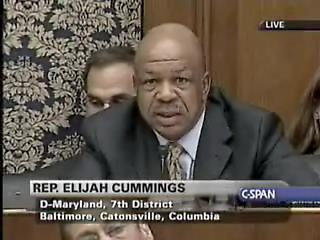
Cummings also asked Wilson to respond to the specific claim, made by Victoria Toensing and others, that Plame had lost her covert status because she “had not been stationed abroad within five years.” Cummings asked, “During the past five years, Ms. Plame, from today, did you conduct secret missions overseas?” She answered, “Yes I did, congressman.”
Watch it:
Transcript: expand post »
CUMMINGS: Ms. Wilson, first of all, thank you for your service. Ms. Wilson, even today your work for the CIA is so highly classified that we’re not permitted to discuss the details, but we can clarify one crucial point — whether you worked undercover for the CIA. You said your position was covert but I’ve heard others say you were not covert. In fact, one of the witnesses who will testify a little bit later, Victoria Toensing, is making that same argument. In an op-ed that appeared in the Washington Post on February 18, she says it quite bluntly. She says, “Plame was not covert. She worked at CIA headquarters and had not been stationed abroad within five years.” I know there are restrictions on what you can say today, but is Ms. Toensing’s statement correct?
WILSON: Congressman, thank you for the opportunity. I know I’m here under oath, and I am here to say I was a covert officer of the Central Intelligence Agency. Just like a general is a general whether he is in the field in Iraq or Afghanistan, when he comes back to the Pentagon, he is still a general. In the same way, covert operations officers who are serving in the field, when they rotate back to a temporary assignment in Washington, they, too, are still covert.
CUMMINGS: Is it possible that Ms. Toensing had more information than you do about your work or had access to secret document that you don’t?
WILSON: I would find that highly unlikely, congressman, because much of that information about my career is still classified.
CUMMINGS: On Wednesday night, I know that Mr. Waxman, our chair, and Congressman Reyes, the Chairman of the House Intelligence Committee, spoke personally with General Hayden, the head of the CIA. And Mr. Waxman told me that Gen. Hayden said clearly and directly, “Ms. Wilson was covert.” There was no doubt about it. By the way, the CIA has authorized us to be able to say that. In addition, I understand that Chairman Waxman sent his opening statement over to the CIA to be cleared and to make sure that it was accurate. In it, he said, “Ms. Wilson was a covert employee of the CIA.” “Ms. Wilson was undercover.” The CIA cleared these statements. I emphasize all of this because I know that there are people who are still trying to suggest that what seems absolutely clear isn’t really true and that you weren’t covert. And I think one of the things we need to do in this hearing is make sure there isn’t any ambiguity on this point. Just three more questions, did you hold this covert status at the time of the leak? Did you — the covert status at the time of the leak?
WILSON: Yes I did, congressman. Yes.
CUMMINGS: Number two, the Identities Protection Act refers to travel outside the United States within the last five years. Let me ask you this question. Again, we don’t want classified information, dates, locations, or any other details. During the past five years, Ms. Plame, from today, did you conduct secret missions overseas?
WILSON: Yes I did, congressman.
CUMMINGS: Finally, so as to be clear for the record, you were a covert CIA employee and within the past five years from today, you went on secret missions outside the United States. Is that correct?
WILSON: That is correct, congressman.
CUMMINGS: I want to thank you and I hope this committee now has cleared up the issue of covert, whether Ms. Plame was a covert agent, and I yield back. « collapse post
Filed under: Ethics, Administration