Showing posts with label resistance. Show all posts

Friday, April 27, 2007

On whose side is Al-Qaeda?

Tension between the national resistance in Iraq and Al-Qaeda mounts as the latter makes a bid for power monopoly, writes Lamis Andoni

Al-Qaeda's Islamic State of Iraq has signalled the beginning of an offensive that sets it apart from Iraqi resistance groups in a brazen and violent struggle not only against foreign occupation but also and mainly for power in Iraq.

If Al-Qaeda was responsible, as it claims, for the suicide bombing at the Iraqi parliament, the attack represents its most daring act yet aimed at asserting a monopoly of representation of Iraqis. The bombing, as much as it shattered the American security plan, signals that Al-Qaeda has embarked on an irreversible path of wrestling for power even before a withdrawal of American troops from Iraq.

While various Iraqi resistance groups have always differed with Al-Qaeda's tactics and actions, trying at the same time to avoid an all-out confrontation with the transnational organisation, the so- called Islamic State of Iraq is declaring war on all who do not conform to its ambitions.

The struggle between resistance groups and Al-Qaeda rose to surface when the Islamic Army, a prominent resistance group, issued a strong-worded statement condemning Al-Qaeda's actions and calling on Osama Bin Laden to personally intervene to rein-in Al-Qaeda in Iraq.

The assassination of 1920 Revolution Brigades leader Harith Dhaher Khamis Al-Dhari, nephew of the influential Muslim Scholars Association leader Sheikh Harith Al-Dhari, on 27 March, reportedly in an Al-Qaeda ambush, sent shockwaves across resistance groups, especially that it followed the killing of at least 30 fighters from the Islamic Army.

"Al-Qaeda has actually killed a number of Mujahideen brothers, 30 of them so far, and also attacked other resistance groups, clashing with the 1920 Revolution Brigades, battles with which break out from time to time until now in Abu Ghraib. Most recently Al-Qaeda killed one of its field commanders, Brother Harith Dhaher Al-Dhari," the statement said.

"Al-Qaeda has also killed members of the Army of the Mujahideen resistance organisation and members of the Ansar Al-Sunna resistance group. Al-Qaeda has also threatened the Islamic Front," the statement added.

Differences between Al-Qaeda's Islamic State in Iraq and the resistance have been simmering ever since Al-Qaeda in Mesopotamia declared an Islamic state with Abu Omar Baghdadi named "prince of the faithful". That dramatic move, replete with an armed parade, was witnessed with alarm across the Sunni political community and the resistance alike. While staking its claim over the leadership and future of Iraq, it was not expected that Al-Qaeda would move so quickly into eliminating its opponents and demanding total allegiance.

The Islamic Army and other resistance groups, even those with close coordinating ties with Al-Qaeda, refuse the logic of being subordinated to the Islamic State of Iraq's self-proclaimed leader. Sources close to both the Islamic Army and the 1920 Revolution Brigades say it is now obvious that Al-Qaeda is vying for unrivaled control over the resistance.

Differences over the agenda and leadership of the resistance are not new, but the death of Abu Musaab Al-Zarqawi brought such differences to the fore.

"We were hoping that the resistance could continue coordinating with Al-Qaeda in the battlefield and postpone any conflict until later," a source close to the 1920 Revolution Brigades recalls. The declaration of the Islamic State and ensuing threats to resistance fighters and leaders made it clear that Al-Qaeda was looking neither for coordination nor a coalition. "Al-Qaeda saw no room for other agendas but one -- its own," the source said.

Following the assassination of Al-Dhari, the 1920 Revolution Brigade and the Dhari tribe tried to contain the incident, as the resistance "should not be dragged into dangerous confrontations with Al-Qaeda", according to at least two sources close to the resistance. Al-Qaeda's Islamic State of Iraq, however, was deterred neither by alarmed reactions nor attempts to contact its leadership in Iraq. The Islamic Army broke its silence once Al-Qaeda's attacks against Sunni civilians, mosques, imams, and even "demanding money" from families in return for protection, became the rule, not the exception.

"The Sunni population has thus become a 'legitimate target' for them, in particular the wealthy, who are told that either they must pay what Al-Qaeda wants or they will be killed, and they strive to kill anyone who criticises them or differs with them and exposes their errors, regarding this as a simple matter," the Islamic Army said.

In an interview with Al-Jazeera, Islamic Army spokesman Ibrahim Al-Shammari said that while at the beginning -- at the onset of the US occupation -- the Islamic Army maintained field coordination with Al-Qaeda, differences had grown to the point where it was impossible "to tolerate Al-Qaeda actions, which have been very damaging to the resistance".

Different resistance groups, especially Islamic- based groups, had initially accepted Al-Qaeda's role, which they saw as impressively efficient and painful for occupation forces. Salafi-based groups, like Ansar Al-Sunna, and some members of the other groups, embraced Al-Qaeda and hailed "the Muslim Mujahideen who came to liberate Iraq." Al-Qaeda was welcomed into the fold of the Majles Al-Shura (Consultative Council) that includes seven factions, though its attempts to control the council or impose its agenda were repeatedly rejected.

The resistance, according to different sources close to the movement, saw the advantage of Al-Qaeda's military attacks against the occupation forces but felt the damage done by its sectarian rhetoric and deadly assaults against Iraqi civilians.

A debate has been ongoing about targeting the Iraqi army and police, and Iraqis involved in the American-sponsored political process. In his Al-Jazeera interview, Al-Shammari rejected considering the Iraqi army, the police and Iraqis in parliament as legitimate targets. The same position is held by the 1920 Revolution Brigades and other Sunni leaders.

Now, as dramatically demonstrated in the parliament bombing, Al-Qaeda's Islamic State in Iraq is going out on its own. Reports from Baghdad also suggest an increasing number of attacks by Al-Qaeda on resistance groups, its leaders and districts that don't submit to its control.

While Al-Qaeda's influence has decreased in most of Al-Anbar, following the establishment of the Anbar Salvation Council and local/tribal police forces "to combat terrorism", it exerts total control in certain enclaves such as Al-Karma, a small town near Fallujah, by directly administering schools, hospitals and all movement.

"People and the resistance are finding themselves targets of the occupation and government forces on the one hand, and Al-Qaeda's Islamic State in Iraq on the other," an Iraqi journalist told Al-Ahram Weekly.

According to informed sources close to at least two resistance groups, the Iraqi resistance, though engaging Al-Qaeda when forced to, is still seeking to avoid an all-out confrontation, even if Al-Qaeda seeks it. Nonetheless, the situation seems to be escalating on a daily basis, with many Iraqi nationalist activists who support the resistance fearing that "occupation forces are benefiting the most from Al-Qaeda's actions."

* The writer is a US-based journalist.

© Copyright Al-Ahram Weekly. All rights reserved

Al-Ahram Weekly Online

Monday, April 16, 2007

Resisting the Drums of War


The Bush administration promoted the misguided and destructive war in Iraq by targeting our concerns about vulnerability, injustice, distrust, superiority, and helplessness. The continued occupation of Iraq—or an attack on Iran—will likely be sold to us in much the same way. This video examines these warmongering appeals and describes how to counter them.

Thursday, April 12, 2007

Librarian Who Resisted FBI Says Patriot Act Invades Privacy

By Andrew Miga

Associated Press
Thursday, April 12, 2007; A12

A librarian who fended off an FBI demand for computer records on patrons said Wednesday that secret anti-terrorism investigations strip away personal freedoms.

"Terrorists win when the fear of them induces us to destroy the rights that make us free," said George Christian, executive director of Library Connection, a consortium of 27 libraries in the Hartford, Conn., area.

In prepared testimony for a Senate panel, Christian said his experience "should raise a big patriotic American flag of caution" about the strain that the government's pursuit of would-be terrorists puts on civil liberties.

He said the government uses the USA Patriot Act and other laws to learn, without proper judicial oversight or any after-the-fact review, what citizens are researching in libraries.

A recent report by the Justice Department's inspector general found 48 violations of law or rules in the FBI's use of national security letters from 2003 through 2005. Some congressional critics want to tighten legal safeguards on the letters.

" 'Trust us' doesn't cut it when it comes to the government's power to obtain Americans' sensitive business records without a court order and without any suspicion that they are tied to terrorism or espionage," said Sen. Russell Feingold (D-Wis.), the chairman of the Senate Judiciary subcommittee on civil rights.

Under the Patriot Act, the FBI can use the letters to acquire telephone, e-mail, travel and financial records without a judge's approval. Letter recipients are not allowed to disclose their involvement in a request.

Prosecutors have said secrecy is needed to avoid alerting suspects.

In July 2005, the FBI issued a national security letter to Christian and three other Connecticut librarians. The letter sought computer subscriber data for a 45-minute period on Feb. 15, 2005, during which a terrorist threat was thought to have been transmitted. A gag order prevented the librarians from talking about the letter.

The librarians refused to comply with the FBI's request.

The American Civil Liberties Union filed a legal challenge on behalf of the librarians but did not name them.

A judge ruled that the gag order should be lifted, saying it unfairly prevented the librarians from participating in debate over how the Patriot Act should be rewritten. Prosecutors appealed, but in April 2006 they said they would no longer seek to enforce a gag order.

Last year, authorities dropped their demand for the records, saying they had discounted the potential threat that led to the request.

The Iraqi resistance only exists to end the occupation

The escalating attacks are not usually aimed at civilians, but are a direct response to the brutal actions of US-led troops

Haifa Zangana
Thursday April 12, 2007
The Guardian


In Muqdadiyah, 50 miles from Baghdad, a woman wearing a traditional Iraqi abaya blew herself up this week in the midst of Iraqi police recruits. This was the seventh suicide attack by a women since the Anglo-American invasion in 2003, and an act unheard of before that. Iraqi women are driven to despair and self-destruction by grief. Their expectations are reduced to pleas for help to clear the bodies of the dead from the streets, according to a report by the international committee of the Red Cross, released yesterday. It's the same frustration that drew hundreds of thousands to demonstrate against foreign forces in Najaf on Monday.

In the fifth year of occupation, the sectarian and ethnic divide between politicians, parties and their warring militias has become monstrous, turning on its creators in the Green Zone and beyond, and not sparing ordinary people. One of the consequences is a major change in the public role of women.

During the first three years of occupation women were mostly confined to their homes, protected by male relatives. But now that the savagery of their circumstances has propelled many of them to the head of their households, they are risking their lives outdoors. Since men are the main target of US-led troops, militias and death squads, black-cloaked women are seen queuing at prisons, government offices or morgues, in search of disappeared, or detained, male relatives. It is women who bury the dead. Baghdad has become a city of bereaved women. But contrary to what we are told by the occupation and its puppet regime, this is not the only city that is subject to the brutality that forces thousands of Iraqis to flee their country every month.

Bodies are found across the country from Mosul to Kirkuk to Basra. They are handcuffed, blindfolded and bullet-ridden, bearing signs of torture. They are dumped at roadsides or found floating in the Tigris or Euphrates. A friend of mine who found her brother's body in a hospital's fridge told me how she checked his body and was relieved. "He was not tortured", she said. "He was just shot in the head."

Occupation has left no room for any initiative independent of the officially sanctioned political process; for a peaceful opposition or civil society that could create networks to bridge the politically manufactured divide. Only the mosque can fulfil this role. In the absence of the state, some mosques provide basic services, running clinics or schools. In addition to the call to prayer, their loudspeakers warn people of impending attacks or to appeal for blood donors.

But these attempts to sustain a sense of community are regularly crushed. On Tuesday, troops from the Iraqi army, supported by US helicopters, raided a mosque in the heart of old Baghdad. The well-respected muazzin Abu Saif and another civilian were executed in public. Local people were outraged and attacked the troops. At the end of the day, 34 people had been killed, including a number of women and children. As usual, the summary execution and the massacre that followed were blamed on insurgents. The military statement said US and Iraqi forces were continuing to "locate, identify, and engage and kill insurgents targeting coalition and Iraqi security forces in the area".

It is important to recognise that the resistance was born not only of ideological, religious and patriotic convictions, but also as a response to the reality of the brutal actions of the occupation and its administration. It is a response to arbitrary break-ins, humiliating searches, arrests, detention and torture. According to the Red Cross, "the number of people arrested or interned by the multinational forces has increased by 40% since early 2006. The number of people held by the Iraqi authorities has also increased significantly."

Many of the security detainees are women who have been subjected to abuse and rape and who are often arrested as a means to force male relatives to confess to crimes they have not committed. According to the Iraqi MP Mohamed al-Dainey, there are 65 documented cases of women's rape in occupation detention centres in 2006. Four women currently face execution - the death penalty for women was outlawed in Iraq from 1965 until 2004 - for allegedly killing security force members. These are accusations they deny and Amnesty International has challenged.

There is only one solution to this disaster, and that is for the US and Britain to accept that the Iraqi resistance is fighting to end the occupation. And to acknowlege that it consists of ordinary Iraqis, not only al-Qaida, not just Sunnis or Shias, not those terrorists - as Tony Blair called them - inspired by neighbouring countries such as Iran. To recognise that Iraqis are proud, peace-loving people, and that they hate occuption, not each other. And to understand that the main targets of the resistance are not Iraqi civilians. According to Brookings, the independent US research institute, 75% of recorded attacks are directed at occupation forces, and a further 17% at Iraqi government forces. The average number of attacks has more than doubled in the past year to about 185 a day. That is 1,300 a week, and more than 5,500 a month.

Another way of understanding this is that in any one hour, day or night, there are seven or eight new attacks. Without the Iraqi people's support, directly and indirectly, this level of resistance would not have happened.

· Haifa Zangana, an Iraqi exile who was imprisoned by Saddam Hussein, is the author of Women on a Journey: Between Baghdad and London
haifa_zangana@yahoo.co.uk


Haifa Zangana is a novelist and former prisoner of Saddam Hussein’s Iraqi regime. She is a weekly columnist for al-Quds newspaper and an occasional commentator for the Guardian, Red Pepper and al-Ahram Weekly. She lectures regularly on Iraqi culture, literature, and women issues.

Born in Baghdad in 1950, she worked with the PLO in Damascus, Syria, in 1975, and has lived in London since 1976. As a painter and writer, she participated in various European and American surrealist publications and group exhibitions in the 80s, and performed one-woman shows in London and Iceland.

She has worked as an adviser for the United Nations Development Programme, writing a report on empowerment of women in the Arab world, and as a member of the advisory board of a Brussels tribunal on Iraq. She co-founded Act Together: Women Action for Iraq and is the chair of Iraqi Patriots in Media and Culture (IPMC). She was a founding member of the International Association of Contemporary Iraqi Studies (IACIS), and edited and published Halabja, a homage to the eponymous Kurdish town by Iraqi and Arab writers and artists.

Through the Vast Halls of Memory, her biographical novel, was published in English by Hourglass in 1990, reprinted in 1991, and published in Arabic in 1995. Three collections of short stories followed: The Ant’s Nest (1996), Beyond What the Eye Sees (1997) and The Presence of Others (1999). She has since published two more novels: Keys to a City in 2000 and Women on a Journey in 2001.

Publications include:

A piece in Not One More Death, a collection of writings against the Iraq war/occupation. STW and Verso, March 2006

A translation of her novel Women on a Journey. Texas University Press, December 2006

The Three Cyclops of Empire: Targeting the Fabric of Iraqi Society, a chapter in Empire’s Law, Pluto, February 2006

Colonial Feminist: from Washington to Baghdad, a chapter in Barriers to Reconciliation, Washington DC University Press, 2006

Packaged Lives, a collection of short stories in Arabic, Dar Al Sawad.

Forthcoming publications include:

Interrupted struggle: A short history of women in Iraq, Seven Stories NY, autumn 2007

A translation of Women on a Journey. Texas University Press, spring 2007

Turkey Launches Attacks on Kurd Rebels

AP forgets to mention Turkey attacked Kurds in Iraq as well. AP= the voice of the Pentagon.
---
Thursday April 12, 2007 1:01 PM

ANKARA, Turkey (AP) - Turkey's army chief said Thursday the military had launched several ``large scale'' offensives against separatist Kurdish rebels in the predominantly Kurdish southeastern region.

The offensives were launched to coincide with spring, when the rebels intensify attacks on Turkey, with melting snow making mountain passes easier to access, said Gen. Yasar Buyukanit, the head of Turkey's powerful military.

The announcement came as Turkey has been intensifying pressure on Iraq and the United States to crack down on the rebels who launch raids from bases in northern Iraq.

Monday, April 9, 2007

An Israeli Refusenik’s Good Fight

Features > April 6, 2007

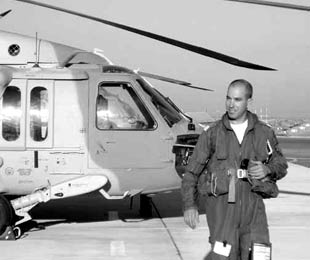
One of Shapira's last flights in the Air Force in September 2003.

In September 2003, in the midst of Israel’s campaign of targeted assassinations against Palestinian terrorists, a 31-year-old Black Hawk helicopter pilot named Yonatan Shapira terrorized Israel’s military high command without committing a single act of violence.

In the Pilots’ Letter of Refusal that he authored and 26 other pilots signed, these historic words were written: “We, who were raised to love the state of Israel and contribute to the Zionist enterprise, refuse to take part in Air Force attacks on civilian population centers. … These actions are illegal and immoral, and are a direct result of the ongoing occupation which is corrupting all of Israeli society.” Reading those words to an audience of progressive Jews, he added, “We will continue to serve the Israeli Defense Forces (IDF), but not the Israeli occupation forces.”

It wasn’t the first time Israeli soldiers refused to serve—dissident soldiers forged a movement called Yesh Gvul (There Is A Limit) during the first Lebanese war in the early ’80s. Shapira’s letter, however, did mark the first time that pilots, the elite of the military and the darlings of society, defied military orders for reasons of conscience. They were promptly dismissed from the Air Force.

Shapira, the son of an Israeli pilot from an Ashkenazi family, is currently living with his girlfriend in Brooklyn and finishing his thesis for the European Center For Peace and Conflict Studies in Austria. His subjects are the Israeli pilots with whom he conducted countless hours of interviews.

How did the Israeli public react to you and to the other pilot-refusers?

There was a big uproar in the entire country. We had many supporters, and many opponents, of course. Yedioth Aharonoth, the biggest newspaper in Israel, and Channel Two, the popular TV station, presented the statements, the interviews, the filming we prepared with them in advance. It was a scoop.

We had a lot of support within the Air Force. Many pilots who didn’t agree to sign gave us moral support. The opposition, including Zionist leftists, called us traitors. People condemned us, but we were convinced, and still are, that we did the right thing for the country.

And those who ruled the country?

We made them feel afraid, vulnerable and weak, because we broke ranks, because we touched the very nerve of the system. It can’t work without obedience. That’s why the support we got from many pilots disturbed the Air Force and the government.

Following your own refusal, you called upon other pilots to say no to being pilots of the occupation. Didn’t that put you at risk of doing major jail time?

I understood by then that they would not imprison us, or put us on trial, because that would serve our interests. We don’t shoot or attack anyone. Our ammunition is public attention. We would have welcomed being charged with acting against an illegal and immoral occupation.

Tell me about Combatants For Peace, the group of former Israeli and Palestinian fighters that you belong to.

Early in 2005, my brother Zohar made contact with Sulaiman Al Hamri, a former Fatah fighter, in Bethlehem. Some weeks later a meeting took place between Israeli refuseniks and Palestinian ex-prisoners and fighters. We were suspicious of each other at first, but by telling our stories, we created a bond. We agreed that we should meet, dialogue, struggle together against the occupation. One of our actions was to help rebuild a Palestinian house that was destroyed by the army. Last April, we had a public lunch in a schoolyard in Anata, which was cut in two by the wall—60 Israeli and 60 Palestinian former fighters. We were joined by members of the European Parliament, even by members of the Knesset. The army fired a shock grenade over our heads.

Many in the Israeli peace movement supported the war in Lebanon. Why did they support it and you did not?

I think what differentiated us from groups like Shalom Achshav [Peace Now] was that, unlike them, we spent a lot of time in the occupied territories with the Palestinians, and with their suffering. We lost faith in our government and in the army. Many of my friends are against the occupation, but they still have faith in the government. They allowed themselves to be manipulated by the government. What was involved was a combination of basic fears, because we were attacked, and their buying into the idea that we could destroy Hezbollah.

What do you think about Defense Minister Amir Peretz, the former Labor Party leader whose name will forever be linked with the war in Lebanon?

Amir Peretz was a very sad example of someone in whom we had great hope, because he was not from the typical Ashkenazi [European Jewish] leftist background. Unfortunately, he was easy for the army to manipulate. He made an impressive statement before the elections: “There is no difference between a child in Gaza and a child in Sderot.” He was a lefty leader who spoke of peace and social justice, and was one of those responsible for the absolutely crazy war in Gaza, and the war in Lebanon after that. I guess it was smart of Prime Minister Ehud Olmert to make him defense minister and ruin him completely.

What is known about the morale of Israeli soldiers who fought in Lebanon?

There was a lot of confusion in the way the war was conducted. Soldiers were fighting a guerrilla war that they were not prepared or trained for. Many had previously manned checkpoints or roadblocks in the occupied territories. Their experience was in policing the West Bank. Pilots complained that their targets were not well-chosen. Moshe Yaalon, the former chief of staff, has said that some of the operations, especially those at the end of the war, when many soldiers were brought in, were carried out to make it appear to the public that we had won a victory.

My brother Itamar was called up and refused to go to war. As a citizen, he felt the best way to protect his country was to try to prevent this war, to demonstrate against it, and to try to convince other soldiers not to go. He was jailed for eight days. Others were put in jail for four weeks. Some soldiers refused, but not publicly. I have a friend who called in to refuse. They told him, “OK, call us next week, and we may ask you to come in and talk with your commander.” He didn’t call, and nothing happened. But he was ready to go to jail.

What accounts for you and your brothers all being public dissidents?

We are just acting on the values we were raised with: democracy, equality, justice, caring about those who suffer. That’s what we were taught at home, that’s what we learned at school. Those values have been eroded by 40 years of occupation. But in the case of my brothers and I, and thousands of refusers and conscientious objectors, they are the values we live by.

Have you been threatened in Israel or the United States for speaking out?

I haven’t been seriously threatened in Israel and certainly not here.

Yes, I received threats in Israel. One veteran right wing pilot said that people like me who disobey orders in wartime should be “put against the wall.” But people these days are for the most part indifferent. And the foreign ministry said that our actions, and the fact that we weren’t punished, shows that Israel is a democracy. Politically, they made it work to their advantage.

What is your perspective on Israel since the war in Lebanon, which many believe Israel lost?

I had the feeling at the end of this war that something good may come out of this loss. We have been trained and educated to think that winning wars is always good, and that’s wrong. Having the strongest army, and being the most aggressive country, will not help us survive forever. To survive, we have to make peace with the Palestinians, with Syria, with Lebanon. I think this current generation of leaders will not lead us to that peace. That will happen only with massive international pressure, and when we have a new generation of leaders less controlled by fears and Holocaust syndromes. I see great potential in many of the young people now graduating high school, some of whom are going to jail instead of going into the army.

Also, you had reservists who came back from the war very disillusioned. They protested against Olmert, Peretz and IDF Chief of Staff Dan Halutz, demanding that they resign. But at the same time, Israel is becoming more and more nationalistic. A Nazi commander at the Nuremberg trials said, it’s not hard to get people to go to war, just tell them they are being attacked. That’s what happened here. Even the Labor Party, with its “peace agenda” agreed to remain in the government when Olmert made Avigdor Lieberman, the head of the extreme right wing Yisrael Beiteinu [Our Home], deputy prime minister.

What can be done here in the United States to pressure Israel to end the occupation?

First of all, the military aid to Israel has to stop. This coming year [2007??] it will amount to $2.4 billion. Products from the settlements, and official representatives of the Israeli government should be boycotted. AIPAC [American Israel Public Affairs Committee], which works against the interests of my country, should be replaced by more moderate Jewish organizations.

The majority of Jews in America must start to act and stop worshipping the State of Israel like it was God. Some people say it’s like the worship of the Golden Calf in the Bible. Idolatry.

By Robert Hirschfield

Robert Hirschfield is a New York-based writer who covers Israeli and Palestinian peace activists. He has written for The Progressive, The National Catholic Reporter and Sojourners.

Wednesday, March 28, 2007

Legislators say it's time to quit Iraq

By TOM FAHEY


State House Bureau Chief
1 hour, 11 minutes ago

The New Hampshire House today voted 214-151 to call for withdrawal of American troops from Iraq.

The House resolution expresses support for the troops, opposes the surge of 20,000 troops into Iraq, calls for full funding of medical services to veterans, and for diplomatic talks to calm the region.

The resolution is a symbolic victory for war opponents. It does not bind the federal government or the state to take any action.

Most of the two-hour debate was not over whether to pass a resolution, but which of two versions to adopt.

The original version sponsored by Rep. James Splaine, D-Portsmouth, which passed, was the tougher of the two.

An amended version that emerged from committee called for withdrawal “upon task completion.” Critics said the change left the withdrawal question open-ended, and could leave American troops in place for years to come.

Those who fought the resolution said New Hampshire’s legislature is not the place for a debate on a foreign war. They also argued that calling for withdrawal would be a sign of weakness in the nation’s war on terrorism.

Minority Leader Michael Whalley, R-Alton, argued against the measure, saying it will hurt troops in the field.

“We will cause their pain to be greater than it would be otherwise,” he said.

“And for one brief moment we will give satisfaction to the enemy and they will feel one step closer to having beaten us.”

Many who spoke are veterans of the armed forces, but they were on opposing sides of the debate.

“We should be worried about what going on with criminals in our state, not with what’s going on in Iraq,” Rep. Alfred Baldasaro, R-Londonderry, said. “We need to finish what we started.” A call for withdrawal “is a black eye for our state,” the retired Marine said.

Rep. Paul McEachern, D-Portsmouth, a U.S. Navy veteran, said the war is a proper subject for the Legislature.

“It is appropriate that it be discussed here, because it is the town square of New Hampshire. We should debate this,” he said.

Rep. David Smith, D-Nashua, said the resolution only hurts service members in Iraq and their families.

“If you don’t’ like war in Iraq, what we do here won’t make a difference over there, but it might make a difference to these young men and women down the road.

“I suggest if you want to send a message, contact your congressman.”

Rep. Robert Perry, D-Strafford, said that members of the armed forces are dying at a rapid rate with no end in sight.

He said 3,103 have died in the war, “24 more than when I spoke here in this hall a week ago."

Splaine said the debate was not about disrespecting those serving in Iraq.

“This is about the brave men and women who are in the armed services and how we can use our smarts in this country to fight the war on terrorism in ways that make sense. We need to find a way to end this war,” he said.

Rep. Peter Schmidt, D-Dover, also a retired Marine, said he supports the troops in the field, “but this is also a very incompetently waged war because ‘the Decider’ got it wrong.”

Rep. Eleanor Kjellman, D-Henniker, an Air Force veteran, mother of an Iraq Warveteran, said, “It is our duty to question the wisdom of this war and the broadening of it. It is our duty to ask when it will end.”

After the roll call was taken, a line of Republicans registered formal protests of the vote.

British pawns in an Iranian game

The Iranian seizure of 15 British sailors may be much cleverer than it appears. Oil has moved above US$60 a barrel as a result of the incident. And if Tehran drags out proceedings, the Shi'ites in southern Iraq may take the hint and accelerate a confrontation, and even start merging with strands of the Sunni resistance.

Mar 29, 2007 Publish

THE ROVING EYE

By Pepe Escobar

The 15 British sailors and marines who were patrolling the Shatt-al-Arab - or Arvand Roud, as it is known in Iran - were not exactly indulging in a little bit of Rod Stewart ("I am sailing/stormy waters/to be with you/to be free"). They had their guns loaded. These would certainly have been fired against Iraqi smugglers - or, better yet, the Iraqi resistance, Sunni or Shi'ite. But suddenly the British were confronted not by Iraqi but by Iranian gunboats.

This correspondent has been to the Shatt-al-Arab. It's a busy and tricky waterway, to say the least. Iraqi fishing boats share the waters with Iranian patrol boats. From the Iraqi shore one can see the Iranian shore, flags aflutter. These remain extremely disputed waters. In 1975, a treaty was signed in Algiers between the shah of Iran and Saddam Hussein. The center of the river was supposed to be the border. Then Saddam invaded Iran in 1980. After the Iran-Iraq War that this sparked ended in 1988, and even after both Gulf wars, things remain perilously inconclusive: a new treaty still has not been signed.

The British are adamant that the sailors were in Iraqi waters checking for cars, not weapons, being smuggled. It's almost laughable that the Royal Navy should be reduced to finding dangerous Toyotas in the Persian Gulf. Some reports from Tehran claim the British were actually checking Iranian military preparations ahead of a possible confrontation with the US.

Western corporate media overwhelmingly take for granted that the British were in Iraqi or "international" waters (wrong: these are disputed Iran/Iraq waters). Tehran has accused the British of "blatant aggression" and reminded world public opinion "this is not the first time that Britain commits such illegal acts" (which is true). Tehran diplomats later suggested that the British might be charged with espionage (which is actually the case in Khuzestan province in Iran, conducted by US Special Forces).

Chess matters
The coverage of the sensitive Shatt-al-Arab incident in the Iranian press was quite a smash: initially there was none. Everything was closed for Nowrouz - the one-week Iranian New Year holiday. But this has not prevented radicalization.

Hardliners like the Republican Guards and the Basiji - Iran's volunteer Islamist militia - asked the government of President Mahmud Ahmadinejad not to release the sailors until the five Iranian diplomats arrested by the US in Iraq were freed. They also demanded that the new United Nations sanctions imposed on Iran over its nuclear program be scrapped. And all this was under the watchful eyes (and ears) of the US Navy's 5th Fleet in Bahrain.

Much of the Western press assumed Iran wanted Western hostages to exchange for the five Iranian diplomats, without ever questioning the Pentagon's illegal capture of the Iranians in the first place. Then the plot was amplified as an Ahmadinejad diversion tactic as the UN Security Council worked out a new resolution for more sanctions on Iran and as Russia told Tehran to come up with the outstanding money or the Bushehr nuclear plant it is building in Iran would not be finished.

The Shatt-al-Arab incident has been linked to an Iranian response to Washington's accusations that Tehran is helping Shi'ite militias with funds, weapons and training in Iraq. For the record, Iran's ambassador in Iraq, Hassan Kazemi Qomi, said there is absolutely no connection: "They entered Iranian territorial waters and were arrested. It has nothing to do with other issues." Not surprisingly, Iraqi Foreign Minister Hoshyar Zebari had to take the side of the occupiers who installed him in his post: he said the British were in Iraq invited by the Iraqi government and were operating in Iraqi waters.

This doesn't stop people, especially in the Islamic world, questioning what business the British, as an occupation force, had in the Shatt-al-Arab to start with.

From the depths of their abysmal, recent historical experience, even the Arab world - which is not so fond of Persians - sees the US-orchestrated UN sanctions on Iran for what they are: the West, once again, trying to smash an independent nation daring to have its shot at more influence in the Middle East. More sanctions will be useless as China and India will continue to do serious business with Iran.

Tactically, as a backgammon or, better yet, chess move - in which Iranians excel - the Shatt-al-Arab incident may be much more clever than it appears. Oil is establishing itself well above US$60 a barrel as a result of the incident, and that's good for Iran. It's true that from London's point of view, the incident could have been arranged as a provocation, part of a mischievous plan to escalate the conflict with Iran and turn Western and possibly world public opinion against the regime.

But from Tehran's point of view, for all purposes British Prime Minister Tony Blair is a soft target. The episode has the potential to paralyze both President George W Bush and Blair. Neither can use the incident to start a war with Iran, although Blair has warned that his government is prepared to move to "a different phase" if Iran does not quickly release the sailors.

If the Tehran leadership decides to drag out the proceedings, the Shi'ites in southern Iraq, already exasperated by the British (as they were in the 1920s), may take the hint and accelerate a confrontation. Strands of the Shi'ite resistance may start merging with strands of the Sunni resistance (that's what Shi'ite cleric Muqtada al-Sadr has wanted all along). And this would prove once again that you don't need nuclear weapons when you excel at playing chess.

Pepe Escobar is the author of Globalistan: How the Globalized World is Dissolving into Liquid War (Nimble Books, 2007). He may be reached at pepeasia@yahoo.com.

Copyright 2007 Asia Times Online Ltd.

Khalilzad's bogus talks with Iraq's resistance

The Times, in its farewell paeon to departing Ambassador Khalilzad, headlines the least-secret secret of his tenure in Baghdad: that he held talks with representatives of Iraq's resistance:

The senior American envoy in Iraq, Ambassador Zalmay Khalilzad, held talks last year with men he believed represented major insurgent groups in a drive to bring militant Sunni Arabs into politics.

“There were discussions with the representatives of various groups in the aftermath of the elections, and during the formation of the government before the Samarra incident, and some discussions afterwards as well,” Mr. Khalilzad said in a farewell interview on Friday at his home inside the fortified Green Zone. He is the first American official to publicly acknowledge holding such talks.

The meetings began in early 2006 and were quite possibly the first attempts at sustained contact between senior American officials here and the Sunni Arab insurgency. Mr. Khalilzad flew to Jordan for some of the talks, which included self-identified representatives of the Islamic Army of Iraq and the 1920 Revolution Brigades, two leading nationalist factions, American and Iraqi officials said. Mr. Khalilzad declined to give details on the meetings, but other officials said the efforts had foundered by the summer, after the bombing of a revered Shiite shrine in Samarra set off waves of sectarian violence.

The talks were widely reported, beginning as long ago as 2005. They collapsed not because of the post-Samarra "sectarian violence," but simply because the United States isn't willing to go even halfway toward meeting the insurgents' demands.

Those demands were described, accurately, by none other than Ahmed Chalabi, in the Times piece:

Ahmad Chalabi, an Iraqi politician who is a friend of Mr. Khalilzad, said the talks fizzled out partly because the insurgents’ representatives made untenable demands. They asked for a suspension of the Constitution, breakup of Parliament, a reinstatement of the old Iraqi Army and establishment of a new government, he said.

That's pretty much correct, although Chalabi ignores the reality that the central demand of the resistance (the non-Al Qaeda-linked mainstream resistance) is the withdrawal of U.S. forces from Iraq, in exchange for which they're willing to declare a ceasefire. The Bush administration, of course, isn't willing to consider that.

Interesting, though, that the Times calls Chalabi a "friend of Mr.Khalilzad." Also, in its piece, the Times forthrightly calls Khalilzad a "neoconservative," which describes him exactly. (At a speaking engagement last fall, when I called Khalilzad a neoconservative, I was strongly criticized for saying so by Judith Kipper.) In any case, neocon Khalilzad, friend of Chalabi, is leaving Iraq.

Thursday, March 22, 2007

Existence is Resistance

Related
Israeli court upholds order to confiscate hundreds of Palestinian citizens' land
Evictions and demolitions continue in East Jerusalem
---
Anna Baltzer writing from Nablus, occupied Palestine, Live from Palestine, 21 March 2007

A view of Nablus from the Old City.

One week after I left Nablus I found myself again looking out across the city's majestic sunlit hills, this time from one of the highest mountains in the West Bank. In all my reporting on Israel's invasion and human rights violations, I never mentioned how beautiful the ancient city is, from the surrounding mountains to the enchanting Old City, so easy to get lost in. Both remind me of Damascus (one pessimistic Palestinian pointed out the comparison early on during my stay, claiming that the Nablus invasion was practice for an attack against Syria). My last day in Nablus I got to discover another one of the city's gems: An-Najah University. I immediately took to the old architecture mixed with modern sculptures on the main campus, but what inspired me most was watching thousands of students return to the frantic bustle of daily university life so soon after soldiers had released the city from hostage. Resilience is a defining character of Palestinian identity in my experience, and I was more impressed than surprised to see Palestinians asserting their determination to get an education even in the most difficult circumstances. Just another example of the ever-pervasive Palestinian nonviolent resistance.

Palestinian students return to An-Najah University after a week under siege in Nablus.
The night before visiting I had passed by the empty campus -- abandoned since the army took over and classes were cancelled -- in a taxi driving home with the family that was hosting me. I had grown quite close to the warm family with Leninist communist leanings, and felt happy and comfortable in their home covered with posters of Che Guevara, David Beckham, Shakira, and others idolized by the three teenage daughters. As we were driving and chatting after having visited some friends, we were suddenly surrounded with jeeps driving through the city to and from seemingly every direction. We panicked. Was there curfew? Would we be shot for being outside? Screeching to a halt, we tried to back up to the neighborhood we'd come from, but jeeps were swarming in that direction as well. Where were we supposed to go?

The jeeps left as quickly as they had come. Apparently they were doing a practice invasion, presumably to train new soldiers, as they've been doing a lot recently in a village called Beit Lid near Tulkarem (even though nobody in the village has been accused of threatening Israel's security). I will never forget that feeling of being suddenly surrounded, the confusion and panic, the helplessness. There was something about sitting together to a cheerful family breakfast the next morning that felt like a kind of nonviolent resistance too: the insistence on ordinary life and pleasures no matter what havoc occupation forces are wreaking just outside.

I returned to the Nablus region a week later to accompany a teacher named Addawiya and her family to plow land they haven't been able to work for six years due to soldier harassment. The next plot over hasn't been plowed in 26 years for the same reason. There are Israeli military posts on all the highest West Bank peaks, among them the mountain where Addawiya's land lies. As we cleared away stones that had overrun the land over the last half dozen years, Addawiya told me about the day she was picking olives with her brother when the soldiers came and threatened to shoot her brother if he didn't leave the land immediately. He persisted in picking olives until the soldiers began shooting into the air to show that they were serious, at which point he ran off terrified. Addawiya was left alone, and on her hands and knees pleaded for her life, all along sure she was going to die. Her fear was not unjustified. Three years ago, Addawiya's sister was taking a walk on the family's land near the village with her husband when a group of soldiers popped out from the foliage and open-fired on him. The 33-year-old teacher died instantly.

The Addawiya family plows their land for the first time in six years.

The Israeli army came and apologized to Addawiya's family. Apparently they were intending to assassinate a wanted man and shot the wrong guy. Addawiya's sister, who was 23 and pregnant at the time, is now a 26-year-old going on 60. With nobody to support her and two young children to raise, she had to move back in with her mother. Incidentally, the mother invited me to move in too when we returned from plowing (as an unmarried, childless 27-year-old woman, I'm practically an old maid around here). I declined politely, and we began the journey back to Haris.

Our first stop along the way was Huwwara, the southern checkpoint out of Nablus city, where as usual hundreds of students from An-Najah and other universities were waiting unhappily, squished together like cattle as it began to rain and everyone squeezed under the roof to wait behind metal detectors and turnstiles to leave the city.

A Palestinian man is searched at Huwwara checkpoint.
I remembered passing through Huwwara a few days earlier on a trip accompanying other farmers in the area. Since the solidarity effort was organized by the Israeli group Rabbis for Human Rights, we were driving in an Israeli car with yellow license plates, so we didn't even slow down as we breezed through on the Israeli-only road parallel to the one where Palestinians had been waiting for hours if not days.

On the way back from Addawiya's land, a colleague and I decided to stay at Huwarra to do checkpoint watch, i.e., witness and document any human rights violations. There was already one sick man whom the army had refused to let pass and we took his story. At first the soldiers didn't seem to mind our presence, but after some time one soldier told us we weren't allowed to stand where we were. He pointed to a line drawn on the floor nearby and said we could stand behind it. We began to protest, but quickly realized a fight would translate into longer waiting time for the Palestinians being processed by the same soldier, so we walked a few paces to the other side of the line. Ten minutes later, a different soldier informed us it was illegal to be observing the checkpoint at all, so we would have to leave immediately. We didn't even dignify his absurd claim with a response. He stood next to us awkwardly repeating himself a few times and then eventually went away.

We were approached by a third soldier, speaking only Hebrew. When we said we couldn't understand, he told us in broken English that it was illegal to be there if you didn't speak Hebrew. This was a new one. Another soldier showed up to translate the soldier's original message, namely that in fact we could look but not take pictures. The soldier regretted to inform us that he would have to delete my photographs. At that point we decided we preferred to leave rather than lose the photos, so we began to walk away. As expected, the soldier didn't chase after the supposedly "illegal" pictures. Just before we left, we saw the sick man previously denied passage try his luck with a different soldier at a different machine and get through.

Israel claims that its checkpoints are for the security and safety of its citizens. What makes this claim so difficult to believe for those observing the institutions is how inconsistent and seemingly arbitrary the army's actions and "laws" so frequently are. The sick man got through on his second try. Had that failed, he could have sprung for an expensive taxi ride to an alternative checkpoint 10 miles north that is scarcely monitored at all (when we passed through on the way to Addawiya's land there were no soldiers in sight). The whole trip north and then around again would cost him several hours and paychecks, but he could exit his city with relative certainty. Anyone who's spent time in the West Bank knows that if you're desperate, you can get anywhere. There is always an alternative road, even into Israel, even with the Wall, which is full of holes so as not to disturb settlers commuting to Israel. Israel is not stupid. It knows that Palestinians can get around the army's blockades if they just drain enough energy and resources to do so. So why does Israel do it?

Israeli soldiers check Palestinian IDs at Huwwara checkpoint.

As our shared taxi from Huwwara to Haris left the checkpoint, the driver pulled up next to several drivers to ask how Zatara was. Zatara is a permanent checkpoint between Huwwara and Haris, but there's an alternative road through Jama'iin village, which drivers take when the checkpoint line is too long or slow. The ride takes much longer, and is painfully bumpy and curvy. When our driver chose the detour, the woman next to me grimaced and took out some plastic bags, which she spent the ride vomiting into. I rubbed her back, not knowing what else to do, thinking about the short, straight, paved road that could have eased her suffering if it were not rendered so endless for non-Jews.

The taxi eventually dropped us off near the Haris bus stop, which soldiers have surrounded with large concrete cubes leftover from the roadblock that used to block our village. The blocks mean that waiting Palestinians cannot easily get from the sheltered bus stop to the road, so at least one traveler must wait always wait on the road to spot and flag down cars, even when it's raining. Each time I'm forced to drench my backpack and jeans waiting to start a day's journey, I think about what Israel has to gain by making even a bus stop inaccessible without struggle, by rendering what could be a smooth drive home into a nauseating miserable ride. I think about why the roadblocks were set up to begin with outside Haris, when villagers either had to drive their cars to the entrance, park, walk around, and take a taxi the rest of the way to work or university, or they had to take their cars along a strenuous unpaved detour through the countryside to reach the same outside road. What's the point of making life so frustrating that people reconsider even going to work or school? What happens when daily life in Palestine becomes just too unbearable?

My questions are answered almost every day when strangers call or approach us desperate for help getting a visa to Europe or North America. They say they can't take it anymore -- first Israel took their land, then their sons, and now their dignity. What Israel wants more than anything isn't to harm Palestinians; it wants for Palestinians to leave. Israel is the first to admit that the "demographic problem" of too many Palestinians in an exclusively Jewish state threatens Israel more than any suicide bomber ever could.

Addawiya told me she wanted to leave as we were walking back from her groves. I asked her where, and she told me it didn't matter -- she wasn't going anywhere. "Because no country will give you a visa?" I asked, and she shook her head. "Because that's what they want us to do. They want us to flee as we did in 1948, so that the Jewish National Fund can again expropriate our land and reserve it for Jews only. But I won't leave. I will stay here because it's my right and it's my duty, to myself and to my children." For Addawiya, even staying in her village and working her land is nonviolent resistance, the kind almost every Palestinian partakes in. It's not the type of resistance that will make it onto headlines or the six o'clock news, but it is there, it is strong, and it is not going away.

All images by Anna Baltzer.

Anna Baltzer is a volunteer with the International Women's Peace Service in the West Bank and author of the book, Witness in Palestine: Journal of a Jewish American Woman in the Occupied Territories. For information about her writing, photography, DVD, and speaking tours, visit her website at www.AnnaInTheMiddleEast.com

After 4 years: Iraqi Resistance Indicators..Up and Up! Rumsfeld's Metrics..Wet!

Wednesday, March 21, 2007

مؤشر المقاومة العراقية
الأرقام المدرجة في الأشكال البيانية المدرجة هنا تبين إضطراد تطور المقاومة العراقية خلال السنين الأربعة الماضية. وهذه
المعلومات مستقاة من مؤشر العراق
حسب تحديث 19 مارس 2007
. The following graphs show the steady progress of the Iraqi resistance over the four years of occupation. They are extracted from the Iraq Index (pp 23 and 24) and updated on 19th March 2007.
.
يبين الشكل الأول أن المعدل اليومي للهجمات المسلحة قد زاد بأكثر من الضعف خلال العام الماضي فوصل الى 185 عملية في اليوم الواحد. وهذا يعني 1300 عملية مسلحة في الأسبوع أو 5500 في الشهر. ويمكن فهم هذه الأرقام بتصور حدوث معدل 7 أو 8 هجوم بقذائف الهاون او القنص أو العبوة التاسفة وما شابه لكل ساعة من ساعات الليل والنهار.تمت أضافة كلمة "المليشيات" الى "المتمردين" في عنوان هذا الشكل البياني الذي يتم تحديثه يأستمرار مؤخرا، كجزء من اللغة الأعلامية للقوات الأمريكية في تغييراتها في الأونة الأخيرة. ويبين الشكلان اللاحقان أن هذه الأضافة تشير الى قوات الحماية الشعبية المنخرطة مع المقاومة العراقية. ـ

.The first graph shows that the average number of attacks have more than doubled in the last year to about 185 per day. That is 1300 per week, and over 5500 attacks per month. Another way of understanding this is that in any one hour, day and night, there are 7-8 new mortar attack, IED, sniper fire, etc. The figures are based on variety of official and semi-official US sources and estimates. The inclusion of ‘Militias’ in the title of the graph is recent, and seems linked to the evolving political vocabulary by the US. In the light of the two other items. Militia can be understood to refer to local vigilantes that are largely part of the resistance.

.الشكل اليياني الثاني يظهر ان 75% من جميع العمليات المسجلة ( المستندة هنا على التقارير الفصلية من وزارة الدفاع الأمريكية الى الكونغرس) موجهة الى قوات الإحتلال مباشرة، و17% ضد القوات الأمنية العراقية تحت الإحتلال. وال 8% الباقية موجهة ضد "المدنيين" بدون تحديد. وهذه، الأخيرة هي التي تطغي على الأعلام.
أن الأعداد الرسمية لقوات الحكومة قد تزايدت بإستمرار وتصل الأن الى 330 ألف. وهي غالبا ما تعمل مع القوات الأمريكية أو تسبقها أو تحمي مؤخراتها. أما بالنسبة لأستهداف المدنيين فمن غير المعروف نسبة الهجمات على المرتزقة ( وتسميهم التقارير الرسمية بالمتعاقدين) الذين يرتدون الملابس المدنية ويعمل الكثير منهم في المناطق المدنية، وتقدر الحكومة الأمريكية عددهم بال 100 ألف، بدون وجود إلتزام بتعدادهم، أو بتعداد ضحاياهم. كذلك لا تميز الأرقام الهجمات على وحدات حماية المنشئات التي يقدر عددها بال150 ألف حسب تقدير نوري المالكي والتي بسبب سيطرتها على المباني وإمتلاكها السلاح والسيارات هي في الحقيقة مليشيات بحد ذاتها، خصوصا أنها تدار من قبل شركات أمنية خاصة ، أي متداخلة مع المرتزقة.أما الهجمات على المدنيين الحقيقيين فالشارع العراقي بشكل عام يضع مسؤليته على عملاء الأحتلال، وهو تصور لا تقل مشروعيته عن وضع مسؤلياتها على متطرفين مجانيين يقتلون الناس وبعضهم البعض

The second graph shows that 75% of the recorded attacks,(here based on the quarterly reviews to congress only) has remained directed at the occupation forces directly, and further 17% at the Iraqi government forces. The remaining, 8% are directed at unspecified civilian targets. It is the later that makes it to the media.
The official Iraqi government security forces numbers have been steadily rising and now stand at about 330 000. They often act as forward or guard units for the occupation forces. It is not known what proportion of the attacks on "civilians" who are in fact mercenaries who operate in civilian clothes and are often based in civilian areas. The official US estimates is of 100,000 private contractors in Iraq. Other civilian targets may be Facility Protection Forces, whose number is estimated by the government at 150 000, or at real civilians. Word on the Iraqi street is that attacks on real civilians are the work of occupation agents, a version of events that is at least as credible as the mad fanatics attacking each other.
.

الشكل الثالث جدول يبين الإنتشار الجغرافي لهجمات المقاومة حسب المحافظات في العامين الأخيرين. وهناك تغييرات صغيرة لكن الأصطدامات المتكررة في المحافظات الجنوبية بين القوات الحكومية ويبينها وبين الأهالي تبدو غير مدرجة ، وهو ما يشير الى أن ما هو مدرج هي أعمال المقاومة وحدها. ومن المعروف أن طريق الإمدادات بين الكويت وبغداد بطول حوالي 800 كم ، والمار عبر أغلب محافظات الجنوب، هو أشد طرق العالم حراسة ، وأن مبالغ خيالية تصرف على المرتزقة و"العشائر" والمليشيات لحمايته. ـ

.The third figure gives the geographic distribution of the resistance attacks. There are small shifts in pattern over time, but the frequent clashes in most southern provinces seem not to be included. This may indicate that the figures used refer only to resistance actions. It must be noted that the 800 km supply route from Kuwait to Baghdad through several southern provinces is the most heavily protected one in the world, with massive funds paid to contractors, ‘tribes’ and local militias.

The Iraq Index is produced by the Washington-based Brookings Institutions. It comes in 54 pages of tables, graphs and footnotes in PDF format, half of which on security indicators.

The index has been updated weekly over the last four years, in whatever section new data become available. The authors are Michael E. O’Hanlon and Jason H. Campbell.
Similar other projects, such as Iraqi Body Count and Iraqi Coalition Casualties Count, the above mentioned Brookings index is based on what is regarded by the western parliamentarians and the establishment figures as reputable sources which would verify and correct their data. Considering the politics of data, the figures are conservative and may well not represent the full story. Most security figures are from U.S. Department of Defense Quarterly Report to Congress.

منذر نعمان الأعظمي- اللجنة العراقية للإعلام والثقافة الوطنيةـ21 مارت 2007
Mundher Adhami
Iraqi Committee for Media and Culture
21 March 2007


As for Rumsfeld's metrics, the Iraqi saying goes: "soak it in water and then drink the water" for all the good it will do you.

.

Wednesday, March 21, 2007

Police Yield to Sunni Insurgents' Ultimatum

In Town North of Baghdad, Five of Eight Stations Are Destroyed

By Karin Brulliard
Washington Post Staff Writer
Tuesday, March 20, 2007; A14

BAGHDAD, March 19 -- Dozens of insurgents wielding machine guns surrounded the police station before dawn Monday in Duluiyah, a majority Sunni town about 45 miles north of Baghdad. The five officers on duty walked out, hands to the dark sky, and waited to be executed.

But instead of firing, the insurgents' leader spoke: Repent, he commanded, or die.

"So we swore to quit the police and support the Islamic State of Iraq," recalled Mohammad Hashmawi, one of the police officers, referring to a militant Sunni organization active in many parts of the country.

Apparently content, the insurgents stole the officers' decrepit weapons and the station's communications equipment, blew up the building and released the officers. A similar scene played out simultaneously at another police station in the town, said police Capt. Hussein al-Jaburi. It was the fifth police station in the town to be destroyed by Sunni extremists in two weeks, he said, leaving just three standing.

Later, Hashmawi said he would keep his vow. "I have seen death with my own eyes, and I don't want to see it again. I will return to being a farmer. I tell you that the decisions and control of the city are in the hands of the Islamic State of Iraq."

In Duluiyah and elsewhere on Monday, Sunni insurgents continued their campaign of violence and intimidation on the eve here of the fourth anniversary of the U.S.-led invasion of Iraq.

In the northern city of Kirkuk, three back-to-back bombings -- near a mosque, a police patrol and the home of a former army general -- killed at least 16 people and wounded at least 38, a Kirkuk police official and a health department official said. Kirkuk police Col. Tala Salahaldeen attributed the bombings to the Sunni insurgent group al-Qaeda in Iraq.

In Baghdad, a suicide bomber detonated his explosives while guards searched him as he tried to enter a mosque in Shorja, killing at least four people and wounding more than 30, police and the U.S. military said. A market in the predominantly Shiite neighborhood was the site of a bombing attack that killed 137 people last month.

As President Bush asked Americans to be patient with his plans for pacifying Iraq, the bloody developments underscored recent shifts in violence in the country. Shiite militias have lain low during a nearly five-week-old security crackdown in Baghdad, but Sunni insurgents have stepped up attacks, especially in the restive belt around the capital.

Execution-style killings persist. Police in Kut, south of Baghdad, discovered the bullet-pierced body of the mayor of Dijelah, a nearby Shiite village, on a main street. Khalaf al-Dilfi had been kidnapped earlier Monday by armed men, said Kut police Capt. Hameed Jiati.

Also Monday, the Iraqi government asked U.S. authorities for custody of former vice president Taha Yassin Ramadan in order to hang him Tuesday, news services reported, citing unnamed officials in Prime Minister Nouri al-Maliki's office. Last week, an appeals court upheld the death sentence given to Ramadan, who, like Saddam Hussein, was convicted for his role in the massacre of 148 Shiites from the town of Dujail in retaliation for a 1982 attempt on Hussein's life. [An official with the prime minister's office said Ramadan was hanged before dawn, the Associated Press reported.]

The U.S. military confirmed Monday that a building in Anbar province being used as an observation post by the Iraqi military was bombed by insurgents Sunday morning. The explosion killed two soldiers and wounded 12 others. Local authorities said Sunday that the building was a former hotel and that insurgents used disguises to plant bombs on the ground floor.

Special correspondents Naseer Nouri and Waleed Saffar in Baghdad and Muhanned Saif Aldin in Tikrit contributed to this report.

Sunday, March 18, 2007

Al-Jazeera released video clip from Iraqi resistance operation

This video released by Al-Jazeera few minuets ago, showing one member of Iraqi resistance putting explosives under a US tank in Ramadi.


Video

Thursday, March 15, 2007

Attacks in Iraq hit all-time high

From correspondents in Washington

March 15, 2007 08:08am
Article from: Agence France-Presse

THE number of attacks in Iraq during the last three months of 2006 was the highest for any such period since 2003, a Pentagon progress report to Congress said today.

"Although most attacks continue to be directed against coalition forces, Iraqi civilians suffer the vast majority of the casualties,'' the report said.

The quarterly report - Stability and Security in Iraq - did not reflect security conditions since the start of the year when the United States increased the number of troops in Baghdad to try break a spiral of sectarian violence.

Echoing a recent US intelligence estimate, it said the term "civil war'' did not capture the complexity of the conflict, which included "extensive'' sectarian violence but also attacks on coalition forces and criminality.

"Some elements of the situation in Iraq are properly descriptive of a 'civil war,' including the hardening of ethno-sectarian and politically motivated violence, and population displacements,'' it said.

"Illegally armed groups are engaged in a self-sustaining cycle of sectarian and politically motivated violence, using tactics that include indiscriminate bombing, murder and indirect fire to intimidate people, and stoke sectarian violence,'' it said.

A chart showed a surge in sectarian incidents from September through December with murders spiking to about 1300 in December alone, from less than 100 in January.

During the last three months of the year, Baghdad experienced a record 45 attacks a day, it said.

"The total number of attacks on and casualties suffered by coalition forces, the ISF (Iraqi Security Forces), and Iraqi civilians for the October-December reporting period were the highest for any three-month period since 2003,'' it said.

"Casualties from these attacks decreased slightly in January, but remained troublingly high,'' the report said.

A chart in the report, however, showed average weekly attacks between January 1 and February 9 exceeded 1000, compared to a weekly average in the last six months of 2006 of about 900.

Thursday, March 8, 2007

Is the Bush surge already failing?

U.S.: Iraqi insurgent attacks intensifying; US general calls for talks with militants
Libby's Lies, Cheney's Lies: Juan Cole calls for impeachment
---
The president just gave a rosy assessment of his plan, but insurgents have adapted and Iraqis continue to be slaughtered.

By Juan Cole

Mar. 08, 2007 | On Tuesday, President Bush said that "even at this early hour, there are some encouraging signs" that the so-called surge is working in Iraq. In fact, three weeks into what the president refers to as the "surge" and what Iraqis call the "new security plan," it's already clear that Bush's last-gasp bid for victory faces challenges that can't necessarily be surmounted by a few thousand additional troops.

With plenty of warning of the U.S. escalation, the Shiite Mahdi Army is lying low. Meanwhile, the Iraqi army and the much better equipped and trained U.S. military have made no appreciable progress against the real drivers of the country's civil war, Sunni Arab guerrillas, who have so far adapted successfully to the new deployments. And perhaps most important, a new spate of massive and deadly bombings has spread insecurity and further compromised the Iraqi government.

The neo-Baathists, Iraqi nationalists and Muslim fundamentalists who make up the insurgency have responded in several ways to the U.S. decision to put extra troops into Anbar Province and Baghdad. First, they have stood their ground, refusing to cede these two pieces of territory to the Americans or the Iraqi government, and they have changed their military tactics.

The Sunni Arab fighters appear to have made a tactical decision to target U.S. helicopters, and perhaps they have recently gotten hold, in the shadowy global arms market, of more sophisticated shoulder-held missile launchers. They have shot down eight U.S. helicopters in the past two months, several of them after the new security plan began. This tactic has made it more difficult for the U.S. to give American and Iraqi troops close air support, and has forced the U.S. to deploy bombers from greater altitudes against suspected guerrilla safe houses. In turn, bombing from a distance increases the likelihood that the U.S. will make a mistake and hit a house full of civilians, providing Iraqi, Arab and European media with heartbreaking footage of children being dug out of the rubble.

The guerrillas have not ceased their attacks in Anbar Province, a key focus of the escalation, where the U.S. military is adding some 4,000 extra troops. Guerrillas have bombed police stations and other sites in major cities like Ramadi and Tikrit on more than one occasion, sometimes killing and wounding dozens of people at a time. On Feb. 24 in Habbaniya, another town in Anbar, guerrillas used a truck bomb to attack a Sunni mosque that was cooperating with the Americans, killing 45 and wounding 110. They have killed a number of U.S. soldiers and Marines.

At the same time that some cells have refused to fall silent or go underground in Baghdad and Anbar, the Sunni Arab guerrillas have shifted some of their attacks to Diyala and Ninevah Provinces, which have Sunni Arab majorities but are not included in the new security arrangements. On Monday, they used a roadside bomb to kill six U.S. troops in Salahuddin Province, and another three in Diyala Province. In February, attacks on U.S. troops were up 70 percent in Diyala, according to the Associated Press. Diyala has a Sunni Arab majority, but because the Sunnis boycotted the last provincial elections, the provincial government, the police and the federal troops are all predominantly Shiite. Locally, American forces are seen primarily as enablers of the Shiite fundamentalist Supreme Council for Islamic Revolution in Iraq. It is not just Diyala. Guerrillas in recent months have driven thousands of Kurds from the large northern city of Mosul, and they have resorted to death squad tactics, often leaving half a dozen bodies in the street at night.

In attempting to suppress the Sunni militants, American troops are not receiving much help from the Iraqi army. The Iraqi brass have had trouble just convincing their troops to come to Baghdad from the provinces to fight. Several battalions have arrived at less than full strength, some of them only 42 percent filled. If troops will not obey a simple order to deploy several hundred miles away from their hometowns, it is difficult to see in what way they can defend the government in Baghdad. Nor had the units from the largely Shiite south managed to establish security in their home regions. As for the two Kurdish units, their deployment against the Arabs of Baghdad is controversial and likely to exacerbate ethnic tensions in the north.

The other problem with Bush's talk of "encouraging signs" is the steep increase in civilian casualties. Since the security plan began, the guerrillas have pulled off a whole series of horrific bombings right in downtown Baghdad, within spitting distance of the Green Zone, where the U.S. and the Iraqi government planned out the new security arrangements.

On Tuesday, the same day Bush gave his rosy assessment of the surge, Sunni Arab guerrillas bombed processions of Shiite pilgrims commemorating the martyrdom of the grandson of the Prophet Mohammed, al-Husayn. They killed some 115 pilgrims. News of the pilgrims' deaths undermined the American claims to be able to provide security, and will certainly eventually result in reprisal killings. Many Shiites believe that the Mahdi Army did a much better job of providing security for the religious processions, and that for the U.S to disarm them this year was a deadly mistake. Since these attempts to target the pilgrims were predictable, it is difficult to understand why the al-Maliki government and the U.S. did not forestall them.

A day earlier, guerrillas set off a car bomb on the famed al-Mutanabbi Street, home of numerous bookshops, on the shelves of which sat rare books and manuscripts that were emblematic of Iraq's deep culture. The explosion killed 38 people and wounded 105, destroying automobiles and setting shops ablaze, sending charred pages of poetry spattered with blood into the sky like leaves in a hurricane. The street has a sentimental value for educated Iraqis and news of the blasts reminded some of them of the predations of bloodthirsty Mongol Gen. Hulagu Khan in 1258.

The previous Monday, Feb. 26, someone blew up government offices during a visit by Iraq's Shiite vice president, Adil Abdul Mahdi, killing 10 persons and wounding many others, including a cabinet secretary. The bruised and scratched vice president barely escaped with his life. Abdul Mahdi angrily accused high officials of his own government of complicity in the assassination plot, without naming names. The day before that, guerrillas bombed offices at the al-Mustansiriya University, killing 41 persons, mainly students, and wounding a similar number. It was the second time the university students were targeted in as many weeks.

This string of major bombings has shaken to the core the confidence of the Iraqi people in the new security plan. Most days there are three or four bombings or mortar attacks in Baghdad. The police corpse patrol in the capital comes upon fewer bodies each day now than last December, but it is not unusual for them to find 15 to 30 bodies every morning, hardly a reassuring figure.

The U.S. strategy assumes that if violence can be dramatically reduced in Baghdad and Anbar, that will give the al-Maliki government breathing room and allow it to assert itself more forcefully. But so far the government hasn't been afforded much relief from the horrific attacks that daily undermine its credibility with the public and provoke destabilizing tribal and religious feuds. That matters, because if Iraqis do not feel that their government can protect them from violence, they will turn again to guerrillas and militiamen. These paramilitary forces, based in the neighborhoods, in turn carry out ethnic cleansing and attacks on police, and further undermine the authority of the central government.

Last summer, Bush explained of Iraq that "victory means a free government that is able to sustain itself, defend itself; it's a government that will be an ally in the war on terror. It's a government that will be able to fight off al-Qaida and its desires to have a safe haven."

There is still no good evidence that the Iraqi government can achieve "freedom" or that it can sustain or defend itself anytime soon. On Tuesday, the Iraqi parliament failed to convene because it could not garner the requisite quorum. The stony-faced prime minister, Nouri al-Maliki, is speaking darkly of having parliamentarians arrested for involvement in death squad activity, and of dismissing from his cabinet members of the Shiite bloc of radical cleric Muqtada al-Sadr that helped elect him in the first place. As a parliamentary democracy, Iraq is broken.

Contrary to what the president says, there is so far no reason to believe that the new security plan has made a big difference in the lives of Iraqis. The massacre of the Shiite pilgrims this week is among the more ominous developments. Protecting the pilgrims was the most important thing the government could have done. That so many were killed is no harbinger of progress. Three weeks into the surge, the Sunni Arab guerrillas are running rings around both al-Maliki's forces and those of the U.S. How some extra troops for half a year will change that remains about as clear as Baghdad's sky during a spring sandstorm.

U.S.: Iraqi insurgent attacks intensifying; US general calls for talks with militants

Related
U.S.: Iraqi insurgent attacks intensifying
---
12.45pm update

US general calls for talks with militants

· Force 'not sufficient' to end Iraq violence
· 2,200 US military police to join crackdown
· 'Surge' should last until 2008, says commander


Mark Tran and agencies
Thursday March 8, 2007
Guardian Unlimited


General David Petraeus gives his first press conference since taking over command of US forces in Iraq
General David Petraeus gives his first press conference since taking over command of US forces in Iraq. Photograph: Chris Hondros/Getty Images


The US commander in Iraq today said military force alone was "not sufficient" to end the violence and political talks must eventually include some militant groups now opposing the US-backed government.

The announcement came as the Pentagon announced the deployment of an extra 2,200 US military police to Iraq to help deal with an anticipated increase in detainees during the latest US-led security crackdown, and the US day-to-day commander in Iraq was reported to have recommended current troop levels are maintained into 2008.

General David Petraeus, a counter-insurgency expert, was picked by Mr Bush in a last attempt to tackle the sectarian violence in Baghdad which is threatening to rip the country apart. US policy in Iraq is at present the deployment of 21,500 more troops to help the Shia-led government of Nuri al-Maliki.

A parallel increase in military police was requested by Gen Petraeus, but at his first news conference in Baghdad since taking charge of American forces last month, he said it was political negotiations with militants that "will determine in the long run the success of this effort".

He said he saw no immediate need for more US combat troops other than those already announced, but a report in the New York Times said his day-to-day commander, Lieutenant-General Raymond Odierno, had made the confidential assessment that heightened troop levels be maintained until February 2008.

Gen Odierno's view reflects the counter-insurgency doctrine favoured by Gen Petraeus of leaving troops in areas they enter rather than withdrawing and letting insurgents return.

Gen Petraeus today said Baghdad had seen encouraging signs of progress despite "sensational attacks", pointing to a fall in sectarian killings and fewer people leaving their homes in recent weeks in the capital.

But nine US soldiers were killed in two separate roadside bombings this week in spite of a security crackdown now in its fourth week.

And the increase in US forces has not prevented a spate of attacks in the past three days on Shia pilgrims making their way to the holy city of Kerbala. At least 150 have been killed, including more than 100 outside the capital. It was "too early to discern significant trends, [but] there have been a few encouraging signs", Gen Petraeus told reporters.

The attacks - mostly blamed on Sunni insurgents - are seen as attempts to provoke a civil war with Shia militia.

Gen Petraeus said it was "critical" for leaders to halt any drift toward sectarian conflict and added that US forces were ready to help provide additional security for the pilgrims if asked by Iraqi authorities.

But he saw no role for the Shia militia known as the Mahdi Army, whose fighters guarded pilgrims in the past two years.

He said "extremist elements" in the militia had been engaged in "true excesses" in the past - a reference to suspected gangs killing Sunnis.

Saturday, March 3, 2007

Insurgents have won 'hearts and minds' of Iraqis: Terror expert

The Iraq insurgency for beginners

A leading expert on the insurgency clarifies who is shooting whom in Iraq, the growing power of al-Qaida, the influence of Iran, and the only thing left for the U.S. to do.

By Kevin Berger

Mar. 02, 2007 | For somebody in America, Evan Kohlmann has a remarkably intimate view of the Iraq insurgency. In 2004, he founded GlobalTerrorAlert.com, a clearinghouse of virtually every communiqué -- video, audio, Internet, printed -- issued by insurgent groups in Iraq. For three years, Kohlmann has pored through every one of them, with the help of Arabic translators, and emerged with a clear-eyed view of who is fighting whom in Iraq and why. Given his insights, Kohlmann has been put to work as a consultant by the U.S. Department of Defense, the Department of Justice, the FBI and the CIA.

Spending time in Kohlmann's archives is an extraordinary experience. It strips away the cloudy myths of the insurgency steamed up by U.S. politicians and pundits and leaves you with a bracing portrait of roving insurgent groups, more like neighborhood gangs, with their own identities and insignias, progressively growing more violent. I wanted to talk to Kohlmann for the simple reason that as much as I follow the news about the Iraq war, I have always felt slightly frustrated at not knowing who the enemy really is. Kohlmann says I'm far from alone. And he's talking about people way over my head. "I find it tragic that people in Washington, D.C., who are the heads of major congressional committees, and deciding things about Iraq, don't know the difference between Sunnis and Shiites," he says. Kohlmann insists he is nonpartisan. He spoke from his office in New York.

Every day you look at Iraq through the lens of insurgent videos and Internet postings. What do you see?

A picture of fundamentalism. Shiite fundamentalism clashing with Sunni fundamentalism clashing with American fundamentalism. We have tried imposing things upon Iraq that are totally foreign to it. Now each side is unwilling to acknowledge the right of the other to have a voice in what's going on. It's a disaster.

Describe the insurgency.

You have to be careful when you say "insurgency." You have to distinguish between the Shiite militias and the actual insurgency, which is the Sunni groups. Most of the Shiite militia activity is not directed at the U.S., it's directed at the Sunnis. The Sunni insurgency, meanwhile, is directed at everyone -- the U.S., the Iraqi government, the militias.

The best way to divide it up is into three camps. You have Sunni nationalists, initially a large portion of the insurgency; the moderate Sunni Islamists, who use Islamic terminology and talk about establishing a government based on Sharia law; and you have the Salafists, like the group Al-Qaida in Iraq. To them, the fight is not about preserving the borders of Iraq, it's about revolution, about rebuilding something completely new on the basis of some kind of idyllic Muslim empire.

What drives people to join the insurgency?

I've called up families of fighters and when I ask that question, the response is always the same: Wouldn't you? They are extremely upset about what's going on in Iraq. Some of them have a burning hatred for the U.S. They see the U.S. as imposing its will on their countries. Some of them have a burning desire to be a missionary and martyr for Islam. You have people who have broken out of prison and gone to fight in Iraq. It's now a vacuum sucking in every disaffected voice in the region.

How has the insurgency evolved?

When the U.S. invasion began in 2003, it was mainly Baathists, ex-Iraqi military, and Saddam loyalists. They were Iraqi nationalists, opposed to foreign occupation, who saw Iraq as a competitor with Egypt for the control of the Arab world. It was an issue of national pride. Video recordings and communiqués were coming out from everybody who had an AK-47. But as the war dragged on, some of these groups started coalescing; others were destroyed. Only the strongest, the most hardcore, the best financed, the people with the most training, survived, despite airstrikes and the arrest of their senior leaders by the U.S. military.

Do you call the insurgents "terrorists"?

No. The nationalist insurgents have done a lot of really brutal things. But in general they are people opposed to foreign occupation. If foreign occupation were removed, they wouldn't necessarily sit down and shake hands with Shiites. But at the end of the day, they would like to see a peaceful Iraq where Sunnis and Shiites can at least coexist with each other. Terrorists are people who set off bombs in marketplaces and deliberately kill innocent civilians for no good reason. Any suicide bombing is a terrorist act. It's not an insurgent act. There is no military objective in it. The vast majority of suicide bombings that take place in Iraq are either the work of al-Qaida or al-Qaida-linked groups. Al-Qaida are the terrorists.

Who constitutes al-Qaida in Iraq now?

It includes everyone from past conflicts in Afghanistan, Bosnia and Chechnya to people from Saudi Arabia, Egypt, North Africa, Syria and Jordan. A growing number of Iraqis continue to join its ranks every day. The people in the nationalist groups feel intensely hurt to see Iraq being torn apart. This is their homeland. And now their groups are taking on an Islamic tinge or else becoming straight-up jihadist groups controlled by al-Qaida. A lot of people joining the jihadist groups are now convinced there is no future left for Iraq, that the only future left is with al-Qaida, the only people who can protect them is al-Qaida.

David Kilcullen, an astute counterinsurgency expert, told George Packer in the New Yorker that what drives a lot of young men to become jihadists is a "sense of adventure, wanting to be in the big movement of history that's happening right now." Do you agree?

Oh, yeah. For some of these guys, it's like a safari. They see themselves as knights of the round table. In fact, that's how al-Qaida now sells the insurgency to them: Are you a chivalrous knight or a coward?

Has the U.S. invasion, in fact, strengthened al-Qaida?

Definitely. And this is the depressing thing. The hardcore true believers of al-Qaida at one time were probably 10 percent of the insurgent groups. Now they're 50 percent. Al-Qaida is growing in places it shouldn't. You have groups like the Islamic Army of Iraq that have transitioned from being traditional insurgents to extremist ones. Or take a popular insurgent group called the 1920 Revolution Brigades. The very name of the group has a nationalist, not Islamist meaning. And yet very recently, the head of al-Qaida's Islamic State in Iraq issued a statement in which he said that people from the 1920 Revolution Brigade were now fighting alongside al-Qaida. The U.S. is failing miserably at containing the spread of al-Qaida.

Why are the more moderate Muslim groups siding with al-Qaida?

They have no choice. There's a group called the Iraqi Islamic Resistance Front. They are far from angels. They recently released a video of supposedly a chemical rocket attack on a U.S. base in Samarra. But they were also the subject of a flier that was being posted around in Ramadi. The flier was signed by al-Qaida and said the Front was working with the Iraqi Islamic Party, the Iraqi government, and so is no longer a legitimate group. The Front was furious. They issued a statement saying, "We're not working with the government, we're with you guys, so don't issue these kinds of accusations." So there's a lot of pressure to work with al-Qaida or be targeted by it.

Does that message go out to people on the streets too?

Yeah, sure. That's the sad thing. If you work with the U.S. or the Iraqi government, you are targeted by al-Qaida. If you work with anyone else, you are targeted by the Shiites. It's a lose-lose situation. And what's amazing is this slide has all happened over the past 12 months. It's pegged to one singular event, the spark, which is the 2006 bombing of the Askariya Mosque in Samarra. Al-Qaida never claimed direct responsibility for it but they did call the mosque the heretical idol and mocked the fact that the Shiites were upset about it. Afterward, it was saying, "We've been fighting Shiite militias all along." To broaden its appeal, it said, "We're declaring the formation of an Islamic state in Iraq. This is no longer just an insurgent movement. We now have a state that we're fighting for, so come and join our cause. You're either with us or against us." Sure enough, we started seeing more groups edging toward al-Qaida's jihadists umbrella network.

Would al-Qaida have blown up the mosque if the U.S. wasn't in Iraq?

There wouldn't be an al-Qaida in Iraq if the U.S. wasn't there. The story of al-Qaida in Iraq begins in 2003. We handed al-Qaida exactly what it was looking for, a real war in the Middle East where it could lead the way. Al-Qaida is like a virus. It goes for weak victims and it uses conflicts to breed. Iraq gives al-Qaida a training ground, a place to put recruits in combat. If they come back from battle, you have people who have fought together, trained together, you have a military unit. As Richard Clarke has said, it was almost like Osama bin Laden was trying to vibe into George Bush the idea: "Invade Iraq, invade Iraq." This was an opportunity they seized with amazing alacrity. As brutal and terrifying as what they've done is, you have to acknowledge they capitalized on an opportunity that we handed them.

What happened to the U.S. message of democracy?

It totally failed. The idea of Western-style democracy in Iraq doesn't appeal to anyone. It was our own myth. We thought that if we get rid of Saddam Hussein, people would come together and celebrate and democracy would reign throughout the Middle East. The people who thought that up are people who think Iraq is like Texas. Iraq is not Texas. To Iraqis, tribal affiliations, religion and family mean a lot more than saying, "I'm from Iraq." You know we're doing a bad job of communicating our own message when we're losing the propaganda war to people who cut other people's heads off on camera. Think about it: People in one of the most Westernized countries in the Middle East would rather trust al-Qaida than the United States. That's a terrible sign of things to come.

How many total insurgents are there?

Somewhere in the tens of thousands. I would say al-Qaida, including the various groups in its alliance, has about 15,000 people, probably more. To give you an idea of its strength, consider that it has sacrificed 800 of its own members in suicide bombings. We know that through direct evidence because al-Qaida has videotaped and recorded many of the bombings. And remember, those 15,000 are just on the Sunni side, and constitute just one group out 10 or more.

The U.S. is fighting both the insurgency and Shiite militias, right?

Right. But the Shiites aren't a simple group either. They have divided themselves into two factions: the pro-Arab Shiites who are Iraqi nationalists and the pro-Iranian Shiites. There have been some incidences involving the Shiite Mahdi Army and the U.S. and British military. But the scope of activity between the Mahdi Army and the U.S. military is minute. The militias pose less of a day-to-day insurgent problem and more of a problem in the way they have infiltrated the Iraqi police force and other Iraqi government services, particularly the Interior Ministry, and how they arranging the murder of Sunnis through those agencies. They are creating instability, and that's the main reason we're going after them. It's also the No. 1 reason why Sunnis fight and are upset: The Shiite militias have essentially taken over the law enforcement and are using it to murder Sunnis.

We invaded Iraq to rectify crimes by Saddam Hussein against the Shiites, right? We wanted to bring him to justice. What the Sunni groups are saying is, "How come there's no justice to people who are drilling holes in people heads right now? Never mind 20 years ago." They have a point. Dozens of bodies turn up every day in Baghdad but nobody is paying heed to them. So the Sunnis are saying to the U.S., "If you guys are not going to prosecute the people responsible for this, then we're going to take matters into our own hands." And the Shiites are saying the same thing. They're saying, "You can't protect us from al-Qaida's suicide bombers. Your idea of strengthening security is to crack down on the Mahdi Army, who are the only ones preventing suicide bombers from coming into Sadr City. Why should we trust you? We should rely on ourselves. You can't trust anyone but your own people." It's an arms race. It just builds up and up.

How do the militias stack up against the insurgents in number of fighters?

There are probably fairly equal numbers of militiamen to Sunni insurgents, if not more. Given that they're waging open war with each other, and neither one seems to be winning outright, the answer is that one doesn't outnumber the other to create an imbalance.

Is a surge of 21,000 new U.S. troops going to help?

I don't think any number of new troops is going to help unless we're going to station troops on every single corner of every single street in every single city in Iraq. The problem is the insurgents are not just a foreign force. You're talking about such a diverse organization and network, where even major groups, when their leaders are killed or captured, still persist. They're self-sustaining operations.

Look at Fallujah. In late 2004, we pumped that place full of overwhelming military force. We went block by block, street by street, and liquidated the place. We got rid of all the insurgents. We chased al-Qaida out of there. That was undoubtedly a military victory. But was that the end of al-Qaida? No, it moved to other cities, established bases in Ramadi, Samarra and Mosul. And Fallujah itself? It was relatively stable but in the past year has started to fall apart. And once again, insurgents are attacking Fallujah.

What do you make of the recent furor over the New Yorker that the U.S. is taking part in clandestine operations aimed at Iran and Syria and that a "by-product of these activities has been the bolstering of Sunni extremist groups"?

The idea that the U.S. is bolstering Sunni extremist groups in Iraq deliberately is pretty ridiculous and sounds awfully conspiratorial to me. Most of the Sunni groups consider themselves to be antithetical to the very idea of the United States. Even if we were to offer to help them for some strange reason, they would never knowingly work with us. But I can't say the same for Saudi Arabia and other supposed U.S. allies in the Gulf region, who don't have any soldiers in Iraq at risk from Sunni insurgents, and who would do just about anything to curb the expansion of Iran.

Contrary to what U.S. leaders are always saying, do you think the insurgency, and militias, have, ultimately, won the hearts and minds of the Iraqi people?

Unfortunately, I do. But I tell you this: Between August and December of 2005, there was a dramatic loss of influence of al-Qaida in Iraq. People associated with groups like the Islamic Army in Iraq, mainstream Sunni insurgent groups, were not so sure about killing people at a polling station. Al-Qaida was threatening to kill anyone, Sunni or Shiite, who tried voting. But the Sunni insurgents were saying, "No, we're not going to let the Shiites take power willingly. We're going to try and beat them anyway we can." At the time, I could see the various Iraq tribes saying, "Forget this, al-Qaida, maybe we can achieve reconciliation with the Shiites." The U.S. could have capitalized on that friction. But it didn't. A month went by, there was bickering about the makeup of the government and the results of the election, and we weren't hands-on enough in trying to broker out some kind of truce. Then came the bombing of the mosque in Samarra and it was too late.

What should the U.S. have done to capitalize on the friction at the time after the elections?

We needed to make sure that the Shiite militias were kept in check. And that's exactly what we didn't do. Following the bombing of the mosque, there should have been a serious clampdown. It was a matter of trying to stop the cycle of reprisals. But we did nothing while the Shiites went on a rampage.

Do you think the U.S. should withdraw from Iraq?

I'm afraid not. If we withdraw from Iraq right now, there's no doubt what will happen. First there's going to be a war for control of Baghdad and then once Baghdad is ripped to the ground, the battle is going to spread across Iraq. It could potentially be like Rwanda. Right now, hundreds of people are being killed each month, which is awful and horrifying in itself. Imagine if that figure was 100 times bigger. Also, if we withdraw, a widespread war is going to be entirely our responsibility. It's easy to say it's Iraqis killing Iraqis. But nobody else is going to see it that way. Everyone is going to affix blame to us. We will ultimately cause a situation that forces us to reinvade Iraq and create even more casualties. It's an awful Catch 22.

I take it you have little faith in the Iraqi government.

The Iraqi government is a joke. A very sad joke. It's beset on all sides. It's been thoroughly infiltrated by militia groups and has no sway whatsover among Sunnis, even moderate Sunnis. It is completely incapable of defending itself, despite whatever bizarre claims Prime Minister Maliki may make. If we were to withdraw, it would collapse. An Iraqi government would only work if it included both Shiites and Sunnis, and there are precious few Sunnis who are working in Iraqi government, and even the ones who do are under constant threat.

So what's the solution?

We have to give people a reason to stop supporting al-Qaida. And the only way to do that is to punish the people who are harming them. We have to show that democratic forces can also hold up justice. Right now, democracy for Iraqis amounts to Shiites in control of the police force and running everything. The things that might convince Sunnis to move back in the other direction would be a real step at trying to reform the Iraqi police force, the Interior Ministry, and try and bring some of the individuals in those places, which have committed gross crimes, including crimes on the scale of Saddam Hussein, to justice.

Does the Bush administration have the smarts to figure that out?

I'm not sure they do. I thought perhaps, in invading Iraq, they had some long-term view that nobody else could see. But that hope faded very quickly. The Bush administration didn't reach out to anyone credible when they were asking about, for instance, the connections between al-Qaida and Saddam Hussein. Anybody with any real knowledge of the region would have told them there are no connections between Saddam Hussein and al-Qaida. The only people who believed that nonsense were lunatics.

If I was going to invade Iraq, the first thing I would do is commission the top history experts, top geographical experts, top cultural experts, and sit them down at a table and say, "This is what I'm thinking about doing. Is this feasible?" That was never done. Nobody in their right mind would have taken a look at Bush's plan and said, "Oh, yeah, that's going to work." It's not possible that it could work. Every historic precedent works directly against Bush's plan. I know it's easy to say, but the best solution is not to have invaded at all.