Monday, March 12, 2007; A03
The conviction of I. Lewis "Scooter" Libby last week gave Americans a chance to pick at the scab of what has become a favored obsession -- the debate over the motives of the Bush administration in the run-up to the war in Iraq.
The contours of that debate are straightforward. Opponents of the war believe passionately that President Bush, his neoconservative allies and a complicit Congress deliberately misled the nation into war. Supporters of the president and the war concede that mistakes were made, especially on the question of whether Saddam Hussein had weapons of mass destruction, but say this involved no attempt to hoodwink the nation.
Antiwar groups declared that the Libby trial laid bare the Bush administration's smear campaign to discredit a war critic -- and said they hope Libby is just the first in a long line of officials to be punished. Supporters of the administration and the war declared the trial showed that Bush had done nothing to mislead the nation and that war opponents are being paranoid.
What is interesting about the clash from a psychological perspective is not that supporters and critics disagree, but that large numbers of people on both sides claim to know the motives of people who disagree with them. When was the last time you heard people say that those who disagree with them on the Iraq war are well-meaning, smart, informed and thoughtful?
A wide body of psychological research shows that on any number of hot-button issues, people seem hard-wired to believe the worst about those who disagree with them. Most people can see the humor in such behavior when it doesn't involve things they care about: If you don't care about sports, for example, you roll your eyes when fans of one team question the principles and parentage of fans of a rival team.
"We are really bad about putting ourselves in other people's places and looking at the world the way they look at it," said Glenn D. Reeder, a social psychologist at Illinois State University who recently conducted a study into how supporters and critics of the Iraq war have come to believe entirely different narratives about the war -- and about each other. "We find it difficult to grant that other people come to their conclusions in good faith if they reach a conclusion that is different than ours," he said.
When Reeder and his colleagues asked pro-war and antiwar Americans how they would describe the other side's motives, the researchers found that the groups suffered from an identical bias: People described others who agreed with them as motivated by ethics and principle, but felt that the people who disagreed with them were motivated by narrow self-interest.
There were also large differences in how the groups perceived Bush's motives. Nearly three-quarters of the people who supported the war believed that Bush was thinking about self-defense when he launched the invasion of Iraq. By contrast, fewer than 2 in 5 Americans who opposed the war were willing to grant that Bush was thinking of self-defense. Fully 70 percent of the people who supported the war said Bush was aiming to do good; only 27 percent of people who opposed the war believed that the president's motives were about doing good.
When Reeder asked the pro-war and antiwar volunteers whether they thought Bush had a hidden motive, the numbers flipped. Only 11 percent of the supporters of the president and the war said they could see a hidden agenda, whereas 50 percent of the people who opposed the war said it was plain as day that Bush had a hidden (and nefarious) motive.
It is important to note that the experiment does not establish which version of Bush's motives is true. It is possible, in other words, that everything you believe about Bush's motives is true and everything that your opponents believe is false. But a number of studies suggest people ought to be cautious about such conclusions. Studies have found, for example, that people believe that those who disagree with them are less informed and that those who agree with them are better informed. On issues in which information is widely available, people concede that their opponents are knowledgeable but insist that their conclusions are self-serving and biased.
Another study found that liberals and conservatives not only overestimate their opponents' partisan motives on questions such as abortion and same-sex marriage but also overestimate the partisan motives of people on their own side.
"Partisans within ideological groups tended to view themselves as atypical vis-a-vis their group: atypical in their moderation, in their freedom from bias, and in their capacity to 'see things as they are in reality' even when that reality proves to be ideologically inconvenient or 'politically incorrect,' " Harvard Business School researcher Robert J. Robinson and his colleagues concluded.
All this can be amusing, but the consequences are obvious. If you believe that you are a patriot but that those who disagree with you about the Iraq war are self-interested zealots intent on destroying America, what can you possibly have to discuss with them?
Reeder said he has very strong beliefs about the Iraq war, but reminds himself when he gets too heated that he might be falling victim to the very biases he studies. I asked the psychologist where he stands on the war. He declined to say. "I have done my job," he said, "if partisans on both sides think I disagree with them."


 Now, over 40 years later, the mainstreaming of beliefs very similar to those of Hargis has advanced so far that a Christian leader - who alleges a vast satanic "secular humanist" conspiracy against Christian America, blames Jews for the Holocaust, says Hitler's Nazis were doing God's work, places gays, the ACLU, and Islamic terrorists together on the side of absolute evil, calls liberal Jews "poisoned" and "spiritually blind" and states that he hopes for a catastrophic conflict that will kill most Jews in Israel and maybe most Jews on Earth - will be addressing, this Sunday evening, at this year's
 "In this struggle, we are not alone; for the battle is but a renewal of ancient hostilities between the Kingdom of Jesus Christ and the Kingdom of Satan... loyal followers of Jesus Christ who make up the Church of Christ have every reason to believe that they are not alone as atheistic Communism launches its bitter attack against the Church, Christ, and God Himself" - Billy James Hargis, "The Far Left", 1964
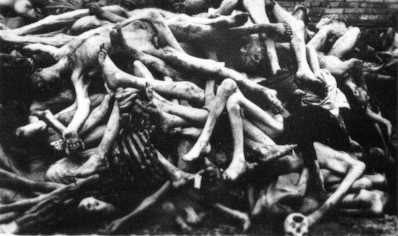 "The Prophet Jeremiah... paints a vivid picture of the human agents God intended to use to bring the Jewish people back to Israel:

