Showing posts with label impeach. Show all posts

Tuesday, May 8, 2007

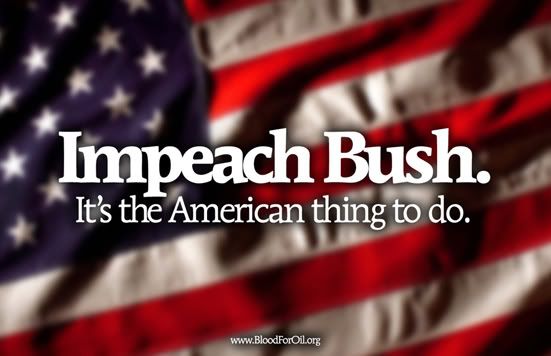
Impeach Bush Vol. 3 - War Profiteers and Democrat Pussies


Music by Eminem, Song: Business. WA... Music by Eminem, Song: Business. WARNING - This video contains graphic war photos, expletive language, and violent content which some may find gruesome and offensive.

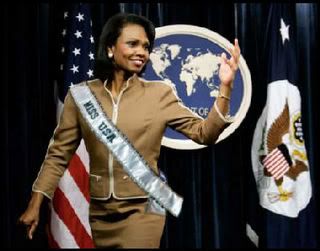
Condoleeza Rice's transformational diplomacy doctrine is nothing more than an excuse for us to go to war with every country on the planet and pour billions of dollars into the pockets of the financiers that put Bush into office: specifically, the war profiteers such as Halliburton and Blackwater and the major oil companies who want to take the oil from the country once its invaded. The Bush administration personally has no financial incentive whatsoever to impose any diplomatic doctrines.

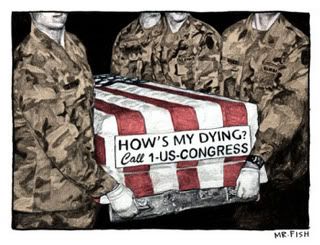
Sending our soldiers to fight an engineered war for oil company and defense contractors to make money is pure treason, abuse of power, crime against humanity and is rock solid ground for impeachment. It is the reason that the impeachment process was put into place.

Meanwhile, the Democrats in office refuse to impeach Bush and Cheney because Nancy Pelosi won't put it on the table.

April 09, 2007

Monday, April 30, 2007

There is possibility of impeaching Bush: Murtha

There is possibility of impeaching Bush: lawmaker

Washington, April 30 (PTI): A top US lawmaker and a leading war critic has held out the possibility of the Democrats impeaching the President George W Bush stressing that this is perhaps one way of influencing a President.

The Democrat in the House of Representatives John Murtha, a top conservative turned critic of the Iraq war, has said that if the President vetoes the current spending legislation as he has promised to the Democrats will send him one more and this would perhaps take the route of Democrats insisting on a two month funding first before looking at a year's timetable.

"... in the first place, we gave the president everything he asked for and then some. We gave him USD four billion more...If he vetoes this bill, he's cut off the money. But obviously, we're going to pass another bill. It's going to have some stringent requirements. I'd like to see two months.

I' d like to look at this again in two months... Fund it for two months instead of a year. And then look at it again," Murtha said on CBS' Face The Nation programme.

Murtha stressed that the White House has not been in a compromising mood and that Congress has done everything it can to accomodate the wishes of the White House.

"But the White House has said no to everything. They say we're willing to compromise, and then we don't get any compromise. We've compromised on waivers for the requirements for the troops, which is their own requirements, and also goals instead of requirements for the benchmarks. So, we've already compromised," the law maker said.

"And we need to make this president understand, Mr. President, the public has spoken. There's three ways or four ways to influence a president. One is popular opinion, the election, third is impeachment and fourth is, and fourth is the purse," Murtha remarked.

Pressed on the issue the Congressman merely replied "... what I'm saying, there's four ways to influence a president... And one of them's impeachment".

"...I'm just saying that's one way to influence a president. The other way is through the purse. And the purse is controlled by the Congress, who's elected the by the public. In the last election, the public said, we want the Democrats in control" he said.

For its part the administration sent out Secretary of State Condoleezza Rice on the Sunday Talk Shows Circuit. She put out the standard opposition to the Congressional legislation.

"The president has said he will not accept anything that constitutes a timetable for American withdrawal," Rice said on ABC's This Week.

"To begin now to tie our own hands and to say we must do this if they don't do that doesn't allow us the flexibility and creativity that we need to move this forward," she said.

Tuesday, April 17, 2007

Impeach Bush, or get out of the way

Reformer.com

Friday, April 13

There will be a time when future generations will look at us and wonder why President Bush and Vice President Cheney were not removed from office.
They will look at us and question why, when confronted by the most corrupt and incompetent administration ever witnessed in the United States, nothing was done to stop Bush and Cheney.

They will look at the craven behavior of the Democrats, too afraid to take on the president when it mattered. They will look at the Republicans, so intoxicated with power that they backed their president to the hilt, even as he ran this country off a cliff. They will look at the press, and how too many journalists were cowed into parroting the words of the administration. They will look at the voters, and shake their heads in disbelief that a number of Americans voted for all this -- the electoral equivalent of the chickens voting Colonel Sanders president.

And they will look at Vermont, and how a bottom-up impeachment effort with broad support ran into a brick wall of indifference in Montpelier as well as Washington.

History will not look kindly on House Speaker Gaye Symington for her insistence that her chamber must focus on "important matters" and that the House "does not have the time" to deal with impeachment.

History will not look kindly on Senate President Pro Tem Peter Shumlin, who has talked loudly about impeaching Bush and Cheney, but won't pursue the issue as long Symington says no.

Even though an impeachment resolution, like any other Vermont law, can start in either chamber, Shumlin is using decorum and the "we don't have time" argument as an excuse to duck this important issue.

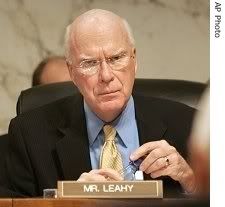
History will not look kindly on Sen. Bernard Sanders, and his successor in the House, Peter Welch, as well as Sen. Patrick Leahy, for treating impeachment as if it were a barrel of toxic waste. Short-term political considerations apparently are more important than the Constitution, which they took an oath to uphold and defend.

Nearly 40 towns voted for impeachment at their town meetings this year. There is little support for Bush, Cheney and the war in Iraq that they lied us into. The list of the administration's failures at home and abroad is long and embarrassing. Yet Symington, Shumlin, Welch, Sanders and Leahy feel no sense of urgency to hold Bush and Cheney accountable.

We believe this is unacceptable and that both the Vermont Legislature and Congress are shirking their responsibilities. There is time to deal with impeachment and we believe nothing is more important.

When the story of our time is written by future historians, there will be but one question asked: When confronted with the malevolence and mendacity of the Bush administration, how did the people in positions to do something about it react?

Does Vermont want to go down in the history books as standing up to the worst president ever? We, the people of Vermont, have the chance to affect the outcome of this story. We must seize this opportunity.

Monday, April 9, 2007

URGENT national ACTION needed for Hawaii SCR 83 requesting impeachment

Submitted by Matthew Lopresti on April 6, 2007 - 6:10pm.

Aloha everyone,

I live way out in Honolulu and I have been fortunate enough to suggest and help draft for the Hawaii State Senate, Senate Concurrent Resolution 83, requesting Congress to commence impeachment proceedings against the President and the Vice President of the United States.

The deadline for this resolution to make it through the Hawaii State Judiciary and Labor Committee is Friday the 13th. Senator Clayton Hee is the chair and he decides whether or not it will be heard. He has waffled a bit on this and is very clearly seeking a great deal of attention to be paid to this if he is going to hear it. Hence my desperately late letter to you to ask people on your list serve to sign a petition, call, or write letters to Senator Hee, the Vice-Chair Senator Kokubun and the other committee members before this thing dies in committee! It might actually work here in one of the most liberal states in the Union, but its got to get through this committee first!

It does not matter that you and those you might be able to get to help call or write are not Hawaii residents, this Senator (and frankly this issue) needs national attention for action to take place.

Below is a proposed draft letter. PLEASE send this to Sen. Hee at senhee@Capitol.hawaii.gov or call his office at 808-586-7330 and say something in favor of him hearing this resolution. The local media wants to do a story on it too, but only if Sen. Hee agrees to hear the resolution. But unless people know about the resolution, they wont contact him to ask him to hear it...

Dear Senator Hee,

If a state legislature forwards a bill or a resolution on impeachment to the Congress of the United States, then the Congress must act. I urge you to hear Senate Concurrent Resolution 83 before the JDL committee. This resolution reflects the sentiment of a growing number of people in the State of Hawaii and in the nation at large, and the people and the sentiment of the people should be heard.

Considering this resolution before your committee can only strengthen our democracy by fostering a much broader national debate on the importance of holding he executive branch of our federal government accountable for its actions and will send a strong message to future Presidents and Vice-Presidents of the United States that they are not above the law. Please do not shy away from making the State of Hawaii politically relevant on the national level and hear SCR 83 before your committee before it’s too late!

Matthew Lopresti

Honolulu, HI

Saturday, April 7, 2007

Liberals push to impeach Bush

By Christina Bellantoni

THE WASHINGTON TIMES
Published April 6, 2007

Congressional Democrats say their constituents are clamoring for something even the most liberal lawmakers promise they won't pursue: President Bush's impeachment.

"I get one call after another saying, 'Impeach the president,' " said Rep. John P. Murtha, Pennsylvania Democrat and one of Mr. Bush's most relentless critics on the Iraq war.

"It's a simple process but a very divisive thing," Mr. Murtha said. "You've got to measure what it's going to do to the country, and at this point I don't see that happening. Instead we'll fight it out on the issues."

Some members speculated that the Democratic takeover of Congress and passage of Iraq withdrawal timetables in both the House and Senate have emboldened liberals across the country who want to see the president embarrassed during his final 21 months in office.
"The timing is all wrong," said Rep. Jerrold Nadler, New York Democrat. "If this were the first two years of his administration I would advocate impeachment. A lot of people at home say impeachment, and I'm sure he committed a lot of impeachable offenses, but think about it practically."

Mr. Nadler said impeachment hearings would be pointless and would only distract the country from the presidential election next year.

Democrats say their constituents also want them to target such administration figures as Vice President Dick Cheney, Attorney General Alberto R. Gonzales and Karl Rove, Mr. Bush's chief political adviser.

Rep. Diane Watson, California Democrat, said she hears calls for impeachment from every crowd.

"They say, 'Democrats: Do something. Get Cheney, Karl Rove, Alberto Gonzales.' They are saying impeachment. I am hearing that more and more and more," said Ms. Watson.
She said she has been receiving "nothing but kudos" for being one of just a few Democrats to vote against the party's Iraq spending bill on the premise that Congress should not keep funding the war.

Although she said she would support impeachment, she speculated that it is "not a strategy our new leadership would want to start with."

House Speaker Nancy Pelosi, California Democrat, pledged last year not to seek impeachment hearings if her party won control of Congress.

"Democrats are not about impeachment," Mrs. Pelosi said on NBC's "Meet the Press" in May. "Democrats are about bringing the country together."

An online "Impeach Bush" movement has received 861,000 votes, and the president's approval ratings hover below 30 percent nationally, according to polls.

Few of those surveys ask about impeachment, and a Los Angeles Times/Bloomberg Poll conducted in January showed less than 1 percent think a Bush impeachment should be a "top priority" for Congress.

A December 2005 Rasmussen Reports poll found that 32 percent of Americans think Mr. Bush should be impeached.

Several congressional Democrats told The Washington Times in an informal survey last week that they think impeachment is the wrong strategy.

"The Republicans showed their true colors when they impeached President Clinton," said Sen. Tom Harkin, Iowa Democrat.

He called the Whitewater investigation of the Clintons' Arkansas real estate dealings a "witch hunt" that wasted thousands of hours and "so much of the public's money."

"We Democrats have to show the people of this country that we're better than that," he said.
Sen. Russ Feingold, Wisconsin Democrat, last year authored a resolution calling on Congress to censure Mr. Bush for his warrantless wiretapping program. He told The Times that he is unlikely to reintroduce the bill or push for impeachment hearings.

"The election in many ways was a censure of the president and his performance in a number of these areas," Mr. Feingold said, noting that voters want Congress to tackle Iraq policy, health care and government accountability.

"Impeachment might make it look like we don't care about the other stuff," he said. "I don't think it serves the American people well, even though if there ever was a president that deserved to be removed, this is probably the guy."

Sen. John Kerry, Massachusetts Democrat, backed censure last year but said the focus now should be on oversight. "It's a chance to change the administration's behavior, not just to express disappointment," said Kerry spokeswoman Amy Brundage.

Rep. John Conyers Jr., Michigan Democrat and Judiciary Committee chairman, has backed off his impeachment calls and has not reintroduced his bills to censure Mr. Bush and Mr. Cheney.
A Conyers spokesman said the chairman has "no plans to resubmit" the bills, but declined further comment. Mr. Conyers' campaign Web site once implored visitors to "demand an investigation of administration abuses of power" and consider impeachment.

Mr. Conyers is still no fan of the Bush administration, as is evident on the site now, but his calls for impeachment have been removed.

Dozens of comments posted as recently as yesterday urge Mr. Conyers to seek impeachment.
"At what point do the Democrats in Congress agree with the American people that impeachment is viable and warranted?" read one comment.

Mark A. Jeror Sr. echoed that thought and commented on the Conyers site, "Sooner or later, the biggest issue won't be the Iraq war. ... It will be the fact that the Democrats have all the evidence they need to impeach Bush, and they are too afraid to do anything."

Rep. Dennis J. Kucinich, Ohio Democrat, said he thinks impeachment has merit. In a video on his 2008 presidential campaign site, Mr. Kucinich tells supporters: "We need to reevaluate the direction of this administration by looking at its conduct in office, by determining whether it has faithfully followed the laws of our nation. I'm prepared to
start that process."

Wednesday, March 21, 2007

Gonzales’s Fall, Bush’s Impeachment?

by James Bovard

Alberto Gonzales will soon be ejected from the Justice Department. Bush’s Attorney General has been caught in too many flagrant lies and abuses. The real question is whether Gonzo’s fall will signal the beginning of the end of the Bush reign.

Gonzo’s fall will be widely seen as a result of shenanigans and deceits involving the firing of 8 U.S. attorneys. The White House and top Justice Department officials seem to have colluded to deep-six attorneys who threatened Republican congressmen or appointees. The pending congressional testimony by Gonzo’s former chief of staff, Kyle Sampson, could create new problems for the White House.

But Bush is probably in much greater danger from the derailing a Justice Department investigation into Gonzo’s possibly criminality. Murray Waas, one of the best investigative journalists in DC, has a new piece on Attorney General Alberto Gonzales’s role in derailing a Justice Department investigation of his own possible criminality. Waas reported last Thursday at the National Journal web page.

Shortly before Attorney General Alberto Gonzales advised President Bush last year on whether to shut down a Justice Department inquiry regarding the administration’s warrantless domestic eavesdropping program, Gonzales learned that his own conduct would likely be a focus of the investigation, according to government records and interviews. Bush personally intervened to sideline the Justice Department probe in April 2006 by taking the unusual step of denying investigators the security clearances necessary for their work.

The Justice Department investigation could have exposed on the role of Bush and his top advisors in masterminding a program that some of the federal government’s top experts considered to be clearly illegal. Waas noted, "According to accounts that Gonzales and his aides gave to others in the department, Gonzales did advise Bush on the issue of the OPR inquiry."

Thus, Bush may have knowingly derailed an investigation that could have exposed his own criminal conduct. This may be even too brazen an abuse of power for many Republicans to stomach.

It is ironic that Gonzo will probably get sunk for his role in firing and lying about U.S. attorneys, considering that he had so many worse offenses. It was only a few months ago that Gonzales notified a shocked Senate Judiciary Committee that the Constitution did not guarantee habeas corpus, despite explicit language to the contrary.

In early 2002, Gonzo wrote a memo to Bush effectively urging him to scorn prohibitions in federal law and in the Geneva Convention banning torture. Gonzales, then serving as White House counsel, revealed: "The nature of the new war places a high premium on other factors, such as the ability to quickly obtain information from captured terrorists and their sponsors in order to avoid further atrocities against American civilians. In my judgment, this new paradigm renders obsolete Geneva’s strict limitations on questioning of enemy prisoners and renders quaint some of its provisions."

On June 22, 2004, Gonzales publicly declared that Bush possessed "commander-in-chief override power" over the Constitution and the federal law in the conflict with Al Qaeda. This "override power" is something that exists in the minds of conservative absolutists, not the Constitution.

In January 2005, after Bush nominated him to replace John Ashcroft as Attorney General, Gonzales testified before the Senate Judiciary Committee. Sen. Richard Durbin (D-Ill.) asked what, in most hearings, would have been considered a slow-pitch question: "Do you believe there are circumstances where... the War Crimes Act would not apply to U.S. personnel?"

Gonzales responded as if he had been asked to solve the riddle of the Sphinx: "Senator, I don’t believe that that would be the case. But I would like the opportunity – I know I want to be very candid with you and obviously thorough in my response to that question. It is sort of a legal conclusion, and I would like to have the opportunity to get back to you on that."

Durbin later asked: "Can U.S. personnel legally engage in torture under any circumstances?" Gonzales again struggled: "I don’t believe so, but I’d want to get back to you on that and make sure I don’t provide a misleading answer." Torture was obviously going to be the hottest topic of the confirmation hearing, and yet Gonzales repeatedly sounded as if it was a novel topic that he would need to visit a law library to learn about before forming an opinion.

Gonzales will be difficult to replace – in more ways that one. The Senate Democrats will probably not confirm some obvious hatchet man. Bush has "benefitted" from two Attorney Generals who were profoundly dishonest and demagogic. No matter what the Bush administration did, they could be counted on to rubberstamp it as legal – or "close enough for government work" legal.

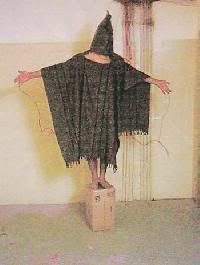
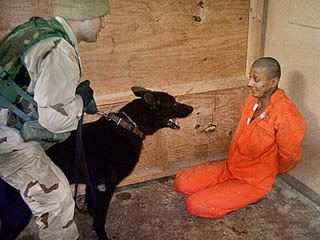
If the next Attorney General is halfway honest and opens the files of what has been done since 2001, even damn moderates will be shocked. There are bombshells waiting to detonate on the torture scandal, on Iraq, and other dishonest and illegal gross abuses. For instance, the ACLU released a CIA letter in November confirming the existence of "a directive signed by President Bush granting the CIA the authority to set up detention facilities outside the United States and outlining interrogation methods that may be used against detainees." This confirms a May 2004 email from the FBI’s "On Scene Commander" in Baghdad regarding a secret "presidential Executive Order" permitting extreme interrogation techniques considered illegal by the FBI including "sensory deprivation through the use of hoods," stress positions, and military dogs.

The Justice Department has so far blocked release of Bush’s secret order. If this Bush order becomes public, it may be akin to a 1972 memo from Richard Nixon specifying the exact methods of lock-picking the Watergate burglars should use. Bush’s involvement in the torture scandal may be far deeper than Nixon’s involvement in Watergate.

The Bush administration has survived because it has succeeded in keeping the lid on so many scandals. Any change in top personnel raises the risks of lids slipping. New appointees will not want to put their heads on the chopping block to cover up crimes that occurred before they got the corner office.

Democratic subpoenas are beginning to darken the D.C. sky like the English arrows at Agincourt. The subpoenas and scandals generate congressional testimony which spur the number of political appointees who could be indicted for perjury. The scandals are accelerating while support for the Bush administration seems to be collapsing.

At best, Bush may need to award more Medals of Freedom this year than ever before. At worst, he may need to resurrect Gerald Ford and his all-inclusive "from the first day to the last day" pardon for himself and his nearest, dearest co-conspirators.

March 20, 2007

James Bovard [send him mail] is the author of the just-released Attention Deficit Democracy, The Bush Betrayal, and Terrorism & Tyranny: Trampling Freedom, Justice, and Peace to Rid the World of Evil. He serves as a policy advisor for The Future of Freedom Foundation. Visit his website.

Copyright © 2007 LewRockwell.com

Friday, March 16, 2007

A Curious Sight on Capitol Hill: “Impeach Bush Now” Seen at CIA Leak Hearings

March 16, 2007, 11:39 am

***

Also somehow finding her way into camera range on the CNN telecast of Ms. Plame’s opening statement was a spectator with a somewhat terser opinion who was anything but covert:

spectator with tee shirtFrom the CNN telecast.

Though hard to capture in a single still image, it was pretty obvious in a minute or two’s viewing of the telecast what the shirt said in full: “Impeach Bush Now.”

After Ms. Wilson’s opening remarks and a question or two from congressmen on the committee, CNN broke away for commercials, and when the live coverage resumed, the woman in pink was nowhere in sight.

UPDATE

As several commenters have noted, the T-shirt wearer has intermittently reappeared on camera several times as television coverage of the hearing continued.

***

Saturday, March 10, 2007

Cheney's still dangerous

ROBERT KUTTNER

ONE BUMPER STICKER proposes: Impeach Cheney First.

Vice President Dick Cheney has now suffered back-to-back humiliations, with the conviction of his former chief of staff, I. Lewis Libby, and the wresting of key foreign policy decisions by Secretary of State Condoleezza Rice. But if anything, he is even more dangerous wounded.

The Bush administration keeps handing the opposition party loaded guns, the latest being the clumsy, politically motivated firings of eight US attorneys, a rare oasis of professionalism. These prosecutors are appointed by the president, but, unlike ordinary presidential appointees, they are not normally removed except for cause. In every case, the purpose seems to have been either to punish a prosecutor who did not capitulate to political pressure or to open up a slot for up-and-coming politicians. All this will now be laid bare in congressional investigations.

In another new case of lawlessness, the Justice Department's own inspector general issued a withering report on how the FBI has issued thousands of "administrative" subpoenas, fishing for information without the knowledge of the target. These are permitted under the Patriot Act, subject to narrow guidelines and special "exigencies," but the FBI has not been following its own internal rules.

With Democrats now in the congressional majority, the administration has lately been running on two tracks. On one track, grown-ups seem to have regained a measure of control. Rice was able to negotiate a long-delayed deal with the North Koreans to limit that nation's nuclear ambitions in exchange for the beginning of normalized relations. The deal has been available for six years. Rice was able to win its approval only by keeping Cheney out of the loop and requesting National Security Adviser Stephen Hadley to take the agreement directly to President Bush.

This weekend's regional diplomatic conference on Iraq, with representatives of the Iranian government sitting with US envoys, also represents a victory of pragmatists over extremists. The US line, dictated by Cheney and former defense secretary Donald Rumsfeld, had been that we can't talk directly to Iranians as long as they are pursuing nuclear weapons. That strategy had produced a stalemate, and US threats to bomb Iran -- which mainly frightened the Europeans and our few remaining Middle East allies. Bush has pulled back from that course, and is now willing to try direct diplomacy -- another setback for Cheney.

Yet, at the same time, the contempt for law continues, such as the firing of US attorneys. And Cheney may be down but he is far from out.

--MORE--

Thursday, March 8, 2007

McGovern: Cheney must go ; Bush worse than Nixon, calls for impeachment

McGovern: Cheney must go

Says Libby's conviction points to vice president's involvement in CIA leak
By John Nichols

George McGovern has a word for Vice President Dick Cheney: "Resign."

Responding to Tuesday's conviction of Cheney's former chief-of-staff, I. Lewis "Scooter" Libby, on charges of obstruction of justice, perjury and lying to the FBI - after a trial that revealed Cheney's intimate involvement with a scheme to discredit a critic of the administration's war policies - the former congressman, senator and presidential candidate said it was time for the vice president to go.

"What we have learned about how he has conducted himself leaves no doubt that he should be out of office," McGovern says of Cheney. "If he had any respect for the Constitution or the country, he would resign."

And if Cheney does not take the liberal Democrat's counsel?

"There is no question in my mind that Cheney has committed impeachable offenses. So has George Bush," argues McGovern. "Bush is much more impeachable than Richard Nixon was. That's been clear for some time. There does not seem to be much sentiment for impeachment in Congress now, but around the country people are fed up with this administration."

At age 84, McGovern has attained the elder statesman status that is afforded politicians who held or sought the presidency. He enjoys the respect of fellow Democrats and more than a few Republicans for being, like former Arizona Sen. Barry Goldwater, a straight-talking man of deep commitment who may have lost one presidential election but won the battle for a place of honor in the nation's history texts.

McGovern testifies before congressional caucuses about how to end the war in Iraq, delivers distinguished lectures, travels widely to discuss his well-received books, defends school lunch programs with a former Republican colleague in the Senate, Bob Dole, and campaigns tirelessly - in the memory of his late daughter, Terry - to enlighten the nation about the need to better address the scourges of alcoholism.

It is in that final capacity that McGovern will return tonight to Madison, a city that has always greeted him kindly, to headline a soldout fundraising benefit at the Inn on the Park for the Teresa McGovern Center, a substance abuse treatment facility that operates under the umbrella of Tellurian UCAN. Money raised at what promises to be a packed event will be used to expand services at the McGovern Center, as well as to help pay for treatment for patients who cannot cover their own expenses.

McGovern will speak about the need to recognize alcoholism as a threat not just to individuals but society. He will recall the poignant story of his daughter's struggle with the disease, which ended in her death at age 45 in Madison in 1994. That's the personal side of this journey, his first to Madison since the death of his wife, Eleanor, in January.

But as he mingles with Madisonians, who were among the most ardent and faithful supporters of his 1972 campaign for the presidency, talk of politics will never be far from the forefront. And, even if he may be an elder statesman, McGovern will not mince words about the current occupants of the White House.

"I think this is the most lawless administration we've ever had," he says of the Bush-Cheney team. That's a strong statement coming from a man who tangled in 1972 with Nixon, and then saw Nixon's presidency destroyed by the Watergate scandals. But McGovern says there is no comparison.

"I'd far rather have Nixon in the White House than these two fellows that we've got now," said the former three-term senator from South Dakota. "Nixon did some horrible things, which led to the effort to impeach him. But he simply was not as bad as Bush. On just about every level I can think of, Bush's actions are more impeachable than were those of Nixon."

Of particular concern to McGovern is the war in Iraq, which he has steadfastly opposed.

"The war was begun in clear violation of the Constitution," McGovern says. "There was no declaration of war by the Congress. Secondly, it's a flagrant violation of international law: Iraq was not threatening the United States in any way. Yet, the United States went after Iraq. The president and vice president got away with it, at least initially, because they were willing to exploit the emotional power of the 9/11 attack to achieve their goal of getting us into a war in the Middle East."

McGovern, a decorated World War II veteran, approves of U.S. Sen. Russ Feingold's suggestion that Congress should look into employing the power of the purse to force the administration to begin withdrawing troops from Iraq. "Frankly," the former senator says, "I would support anything that would get our troops out of there."

During his tenure in the Senate, McGovern worked with a Republican, Oregon Sen. Mark Hatfield, to try and pass legislation to force the end of the Vietnam War. He also supported efforts to "chain the dogs of war," which were spearheaded by his liberal Democratic colleague, Missouri Sen. Thomas Eagleton, a leading proponent of the 1973 War Powers Act.

Eagleton, who died this week at age 77, was briefly McGovern's running mate in the 1972 race. But the revelation that Eagleton had checked himself into the hospital three times for physical and nervous exhaustion led, after some internal turmoil, to a decision by McGovern to drop the Missouri senator from the ticket.

That decision, McGovern now says, was "absolutely a mistake." He now believes that the controversy would have quickly blown over. He also says that dropping Eagleton from the ticket did more harm than good.

McGovern is not afraid to delve into the historical record, even when it involves incidents related to his own career in public life. "We ought to learn from history," says the former senator, who notes that he earned a Ph.D. in history from Northwestern University "thanks to the G.I. Bill."

"I think that the greatest deficiency in our politics these days is the fact that our leaders fail, by and large, to remember our history," says McGovern.

A close second is the caution of the current political class. McGovern calls the Congress "lily-livered" for failing to check and balance Bush and Cheney on the war.

McGovern does not suffer from the condition. He's as bold now as ever, and there is a sense of urgency about the man who could easily relax and accept the honors accorded an senior statesman of his own party and the country.

"I feel an obligation to speak up when I see these flagrant things happen," says McGovern. "I can't be silent when President Bush and Vice President Cheney choose to disregard the Constitution. Maybe if there were other people in the White House, I could slow down a little. But I can't do that as long as this administration is in charge."

Speaking of which: Is there a Democratic contender for the 2008 Democratic presidential nomination that McGovern likes? He's making no endorsements at this stage. But, like a lot of Democrats, McGovern says, "Right now, (Illinois Sen.) Barack Obama looks awfully good."

Then again, a typically frank McGovern admits, "I've gotten to the point where I think just about anyone would be better than Bush."

Published: March 7, 2007

Wednesday, February 21, 2007

GQ: IMPEACH CHENEY

THE PEOPLE V. RICHARD CHENEY

Resolved, that Richard B. Cheney, vice president of the United States, should be impeached for high crimes and misdemeanors and that these articles of impeachment be submitted to the American people

GQ, March 2007

When the Founding Fathers crafted the U.S. Constitution, they wanted to be sure that the president, vice president, and other ranking officials could be evicted more easily than the British monarchy. To ensure that the process would be swift and certain, they made it simple: Only two conditions must be met. First, a majority of the House of Representatives must agree on a set of charges; then, two-thirds of the Senate must agree to convict. After that, there is no legal wrangling, no appeal to a higher authority, no reversal on technical grounds. There is not even a limit on what the charges may be. As the Constitution describes it, the cause may be “treason, bribery, and other high crimes and misdemeanors,” but even these were left deliberately vague; as Gerald Ford once pointed out while still serving in the House of Representatives, the only real definition of an “impeachable offense” is “whatever a majority of the House of Representatives considers it to be at a given moment in history.”

click here for more >

Monday, February 19, 2007

NM Senate Rules Committee Passes Bush-Cheney Impeachment Resolution

Friday, February 16, 2007

BREAKING

Senate Joint Resolution 5, the legislation urging impeachment of Bush and Cheney, was passed this morning in the NM Senate Rules Committee with only Democrats present, all of whom voted for the resolution! The meeting room was packed to the gills, with a huge crowd winding down the hallways outside the hearing. Several hours were spent listening to citizens speak on behalf of the bill, until Committee members were forced to move on to other business.

I find it appalling that every Republican member of the Committee refused to attend and listen to what our citizens have to say about what may well be the most important issues of our era -- the Iraq occupation and the refusal of the President and Vice President to obey the law. I guess they couldn't bear to hear ordinary people speaking truth to power. I guess they believe they only represent the Republicans in their districts, not all the citizens.

Now's the time to THANK THESE DEM SENATORS FOR VOTING FOR THE IMPEACHMENT RESOLUTION:

Senator Linda M. Lopez, Chair:
Lopez_2
Senator John Grubesic, Vice Chair; one of bill's sponsors:
Grubesic
Senator Ben D. Altamirano:
Altamirano
Senator Dede Feldman:
Feldman_1
Senator Cisco McSorley:
Mcsorley

And don't forget the resolution's other ORIGINAL SPONSOR, Senator Gerald Ortiz y Pino:

Ortizypino

Job well done also goes out to Leland Lehrman of Mother Media and ALL the citizen lobbyists, callers and emailers! We have much more to do, but this is a very hopeful start. The resolution has to pass through the Senate Public Affairs and Senate Judiciary Committees before it can be debated on the Senate Floor, but I think even getting this far in Bush's America is a real accomplishment and an act of courage by the legislators involved.

The first person to testify at the hearing was progressive activist and retired District Judge Anne Kass of Albuquerque. She had this to say in her eloquent prepared statement, representing what so many of us are feeling these days:

One of the sources of America's moral authority in the world is its professed commitment to an ideal known as the Rule of Law.

The Rule of Law includes the principle that no man is above the law.

The Rule of Law also includes the principle that crimes must be prosecuted.

If the Rule of Law is to be anything more than an empty slogan, then all American citizens, but especially legislative bodies such as this, where both laws and the consequences for breaking laws are established, must demand, when there is compelling evidence that criminal acts have been committed, that there be a formal, official investigation and prosecution.

Confidence that crimes will be prosecuted is essential to the existence of civilized society. If the New Mexico Legislature hopes to retain its moral authority to continue to write laws and set consequences when the laws are broken -- if, for example, the New Mexico Legislature wishes to be able to speak with moral authority when it declares that anyone who drives while intoxicated must be held accountable and experience severe consequences, then the New Mexico Legislature must insist that there be a formal and official investigation and prosecution to test the compelling evidence that exists that Mr. Bush and Mr. Cheney have committed grave crimes ... crimes which have resulted in the deaths of thousands of American soldiers and hundreds of thousands of Iraqi people.

That there is compelling evidence of crimes having been committed is unquestionable. The evidence that Mr. Bush and Mr. Cheney lied about the existence of weapons of mass destruction as an excuse to take our nation to war is overwhelming. What greater crime could there be than initiating an unjustified, unnecessary war? AND, there is compelling evidence of still other serious crimes.

The United States House of Representatives has to date failed to meet its duty to enforce the principle that crimes must be prosecuted. Its failure is a source of shame, and if it persists, it will lose its moral authority to call for, or even speak to, law and order, let alone accountability, regarding it's responsibilities as a part of the governing body of this nation. It is our hope that a nudge from the New Mexico Legislature, making the statement that it takes its duties to honor and uphold the Rule of Law seriously, and leading by example, will remind the United States House of Representatives that it is responsible, first and foremost, to the people of the United States of America.

That said, let me add that we-the-people are becoming more and more frantic about Congress's failure to stop George W. Bush from doing still more harm to our country. Mr. Bush appears to have no understanding of the concept of checks and balances, of the meaning of the word democracy, or of the principle that in America the government governs only with the consent of the governed. He has made it clear that he intends to ignore both we-the-people and Congress with respect to escalating the occupation of Iraq. It sounds more and more that he also intends to attack Iran, never mind that a clear majority of the citizens of this country oppose it. Congress must act, but it looks to be almost paralyzed. The New Mexico Legislature must show that it is not paralyzed and in so doing help the United States House of Representatives regain its own understanding of the concept of checks and balances, of the meaning of the word democracy, and of the principle of consent of the governed. --statement of Anne Kass, Albuquerque, NM, testifying at February 16, 2007 NM Senate Rules Committee hearing at the Santa Fe Roundhouse on impeachment resolution

*************
To read our archive of posts on the NM impeachment effort, click here.

February 16, 2007 at 11:36 AM in Impeachment, NM Legislature 2007 | Permalink

Tuesday, January 23, 2007

How We Can End the Occupation of Iraq

By David Swanson

President George Bush deflects criticism of his war plans by claiming that his critics have no plans of their own. Vice President Dick Cheney, meanwhile, asserts that matters of war must be left in the hands of the President (presumably no matter how brilliant your alternative plan).

Congressman Dennis Kucinich (D., Ohio) has had an exit plan on his website for over three years. Congresswoman Lynn Woolsey (D., Calif.) has held several hearings discussing exit plans over the past year and a half. Peace activists, including Tom Hayden, have published and promoted a variety of exit plans over the past couple of years, and have even gone so far as to meet and discuss them with members of the Iraqi Parliament.

More recently, former Senator George McGovern and William Polk have published a detailed exit plan, one that helped shape a bill introduced on January 17th by a dozen Democrats led by Woolsey. It's a comprehensive bill that lays out a plan to safely bring our troops home, end the war, reconstruct Iraq, and take care of our veterans for a change. The Woolsey bill is one of several new bills in Congress that would end the war. At least two others, sponsored by Congressmen Jim McGovern (D., Mass.) and Jerrold Nadler (D., New York) include, as does Woolsey's, a key component that shatters Cheney's vision of executive power: they cut off the funds for the war. Of course, they do so while providing for the safe return of our troops.

While the U.S. Constitution actually does not give to any branch of our government the authority to launch aggressive and endless wars against other countries, that beleaguered document does give the Congress the authority to declare war. When that authority is neglected by Congress or overrun by the White House, Congress can make use of another Constitutional power, the power of the purse. While the President might argue that he has the legal authority to continue or escalate a war once underway, even if opposed by Congress, he cannot do so if Congress denies him the necessary funding.

Of course, Congress must also provide the funding to begin a war or to do anything else whatsoever. Bob Woodward's "Plan of Attack" reports that in the summer of 2002 Bush took money appropriated by Congress for Afghanistan and other programs and, with no Congressional notification, used it to build airfields in Qatar and secretly begin a war on Iraq. According to Woodward, the amount was $700 million; the Congressional Research Service later found it was actually $2.5 billion.

Meanwhile, Bush was marketing his proposed (and secretly begun) war to Congress and the American public, making claims that have proven false in virtually every detail. Amazingly, four years later, Congress has yet to investigate this apparently fraudulent marketing campaign.

The Senate Select Committee on Intelligence and the so-called WMD Commission have both done investigations and produced reports, but both were barred from addressing the central question of whether the Bush administration had presented the intelligence honestly.

There are some Democrats, newly in power, proposing to investigate this war, just as there are some proposing to cut off the funding and end it. But both groups are currently small minorities in Congress, even if they speak for the majority of Americans who oppose this war and want the truth brought to light. The only reason that even these moral leaders in Congress have begun to act on this issue is the intensity of the public pressure they are feeling. We are planning to dramatically increase that pressure on every member of the House and Senate on January 27th and 29th.

On February 15, 2003, we organized with our allies around the world the single largest day of protest in world history, a protest aimed at preventing this war before it began. While we failed to influence President Bush or the Republican Congress, our position won out in nations around the world which refused to take part in the war, and in the United Nations which refused to sanction it. Had our government been more democratic, more open to the concerns of its citizens, this war would not have happened.

We now have a Congress controlled by Democrats. Will they be more responsive than the Republicans? There is one way to find out. On January 27th we are organizing a massive march in Washington, D.C., followed by a day of organized citizen lobbying for peace on January 29th. We'll find out if the change of party we voted for in November changed something more than the names of committee chairs. Learn more at www.unitedforpeace.org

Tuesday, January 9, 2007

Surging Towards Bethlehem: How to Stop the Madness

By Bernard Weiner
Co-Editor, The Crisis Papers
January 9, 2007


...Things fall apart; the centre cannot hold;
Mere anarchy is loosed upon the world,
The blood-dimmed tide is loosed, and everywhere
The ceremony of innocence is drowned;
The best lack all conviction, while the worst
Are full of passionate intensity...

And what rough beast, its hour come round at last,
Slouches towards Bethlehem to be born?

W. B. Yeats, "The Second Coming"


In the Vietnam-War era, which was the crucible of activism for my generation, we had a devil of a time trying to get the Democratic Party to recognize the necessity for withdrawing our troops from that ill-advised, unwinnable war. With regard to Bush's misadventure in Iraq, it turns out not all that much has changed.

The midterm election and many polls since have clearly demonstrated that Americans recognize that Bush's Iraq policy is and has been a thoroughgoing disaster -- from taking us into war based on lies and deceptions to the way the Occupation has been totally mismanaged. Our troops are now caught in the middle of a brutal sectarian civil war. But the Democrats appear to be divided about how to proceed: give Bush one last chance to "win," whatever that may mean, or start pulling out our troops while we still can with at least a shred of dignity.

Given this situation, the time for politeness, for speaking around the truth, is gone. Civility yes, holding one's tongue, no.

Not while more and more young Americans are dying in Iraq, 3000 to date, with an estimated 25,000 maimed; not while up to 3000 innocent Iraqi civilians are being slaughtered every month; not while billions of dollars each month (half-a-trillion! total so far) are being siphoned from the U.S. treasury, and vital social programs, to pay for this moral monstrosity of a war.

And definitely not while CheneyBush are determined to send tens of thousands more U.S. troops into Iraq's civil-war hellhole.

The "surge" scenario is one written to satisfy the Administration's political goals, not one expected to change much on the ground in Iraq, which is why so many military leaders are opposed to it. Clearly, the "surge" is a public-relations, fig-leaf operation to cover Bush's embarrassing exposure of mendacity and fecklessness.


REPUBS ARE NERVOUS ABOUT BUSH'S "SURGE"

--MORE--

Monday, January 8, 2007

Don't allow impeachment of President Bush to fall off the table

Home News Tribune Online 01/8/07

Speaker of the House Nancy Pelosi, D-Calif., says "impeachment is off the table."


Former White House counsel to President Richard Nixon, John Dean, speculates that even if the House of Representatives were to draw up and pass articles of impeachment on President George W. Bush, the effort would lack enough votes in the Senate where the trial to convict would require a two-thirds majority vote.

My friends and colleagues say it's too late into Bush's term to impeach him.

Impossible. Implausible. Impractical.

My reply? Hold hearings, assemble evidence and pursue impeachment in earnest.

Impertinent? I don't think so, and neither does a growing number of American citizens, including Rep. John Conyers, D-Mich., who introduced House Resolution 635 back in December of 2005 calling on Congress to do just such a thing. It has roughly 30 co-sponsors and growing.

The resolution cites: "the Administration's intent to go to war before congressional authorization, manipulation of pre-war intelligence, encouraging and countenancing torture, retaliating against critics" as reasons to form a committee to investigate the President's behavior for evidence of "high crimes and misdemeanors."

Others have noted Bush's disgusting response, or nonresponse, to Hurricane Katrina and his illegal wiretaps as further grounds for impeachment. Several local resolutions have been passed around the country, notably in Vermont and San Francisco (Pelosi's home district) calling for impeachment.

These efforts look like more of a growing groundswell than a grinding to a halt.

One of the most interesting aspects of the Nixon impeachment process was that, at that outset, impeachment also seemed "off the table." But by late 1973, the flames of public indignation had been stoked by several months of Senate Watergate Committee hearings and Nixon's attempt to fire Special Prosecutor Archibald Cox. When the Supreme Court ordered the release of Nixon's tapes showing his attempt to cover up the break-in at the Watergate Hotel, Nixon resigned as near certain, bipartisan impeachment stared him in the face.

Former member of Congress Elizabeth Holtzman sat on the House Judiciary Committee during Nixon's impeachment proceedings. She's been a leading advocate of starting proceedings against Bush and recently published a book, "The Impeachment of George W. Bush." She noted that impeachment efforts must be nonpartisan to be successful, unlike the efforts against former Presidents Bill Clinton and Andrew Johnson.

Regarding Nixon's impeachment Holtzman wrote: "Then the American people spoke . . . and said, "That's it, enough is enough. We can't have a president who is above the law. . . . We are not a banana republic.' "

Excellent news anchor and reporter Amy Goodman of "Democracy Now" radio and TV broadcast recently wrote that former President Gerald Ford's pardoning of Nixon may not have been the completely healthy gesture for a nation that many, in retrospect, have judged it to be. She feels that an impeachment trial of Nixon may have driven home the point that no president is above the law to men like Donald Rumsfeld and Dick Cheney who became appointees of Ford's.

The rest of us have accountability in our personal, professional and public lives. Why shouldn't the president have the same? After the Clinton proceedings you can bet on one thing: No U.S. President will soon be putting mirrors on the ceiling of the Oval Office and hanging around after hours with a buxom staffer in a black beret.

And by the way, the Founding Fathers were correct: A monarchy was never a good idea. President Bush has yet to grasp that simple concept.

Memo to Pelosi: Impeachment is never off the table. It's a critical part of our Constitution — the one you've sworn to uphold.

Gene Racz covers Middlesex County government and is co-author of "Bury My Heart at Cooperstown" (Triumph Books, 2006). He can be reached at (732) 565-7306 or gracz@thnt.com.


Saturday, January 6, 2007

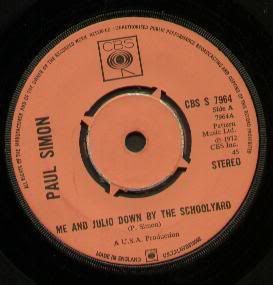
Me And Julio Down By The Schoolyard

Sat Jan 06, 2007 at 10:58:58 AM EST

By Ed Garcia
kestrel9000@gmail.com


The mama pajama rolled out of bed, and she ran to the police station

When the papa found out, he began to shout, and he started the investigation

It's against the law,

it was against the law

What the mama saw,


it was against the law.

The mama looked down and spit on the ground ev'ry time my name gets mentioned

The papa say "Oy, if I get that boy

I'm gonna stick him in the house of detention."

I'm on my way, I don't know where I'm goin',

I'm on my way, I'm takin' my time, but I don't know where.

Goodbye to Rosie, the Queen of Corona

See you, me and Julio down by the schoolyard

In a couple of days they come and take me away
But the press let the story leak

And when the radical priest come to get me released

We's all on the cover of Newsweek

Well, I'm on my way,

I don't know where I'm goin'

I'm on my way,

I'm takin' my time, but I don't know where

Goodbye to Rosie, the Queen of Corona

See you, me and Julio down by the schoolyard

Tags: Paul Simon, impeach, (All Tags)
Me And Julio Down By The Schoolyard | 0 comments | Post A Comment

Saturday, December 16, 2006

Refocusing the Impeachment Movement on Administration Officials Below the President and Vice-President

----
By JOHN W. DEAN
Why Not Have A Realistic Debate, with Charges that Could Actually Result in Convictions?
----
Friday, Dec. 15, 2006

There is a well-organized and growing movement to impeach President Bush and/or Vice President Cheney. On my bookshelf sit half a dozen books making the case for Bush's impeachment. I myself have no doubt that Bush has, in fact, committed impeachable offenses, and that for each Bush "high crime and misdemeanor," Cheney's culpability is ten or twenty times greater.

At the outset of the 2006 midterm election, Democratic Speaker-designate Nancy Pelosi, and Senator Majority Leader-designate Harry Reid, stated on behalf of the Democratic leadership that impeachment of Bush or Cheney would be off the table if they won control of Congress - as they have indeed done. But this position has angered many who want these men impeached.


"Impeachment is not optional. It's not something that Nancy Pelosi and Harry Reid can say is not on the table," Cindy Sheehan, who lost her soldier son in Iraq, said at a recent rally. "It is their duty as officers of the Constitution, who have sworn an oath to defend the Constitution, to carry out impeachment." Her anger is certainly understandable. Her relentless pursuit of this cause is highly commendable. But her energy and effort are misplaced, if not wasted.

Impeachment is a political process, and not only are the votes to remove either Bush or Cheney lacking, but it also would not be very good politics to do to them what was done to President Clinton.

There Is No Chance Either Bush or Cheney Will Be Removed From Office

The Republican Congress shamed itself when it impeached and tried President William Jefferson Clinton. It was a repeat of what an earlier Republican Congress had done to President Andrew Johnson, following the Civil War. Both proceedings were politics at their ugliest.

Democrats, when they undertook to impeach Richard Nixon, moved very slowly, building bipartisan support for the undertaking. Nixon, of course, resigned, when it became apparent that the House had the votes to impeach and the Senate had the votes to convict, with his removal supported by Democrats and Republicans, and conservatives and liberals alike.

Getting the necessary two-thirds supermajority in support of impeachment in today's Senate, which is virtually evenly-divided politically, is simply not possible. With forty-nine senators of the 110th Congress members in good standing with the Republican Party, and most of them rock-ribbed conservatives, even if the House produced evidence of Cheney personally water-boarding "Gitmo" detainees in the basement of his home at the Naval Observatory, with Bush looking on approvingly, there are more than thirty-three GOP Senators who still would not vote to convict. (Senate Republicans who have no problem with torture, or with removing the right to habeas corpus, and who refused to exercise any oversight whatsoever of Bush or Cheney, are hardly going to remove these men for actions in which they too are complicit.)

Pelosi and Reid have long understood this reality, and rather than do to Bush and/or Cheney what Republicans did to Clinton - impeach him in the House merely because they had the power to do so and they wanted to tarnish him, only to lose their battle decisively in the Senate - they are simply not going to play the same game. Politically, this is smart. Americans do not want another impeachment, particularly when Bush and Cheney will be out of office in January 2009.

Column continues below ↓

The drive to impeach Bush and Cheney should, however, refocus its effort and energy into another undertaking - one that not only might succeed, but if it did, it would greatly benefit the nation and the well-being of all Americans. Allow me to explain:

Realistically Refocusing the Impeachment Movement

The Constitution's Impeachment Clause applies to all "civil officers of the United States" - not to mention the president, vice president and federal judges. It is not clear who, precisely, is among those considered "civil officers," but the group certainly includes a president's cabinet and sub-cabinet, as well as the senior department officials and the White House staff (those who are issued commissions by the president and serve the President and Vice President).

Quite obviously, Bush and Cheney have not acted alone in committing "high crimes and misdemeanors." Take a hypothetical (and there are many): Strong arguments have been made that many members of the Bush Administration - not merely Bush and Cheney -- have engaged in war crimes. If war crimes are not "high crimes and misdemeanors," it is difficult to imagine what might be. Jordan Paust, a well-know expert on the laws of war and a professor at University of Houston Law Center, has written a number of scholarly essays that mince few words about the war crimes of Bush's subordinates. For example, many of their names are on the "torture memos."

Why impeach lower-level officials, rather than the "big enchilada," as Nixon used to say? There are multiple reasons.

Focusing On Bush Administration Officials

Lowering the aim of an impeachment effort to focus on those who have aided and abetted, or directly engaged in, the commission of high crimes and misdemeanors, would have all the positives, and none of the negatives, of going after Bush and Cheney. It would not be an effort to overturn the 2004 election, but rather to rid the government of those who have participated, along with Bush and Cheney, in abuses and misuses of power; indeed, many among them have actually encouraged Bush and Cheney to undertake the offensive activities.

Many of these men (and a few women) are young enough that it is very likely that they will return to other posts in future Republican Administrations, and based on their experience in the Bush/Cheney Administration, they can be expected to make the offensive conduct of this presidency the baseline for the next president they serve. Impeachment, however, would prevent that from happening.

It will be recalled that Article I, Section 3 of the Constitution states: "Judgment in Cases of Impeachment shall not extend further than to removal from Office, and disqualification to hold and enjoy any Office of honor, Trust or Profit under the United States." (Emphasis added.) After any civil officer has been impeached, under the rules of the Senate, it requires only a simple majority vote to add the disqualification from holding future office.

In addition, it is likely that the impeachment process of any official in a position below that of the president or vice president, would be treated the same as the impeachment of federal judges. The work is done in both the House and Senate by special subcommittees, so it does not consume the attention of the full bodies until the final votes.

The Belknap Precedent

Impeachment of Secretary of War William Belknap, in the aftermath of the Civil War, is the only precedent for using these proceedings against subordinate executive officers. Belknap was said to be involved in a kickback scheme involving military contracts. Just hours before the House was to vote to impeach him, Belknap resigned. Nonetheless, on March 2, 1876, the House impeached the former cabinet officer, and the five articles of impeachment were presented to the Senate.

The Senate trial lasted five months. (Today, such a trial would likely be handled by a trial committee of twelve senators, with a final debate and vote by the full Senate.) A central issue in the Belknap case was whether his resignation had terminated the jurisdiction of the Congress, and whether impeachment was still appropriate when his removal was no longer at issue. The Chairman of the House Judiciary Committee, Representative J. Proctor Knott, who was trying the case before the Senate, explained the controversy as follows:

"Was the only purpose of this disqualification simply to preserve the Government from the danger to be apprehended from the single convicted criminal?" Knott rhetorically asked. "Very far from it, sir. That in reality constituted but a very small part of the design. The great object, after all, was that his infamy might be rendered conspicuous, historic, eternal, in order to prevent the occurrence of like offenses in the future. The purpose was not simply to harass, to persecute, to wantonly degrade, or take vengeance upon a single individual; but it was that other officials through all time might profit by his punishment, might be warned by his political ostracism, by the ever-lasting stigma fixed upon his name by the most august tribunal on earth, to avoid the dangers upon which he wrecked, and withstand the temptations under which he fell; to teach them that if they should fall under like temptations they will fall, like Lucifer, never to rise again."

By two votes, Belknap escaped conviction in the Senate. Had he not resigned, however, there is little question he would have been found guilty, removed and disqualified. Belknap's proceedings are a clear precedent for impeaching and disqualifying "civil officers," but the case has not resolved the issue of merely disqualifying an official who has resigned from holding future office.

The House Judiciary Committee Should Undertake Appropriate Proceedings

Given the number of officials within the Bush Administration who may have been engaged in Constitutional high crimes or misdemeanors, and the nature of the impeachment process, there is no shortage of civil officers worthy of consideration. Where there is clear prima facie evidence of such constitutional misconduct, impeachment action should be commenced.

The way the process works is that a bill of impeachment is introduced in the House, where it is referred to the House Judiciary Committee. Acting as a grand jury, the Judiciary Committee then decides if there is sufficient evidence to warrant a full inquiry. If its members believe there is, they refer the matter to the full House for a vote, and if a majority of the House agrees, the matter is returned to the Judiciary Committee for fact-finding - compelling witnesses to testify, and compelling the production of documents. A simple majority of the Judiciary Committee can then send recommended articles of impeachment to the floor of the House, and a simple majority of the House can send them on to the Senate for trial. They are privileged, and the Senate must hold a trial.

If the movement to impeach Bush and Cheney, an outcome which simply is not going to happen, were to turn its attention to many of the other civil officers who have been involved in high crimes and misdemeanors, it might be very different. With strong prima facie evidence, the House Judiciary Committee at a minimum would have good reason to at least begin the process, and that in itself could send a powerful message.

While this is all possible in theory, it will only happen in practice if the Democrats have recovered from what CNN's Candy Crowley called their "wuss" phase, meaning, of course, their lack of backbone. The Republican Congress let Bush, Cheney & Company literally get away with murder and torture. We must all hope that the Democrats have recovered from their spinal problems, and that they will bring the invisible Congress back into play as what it is, and ought to act like: a constitutional co-equal. There would be no better way to do it than to commence impeachment proceedings against any on a potentially very long list of civil officers of the Bush Administration who should be removed from government, and disqualified from future opportunities to misuse government powers.


John W. Dean, a FindLaw columnist, is a former counsel to the President.

Saturday, December 9, 2006

Impeach His Ass, You Have No Choice


by BooMan,
admin@boomantribune.com


Sat Dec 9th, 2006 at 12:34:21 PM EST

I don't know how I can make it any clearer that we cannot merely censure the President. It isn't about revenge or the rule of law or lawbreaking. It's about the absolute necessity of removing him as commander in chief. I mean, let's get serious.

Democrats in Congress left a White House meeting with President Bush on Friday frustrated over what they perceived as his reluctance to embrace major recommendations from the bipartisan Iraq Study Group.

Democrats stressed to Bush in separate meetings the dire need for the administration to revamp its Iraq policy, but they don't expect him to embrace all 79 recommendations made this week by the panel, which was chaired by former Secretary of State James Baker and former Rep. Lee Hamilton, D-Ind.

Bush said he talked about "the need for a new way forward in Iraq" in his morning session with leaders from both parties and chambers of Congress, "and we talked about the need to work together on this important subject."

But some Democrats came away unconvinced that major changes were coming.

"I just didn't feel there today, the president in his words or his demeanor, that he is going to do anything right away to change things drastically," Senate Majority Leader-elect Harry Reid, D-Nev., said following the Oval Office meeting. "He is tepid in what he talks about doing. Someone has to get the message to this man that there have to be significant changes."

Instead, Bush began his talk by comparing himself to President Harry S Truman, who launched the Truman Doctrine to fight communism, got bogged down in the Korean War and left office unpopular.

Bush said that "in years to come they realized he was right and then his doctrine became the standard for America," recalled Senate Majority Whip-elect Richard Durbin, D-Ill. "He's trying to position himself in history and to justify those who continue to stand by him, saying sometimes if you're right you're unpopular, and be prepared for criticism."

Durbin said he challenged Bush's analogy, reminding him that Truman had the NATO alliance behind him and negotiated with his enemies at the United Nations. Durbin said that's what the Iraq Study Group is recommending that Bush do now - work more with allies and negotiate with adversaries on Iraq.

Bush, Durbin said, "reacted very strongly. He got very animated in his response" and emphasized that he is "the commander in chief."

Not for long. Not if is this is how he is going to respond to Baker-Hamilton. The grown-ups have spoken.

Comments >> (7 comments)