Showing posts with label photos. Show all posts

Thursday, April 19, 2007

Virginia Tech killer's manifesto stuns students


Videos and photographs of an armed Cho Seung-Hui shock Virginia Tech's community.

Watch excerpts from Cho's video


Photos

This video frame grab image taken from a video aired by NBC News on Wednesday, April 18, 2007 shows Virginia Tech gunman Cho Seung-Hui. The video was part of a package allegedly mailed to the network on Monday, April 16 between Cho's first and second shootings on the Virginia Tech campus. NBC said that a time stamp on the package indicated the material was mailed in the two-hour window between the first burst of gunfire in a high-rise dormitory and the second fusillade, at a classroom building. Thirty-three people died in the rampage, including the gunman, who committed suicide. (AP Photo/NBC)
AP Photo: This video frame grab image taken from a video aired by NBC News on Wednesday,...

Va. Tech stunned by images of gunman

By MATT APUZZO, Associated Press Writer 36 minutes ago

Restaurant patrons cringed and mothers turned their children away from the television as the video came up of an armed Cho Seung-Hui delivering a snarling, venomous tirade about rich "brats" and their "hedonistic needs."

The self-made video and photos of Cho pointing guns as if he were imitating a movie poster were mailed to NBC on the morning of the Virginia Tech massacre. A Postal Service time stamp reads 9:01 a.m. — between the two attacks that left 33 people dead.

"This is it. This is where it all ends," Cho says in one videotape, in which he appears to be more melancholy than angry. "What a life it was. Some life."

Cho, 23, speaks in a harsh monotone in other videotaped rants, but it isn't clear to whom he is speaking.

"You had a hundred billion chances and ways to have avoided today," he says in one, with a snarl on his lips. "But you decided to spill my blood. You forced me into a corner and gave me only one option. The decision was yours. Now you have blood on your hands that will never wash off."

NBC said the package contained a rambling and often incoherent 23-page written statement, 28 video clips and 43 photos.

On NBC's "Today" show Thursday, host Matt Lauer said the decision to air the information "was not taken lightly." Some victims' relatives cancelled their plans to speak with NBC because they were upset over the airing of the images, he said.

"I saw his picture on TV, and when I did I just got chills," said Kristy Venning, a junior from Franklin County, Va. "There's really no words. It shows he put so much thought into this and I think it's sick."

The package helped explain one of the biggest mysteries about the massacre: where the gunman was and what he did during that two-hour window between the first burst of gunfire, at a high-rise dorm, and the second attack, at a classroom building.

"Your Mercedes wasn't enough, you brats," says Cho, a South Korean immigrant whose parents work at a dry cleaners in suburban Washington. "Your golden necklaces weren't enough, you snobs. Your trust funds wasn't enough. Your vodka and cognac wasn't enough. All your debaucheries weren't enough. Those weren't enough to fulfill your hedonistic needs. You had everything."

Earlier in the day, authorities disclosed that more than a year before the massacre, Cho was accused of sending unwanted messages to two women and was taken to a psychiatric hospital on a magistrate's orders and was pronounced a danger to himself. But he was released with orders to undergo outpatient treatment.

The disclosure added to the rapidly growing list of warning signs that appeared well before the student opened fire. Among other things, Cho's twisted, violence-filled writings and sullen, vacant-eyed demeanor had disturbed professors and students so much that he was removed from one English class and was repeatedly urged to get counseling.

Some of the pictures in the video package show him smiling; others show him frowning and snarling. Some depict him brandishing two weapons at a time, one in each hand. He wears a khaki-colored military-style vest, fingerless gloves, a black T-shirt, a backpack and a backward, black baseball cap. Another photo shows him swinging a hammer two-fisted. Another shows an angry-looking Cho holding a gun to his temple.

He refers to "martyrs like Eric and Dylan" — a reference to the teenage killers in the Columbine High School massacre.

NBC News President Steve Capus said the package arrived in Tuesday afternoon's mail, but was not opened until Wednesday morning. It was sent by overnight delivery and apparently had the wrong ZIP code, NBC said.

An alert postal employee brought the package to NBC's attention after noticing the Blacksburg return address and a name similar to the words reportedly found scrawled in red ink on Cho's arm after the bloodbath, "Ismail Ax," NBC said.

Capus said that the network notified the FBI around noon, but held off reporting on it at the FBI's request, so that the bureau could look at it first. NBC finally broke the story just before police announced the development at 4:30 p.m.

It was clear Cho videotaped himself, Capus said, because he could be seen leaning in to shut off the camera.

State Police Spokeswoman Corinne Geller cautioned that, while the package was mailed between the two shootings, police have not inspected the footage and have yet to establish exactly when the images were made.

Cho repeatedly suggests he was picked on or otherwise hurt.

"You have vandalized my heart, raped my soul and torched my conscience," he says, apparently reading from his manifesto. "You thought it was one pathetic boy's life you were extinguishing. Thanks to you, I die like Jesus Christ, to inspire generations of the weak and the defenseless people."

A law enforcement official said Cho's letter also refers in the same sentence to President Bush and John Mark Karr, who falsely confessed last year to having killed child beauty queen JonBenet Ramsey. The official spoke on condition of anonymity because the person was not authorized to speak to the media.

Earlier Wednesday, authorities disclosed that in November and December 2005, two women complained to campus police that they had received calls and computer messages from Cho. But the women considered the messages "annoying," not threatening, and neither pressed charges, Virginia Tech Police Chief Wendell Flinchum said.

Neither woman was among the victims in the massacre, police said.

After the second complaint about Cho's behavior, the university obtained a temporary detention order and took Cho away because an acquaintance reported he might be suicidal, authorities said. Police did not identify the acquaintance.

On Dec. 13, 2005, a magistrate ordered Cho to undergo an evaluation at Carilion St. Albans, a private psychiatric hospital. The magistrate signed the order after an initial evaluation found probable cause that Cho was a danger to himself or others as a result of mental illness.

The next day, according to court records, doctors at Carilion conducted further examination and a special justice, Paul M. Barnett, approved outpatient treatment.

A medical examination conducted Dec. 14 reported that that Cho's "affect is flat. ... He denies suicidal ideations. He does not acknowledge symptoms of a thought disorder. His insight and judgment are normal."

The court papers indicate that Barnett checked a box that said Cho "presents an imminent danger to himself as a result of mental illness." Barnett did not check the box that would indicate a danger to others.

It is unclear how long Cho stayed at Carilion, though court papers indicate he was free to leave as of Dec. 14. Virginia Tech spokesman Larry Hincker said Cho had been continually enrolled at Tech and never took a leave of absence.

A spokesman for Carilion St. Albans would not comment.

Though the incidents with the two women did not result in criminal charges, police referred Cho to the university's disciplinary system, Flinchum said. But Ed Spencer, assistant vice president of student affairs, would not comment on any disciplinary proceedings, saying federal law protects students' medical privacy even after death.

Some students refused to second-guess the university.

"Who would've woken up in the morning and said, `Maybe this student who's just troubled is really going to do something this horrific?'" said Elizabeth Hart, a communications major and a spokeswoman for the student government.

One of the first Virginia Tech officials to recognize Cho's problems was award-winning poet Nikki Giovanni, who kicked him out of her introduction to creative writing class in late 2005.

Students in Giovanni's class had told their professor that Cho was taking photographs of their legs and knees under the desks with his cell phone. Female students refused to come to class. She said she considered him "mean" and "a bully."

Lucinda Roy, professor of English at Virginia Tech, said that she, too, relayed her concerns to campus police and various other college units after Cho displayed antisocial behavior in her class and handed in disturbing writing assignments.

But she said authorities "hit a wall" in terms of what they could do "with a student on campus unless he'd made a very overt threat to himself or others." Cho resisted her repeated suggestion that he undergo counseling, Roy said.

Questions lingered over whether campus police should have issued an immediate campus-wide warning of a killer on the loose and locked down the campus after the first burst of gunfire.

Police said that after the first shooting, in which two students were killed, they believed that it was a domestic dispute, and that the gunman had fled the campus. Police went looking for a young man, Karl David Thornhill, who had once shot guns at a firing range with the roommate of one of the victims. But police said Thornhill is no longer under suspicion.

___

Associated Press writers Allen G. Breed, Vicki Smith, Sue Lindsey and Justin Pope in Blacksburg, Va., Matt Barakat in Richmond, Va., Colleen Long and Tom Hays in New York, and Lara Jakes Jordan in Washington, D.C. contributed to this report.

More Virginia Tech news

Sunday, April 1, 2007

The REAL Face of War

Sunday, April 1, 2007

swordsintoPlowshares

"...and they shall beat their swords into plowshares, and their spears into pruning hooks: Nation shall not lift up sword against nation, neither shall they learn war any more."

War has been romanticized in innumerable books and movies, and made fortunes for those who exploited the subject well. (Clint Eastwood is still at it, among others, with his latest opus, Flags of Our Fathers). In most movies—at least until recently—soldiers died "beautifully"—no hideous wounds, no real gasping fear in their eyes, they even got to say a few noble words for posterity, proof of a charitable destiny that, despite assigning them death, did not deny them their fifteen seconds of centerstage.

"There, for the Grace of You Know What, Go I."

But war is ugly. And war is also ruthless, sordid, and ill-mannered. It doesn't give most people time to proffer pretty speeches. And like death—which is its normal and inevitable companion—war remains in some ways unfathomable. Wars can be depicted as noble only by those who are too naive, too young, too deluded, too corrupt, too sociopathic, or too stupid to understand the obscenity that killing in such an organized fashion represents. Are there "good wars"? Maybe. Nothing is absolute, not even something as heinous as war. But we'll leave that question for another day, another article. Let us say however this much: most wars in the history of our species have been useless, stupid enterprises; for all the suffering and mayhem they have caused, they have been utterly unnecessary...the instruments of knaves and the glory of fools, a massive carnage unleashed by every single form of human defect and backwardness: greed, deceit, ignorance, fanaticism and mass stupidity.

So whether a war is "good" or "bad" —while certainly an important consideration—there is one thing that all wars are, and that is they are unvelievably, obscenely ugly—as these images attest.

This is the real face of war, which our engines of mass misinformation will never show you. We owe it to them, to those who died, to look at them, and reflect upon this criminal madness, to ponder the reasons why such people were put, found themselves, in harm's way...and who put them there...in the hope that eventually, more and more people will try to understand the actual mainsprings of war, and mobilize to make them—at last—a thing of the past.

So, why do we fight?

We, progressives, fight to ban this horror from human history, and to do so we must revolutionize society and man.

—Patrice Greanville

One last word of caution: We suggest that only adults visit this gallery.

CLICK HERE TO ENTER

ILLUSTRATION:

"Let Us Beat Swords into Plowshares" was a gift from the then Soviet Union presented in 1959. Made by Evgeniy Vuchetich, this bronze statue represents the figure of a man holding a hammer in one hand and, in the other, a sword which he is making into a plowshare, symbolizing man's desire to put an end to war and convert the means of destruction into creative tools for the benefit of all humankind.

Friday, March 23, 2007

Even the disabled are not immune to assaults by the Israeli Military

PCHR Palestinian Centre for Human Rights http://www.pchrgaza.org

Weekly Report: On Israeli Human Rights Violations in the Occupied Palestinian Territory No. 11/2007
15 - 21 March 2007


Balein village- Ramallah, even the disabled are not immune to assaults by Israeli Occupation Forces.


Israeli Occupation Forces (IOF) Continue to Commit War Crimes in the Occupied Palestinian Territory (OPT)

  • 2 Palestinian, including a child, killed by IOF in the West Bank.

  • 13 Palestinian civilians, including 7 children were wounded by IOF.

  • 8 of these civilians were wounded in Bal’ein village, west of Ramallah; 4 were injured by IOF gunfire at checkpoints.

  • IOF conducted 31 incursions into Palestinian communities in the OPT, including a minor incursion into the Central Gaza Strip.

  • IOF arrested 61 Palestinians, including 6 children, in the West Bank.

  • 4 civilians, including 2 fishermen, arrested from the Gaza Strip.

  • IOF have continued to impose a total siege on the OPT.

  • IOF positioned at a checkpoint in the West Bank arrested 1 Palestinian civilian.

  • The Gaza Strip has suffered from shortages in fuels and basic goods.

  • IOF have continued settlement activities in the West Bank.

  • 3 houses were demolished by IOF in Sour Baher village, southwest of Jerusalem.

  • Israeli settlers launched several attacks on Palestinian civilians and property in Hebron.


--MORE--

Wednesday, March 21, 2007

'Silent victims': What will become of Iraq's children?

Story Highlights• Health officials say the war is taking an increasing toll on Iraqi children

• One boy: "They killed my father and uncle in front of my eyes"
• Hundreds of thousands of children no longer attend school
• Hospitals too strapped with casualties to deal with mental toll on children
From Jennifer Eccleston
CNN

BAGHDAD, Iraq (CNN) -- Mustafa Karim, a fourth-grader, now lives with family members in a squalid camp in eastern Baghdad where displaced Shias go after fleeing their homes, often after relatives have been killed.

The young boy's eyes fill with tears when he recalls the circumstances that led to his exile.

"They killed my father and uncle in front of my eyes," he says.

He then breaks down sobbing. He can no longer speak. The anguish is unbearable.

Such stories are not uncommon in Iraq four years after the U.S.-led invasion. Health officials say the daily hardships -- bomb blasts, gunfire, killings of family members and sectarian violence -- are taking an increasing toll on Iraq's children.

Hundreds of thousands of children no longer attend school. Others have been forced from their homes to camps, while others have fled the nation with family. (Audio slide show: 'All they've ever known is conflict')

For those that remain behind, there is the constant fear of being killed and the mental toll that warfare takes on its most vulnerable victims.

"Our children are surrounded by violence," said Dr. Saied al Hashimi, a professor of psychiatry at Baghdad's Mustansriya University. "Most of them are traumatized."

He says mass displacement, the death and murder of family members and the constant presence of heavily armed troops, militias and death squads have a long-term impact on the children, especially those in and around Baghdad where violence is most intense. (Watch boy feign death, carried away like martyr)

"I call them the silent victims. Our Iraqi children are the silent victims," he told CNN.

Children face post-traumatic stress disorder

It is nearly impossible to quantify exactly how much the war and violence has impacted these children or just how many are affected.

The humanitarian organization Save the Children, in a report last year about children in conflict zones, estimated that 818,000 Iraqi children, ranging in age from 6 to 11, were not in school. That's roughly one in every five children in that age group.

"Conflict disrupts normal life, forces millions of families to flee their homes, separates children from their families and reduces schools to rubble," the report said. "Every day, these children wake up to a life characterized by hardship and work, and a bleak outlook for their future."

From January to March of last year, the World Health Organization worked with Iraqi psychiatrists on a series of studies on the mental health of children in the cities of Baghdad, Mosul and Dohuk. (Watch the effects of war on childrenVideo)

One of the studies on primary-school-age children in Baghdad found that nearly half of the 600 children surveyed had experienced a major traumatic event since the war began. Just over one in every 10 suffered from post-traumatic stress disorder, the study found.

Another of the studies found that older children in Mosul suffered even worse. Thirty percent of the 1,090 children surveyed showed signs of post-traumatic stress disorder. Nearly all of those with PTSD symptoms, 92 percent, had not received any treatment, according to the study.

In fact, the doctors aren't immune to the dangers of the conflict. Fifty percent of Iraq's psychiatrists have fled the country or been killed since the war began, said Dr. Naeema Al-Gasseer, the WHO's representative for Iraq.

"That's something that's really worrying," she said.

Among those killed was Harith Hassan, one of Iraq's most prominent psychiatrists who often talked to the Iraqi media about the effects of the war -- shot to death as he drove to work last December.

Girl has seizures at sound of warfare

Such attacks have contributed to the atmosphere of fear that has created a shortage of professional help in Iraq. Most major aid organizations no longer have a presence in the country after being forced to leave due to the violence and lack of security.

Save the Children UK, which had been in Iraq for 15 years, was among the last major groups to leave, closing its Iraq office earlier this month.

Iraq's health care infrastructure is reeling from victims of the physical brutality of war, too overwhelmed to properly deal with victims of psychological trauma. In addition, many of the nation's best and brightest doctors have fled the country or have been murdered.

That has left caring for the psychological welfare of children up to a small team of local doctors, like Dr. Hashimi. He trains pediatricians and teachers -- those who have the most contact with children -- to recognize signs of mental distress.

Dr. Ali Hussein, a general practitioner, is among those trying to help.

"A little girl came to my office. She was screaming all the time," he said. "Her mother said they heard bombs every day but just recently she started to panic. It finally got to her. She couldn't take it anymore."

Such effects were evident in one young girl at a psychiatric clinic run by Dr. Haidar Abdul Mohsen, who operates the only psychiatric outpatient clinic in Iraq.

Eight-year-old Zahrah was dressed in a pink track suit and matching sneakers, her boundless energy matched only by her infectious sweetness.

But Zahrah's mother told Dr. Mohsen this calm demeanor vanishes as soon as bombs explode in their neighborhood. The young girl suffers from seizures when the blasts go off.

Another patient, 13-year-old Khitam, has a different reaction to the sound of explosions: She strikes her mother.

"Our children became very violent, became very aggressive. They talk badly. They behave in a bad manner. And we think this is one of the effects of war," said Mohsen.

Girl forced to sleep next to dead body

Mohsen says he hears similar stories every day. He treats up to 15 patients a day. Despite meager resources, he says, he doesn't get any government financing.

One of his patients is 16-year-old Zaman. She was kidnapped outside her school in the Sunni neighborhood of Al Mansour. She says she was held for nine days in a windowless room with 20 other girls.

When one girl's family didn't pay for her release, the abductors raped and killed her. Zaman says she was beaten and forced to sleep next to the girl's dead body. Zaman's family says it paid $20,000 for her release.

The 16-year-old now suffers from deep depression. She screams and cries in the middle of the night. Her nightmares are so intense she's too afraid to sleep.

Her mother begs Dr. Mohsen to help her daughter.

"It's OK. It's OK," he said. "Calm down."

But away from her, he confides that he believes this is a lost generation.

"They live in real tragedy. They have many psychological problems," he said. "What we can do to them is just try to help them by simple things. And so I think our children have big problems."

What does he make of it all for Iraq's youngest generation?

"I don't know what their future is," he said.

Monday, March 19, 2007

Ottawa and Montreal - Day of Action: 4th Anniversary of Iraq War

Saturday, March 17, 2007

Hundreds of people once again braved icy winds and snow flurries today to join at least 37 Canadian cities and thousands of U.S. cities in voicing grave concern over the wars inflicted by the West on Iraq and Afghanistan, and currently being threatened against Iran. There was actually a global callout that included protests against regional wars such as in Somalia, Palestine and Darfur as well.

Below you will see photos from the Ottawa demo and below that are a few words and some photos of the Montreal demo, courtesy of Ron Saba, Editor of Montreal Planet Magazine.

I need to say very little about the Ottawa rally, because the protest signs spoke volumes. It was obvious the people are not fooled by the false premises - such as, we're there to "help with reconstruction" - on which the wars and horrendous human rights violations are based and by which they are lamely justified.

The Ottawa demonstration was cooperatively organized by groups such as ROCG, NOWAR-PAIX and SCAW. Information about those groups, their websites, and the names of persons who spoke at the event can be found here.

I heard several times today from people of my advanced age how wonderful it was to see so many bright young faces in the crowd. Students probably have no idea how much their enthusiasm and creativity are appreciated by worn out older activists.

On with the photos. If you notice white spots, that's falling snow. (Click on each image to see a larger version)

Gatineau, Ottawa and student groups converged at the National Art Gallery. In this photo a man is holding one of the most stand-out, homemade peace symbols I've ever seen. Someone else is carrying a sign that says: "War is a moral issue - Thou shalt not kill" It seems that even though Stephen Harper and George Bush proudly proclaim their Christianity, they have missed the point of it entirely.


"Harper Dearest: Don't Assume I Share Your Prejudices"
This sign also contains the universal symbol for "No" (a red circle with a diagonal line) and the word "Fascism" inside the circle.


"No to military attack on Iran! No to Islamic Republic of Iran!"
(Worker Communist Party of Iran)

Another sign in this photo: "The Emperor has no brain"


Two signs: "War is not the Answer" and "Stop the Bloodshed - Troops out Now!"


Two signs: "9.11 - 20.3.03; Lest We Forget - the official version IS a conspiracy!"
"Blessed are the Peace Makers for they shall be called Children of God, Matt. 5:9"


Then the march began through the Byward Market area and toward the US Embassy.
This sign says: "This is what Democracy looks like!" (In case anyone has forgotten)


"Collateral damage is not reconstruction"


"Bombs are not smart"


"We are all to blame - it's time to take a stand"


"War = The best terrorist recruitment tool our tax dollars can buy"


"Troops' lives are not worth Harper's lies"


"There is no 'reconstruction' in military destruction"


"To live the American Dream, you have to be ASLEEP! WAKE UP CANADA!"


This sign is orange and diamond-shaped like a stop sign.
It has images of Harper and Bush side by side and the words:
"Caution - War Mongers in Progress"


Here we are at the US Embassy. Photo: Girl holding bomb. I don't think it's real.


This is the speakers' dais, decorated with two wooden coffins made by a professor from one of the universities. That's the embassy in the background at which Ottawa activists have so often vented their frustration with George Bush.


Moving on toward Parliament Hill
Sign: "Our Troops are Amazing! Our Foreign Policy is Abominable!"


Banner: "Industrial Workers of the World - An injury to one is an injury to all!"


"No Illegal Imprisonment"


"Stop Fascism"
I have to assume this means the fascism in our own country. The word Islamofascism was coined by those who are trying to project our own sins onto someone else.


Taking the message right to the steps of Parliament.


The Raging Grannies received an enthusiastic response to their songs.


Here are my favourite photo subjects - I always love to see the all-important drummers and the sweet little kids

One of the drummers.


Child wearing military style helmet with the words "Class Warrior" in red at the front. The "A" in warrior is changed to a peace symbol, and there is a larger peace symbol on the back of the helmet.


This little girl made and decorated her own sign. It says "Peace on Earth" and it has hearts and stars and flowers and Mr. Sun on it, all in pretty pastel colours.


On to Montreal
Israeli Apartheid is always included in Montreal rallies. This one was no exception.

By Ron Saba: Montreal Anti-Occupation/War/Apartheid Demo, March 17, 2007
(Photo captions added by YYC)

With a cunning smile, the US Empire and its Canadian lackey offers imperial soup. And then guns them down with imperial guns. Canadians have much blood on their hands. We will have even more blood on our hands unless we act now to stop the Harper/Bush Military Industrial Complex before it attacks Iran. We the people must stand together and demand an end to the military industrial complex. We the people must stand together and demand an end to the illegal occupation of Iraq, Afghanistan and Palestine.

Sign: "Palestiniens et Juifs Unis Contre L'Occupation Israélienne"


View of marchers in the street


Sign: "Massacre Charitable? C'est Louche!"


Street theatre - tough guy soldiers with guns


Sign: "No More Bantustans - South Africa 1988, Now Palestine"
(The Coalition Against Israeli Apartheid)


A pointed message about Petro Canada : "See ya in Iran"
In other words, we're onto you guys. We know what you're really after, and what you don't mind shedding other people's blood for.


Related:
CanadaWatch: PHOTOS of Hamilton demo
CBC: Rallies in Canada and U.S. protest Iraq war, Afghan mission
More links to photos at WhatReallyHappened.com

Sunday, March 18, 2007

Major New Problems At Walter Reed

EXCLUSIVE
Written by Bruce Leshan
9NEWS NOW
Created:3/16/2007 3:40:22 PM
Last Updated:3/16/2007 6:30:26 PM

Washington, DC (WUSA) -- A major 9NEWS NOW EXCLUSIVE -- allegations from a former inspector at Walter Reed of widespread and dangerous problems in nearly all the buildings at the Army's premier hospital.

Burst steam pipes near electrical cables, rats, mold, and holes in floors and walls -- all of that extends far beyond the well-publicized problems at the notorious Building 18.

And 9NEWS NOW has learned managers may have been slow to respond.

A worried quality control inspector, Mark Cordell, finally quit last week in frustration, and brought his fears to 9NEWS NOW.

"I won't sit back and watch someone get killed," he says while running through 81 pictures of the problems on a laptop computer.

Cordell says the worst of it may be Building 40. The old research institute has been condemned, but last week, the private contractor now responsible for maintaining Walter Reed sent workers in to fix a leak.

Cordell points to a picture showing the terrible decay inside the building and says, "The water is actually on the ground floor here. There is water halfway across the ground floor. And there's electricity too. There's high voltage that goes to this building. Two thirteen thousand volt transformers. Through the basement filled with water."

Cordell took more pictures in Building 1, the old hospital, that's now the main administration building. Water damage in the walls; holes in the ceilings next to electric cables and computer servers; hazardous waste stored between occupied floors; and leaking pipes that are rotting floor joists.

"The steam pipes below these buildings have burst, and it's making the rafters on the basement floor wet. People work on those floors," says Cordell.

When the Washington Post exposed the black mold in Building 18, where wounded soldiers recover, the contractor sent Cordell in to coordinate repairs. He says he did 250 to 300 work orders in two weeks.

The Army moved many of the injured soldiers to Building 14 -- and Cordell says as soon as they arrived the troops found more problems.

"So the building the soldiers moved to is just as messed up as Building 18?" asked 9NEWS NOW Reporter Bruce Leshan.

"Yes. Every one of the buildings at Walter Reed is the same way, or worse."

Cordell has a stack of e-mails -- nearly a week of trying to get managers to hire a qualified high voltage electrician to shut off the power to the flooded Building 40.

He finally went to the Garrison Commander who thanked him. But he's still unsure if it's been fixed.

He says, "They more or less told me, just be quiet and let it go. Well you know what, I can't let that go. Look at this, this is corrosion, stuff just wasted away. When they fix one steam leak, it just bursts somewhere else."

A spokesman for Walter Reed declined to offer any comment on the situation. But a Pentagon public affairs officer called and promised a response soon.

IAP, the private contractor that took over maintaining the hospital last month, released a written statement, saying it acted "without delay" to deal with the situation at Building 40, but that it took a little while to find "electrical schematics" and bring in a "high voltage subcontractor."

It also says Cordell's photographs were part of a survey it's using to develop a comprehensive building maintenance and assessment plan.

Related Video
Bruce Leshan Reports


PHOTOS

March on Pentagon Photo Gallery

March on Pentagon Photo Gallery

Saturday, March 3, 2007

Israeli Army Accused Of Using Banned 'Human Shields'

Amira is being led by Israeli soldiers at gunpoint [AP]


Israel accused of rights abuses

An Israeli human rights group has accused the country's government of using Palestinians as human shields during its raids on Nablus.The Israeli supreme court banned the practice two years ago.

The claim from B'tselem, a human rights monitor, came after video footage appeared to show Israeli soldiers forcing a man to walk ahead at gunpoint.

Sameh Amira, a 24-year-old Nablus resident, said he thought he was going to die: "When I was walking ahead of them, I was expecting they would shoot bullets at any time.

"All the time I was scared, terrorised. I was expecting anything from them. That I would be injured and die in front of them.

"[The Israeli soldiers] said 'come here' and they put me ahead of them and took me up to the house. As soon as they were in, they started shooting at the wardrobe," Amira said.

'Illegal'

Jessica Montell, executive director of B'tselem - the Israeli information centre for human rights in the occupied territories - said: "It's a clear case - the Israeli supreme court has determined it is illegal and the Israeli military has committed to not using this 'neighbour' procedure or any other kind of human shield by using Palestinians for these dangerous operations."

In a faxed message, an Israeli spokesperson said the army had seen the footage and does not see any instance of the illegal use of civilians.

However, the statement pledged to pursue a thorough inquiry.

Fifty-thousand Nablus residents were placed under curfew last weekend when Israeli security forces sealed off the centre of the town and began a house-to-house search for fighters.

One Palestinian was killed during the operation. Israel says they found three explosives laboratories and detained a number of suspects.

Friday, February 16, 2007

Interview With War Photographer James Nachtwey

Vlog, Videoblog: James Nachtwey : War photographer

February 6th, 2007

james_nachtwey_vlog1.jpg

Interview: James Nachtwey (Quicktime-Video)

James Nachtwey : war photographer

It is said as a war photographer you either become cynical or holy. If there are indeed only these two ways of existing as a war photographer James Nachtwey belongs to the holy. Nachtwey, a tall and elegant man appears within the terror which he photographs as he was surrounded by an aura of being untouchable. He was everywhere where there had been wars and committed atrocities during the last decades: Somalia, Sudan, Bosnia, Ruanda, Chechnia, Kosovo, Indonesia, Afghanistan, Libanon, Israel, Irak and in many other countries. And of course he is not untouchable at all. Serverall times he had been severely injured, illnesses tore him down. Nevertheless he continues working because of the strong belief to change something with his pictures. Nachtwey is convinced of the effect his pictures have and never has stopped hoping to fight war, hunger and poverty this way.

What Nachtwey has seen can hardly be described. It is bare horror.
And his pictures show only a part of it because a picture can not reproduce the sound of a machine-gun and the stink of a rotting corpse. These pictures though are so strong and overwhelming that they burn into the mind of the beholder. And that is what Nachtwey wants. Nobody should forget what atrocities are going on in the world day by day and everybody should - according to his abilities – do something against it: sublime ideal and a powerful motivation.

nachtwey_war_vlog03.jpg

James Nachtwey. Chechnya. 1996. Ruins in the center of Grozny.

In the „STERN“ book „Pictures of war“ the author Rainer Fabian writes: „Lost children of our era are all of those who photograph wars and only wars. At the frontlines they have lost their social living habits, their emotional culture, their intellectual home. They got used to move back and forth between apocalypse and the Hilton, anywhere they had affairs and ruined their marriages. They hooked up on the „thrill“ and could not live without it anymore. One day they knew every taxidriver in Seoul or Saigon in Beirut or Bagdad and nobody at home anymore. But they had - an thats what consoled them – experienced much more in one day than an average person in its whole life.

Nachtwey had no average life, no marriage or family to lose because from the day he decided to become a war photographer he dedicaded his life to this task. He founded no family, raised no kids. He photographed. Maybe this is the reason why he didn´t become a cynical. Because he never lived the contradiction of portaying a little starving kid and a little later embracing his own healthy well-fed children. His life seems to be lead by a higher power, a continuing transformation from monk like asceticism to fullfilling his mission. This way the most asthetic war photographs of all times have been and are being made and thats what he is reproached for. Nachtwey´s pictures are truly beautiful: perfect light, wonderful composition, always very close: aesthetics of horror. In „The Village Voice“ Richard B. Woodward accuses the famous war photographer of fueling the hunger for pictures getting more and more gruesome and enjoying his holy role. Furthermore Woodward claims Nachtwey is lacking a true mission. Here comes the question: how should war be portrayed or rather should it be portrayed at all? What value would Nachtwey´s pictures have if they hadn´t been shown in their perfection in the big magazines? Would they ever have made their way there? Is a snapshot of the war a better picture when the photographer leaves aside the aestitical aspect because of the horror he portrays? No, because these pictures would not come to light, they would be left unpublished because of minor quality. For their unbelievable perfection and expressiveness Nachtweys pictures have got so far and reached such a wide audience. Thats Nachtwey´s mission, that is why he works so restlessly. Its getting harder and harder for him to publish in glossy magazines and therefore he shows his pictures in galleries and exhibitions as well. Who wants to set product advertisments beside mutilated war veterans? Nachtwey wants to access mass media not elite art palaces which are only his second choice. In the first place he takes these pictures to show them to as many people as possible.

nachtwey_war_vlog01.jpg

James Nachtwey. West Dafur, Sudan. Mother and son.

Nobody knows who is the private man behind this work maniac, how does he cope with the time in his New York loft in between two assignments. The south african photo journalist and war photographer Kevin Carter won the Pulitzer Price in 1994 for a picture taken in Sudan. You see a vulture behind a crouching and starving child. Carter took the picture but didn´t help the child. He committed suicide. In an extract of his farewell letter he says: „I´m hunted by the memories of the murder, of the corpses, of the rage, of the pain …, of starving and wounded children, of trigger-happy madman …The pain of life surmounts the joy to an extend that no joy exists anymore…“

nachtwey_war_vlog02.jpg

James Nachtwey. Romania. 1990. An orphan in an institution for “incurables”.

How does Nachtwey feel when he develops the freshly shot pictures and the first prints are made? When he sees starving people creeping over dried up land whom he stood before and pulled the trigger of his camera? It is indeed well known that Nachtwey not only takes pictures but also has offered his help when it was somehow possible. Maybe thats´ what saves him from collapsing.
Presumably James Nachtwey photographs until he dies and it´s not unlikely that he will perish during a dangerous assignment. The crux of war photography is: you cannot just stop it. Don McCullin who was haunted by nightmares decided in 1981 to finally quit and never come back to a warzone. In 1982 he flew to Nicaracua did a new job. Michael Herr once said: „Coming back home was always coming down. After something like that where could you get your thrill from, what could withstand, what come afterwards?“
What is still going to come in the life of James Nachtwey? Nobody awaits him at home. And the war is never going to stop. And what if? Then his mission would be complished.

Action.
Daniela Krien

Translation by Katja Kirsche.

Vlog: Art and Culture, Vlog: Politics | Comments | Trackback

Saturday, January 6, 2007

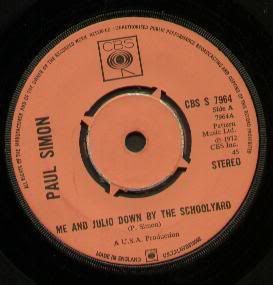
Me And Julio Down By The Schoolyard

Sat Jan 06, 2007 at 10:58:58 AM EST

By Ed Garcia
kestrel9000@gmail.com


The mama pajama rolled out of bed, and she ran to the police station

When the papa found out, he began to shout, and he started the investigation

It's against the law,

it was against the law

What the mama saw,


it was against the law.

The mama looked down and spit on the ground ev'ry time my name gets mentioned

The papa say "Oy, if I get that boy

I'm gonna stick him in the house of detention."

I'm on my way, I don't know where I'm goin',

I'm on my way, I'm takin' my time, but I don't know where.

Goodbye to Rosie, the Queen of Corona

See you, me and Julio down by the schoolyard

In a couple of days they come and take me away
But the press let the story leak

And when the radical priest come to get me released

We's all on the cover of Newsweek

Well, I'm on my way,

I don't know where I'm goin'

I'm on my way,

I'm takin' my time, but I don't know where

Goodbye to Rosie, the Queen of Corona

See you, me and Julio down by the schoolyard

Tags: Paul Simon, impeach, (All Tags)
Me And Julio Down By The Schoolyard | 0 comments | Post A Comment