| May 4, 2007 |
The theory and practice of oligarchical "conservatism" |
| by Justin Raimondo |
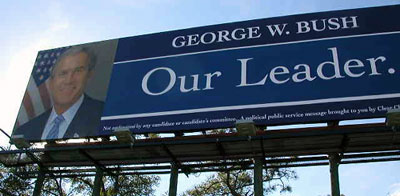
| The Iraq war and the inquiry into its origins has provoked interest in a number of subjects formerly considered obscure, the discussion of which was once limited to the rarified aeries of academia and specialty journals. Some examples are neoconservatism, just war theory, and, most surprisingly, the theories of Leo Strauss, the philosophical avatar of a cynical Machiavellianism that promotes the idea of the "noble lie." As the disaster in Iraq unfolded, subjects once considered abstruse were introduced into the pages of the popular press, so that, at one point, we were treated to a long explanation of the doctrines of Strauss in the pages of the New York Times. As Jeet Heer put it in the Boston Globe, "Odd as this may sound, we live in a world increasingly shaped by Leo Strauss, a controversial philosopher who died in 1973. Although generally unknown to the wider population, Strauss has been one of the two or three most important intellectual influences on the conservative worldview now ascendant in George W. Bush's Washington. Eager to get the lowdown on White House thinking, editors at the New York Times and Le Monde have had journalists pore over Strauss's work and trace his disciples' affiliations. The New Yorker has even found a contingent of Straussians doing intelligence work for the Pentagon." This sudden interest was due to the unusual number of Straussians who had found their way into close proximity to the centers of power in Washington – an extraordinary number of Strauss's students (or students of his leading followers) were employed in and around the Bush administration, particularly at key points in the national security bureaucracy, as William Pfaff pointed out, including then- "Deputy Defense Secretary Paul Wolfowitz; Abram Shulsky of the Pentagon's Office of Special Plans, Richard Perle of the Pentagon advisory board, Elliott Abrams of the National Security Council, and the writers Robert Kagan and William Kristol." One can easily see how the concept of the "noble lie" fits neatly into the neoconservative scheme of things, and the run-up to the Iraq war is surely a textbook example of the Straussian method in action: an enlightened elite deceives the public into an action that must be taken, after all, for their own good. In this case, we were lied into invading and occupying Iraq, for reasons that had nothing to do with "weapons of mass destruction" and Saddam's alleged links to al Qaeda and the 9/11 terrorist attacks, both of which the promulgators knew to be lies, and yet reiterated ceaselessly. Since we are now permanently at war, the ideal atmosphere for a Straussian (or any authoritarian) to theorize in, this is the time for the War Party to come out in the open with its theory of government, which, in normal times, is dressed up as "peace through strength," and now comes out of the closet as "peace through dictatorship." Aside from rationalizing a regime based on lies, the Straussian method, and philosophy, is useful in other ways. The prominent Straussian Harvey Mansfield, a professor of government at Harvard, demonstrates his usefulness as a promoter of the regime's authority, and specifically the supremacy of the executive branch of government in wartime. Mansfield makes "The Case for the Strong Executive" in the pages of the Wall Street Journal, and it is an argument that constitutes a vital part of the intellectual blueprint for the dictatorship I wrote about the other day. Mansfield starts out with a paean to the incorrect and unfortunately near-universal conception of the Constitution as a "flexible" document, and the resulting reference to "the living Constitution" is one of those cliches that no one ever thinks to challenge – except when it's too late. When the tanks are already rolling through the streets, that is … Look: there is nothing "flexible" about the Constitution. It means precisely what it says, and its language is not in any way obscure or complex. Furthermore, I would note that every time someone is about to take away our liberties, or in some way circumvent the plain intent of the Founders, they inevitably preface it with odes to the Constitution's "flexibility." Balderdash! The Founders meant what they said, and said what they meant in plain and simple English, language that even a Harvard professor can understand. Yet, examining Mansfield's case for an executive dictatorship – and that is surely the intent of his piece – we see at work the old Straussian method of "reinterpreting" an author's clear intent to mean its exact opposite. Now it would seem that the Founders, being revolutionaries, and even libertarians of a sort (except for Hamilton), were intent on setting up a republic of freemen, that is, a form of government that was constitutionally limited and certainly had nothing to do with the royalism against which they had recently rebelled. Ah, but a Straussian can find "hidden" meanings that the rest of us are blind to, and Mansfield detects a built-in contradiction, a deliberate tension between "one-man rule" and the republican spirit that imbues the Constitution with – yes, an authoritarian streak: "Now the rule of law has two defects, each of which suggests the need for one-man rule. The first is that law is always imperfect by being universal, thus an average solution even in the best case, that is inferior to the living intelligence of a wise man on the spot, who can judge particular circumstances. This defect is discussed by Aristotle in the well-known passage in his ‘Politics' where he considers ‘whether it is more advantageous to be ruled by the best man or the best laws.' "The other defect is that the law does not know how to make itself obeyed. …There must be police, and the rulers over the police must use energy (Alexander Hamilton's term) in addition to reason. It is a delusion to believe that governments can have energy without ever resorting to the use of force. "The best source of energy turns out to be the same as the best source of reason – one man. One man, or, to use Machiavelli's expression, uno solo, will be the greatest source of energy if he regards it as necessary to maintaining his own rule. Such a person will have the greatest incentive to be watchful, and to be both cruel and merciful in correct contrast and proportion. We are talking about Machiavelli's prince, the man whom in apparently unguarded moments he called a tyrant." This is the theme of Mansfield's book, Taming The Prince, in which he asserts that the modern idea of the executive is merely the old Aristotleian portrait of a royal personage who exemplifies the right of the strong to rule over the weak. In our own time, we are unable to directly acknowledge this ancient legacy and so we mask it in the mythology of the Constitution. We cloak the royalist reality in the raiment of republicanism, and promulgate the myth that the executive is somehow the servant of the people. "The American Founders," Mansfield avers, had a different idea, because they "Heeded both criticisms of the rule of law when they created the presidency. The president would be the source of energy in government, that is, in the administration of government, energy being a neutral term that might include Aristotle's discretionary virtue and Machiavelli's tyranny – in which only partisans could discern the difference." Tyranny, discretionary virtue – whatever. It's all a matter of partisan, i.e. totally subjective, opinion. In any case, the cult of Strauss is built around the cult of the Leader, or the "wise man," as Mansfield puts it, the solo uno who sees beyond what ordinary citizens can perceive. Sure, he's driven by a relentless drive to achieve and maintain his own power, but this very ruthlessness is what gives a republic its "energy" and the ability to survive its own inherent fragility. "A free government" avers Mansfield, "should show its respect for freedom even when it has to take it away." This little aphorism, worthy of being carved in stone on the gravestone of the American republic, just about sums up the tone and content of Mansfield's panegyric to the "greatness" of the presidential office, and its necessary "expansion" in time of war – which means, in the neocon lexicon, from now on. Rights are not inherent, in the Manfieldian-Straussian universe, but purely conditional, and our condition today is one that cannot afford such luxuries. According to Mansfield: "In our time … an opinion has sprung up in liberal circles particularly that civil liberties must always be kept intact regardless of circumstances. This opinion assumes that civil liberties have the status of natural liberties, and are inalienable. This means that the Constitution has the status of what was called in the 17th-century natural public law; it is an order as natural as the state of nature from which it emerges. In this view liberty has just one set of laws and institutions that must be kept inviolate, lest it be lost. "But Locke was a wiser liberal. His institutions were ‘constituted,' less by creation than by modification of existing institutions in England, but not deduced as invariable consequences of disorder in the state of nature. He retained the difference, and so did the Americans, between natural liberties, inalienable but insecure, and civil liberties, more secure but changeable. Because civil liberties are subject to circumstances, a free constitution needs an institution responsive to circumstances, an executive able to be strong when necessary." I won't dispute Mansfield's reinterpretation of the Lockean position on natural rights, except that it resembles a Bizarro Locke, inverting the philosopher's defense of natural rights and limited government, and somehow managing to turn it into the manifesto of a super-centralism that the 17th century English liberal would recoil from in horror. This is typical of the Straussian method. Leaving Locke entirely out of it, however, let us look at the Mansfieldian theory of "civil liberties" as forever "subject to circumstances" – just like our "flexible" Constitution, and, of course, the "secure but changeable" Bill of Rights. In the Bizarro-Mansfieldian world of perfect "freedom," where "a free government should show its respect for freedom even when it has to take it away," there is no right to free speech, no right to assemble, nor, really, any rights at all, including the right to hold property: all of these are merely temporary privileges, and are particularly ethereal in wartime. Inalienable rights? Not if the President says otherwise. This is nothing less than a rationalization for a dictatorship. It is authoritarianism dressed up in seemingly "American"-sounding verbiage, a prescription for fascism just as surely as the rantings of Alfred Rosenberg or the polemics of Robert Brassillach. As John T. Flynn, the liberal-turned-‘Old Right' opponent of the New Deal put it: "When fascism comes it will not be in the form of an anti-American movement or pro-Hitler bund, practicing disloyalty. Nor will it come in the form of a crusade against war. It will appear rather in the luminous robes of flaming patriotism; it will take some genuinely indigenous shape and color, and it will spread only because its leaders, who are not yet visible, will know how to locate the great springs of public opinion and desire and the streams of thought that flow from them and will know how to attract to their banners leaders who can command the support of the controlling minorities in American public life. The danger lies not so much in the would-be führers who may arise, but in the presence in our midst of certain deeply running currents of hope and appetite and opinion. The war upon fascism must be begun there." Flynn, one of FDR's bitterest opponents, wrote these words in As We Go Marching, his indictment of a postwar America that had fought national socialism – and was beginning to fight Soviet totalitarianism as the book was published – but, he feared, would lose the fight against incipient authoritarianism on the home front. Flynn defined fascism in a way that was congruent with the rising Welfare-Warfare State, founded on the principle of Big Government at home and militarism abroad. "First let us state our definition of fascism," he writes: "It is, put briefly, a system of social organization in which the political state is a dictatorship supported by a political elite and in which the economic society is an autarchic capitalism, enclosed and planned, in which the government assumes responsibility for creating adequate purchasing power through the instrumentality of national debt and in which militarism is adopted as a great economic project for creating work as well as a great romantic project in the service of the imperialist state." What a near-perfect anticipation of our present state! He must have seen it in a dream. As an unpopular war reaches its horrific crescendo, and the President upholds his "right" to wage it in defiance of Congress and the popular will, the theoreticians of the new fascism – what Lew Rockwell trenchantly calls "red-state fascism" – are given ample space on the editorial page of the War Street Journal to make their case. Are the masses growing increasingly discontented with the "wisdom" of their rulers, who are, after all, by definition, their betters? Well then, let us endow the President with kingly powers, so he can disregard the "temporary delusions" of the people, as Mansfield puts it – such as, for example, the "delusion" that we cannot win the war in Iraq, and shouldn't have gone there in the first place – and let our glorious Leader and Commander-in-chief get on with the job. This, Mansfield avers, is true "greatness." Naturally he invokes the spirit of FDR, among others (Lincoln, the great "emanicipator," who jailed his opponents and closed down newspapers for "seditious" utterances, also gets Mansfield's strong endorsement). What is odd is that both Flynn and Mansfield are considered conservatives, men of the Right – and yet their political and moral stances could not be more adversarial. What kind of "conservatism" is it that extols the Leader Principle, disdains the Constitution and the concept of "rights" as inalienable, and openly calls for authoritarian rule in case of "emergencies"? Today we have an ostensible "conservative," Thomas Sowell, pining for a military coup in the pages of National Review, and, in the same magazine, Col. "Buzz" Patterson, author of War Crimes: The Left's Campaign to Destroy Our Military and Lose the War on Terror, opining that the Democratic party, and especially its congressional branch, is legally guilty of "treason," and ought to be punished for this crime forthwith. Mansfield articulates the theory, while Sowell and Patterson – along with the Anne Coulters and David Horowitzes of the neoconized "conservative" movement – exemplify the practical politics of red-state fascism. The American Right has come a long way from The Conscience of a Conservative. The legislative basis of the new autoritarianism – the "Patriot Act," the Military Commissions Act [.pdf], the growth of the national surveillance state – is underpinned by the Mansfieldian theory of presidential supremacy and the concept of the "unitary presidency" – in short, the Leader Principle, which is the foundation stone of the modern fascist edifice. Centered around imperialism and the push to expand its system over all or most of the earth, this "energetic" ideology employs the administrative and economic centralism that is the hallmark of modern American "liberalism," and the militarism and imperialism that is the hallmark of the modern "conservative," in a perfect synthesis of "left" and "right" that satisfies everyone and leaves the dissidents in the "far left" and "far right" margins. This is how our modern fascists can, with some justification, call themselves "centrists," and even "moderates." In the Bizarro World we seem to have fallen into, post-9/11 – when a rip in the space-time continuum, caused by the explosive power of the planes' impact on the World Trade Center, caused us to slip into another dimension – who will dispute their self-characterization? After all, in Bizarro World, up is down, truth is a lie, and "democracy" means rule by a self-appointed elite. A Straussian is perfectly comfortable with this universal inversion: as for the rest of us, we'll just have to get used to it. |
Friday, May 4, 2007
America's Coming Dictatorship


Saturday, March 10, 2007
In Iraq, Whispers of Soft Coup Arise
BAGHDAD -- Secular former prime minister and U.S. favorite Ayad Allawi is leading a new push to replace the Shiite-led administration of Prime Minister Nouri al-Maliki with a broad-based government that would focus on restoring order.
Amid deepening concerns among Sunnis and secularists about al-Maliki's performance, Allawi has emerged at the center of an initiative to create a "national salvation front," which his supporters say would be able to secure the backing of Iraqi insurgents, reunite the country and end the sectarian conflict that has prevailed for more than a year.
Though Allawi's aides deny that he wants to replace al-Maliki as prime minister, Allawi is preparing to embark on a tour of the region to win the support of Arab governments for his proposals, just as representatives of Iraq's neighbors are gathering with the U.S. in Baghdad for a regional conference intended to shore up support for the al-Maliki government.
The idea of a new coalition to overturn the current political process is not new, and the front has yet to be fully formed.
Sending a message
But the effort has been given new momentum by the reappearance on the Iraqi political scene of Allawi, a high-profile U.S. ally who is both a Shiite and a centrist; the defection this week of the Fadhila Party, a small faction from al-Maliki's ruling Shiite coalition; and a trip by Allawi in the company of U.S. Ambassador Zalmay Khalilzad to visit the Kurdish leader Massoud Barzani last weekend.
U.S. Embassy officials refused to say why Khalilzad accompanied Allawi on the trip to Kurdistan or what was discussed during the talks.
But the Kurdistan visit was interpreted by many in Baghdad as a public display of support for Allawi by the U.S. It was also seen as a warning to al-Maliki that he cannot count on continued U.S. support if his Shiite-led government does not deliver on a range of promises intended to end the sectarian conflict and bring about real reconciliation with Sunnis.
"You see Allawi meeting with Barzani and the U.S. ambassador is with Allawi, so people analyze this as meaning that the U.S. supports Allawi," said Kurdish legislator Mahmoud Othman, who discussed the meeting with Barzani and does not believe the U.S. has made a decision to support the new front.
"Maybe the U.S. is using this to put pressure on Maliki to deliver more, to remind him that there are alternatives," Othman said.
Sunnis and secularists staunchly opposed to the Islamist Shiite parties now running the government have unsuccessfully tried to find ways to block Shiite rule since the December 2005 election, which gave Shiites a plurality, though not an outright majority, in the Iraqi parliament.
For any new coalition to have a chance of outvoting the al-Maliki government in parliament, it would have to secure the backing of the Kurds, the second-largest parliamentary bloc. The Kurds teamed up with the Shiite coalition to form a majority in the current government.
Triggering rumors
The Kurds are not prepared to abandon their Shiite partners for now, said Othman, which makes it difficult to see how Allawi can succeed in his efforts.
The U.S. has also given no indication that it is considering abandoning al-Maliki. Addressing reporters at his first news conference on Thursday, Gen. David Petraeus, the new commander of U.S. forces in Iraq, expressed full confidence in al-Maliki, saying that he and his team are "striving to be leaders for all Iraqis and responsive to the desires of all Iraqis."
The political maneuvering has nonetheless triggered rumors across Baghdad that a coup plot is being hatched, stirring fury among al-Maliki's supporters.
"If there is any conspiracy or plot against Maliki's government, millions of people will take to the streets," Shiite legislator Hassan Snaid, one of al-Maliki's closest advisers, told Al-Hurra TV, in a reminder that the Shiite government enjoys the support of the vast majority of ordinary Shiites.
Supporters of the new front deny that they are conspiring to remove al-Maliki. They say they will seek to replace him only if he fails to fulfill a set of demands that includes the formation of a new government, an overhaul of the de-Baathification law, which prevents many former Baathists from returning to public life, and a review of the constitution.
These are longstanding Sunni demands, backed by the U.S., that al-Maliki has repeatedly said he will address. They also include a revamp of his Cabinet, which he has promised in the coming week.
"Our problem is not with Mr. Maliki as a person. Our problem is with the system, which must be modified," said Izzat Shahbandar, a parliamentarian from Allawi's bloc who is closely involved in the new effort.
"The first step is for Mr. Maliki to make changes, and if he doesn't respond we are ready to form a parliamentary bloc that is big enough to remove the prime minister."
The latest challenge to al-Maliki has the support of most members of the main parliamentary Sunni and secular blocs, and efforts are also under way to lure support away from the Shiite coalition, which controls 128 seats. Past efforts to split the United Iraqi Alliance have failed, though the small Fadhila Party, with 15 seats, announced it was leaving the coalition earlier this week.
But with the Kurds in control of 53 seats, that still leaves the Allawi initiative far short of the 138 seats needed to bring about a parliamentary coup.
"I'm not optimistic that it will succeed," said Othman, the Kurdish legislator. "I'd prefer a secular government, but the Shiites are sticking together and they're a strong coalition."
By Liz Sly
Chicago Tribune
Friday, February 9, 2007
U.S. Empire Slides Toward Coup, Bankruptcy in `Blowback' Sequel
Feb. 9 (Bloomberg) -- In Chalmers Johnson's unrelentingly grim view, today's dire global conditions are largely the fault of an arrogant, increasingly militarized U.S. bent on expanding its global empire.
If, as you read the preceding sentence, you find yourself nodding in agreement, you may well admire ``Nemesis: The Last Days of the American Republic.'' If you prefer a more nuanced and evenhanded consideration of U.S. responsibility for the world's woes, Johnson's arguments will sound overheated.
For an Asia specialist who taught at the University of California for 30 years, Johnson sounds surprisingly like Michael Moore. The U.S. Central Intelligence Agency, in his view, has become the ``private army'' of the ``Boy Emperor from Crawford, Texas.'' America doesn't have allies; it has ``satellites.'' The U.S. Air Force has become an ``overlord of the globe,'' and the whole country is headed toward a possible military coup or, more probable in Johnson's view, bankruptcy.
Johnson appears to welcome such an outcome. ``We will have to learn what it means to be a far poorer nation and the attitudes and manners that go with it,'' he says in this final piece of the trilogy on the American empire that began with his bestselling ``Blowback.''
There's no denying that President George W. Bush and other U.S. policymakers, past and present, have much to answer for. ``Nemesis'' reiterates a sadly familiar list of shameful misdeeds committed by American leaders or at their behest.
Damning Record
Johnson recalls the manipulation of intelligence in the run-up to the invasion of Iraq; the prisoner abuse at Abu Ghraib; ``extraordinary renditions'' of some terror suspects and the mistreatment of those held at Guantanamo Bay; CIA complicity in coups in Iran and Chile; and criminal behavior by U.S. troops stationed in overseas military bases -- the ``all- encompassing imperial `footprint.'''
Unfortunately, Johnson undercuts his often compelling arguments with selective use of supporting evidence, occasional logical lapses and a chronic use of hyperventilating language. Consider these assertions on the very first page of his book:
``Arrogant and misguided American policies have headed us for a series of catastrophes comparable to our disgrace and defeat in Vietnam or even to the sort of extinction that befell our former fellow `superpower,' the Soviet Union,'' he writes. ``Such a fate is probably by now unavoidable.''
Inevitable Collapse?
Johnson sees signs of rot everywhere. In today's America, he asserts, constitutional checks and balances are in tatters. Government power is concentrated in an imperial presidency protected by the CIA. Congress is corrupt, addicted to lobbyists' money and pork-barrel spending. The judiciary is cowed. Unchecked militarism has spawned a war economy that will inevitably collapse.
For Johnson, no historical comparison is too extreme. The slavish devotion of White House officials to presidential prerogatives reminds Johnson of how Chinese communists deferred to Mao Zedong. He applies Hannah Arendt's description of Nazi war criminal Adolf Eichmann as a ``desk murderer'' to Bush, Dick Cheney and Donald Rumsfeld.
The U.S. today, ``like the Roman Republic in the first century BC, is threatened by an out-of-control military- industrial complex and a huge secret government,'' Johnson writes. Rome's Republic, he reminds us, was destroyed and replaced by the ultimately unsustainable Roman Empire. Something similar might be in store for the U.S., he warns.
What About Nancy?
Though readers already prone to agree with Johnson may be amused, his rhetorical flourishes are likely to distract -- and alienate -- others.
What does the future hold? There is some hope, Johnson says, if Americans, like the British after World War II, come to terms with the inherent weaknesses of an imperial strategy, ``and keep our democracy by giving up our empire.''
Yet Johnson doesn't place much faith in the potential for political change, writing that he can't imagine ``any president or Congress'' defying the interests of the overpowering military-industrial complex. It makes you wonder if he has ever met Nancy Pelosi.
``Nemesis'' is published by Holt (354 pages, $26.00).
(Michael Glennon is a critic for Bloomberg News. The opinions expressed are his own.)
To contact the writer of this review: Michael Glennon at glennon.michael@gmail.com .
Last Updated: February 9, 2007 00:12 ESTThursday, December 21, 2006
An interview with Gore Vidal, writer and critic of the United States
By Rosa Miriam Elizalde
(From the Mexican daily La Jornada)
HAVANA -- He spent five days in Havana. He followed a dizzying schedule that took him from the University of Computer Sciences to the Latin American School of Medicine, from University Hill to the National Ballet School, from Old Havana to the park that memorializes John Lennon with a lifesize bronze statue of the Beatles' founder, sitting on a bench like a local resident's son.
The most erudite American writer of his generation and the most corrosive critic of the current Republican administration, Gore Vidal does not just talk; he interprets what he says. He changes his voice and you can hear George W. Bush, Eisenhower, Franklin Delano Roosevelt, some obscure Pentagon official and even Vidal himself, mocking them all with an irony expressed by a face that does not reflect his 81 years of age.
He would rather be remembered as a historian than as a writer of fiction. Although his works are easily three times his age -- his bibliography contains novels, tragedies, comedies, memoirs, essays, movie and TV scripts -- his obsession is singleminded: the republic has lost its way.
"The main bit of wisdom that I learned from Thomas Jefferson, and he learned it from Montesquieu, is that you cannot have a republic and an empire at the same time," he says. "Since 1846, when we went to war with Mexico, we have been rapacious imperialists."
• You blame Harry Truman for turning the United States into the totalitarian country it is today, an opinion that many Americans do not seem to share. George W. Bush has just said, for example, that the man who dropped the bombs over Hiroshima and Nagasaki was a good president.
• "You must remember something: most Americans are not informed about history, geography, religion and whatever happens in the world. Roosevelt made all the arrangements so we could wrest the colonies from France, the Netherlands and Portugal after World War II. The Americans are still not aware of this. What they know about Truman is that he was a kindly little man who played the piano.
"Behind him was another Prince Metternich, Secretary of State Dean Acheson, an international lawyer who knew everything about everything. It was he who designed the militarized state that emerged in 1949, with a built-in CIA. Everything hinged on one document: National Security Council Memorandum No. 68 of 1950, which remained secret until 1975 and resolved that we should forever be at war with someone. We would fight communism, even if communism didn't threaten us. It established a de-facto Holy War, like the one we're waging now against terrorism and Islam, as stupid as it is irrelevant.
"Truman was so bad that they turned him into an idol. All ignoramuses admire Harry Truman but they don't know why. He ended the republic and placed us atop this wave of conquest. Truman shouted to the people that the Soviet Union was advancing, that it was about to seize Greece and immediately thereafter would go into Italy, France and later would cross the Atlantic.
"Today we find echoes of Truman in this little man, Mr. Bush, who says [IMITATING HIM]: 'Well, we can't fight them over there ... we're gonna have to fight 'em over here ... we're gonna have to fight.' [SPEAKS NORMALLY] And those enemies have no way to come to the United States to start a war. But no American can question such delirium without being tagged as antipatriotic or a fool."
'Bush of Baghdad'
• 'The terrorist attack in Oklahoma in 1995 can be explained by the laws of physics: there is no action without reaction.' That's what you said. You alluded to the hatred that the United States has sown in the world and in the country itself. Was it a prophecy?
• "Even a 5-year-old boy could see that the solution to the problem of terrorist attacks is simply a police action, because we're being attacked by a Mafia. You cannot have a war without an opposing country. Try to explain this to Americans; they don't even know what a country is. [The administration] managed that 80 percent of them still don't know that Saddam Hussein was not precisely Osama Bin Laden's best friend.
"They think the two worked like one and that both attacked us on Sept. 11. It's all nonsense. There was no connection whatsoever between Saddam and Bin Laden, but Bush wanted to complete his father's task and show that he was the bolder of the two. He wanted to be remembered as 'Bush of Baghdad,' something like 'Lawrence of Arabia.'
• A CBS survey this week reported that 75 percent of Americans disapprove of the government's actions in Iraq, while the president's approval index dropped to historic levels. Will Bush be the most hated president in the history of the United States?
• "If the American people had had a true free press and an alert communications media, this man would have never been elected. He is an incompetent being. We have had a lot of dumb presidents, but Bush can't even read well. At least in this, he's representative. You listen to him speak of 10 minutes and it becomes clear that he doesn't know what he's talking about. He's desperate, trying to follow the lines on the Teleprompter. Without one of his advisers by his side, he cannot answer questions.
"Ever since Woodrow Wilson left the Oval Office in 1921, no president has written his own speeches. The president reads what others write. Sometimes he's in agreement; others, not. When Eisenhower read his speeches, they were a discovery to him. During his first election campaign, the country was astounded when, halfway through a speech, he said 'And if I'm elected, I shall go to ... Korea?!' He was furious. Nobody had told him in advance about that promise. But he went to Korea, nevertheless.
"If we had had a press that was interested in the republic, not in the profits, history would have been different. There is some hope. After all, Al Gore won the election in 2000 by popular vote, with 600,000 more votes than Bush. The intervention of the Supreme Court and the trickery in the counting of votes falsified the result of the elections. Overnight, we became a banana republic without bananas to sell. That is our greatest problem today."
• Recently, President Fidel Castro stated that the Bush administration has led the country to a disaster of such magnitude that, almost surely, the people of the United States will not allow him to conclude his term of office. Do you believe this?
• "I wouldn't be surprised. The Bush administration is so extremist and has people with such empty minds that it is capable of bombing Russia or Iran [...] simply to distract people's attention from the other war and to keep the administration from crumbling ahead of schedule. We even know what he would shout. [IMITATING BUSH] 'The true patriots help and support the commander in chief in times of war.' [SPEAKS NORMALLY] That's his signature, even though it doesn't make sense and is stupid. They are expert in fabricating pretexts to create panic.
"Two days after Sept. 11, someone in government said: 'The problem is not if they will attack again but when.' That's when all that foolishness began. When we remind them that five years have passed and [the terrorists] haven't attacked us, they answer: 'That's because of the precautions we have taken at airports!'
"And they say [LOOKS AND SPEAKS AS IF TERRIFIED] 'We don't like those precautions either, because we have to take our shoes off at the airport. But it's those measures that have saved us from the attacks!' [SPEAKS NORMALLY] Well, if that's so, prove it. [TERRIFIED] 'But we can't prove it without revealing our secret sources!' they answer. [NORMALLY] It's a vicious circle.
"I hope that the Democrats, who now are taking over the chairmanship of legislative committees, especially the Judiciary Committee, will summon those generals to Congress, put them under oath, and make them answer our questions seriously."
Many people make money generating fear
• What is needed to restore the republic?
• "To heed the great warning by Franklin Delano Roosevelt, our best president, during his inaugural speech when the country collapsed, money was scarce and the banks failed. He said [IMITATES ROOSEVELT] 'We have nothing to fear but fear itself.' [SPEAKS NORMALLY] That's the basis of our republic. I would tell the American people: Don't let yourself be fooled by fear. There are many people in the United States who make money thanks to fear. That's their job: to scare you.
"I am not in favor of a violent revolution now, because revolutions usually bring the opposite of what they sought. The French Revolution gave the world Napoleon Bonaparte, and Louis XVI was not as bad as Napoleon. But I think that in the United States we're going to have a revolution because of the economic collapse. Some days ago, one of the big headlines said the army was pleading with the government for money.
"They don't have enough money to continue to make fools of themselves in Baghdad! They're going to collect the money any way they can, and not at the expense of the rich. The rich don't have an obligation to pay taxes. Nor do the corporations. In the past, 50 percent of the United States' revenues came from taxes on corporate profits. Now, corporations pay less than 8 percent. [The administration] has freed all its rich friends from paying taxes, so they can donate the money to the Republican Party, with the commitment that [the party] will continue to tell lies to the country and certify that the patriots are traitors.
"It's been a great trick for them, from an economic point of view, but an awful plan for us Americans. And we don't like that. We lost the Bill of Rights and the Magna Carta, on which all our freedoms were based for more than 700 years. No, it has not been a good time, and won't be."
We delight in jailing people and in imposing the death penalty
• Are you aware of the case of the five Cubans imprisoned in the United States for keeping the island government informed about terrorist plans in South Florida?
• "I know the case through the attorneys but not through the media. It seems to be another of the idiotic things our government is doing. I understand that presidents Clinton and Castro exchanged messages to stop the Miami terrorists, who had placed bombs in hotels and offices that sent tourists to the island. The two presidents agreed that this situation had to be halted. Clinton asked the FBI to come to Cuba and Castro agreed to that. Instead of arresting the terrorists, the FBI arrested the Cubans.
"We delight in jailing people, as much as we like the death penalty. It's the brightest star in our diadem. Our country is crazy about torture, murder, executions, life sentences. It's a perverse mentality that comes from a background of Protestant Puritanism. Everybody has to suffer if they have sinned. But if you're rich, God loves you. That's the proof. If you're poor, you don't please God. That's the proof. That kind of thinking is not healthy for anyone and in the state of Florida there are many people who think like that, in addition to those who arrived with Batista.
"The junta that imprisoned and sentenced them did so knowing full well the consequences. The Bush-Cheney, gas-and-oil junta is not as stupid as it seems. It does wicked things because that's how it keeps everything under control. Don't think that they didn't learn from the 20th-Century dictatorships. The case of The Five is one more proof that we have a crisis of law, a political crisis and a constitutional crisis."
• Oliver Stone has been punished by the U.S. Treasury Department for violating the blockade against Cuba. His crime was to have traveled to the island to film his two documentaries about Fidel. Are those measures constitutional?
• "Of course not. It's a violation [of the Constitution]. But on Sept. 11 there was a coup d'état in the United States, the first one in our history. A coup in which a group of dishonest people, an oil junta, usurped the power of the state and overthrew the Congress. It's a unique event and its details will make for a great story someday.
"This is something the people cannot quite understand, because Americans have a very simple mentality. What they don't know or haven't seen previously does not exist. Well, they're living it now, in situ, but they'll find out about it someday, like archeologists, and it won't be pleasant at all. The sanctions against Americans who want a normal relationship with Cuba are born of those circumstances. But Oliver Stone and any other American citizen have every right to many any movie they want under any circumstances, so long as they do not break the law. It's their constitutional right. He has not broken the law. What happens is that the junta doesn't like what he's doing. Oh, my goodness!
• Do you fear any reprisals against you?
• "I am usually prepared for the fact that nothing I do, say or write about this government will please the people in it."
• You have spent several days in Havana. Is Cuba the satanic island the press and the politicians show the Americans?
• "Are you crazy? No! They're always telling us that Cubans hate to be here. That everybody is starving. They come up with those tales that say that hospitals are terrible and that nobody goes to them. That the Cubans who get sick go to the Mayo Clinic in the United States. There isn't a lie that our government hasn't told us, when it comes to Cuba. In the United States, the lie is the lingua franca of the realm.
"Do you know why I go on television? Because I feel that there is someone who will see me and listen to me and to whom I can talk about what I've seen, without tendentious intermediaries. I can talk to them, for example, of the marvelous medical plans in Cuba. I visited a medical school that trains doctors from many countries to give community service to the poor, which is something the American system hates. In the United States, you learn medicine so you can grab all the money you can and flee to Tahiti or some other vacation spot and forget the people who suffer.
"I was talking to eight or nine people from New York and Massachusetts who are studying medicine in Cuba. I asked them if the training the received was as good as I had been told and they answered 'Yes,' that it's better than any training they might get in the United States. Why don't we do the same for our people and for the health of other people?
"Cuban doctors are in the most forgotten places, from Africa to the Amazon jungle. Only if we restore the Constitution could we have a country with aspirations and successes like those of Cuba. Don't think that I, as an American, don't feel envy of what I've seen in Cuba. I am a great patriot, yet I feel envy."
• Will you return?
• "I never make predictions.”
Rosa Miriam Elizalde is an outstanding Cuban journalist who contributes to the national and international media.
Friday, December 1, 2006
Coup in Bagdad? Al-Maliki faces widening revolt within government
By HAMZA HENDAWI, Associated Press WriterThu Nov 30, 6:52 PM ET
Iraqi Prime Minister Nouri al-Maliki faced a widening revolt within his divided government as two senior Sunni politicians joined prominent Shiite lawmakers and Cabinet members in criticizing his policies.
Vice President Tariq al-Hashemi said he wanted to see al-Maliki's government gone and another "understanding" for a new coalition put in place with guarantees that ensure collective decision making.
"There is a clear deterioration in security and everything is moving in the wrong direction," the Sunni leader told The Associated Press. "This situation must be redressed as soon as possible. If they continue, the country will plunge into civil war."
Al-Maliki's No. 2, Deputy Prime Minister Salam Zikam Ali al-Zubaie, also a Sunni, argued that the president's government failed to curb the spread of sectarian politics.
A boycott by 30 lawmakers and five Cabinet ministers loyal to anti-American Shiite cleric Muqtada al-Sadr was in protest of al-Maliki's meeting with President Bush in Jordan on Thursday. The Sadrists said the meeting amounted to an affront to the Iraqi people.
Al-Maliki appealed to the Sadrists to end their boycott and admonished them for an action that he said violated the commitment expected from partners in his 6-month-old coalition government.
"I hope they reconsider their decision because it doesn't constitute a positive development in the political process," al-Maliki said at a news conference on his return to Baghdad. "Political partnership means commitment."
Meanwhile, in an interview with ABC, al-Maliki confidently claimed that his forces would be ready to take over responsibility for security in Iraq by June, a timeline that is about 12 months shorter than what has been floated by top U.S. military commanders.
"We and the President (Bush) agreed to keep the same (U.S.) forces on the ground but to train more Iraqi forces," he said, according to excerpts from the interview to be aired later Thursday.
"We did not talk about any timetables and agenda for the withdrawal but now we are focusing on training Iraqi forces and then we will talk about reducing the number of multinationals," he said, alluding to the U.S.-led, 150,000-strong multinational force in Iraq.
He said he had no objection to any timetable for a U.S. troop withdrawal, but cautioned that such action should be put off until Iraqi forces were ready to stand on their own.
On Thursday, Bush said he would speed a turnover of security responsibility to Iraqi forces and assured al-Maliki that Washington was not looking for a "graceful exit" from a war well into its fourth year.
"So, we'll be in Iraq until the job is complete," Bush said.
Saleh al-Ojeili, a Sadrist legislator, said only a timetable for the withdrawal of foreign troops from Iraq would persuade him and fellow Sadrists to resume participation in the parliament and government.
"It is the minimum we can ask for," al-Ojeili said.
A special commission on U.S. policy in Iraq will urge a pullback of some U.S. troops but will not recommend a timetable for withdrawing all U.S. forces, an official familiar with the panel's deliberations said Thursday.
The Iraq Study Group's report, to be released next Wednesday, will press for a greater shift in responsibility for the country's security from American to Iraqi forces. It will also indicate that the presence of U.S. troops is part of the problem in Iraq, said the official, who requested anonymity because the panel's recommendations have not been made public.
Bush has steadfastly refused to announce a timeline for a troop pullout, saying that such a move would play into the hands of insurgents.
In violence on Thursday, the U.S. military reported the deaths of two soldiers, and Iraqi officials said 47 people had been killed, including 37 bodies found dumped in various regions of the country.
___
Associated Press Writer Lolita C. Baldor in Washington contributed to this report.