Friday, May 4, 2007

Bush appoints incompetent for Medicare chief

A debate prepper. Period.
---
Bush taps Weems for Medicare chief

WASHINGTON (AP) — Kerry N. Weems, a longtime federal health official, is President Bush's choice to oversee the Medicare and Medicaid programs.

If confirmed by the Senate, Weems would succeed Mark McClellan, who resigned in October. Weems is deputy chief of staff to Health and Human Services Secretary Mike Leavitt. He also has served as an acting assistant secretary overseeing budget and technology issues.

The Centers for Medicare and Medicaid Services is the agency that oversees federal health programs for the elderly, disabled and the poor. It accounts for about a fifth of all federal spending.

The president also is nominating Tevi David Troy to be deputy secretary at HHS. Troy is the deputy assistant to the president for domestic policy.

"Both bring a broad array of knowledge, management experience and expertise that will enhance our ability to advance effective policies to improve Americans' health," Leavitt said Thursday.

Medicaid provides health coverage and services to nearly 53 million low-income people. The government spends about $200 billion on the program. States provide abut 43% of the money for the program.

Medicare provides coverage for about 43 million elderly and disabled people. The Medicare program's expenses totaled about $408 billion in 2006; costs are expected to rise rapidly in coming years.

Weems has been one of Leavitt's most trusted advisers on budget issues as the administration tries to restrain the pace of federal health spending.

Troy had primary responsibility for debate preparation in President Bush's re-election campaign. He also has served as the president's liaison to the Jewish community. He began working in the Bush administration at the Labor Department.

McClellan joined a center for regulatory studies run by two think tanks in Washington, the Brookings Institution and the American Enterprise Institute. An economist and physician, McClellan helped put in place the Medicare prescription drug benefit.

Copyright 2007 The Associated Press. All rights reserved.

Baghdad wall has nothing to do with protecting Iraqis

In Focus:

More than a wall

Walling in Al-Adhamiyah has nothing to do with protecting Iraqis

When the Americans decided to build a wall around Al-Adhamiyah in Baghdad, they claimed that their main concern was to protect the inhabitants. Very noble of them, but was this the real reason? Are the Americans interested in protecting Al-Adhamiyah, or in protecting other areas from fighters based in Al-Adhamiyah? Before answering these questions, let's review a few developments that took place in Iraq of late.

The city of Kirkuk is being Kurdicised. Up until the occupation, ethnic Arabs mostly inhabited the city. Now the Kurds want to annex it to their province. Why is that? Because Kirkuk sits on a lake of oil, and the Kurds need to control the oil as part of their plan to secede from Iraq. The Kurdish scheme is so obvious that Turkey is already saying it cannot allow it to happen. The last thing the Erdogan government needs is a Kurdish state on its southern borders.

Meanwhile, plans are underway to declare a Basra Province in southern Iraq, although no attempts at secession have so far been made. The similarity between the situation in Kurdistan and Basra is worth examining. If things keep proceeding in this direction, Iraq would soon be partitioned into three mini-states. The "no fly" latitude lines the Clinton administration put in place several years ago would determine the borders of those mini-states. Kurdistan is already behaving as a semi-independent state. It is signing oil agreements with other countries, establishing political and economic ties with other nations, and generally ignoring the beleaguered government in Baghdad.

The Americans want to see Iraq divided; Kurdistan in the north, Basra in the south, and the Sunni triangle in the middle. But what does all this have to do with Al-Adhamiyah?

Well, let's not forget that the US administration is faced with a deepening crisis both at home and abroad. In Iraq, the US army is on the defensive. At home, the two houses of Congress, acting in defiance of President Bush, have made it clear that troops must be pulled out by September 2008 at the latest. Should the withdrawal take place -- and it most likely will -- then the whole Project for the New American Century would fall apart. All this planning, all these attempts to control oil resources, would come to nothing. It would be a disaster for the neo-cons. This is why the latter are determined to divide Iraq prior to withdrawal, the aim being to have two out of three mini-states under US control.

The Kurdish government would be pleased to forge a close alliance with the Americans. Such an alliance would offer the Kurds protection from the Turks, the Iranians and the pan-Arab government that may emerge in central Iraq. The southern province would also rush into US arms, for more or less the same reasons. Iraq would thus be reduced to the same status as any of the Gulf states, just another group of sheikhdoms reliant on oil and foreign backing.

This scenario wouldn't be easy to carry out so long as the resistance is going strong. So the fighters must be isolated in their strongholds: in Al-Anbar, Tel Afar, Al-Qaim and Al-Adhamiyah. Furthermore, some effort must be exerted for national unity, through the integration of former Baathists and army personnel into the system. The US administration is already moving in that direction. Also, the Americans claim to be succeeding in breaking the ranks of the Iraqi resistance. Still, why Al-Adhamiyah?

Let's go back to history. Founded at the time of Caliph Abu Jaafar Al-Mansour, Baghdad was built on the opposite banks of the Tigris. The west bank of the river was known as Al-Karkh, the east bank as Al-Rasafa. Until recently, the centre of the city was divided equally between the two banks. The mausoleum of Abu Hanifa was in Al-Rasafa, and that of Imam Al-Kazem was in Al-Karkh, with the Imamayn (two imams) Bridge connecting the two. Al-Adhamiyah took its name from the words "Al-Imam Al-Adham", or Abu Hanifa, a leading Sunni doctrinaire. During the Ottoman era, Al-Adhamiyah had a reputation for rebellion that continued even during the communist tide of the 1960s. Since the fall of Baghdad, Al-Adhamiyah has been active in resistance.

In the early days of the occupation, it was said that Iraq's political elite, Saddam's Hussein included, took refuge in Al-Adhamiyah. At one point, it was said that Saddam attended prayers at the mosque of Al-Imam Al-Adham. US forces reacted to the rumours by shelling the mosque. The main minaret of that mosque still bears the marks of shelling. For the past four years, Al-Adhamiyah has been a hotbed of resistance. The Americans repeatedly declared the area "liberated" from the resistance. But when the Americans tried to send the Iraqi army -- the new one they had created -- to its first real test in Al-Adhamiyah, dozens of Iraqi and US troops were killed. After this, the Americans tried to send troops in dinghies across the river, but suffered further losses.

Al-Adhamiyah is the link between the two banks of the Tigris and the gateway to Al-Waziriya, to the Ministry of Defence and the Green Zone. To isolate Al-Adhamiyah is to deprive the resistance of a vital asset. This is why the Americans built the wall. So there you have it. Al-Adhamiyah is part of the US drive to restrain, not protect, the Iraqis. This quest is likely to fail, as it did repeatedly in the past. The days of the occupation are numbered.

Galal Nassar

© Copyright Al-Ahram Weekly. All rights reserved

Al-Ahram Weekly Online

America's Coming Dictatorship

May 4, 2007

The theory and practice of oligarchical "conservatism"

by Justin Raimondo

The Iraq war and the inquiry into its origins has provoked interest in a number of subjects formerly considered obscure, the discussion of which was once limited to the rarified aeries of academia and specialty journals. Some examples are neoconservatism, just war theory, and, most surprisingly, the theories of Leo Strauss, the philosophical avatar of a cynical Machiavellianism that promotes the idea of the "noble lie." As the disaster in Iraq unfolded, subjects once considered abstruse were introduced into the pages of the popular press, so that, at one point, we were treated to a long explanation of the doctrines of Strauss in the pages of the New York Times.

As Jeet Heer put it in the Boston Globe,

"Odd as this may sound, we live in a world increasingly shaped by Leo Strauss, a controversial philosopher who died in 1973. Although generally unknown to the wider population, Strauss has been one of the two or three most important intellectual influences on the conservative worldview now ascendant in George W. Bush's Washington. Eager to get the lowdown on White House thinking, editors at the New York Times and Le Monde have had journalists pore over Strauss's work and trace his disciples' affiliations. The New Yorker has even found a contingent of Straussians doing intelligence work for the Pentagon."

This sudden interest was due to the unusual number of Straussians who had found their way into close proximity to the centers of power in Washington – an extraordinary number of Strauss's students (or students of his leading followers) were employed in and around the Bush administration, particularly at key points in the national security bureaucracy, as William Pfaff pointed out, including then- "Deputy Defense Secretary Paul Wolfowitz; Abram Shulsky of the Pentagon's Office of Special Plans, Richard Perle of the Pentagon advisory board, Elliott Abrams of the National Security Council, and the writers Robert Kagan and William Kristol."

One can easily see how the concept of the "noble lie" fits neatly into the neoconservative scheme of things, and the run-up to the Iraq war is surely a textbook example of the Straussian method in action: an enlightened elite deceives the public into an action that must be taken, after all, for their own good. In this case, we were lied into invading and occupying Iraq, for reasons that had nothing to do with "weapons of mass destruction" and Saddam's alleged links to al Qaeda and the 9/11 terrorist attacks, both of which the promulgators knew to be lies, and yet reiterated ceaselessly.

Since we are now permanently at war, the ideal atmosphere for a Straussian (or any authoritarian) to theorize in, this is the time for the War Party to come out in the open with its theory of government, which, in normal times, is dressed up as "peace through strength," and now comes out of the closet as "peace through dictatorship." Aside from rationalizing a regime based on lies, the Straussian method, and philosophy, is useful in other ways. The prominent Straussian Harvey Mansfield, a professor of government at Harvard, demonstrates his usefulness as a promoter of the regime's authority, and specifically the supremacy of the executive branch of government in wartime. Mansfield makes "The Case for the Strong Executive" in the pages of the Wall Street Journal, and it is an argument that constitutes a vital part of the intellectual blueprint for the dictatorship I wrote about the other day.

Mansfield starts out with a paean to the incorrect and unfortunately near-universal conception of the Constitution as a "flexible" document, and the resulting reference to "the living Constitution" is one of those cliches that no one ever thinks to challenge – except when it's too late. When the tanks are already rolling through the streets, that is …

Look: there is nothing "flexible" about the Constitution. It means precisely what it says, and its language is not in any way obscure or complex. Furthermore, I would note that every time someone is about to take away our liberties, or in some way circumvent the plain intent of the Founders, they inevitably preface it with odes to the Constitution's "flexibility." Balderdash! The Founders meant what they said, and said what they meant in plain and simple English, language that even a Harvard professor can understand. Yet, examining Mansfield's case for an executive dictatorship – and that is surely the intent of his piece – we see at work the old Straussian method of "reinterpreting" an author's clear intent to mean its exact opposite.

Now it would seem that the Founders, being revolutionaries, and even libertarians of a sort (except for Hamilton), were intent on setting up a republic of freemen, that is, a form of government that was constitutionally limited and certainly had nothing to do with the royalism against which they had recently rebelled. Ah, but a Straussian can find "hidden" meanings that the rest of us are blind to, and Mansfield detects a built-in contradiction, a deliberate tension between "one-man rule" and the republican spirit that imbues the Constitution with – yes, an authoritarian streak:

"Now the rule of law has two defects, each of which suggests the need for one-man rule. The first is that law is always imperfect by being universal, thus an average solution even in the best case, that is inferior to the living intelligence of a wise man on the spot, who can judge particular circumstances. This defect is discussed by Aristotle in the well-known passage in his ‘Politics' where he considers ‘whether it is more advantageous to be ruled by the best man or the best laws.'

"The other defect is that the law does not know how to make itself obeyed. …There must be police, and the rulers over the police must use energy (Alexander Hamilton's term) in addition to reason. It is a delusion to believe that governments can have energy without ever resorting to the use of force.

"The best source of energy turns out to be the same as the best source of reason – one man. One man, or, to use Machiavelli's expression, uno solo, will be the greatest source of energy if he regards it as necessary to maintaining his own rule. Such a person will have the greatest incentive to be watchful, and to be both cruel and merciful in correct contrast and proportion. We are talking about Machiavelli's prince, the man whom in apparently unguarded moments he called a tyrant."

This is the theme of Mansfield's book, Taming The Prince, in which he asserts that the modern idea of the executive is merely the old Aristotleian portrait of a royal personage who exemplifies the right of the strong to rule over the weak. In our own time, we are unable to directly acknowledge this ancient legacy and so we mask it in the mythology of the Constitution. We cloak the royalist reality in the raiment of republicanism, and promulgate the myth that the executive is somehow the servant of the people. "The American Founders," Mansfield avers, had a different idea, because they

"Heeded both criticisms of the rule of law when they created the presidency. The president would be the source of energy in government, that is, in the administration of government, energy being a neutral term that might include Aristotle's discretionary virtue and Machiavelli's tyranny – in which only partisans could discern the difference."

Tyranny, discretionary virtue – whatever. It's all a matter of partisan, i.e. totally subjective, opinion. In any case, the cult of Strauss is built around the cult of the Leader, or the "wise man," as Mansfield puts it, the solo uno who sees beyond what ordinary citizens can perceive. Sure, he's driven by a relentless drive to achieve and maintain his own power, but this very ruthlessness is what gives a republic its "energy" and the ability to survive its own inherent fragility.

"A free government" avers Mansfield, "should show its respect for freedom even when it has to take it away." This little aphorism, worthy of being carved in stone on the gravestone of the American republic, just about sums up the tone and content of Mansfield's panegyric to the "greatness" of the presidential office, and its necessary "expansion" in time of war – which means, in the neocon lexicon, from now on.

Rights are not inherent, in the Manfieldian-Straussian universe, but purely conditional, and our condition today is one that cannot afford such luxuries. According to Mansfield:

"In our time … an opinion has sprung up in liberal circles particularly that civil liberties must always be kept intact regardless of circumstances. This opinion assumes that civil liberties have the status of natural liberties, and are inalienable. This means that the Constitution has the status of what was called in the 17th-century natural public law; it is an order as natural as the state of nature from which it emerges. In this view liberty has just one set of laws and institutions that must be kept inviolate, lest it be lost.

"But Locke was a wiser liberal. His institutions were ‘constituted,' less by creation than by modification of existing institutions in England, but not deduced as invariable consequences of disorder in the state of nature. He retained the difference, and so did the Americans, between natural liberties, inalienable but insecure, and civil liberties, more secure but changeable. Because civil liberties are subject to circumstances, a free constitution needs an institution responsive to circumstances, an executive able to be strong when necessary."

I won't dispute Mansfield's reinterpretation of the Lockean position on natural rights, except that it resembles a Bizarro Locke, inverting the philosopher's defense of natural rights and limited government, and somehow managing to turn it into the manifesto of a super-centralism that the 17th century English liberal would recoil from in horror. This is typical of the Straussian method.

Leaving Locke entirely out of it, however, let us look at the Mansfieldian theory of "civil liberties" as forever "subject to circumstances" – just like our "flexible" Constitution, and, of course, the "secure but changeable" Bill of Rights. In the Bizarro-Mansfieldian world of perfect "freedom," where "a free government should show its respect for freedom even when it has to take it away," there is no right to free speech, no right to assemble, nor, really, any rights at all, including the right to hold property: all of these are merely temporary privileges, and are particularly ethereal in wartime. Inalienable rights? Not if the President says otherwise.

This is nothing less than a rationalization for a dictatorship. It is authoritarianism dressed up in seemingly "American"-sounding verbiage, a prescription for fascism just as surely as the rantings of Alfred Rosenberg or the polemics of Robert Brassillach. As John T. Flynn, the liberal-turned-‘Old Right' opponent of the New Deal put it:

"When fascism comes it will not be in the form of an anti-American movement or pro-Hitler bund, practicing disloyalty. Nor will it come in the form of a crusade against war. It will appear rather in the luminous robes of flaming patriotism; it will take some genuinely indigenous shape and color, and it will spread only because its leaders, who are not yet visible, will know how to locate the great springs of public opinion and desire and the streams of thought that flow from them and will know how to attract to their banners leaders who can command the support of the controlling minorities in American public life. The danger lies not so much in the would-be führers who may arise, but in the presence in our midst of certain deeply running currents of hope and appetite and opinion. The war upon fascism must be begun there."

Flynn, one of FDR's bitterest opponents, wrote these words in As We Go Marching, his indictment of a postwar America that had fought national socialism – and was beginning to fight Soviet totalitarianism as the book was published – but, he feared, would lose the fight against incipient authoritarianism on the home front. Flynn defined fascism in a way that was congruent with the rising Welfare-Warfare State, founded on the principle of Big Government at home and militarism abroad. "First let us state our definition of fascism," he writes:

"It is, put briefly, a system of social organization in which the political state is a dictatorship supported by a political elite and in which the economic society is an autarchic capitalism, enclosed and planned, in which the government assumes responsibility for creating adequate purchasing power through the instrumentality of national debt and in which militarism is adopted as a great economic project for creating work as well as a great romantic project in the service of the imperialist state."

What a near-perfect anticipation of our present state! He must have seen it in a dream. As an unpopular war reaches its horrific crescendo, and the President upholds his "right" to wage it in defiance of Congress and the popular will, the theoreticians of the new fascism – what Lew Rockwell trenchantly calls "red-state fascism" – are given ample space on the editorial page of the War Street Journal to make their case. Are the masses growing increasingly discontented with the "wisdom" of their rulers, who are, after all, by definition, their betters? Well then, let us endow the President with kingly powers, so he can disregard the "temporary delusions" of the people, as Mansfield puts it – such as, for example, the "delusion" that we cannot win the war in Iraq, and shouldn't have gone there in the first place – and let our glorious Leader and Commander-in-chief get on with the job. This, Mansfield avers, is true "greatness." Naturally he invokes the spirit of FDR, among others (Lincoln, the great "emanicipator," who jailed his opponents and closed down newspapers for "seditious" utterances, also gets Mansfield's strong endorsement).

What is odd is that both Flynn and Mansfield are considered conservatives, men of the Right – and yet their political and moral stances could not be more adversarial. What kind of "conservatism" is it that extols the Leader Principle, disdains the Constitution and the concept of "rights" as inalienable, and openly calls for authoritarian rule in case of "emergencies"?

Today we have an ostensible "conservative," Thomas Sowell, pining for a military coup in the pages of National Review, and, in the same magazine, Col. "Buzz" Patterson, author of War Crimes: The Left's Campaign to Destroy Our Military and Lose the War on Terror, opining that the Democratic party, and especially its congressional branch, is legally guilty of "treason," and ought to be punished for this crime forthwith. Mansfield articulates the theory, while Sowell and Patterson – along with the Anne Coulters and David Horowitzes of the neoconized "conservative" movement – exemplify the practical politics of red-state fascism. The American Right has come a long way from The Conscience of a Conservative.

The legislative basis of the new autoritarianism – the "Patriot Act," the Military Commissions Act [.pdf], the growth of the national surveillance state – is underpinned by the Mansfieldian theory of presidential supremacy and the concept of the "unitary presidency" – in short, the Leader Principle, which is the foundation stone of the modern fascist edifice.

Centered around imperialism and the push to expand its system over all or most of the earth, this "energetic" ideology employs the administrative and economic centralism that is the hallmark of modern American "liberalism," and the militarism and imperialism that is the hallmark of the modern "conservative," in a perfect synthesis of "left" and "right" that satisfies everyone and leaves the dissidents in the "far left" and "far right" margins. This is how our modern fascists can, with some justification, call themselves "centrists," and even "moderates."

In the Bizarro World we seem to have fallen into, post-9/11 – when a rip in the space-time continuum, caused by the explosive power of the planes' impact on the World Trade Center, caused us to slip into another dimension – who will dispute their self-characterization? After all, in Bizarro World, up is down, truth is a lie, and "democracy" means rule by a self-appointed elite. A Straussian is perfectly comfortable with this universal inversion: as for the rest of us, we'll just have to get used to it.

Deputy national security adviser resigns

WASHINGTON (AP) — Public support in the U.S. for the Iraq war is wavering. Lawmakers are battling the White House over money to fund the combat. Suicide bombings continue in Baghdad.

Despite it all, J.D. Crouch, who is stepping down from his national security post at the White House, is confident history will prove that invading Iraq was the right thing to do.

Crouch, who has been President George W. Bush's deputy national security adviser for more than two years, said the president never will be swayed by opposition to the war. Instead, Crouch said, Bush will use his resolve to help convince a broad section of Americans that it is important to be in Iraq.

"I think it was really the right thing to do, and I think history will bear that out," Crouch said in an interview Thursday.

Crouch, 48, said he has been thinking for months about leaving his job as deputy to the president's national security adviser, Stephen Hadley. The White House was to announce Crouch's resignation on Friday.

With two big projects off his desk — one on Iraq and the other on detainees — Crouch said he thought it was time, for both him and his family, to leave the government and take a position in the private sector or academia.

Hadley said he'll miss Crouch's self-deprecating humor and the way his work discourages leaks.

"He was able to force people to step up to difficult issues, but do it in a way that everybody felt that they had a hearing and that the process was fair," Hadley said. "And that's one of the reasons why I think there has been very little leaking of squabbles of State versus Defense, which you've seen from time to time."

For several months last year, Crouch's cramped office in the West Wing, which he will vacate early next month, was the nerve center for the Bush administration's top-to-bottom review of war strategy that culminated with the president's decision in January to send more troops to Iraq.

"It's going to still be tough and there's still going to be a lot of bad days out there, but definitely, we're already beginning to see some of the positive benefits," Crouch said, while acknowledging that even though Shiite-Sunni violence has ebbed, terrorist attacks have not.

In his remaining time in office, Crouch says Bush hopes to see a stable Iraq and keep pressuring Iran not to develop a nuclear weapon.

Bush also wants to direct attention to his agenda of helping people around the world gain greater political freedom and economic prosperity.

"These are not things that can be solved by military solutions," Crouch said.

Copyright 2007 The Associated Press. All rights reserved.

Where is the dissent in America?

Commentary

Charles R. Larson

May 4, 2007

WASHINGTON -- When viewed through American eyes, the recent protests in Istanbul and Tel Aviv demanding that their governments become accountable are truly impressive and extraordinary.

For a US liberal - which is what I consider myself to be - the Israeli and the Turkish protests are also a disturbing reminder that Americans have apparently forgotten one of their constitutional rights: the right to protest. Americans are loud at proclaiming their rights, but, lately, they have been reluctant to practice them. Indeed, a couple of years ago, when Iraq was writing its new constitution, a joke was frequently repeated in limited circles: "Why not give them the US constitution, since we're not using it?"

The George W. Bush presidency has articulated, ad nauseam, America's plan for exporting democracy to the rest of the world - especially to the Middle East. Yet, rarely does the Bush administration proclaim the need for democracy outside of areas where oil is of our concern.

Take Africa, for example. A couple of years ago, it was Liberia, which, under Charles Taylor, became one of the most wretched places for human rights in the world. Taylor could have been unseated quickly and expeditiously with minimal force, and the United States certainly had historical reasons for "liberating" Liberia from its monstrous dictator. But Taylor stayed in power until he wrecked his country, at which stage the US sent in a handful of marines to make a belated push to force Taylor to leave.

More recently, Zimbabwe and Nigeria ought to be of major concern regarding constitutional abuses, but Robert Mugabe still reigns supreme in the former country (that has no oil) and the rigged election in Nigeria two weeks ago, which ought to have triggered a barrage of criticism from the American State Department, resulted in hardly a puff of smoke. (Actually, in the case of Nigeria - one of America's major oil suppliers - it looks as if oil did contribute to Bush's decision to do nothing.)

But it is the war in Iraq that ought to have led to major protests in the United States by now, because of the administration's "selective" push for democracy around the world.

Three weeks ago, a lone gunman at Virginia Tech murdered 32 innocent students and faculty members, triggering a massive outcry for a few days, but no one expects that America's obsession with guns is about to change. One hundred US soldiers have died in Iraq in the last month alone, and there is nary a protest or airing of concern from Americans, who have clearly stopped paying any attention to the debacle - except to say that they "want our soldiers to come home."

Americans have so compartmentalized the war that hardly anyone pays attention to what's happening in Iraq, except the families of the 150,000 US soldiers who are dying there. Most other Americans have stopped reading articles in the newspapers about the war and muted their TV sets during the evening news when the declining minutes of daily coverage are broadcast.

In part, the utter lack of concern about the war is because Americans are convinced that it has nothing to do with them economically - they have certainly not been asked to make any sacrifice to pay for the war. So, the war continues to drain the country of billions of dollars, while the American consumer continues to prop up the economy by increasing personal debt. That is, of course, a mirror of the government's own massive debt because of Bush's folly.

And it is not just the war that Americans are reluctant to protest about - but just about everything else involving George W. Bush's vision for the country and the world. The country's top law enforcer, Attorney General Alberto Gonzales has been disgraced by recent partisan acts that clearly were designed to support the Republican agenda. Yet, Gonzales is praised almost daily by President Bush, while he violates other parts of the constitution in acts that have systematically eroded all of our individual rights.

Paul Wolfowitz, head of the World Bank, is similarly lauded by President Bush and Vice-President Cheney, though Wolfowitz has also compromised his position and run the morale of the World Bank into the ground.

The list of abuses at the hands of the neocons in their attempt to cram right-wing conservatism down the throats of every American are so ubiquitous that the only pleasure a sane person can take these days is the occasional smile, and the remark, "I told you so," which echo a bumper sticker seen on many vehicles in the country for the past six years: "If You're Not Outraged, You're Not Paying Attention."

Americans are asleep. They have tuned out and shut down to recent events because of the staggering amount of outrage and abuse by their government during the past half-dozen years. Even in the best of times, a large portion of the population pays little attention to world events. If you visit the outlying sections of the country and pick up a local newspaper, you might conclude that the readers of that gazette were only concerned about local events. An international incident, which ought to be of concern for everyone, is either given no attention at all or buried in a minor paragraph at the back of the paper.

One wonders what kind of outrage would finally draw Americans into the streets as the citizens of Istanbul and Tel Aviv did earlier this week.


Charles R. Larson
is Chair of the Department of Literature at American University in Washington, DC. He is a frequent Contributor to Salon, The Nation, and The Washington Examiner magazines. He submitted this commentary to the Middle East Times.

If the United States leaves Iraq things will really get bad

May 3, 2007

by William Blum

This appears to be the last remaining, barely-breathing argument of that vanishing species who still support the god-awful war. The argument implies a deeply-felt concern about the welfare and safety of the Iraqi people. What else could it mean? That the US military can't leave because it's needed to protect the oil bonanza awaiting American oil companies as soon as the Iraqi parliament approves the new written-in-Washington oil law? No, the Bush administration loves the people of Iraq. How much more destruction, killing and torturing do you need to be convinced of that? We can't leave because of the violence. We can't leave until we have assured that peace returns to our dear comrades in Iraq.

To better understand this argument, it helps to keep in mind the following about the daily horror that is life in Iraq:
It did not exist before the US occupation.

The insurgency violence began as, and remains, a reaction to the occupation; like almost all insurgencies in occupied countries -- from the American Revolution to the Vietcong -- it's a fight directed toward getting foreign forces to leave.

The next phase was the violence of Iraqis against other Iraqis who worked for or sought employment with anything associated with the occupation regime.

Then came retaliatory attacks for these attacks.

Followed by retaliatory attacks for the retaliatory attacks.

Jihadists from many countries have flocked to Iraq because they see the war against the American Satan occupiers as a holy war.

Before the occupation, many Sunnis and Shiites married each other; since the occupation they have been caught up in a spiral of hating and killing each other.

And for these acts there of course has to be retaliation.

The occupation's abolishment of most jobs in the military and in Saddam Hussein's government, and the chaos that is Iraqi society under the occupation, have left many destitute; kidnapings for ransom and other acts of criminal violence have become popular ways to make a living, or at least survive.

US-trained, financed, and armed Iraqi forces have killed large numbers of people designated as "terrorists" by someone official, or perhaps someone unofficial, or by someone unknown, or by chance.

The US military itself has been a main perpetrator of violence, killing individually and en masse, killing any number, any day, for any reason, anyone, any place, often in mindless retaliation against anyone nearby for an insurgent attack.

The US military and its coalition allies have also been the main target of violent attacks. A Department of Defense report of November 2006 stated: "Coalition forces remained the target of the majority of attacks (68%)."[1]

And here is James Baker, establishment eminence, co-chair of the Iraq Study Group, on CNN with
Anderson Cooper:
Cooper: And is it possible that getting the U.S. troops out will actually lessen that violence, that it will at least take away the motivation of nationalist insurgents?
Baker: Many people have argued that to us. Many people in Iraq made that case.
Cooper: Do you buy it?
Baker: Yes, I think there is some validity to it, absolutely. Then we are no longer seen to be the occupiers.[2]

In spite of all of the above we are told that the presence of the United States military has been and will continue to be a buffer against violence. Iraqis themselves do not believe this. A poll published in September found that Iraqis believe, by a margin of 78 to 21 percent, that the US military presence is "provoking more conflict that it is preventing".[3]

Remember that we were warned a thousand times of a communist bloodbath in Vietnam if American forces left. The American forces left. There was never any kind of bloodbath.

If the United States leaves -- meaning all its troops and bases -- it will remove the very foundation, origin, and inspiration of most of the hate and violence. Iraqis will have a chance to reclaim their land and their life. They have a right to be given that opportunity. Let America's deadly "love" embrace of the Iraqi people come to an end. Let the healing begin.


Some people love guns. But why should the rest of us be targets?
The massacre at Virginia Tech is the kind of tragedy that invariably produces an abundance of sociological and psychological speculation, comparisons to the violence of American foreign policy, and many other clichés, platitudes, and truisms; a lot of ground I prefer not to walk over again. Except this one thing, as knee-reflex as it is: We should ban all guns. It should be illegal to possess any functioning firearm; those who already possess them should be obliged to turn them in for a payment. No halfway measures here. We went beyond halfway measures many massacres ago.

Last year in England and Wales (population 54 million), where there are tough restrictions on gun ownership, there were 50 shooting deaths. In Washington, DC (population half a million), there were 137 fatal shootings.[4]

Nearly twice as many people commit suicide in the 15 US states with the highest rates of gun ownership than in the six states with the lowest rates of gun ownership, although the population of the two groups is about the same. Guns are used in only five percent of suicide attempts, but more than 90 percent of those attempts are fatal, whereas drugs account for nearly 75 percent of suicide attempts, but the fatality rate in those attempts is less than 3 percent.[5]

Those who question the correlation between ease of gun ownership and death by gunfire should try to imagine what the Virginia Tech killer would have done if he hadn't been able to purchase guns as easily as he had. What would he have used? A club? A knife? He would have been jumped and disarmed after attacking his first victim in the classroom.

The only exception to the gun ban should be for law enforcement. That doesn't include the military. If the American military did not have any weapons this sad old world would be a much safer and nicer place, for American soldiers as well as their victims. So let's perform an act of euthanasia and pull the plug on the military's life-support machine. Let's convert the Pentagon into affordable housing. We won't have to worry about anti-American terrorists because our un-armed forces would not be going all over the world and creating them by the thousands with bombings, invasions, overthrows of governments, occupations, support of repressive regimes, and similar charming activities, all of which require vast amounts of firearms and bombs. Yes, the bombs would become history as well.

Oh, one more thing. Before the gun ban goes into effect, a posse should be formed to go and shoot up the National Rifle Association's headquarters. The NRA loves to cite the Second Amendment to the Constitution: "A well regulated Militia, being necessary to the security of a free State, the right of the people to keep and bear Arms, shall not be infringed." What militias, in the 21st century, are the NRA gun-lovers thinking of? And what state? I'd guess that most NRA members are fervent libertarians who hold a lot of paranoia and no love for any state. It's time for another constitutional amendment to abolish the Second Amendment, like the Thirteenth and Fourteenth Amendments changed the Constitution to abolish slavery.[6]

Because of Virginia Tech's location and the fact that several of the victims came from the Virginia suburbs of Washington, DC, where I live, the Washington Post gave book-length coverage to the event. I found myself choking up, at times with tears, repeatedly, each day as I read the stories of the stolen young lives. Two days after the massacre, the Supreme Court issued a ruling making certain abortions illegal. This led to statements from celebrating anti-abortion activists about how the life of "unborn children" would be saved, and how the fetus is fully a human being deserving of as much care and respect and legal protection as any other human being. But does anyone know cases of parents grieving over an aborted fetus the way the media has shown parents and friends grieving over the slain Virginia Tech students? Of course not. If for no other reason than the parents choose to have an abortion. Does anyone know of a case of the parents of an aborted fetus tearfully remembering the fetus's first words, or high school graduation or wedding or the camping trip they all took together? Or the fetus's smile or the way it laughed? Of course not. Because -- to those who support abortion on demand -- the fetus is not a human being in a sufficiently meaningful physical, social, intellectual, and emotional sense. But the anti-abortion activists -- often for reasons of sexual prudery, anti-feminism, religion (the Supreme Court ruling derived from the five Catholic members of the court), or other personal or political hangups -- throw a halo around the fetus, treat the needs and desires of the parents as nothingness, and damn all those who differ with them as child murderers. Unfortunately, with many of these activists, their perfect love for human beings doesn't extend to the human beings of Iraq or Afghanistan.


A conservative's idea of a random act of kindness is cutting the capital gains tax
Michael Scheuer is a former CIA officer who headed the Agency's Osama bin Laden unit. He's also the author of "Through Our Enemies' Eyes: Osama bin Laden, Radical Islam and the Future of America", and "Imperial Hubris: Why the West Is Losing the War on Terror". In last month's edition of this report, in my section on Washington's war on terrorism, quoting from the Sydney Morning Herald I wrote that when Scheuer was told that the largest group in Guantánamo came from custody in Pakistan, he said: "We absolutely got the wrong people." This sentiment is in keeping with the point I was making, that a significant portion of "terrorists" held in US custody are no such thing.

But then the editor of DissidentVoice.org, which reprints my report each month, received a letter from Mr. Scheuer, saying in part: "Regarding the quote attributed to me in Mr. Blum's column. I do not recall ever making such a statement, and if I did make it, I spoke mistakenly. I have no reason to believe that any one in the Guantanamo Bay facility does not deserve to be there. I have objected to the facility only because it forces the United States to be subject to the pacifist whinings of human rights advocates and EC [presumably European Community] officials."

I replied to Scheuer, asking him if his remark -- "I have no reason to believe that any one in the Guantanamo Bay facility does not deserve to be there" -- referred only to "the present prisoners, those held as of the time of your alleged remark in February 2006, or any and all of the prisoners who've been held there the past 5 years? If the last, that would be quite a remarkable statement to make given all that we know about the very faulty criteria employed in deciding who to send to Guantanamo, a portion of which I discuss in my article. Even if you're referring to the first or second time period, your statement would still be most surprising. How could you possibly know that? Or even hazard a guess? As I mention, even the prison commanders didn't believe that."

Scheuer has not yet replied. I had also wondered about his use of the term "pacifist whinings". Then, in a review of former CIA Director George Tenet's new book, Scheuer takes his former boss to task as well as Bill Clinton for not attacking Afghanistan enough in the late 1990s to kill Osama bin Laden and his followers, accusing the former president of "cowardly pacifism". Scheuer writes: "I did not -- and do not -- care about collateral casualties in such situations, as most of the nearby civilians would be the families that bin Laden's men had brought to a war zone. But Tenet did care. 'You can't kill everyone,' he would say. That's an admirable humanitarian concern in the abstract, but it does nothing to protect the United States. Indeed, thousands of American families would not be mourning today had there been more ferocity and less sentimentality among the Clinton team."[7]

It should be noted that in 1993 Clinton ordered the firing of missiles into Iraq, killing and injuring many, as retaliation for Iraqi involvement in a plot to assassinate former president George H.W. Bush who was due to visit Kuwait. (Both the plot and the Iraqi involvement in it should be filed away under "alleged".) In 1998 the president ordered the firing of several missiles into Afghanistan and Sudan in an attempt to take out suspected terrorists and their facilities, instead hitting "collateral casualties". And the following year, Clinton, wearing a NATO mask, dropped bombs on the people of Yugoslavia for 78 consecutive days.
But by Michael Scheuer's standards, Bill Clinton was a pacifist.

If it's difficult for you pacifists -- of the whining, cowardly, or any other variety -- to appreciate or understand the mind or heart or soul of a Michael Scheuer, if you think he's out of touch with reality, amoral, and scary, take a look at a recent get-together between George W. and a group of neo-conservatives. Compared to these guys, Scheuer should quickly seek out the nearest Friends Meeting House. And the rest of us should seek out another country. Or planet.

Salon.org reported on the February 28 luncheon between Bush and the leading lights of American neo-conservatism. You have to read the whole thing, but here's a snippet: "The most critical priority [of the neo-cons] is to convince the President to continue to ignore the will of the American people and to maintain full-fledged loyalty to the neoconservative agenda, no matter how unpopular it becomes. To do this, they have convinced the President that he has tapped into a much higher authority than the American people -- namely, God-mandated, objective morality -- and as long as he adheres to that (which is achieved by continuing his militaristic policies in the Middle East, whereby he is fighting Evil and defending Good), God and history will vindicate him. ... Finally, the neoconservatives left Bush with the overarching instruction -- namely, the only thing that he should concern himself with, the only thing that really matters, is Iran."[8]

Has there ever been an empire that didn't tell itself and the world that it was unlike all other empires, that its mission was not to plunder and control but to educate and liberate? And that it had God on its side?

Will America's immune system be able to rid itself of its raw-meat conservatives?


The biggest lie of all is never mentioned
Bill Moyers' recent documentary "Buying the War" does an excellent job of showing how the preeminent members of American mainstream journalism failed woefully in their duty to the public and their profession by not properly questioning the great falsehoods of the Bush administration in the leadup to the invasion of Iraq. The media did not expose the fallacies of White House claims that Saddam Hussein possessed all manner of weapons of mass destruction, that he had close working ties to Osama bin Laden and/or al Qaeda, that an Iraqi agent had met with Mohammad Atta, the reputed leader of the 9-11 hijackers, and other stories put forth by the Bush-Cheney gang to create the belief that Saddam Hussein was a threat to the United States.

But the biggest lie of all about the war in Iraq, one that I've discussed before in this report, one that the mainstream media never pursue, one that Moyers doesn't mention in his documentary, but one that has been clearly implied during five years of news and discussions, is this: If in fact Saddam Hussein had possessed all those terrible weapons he would have been a threat to use them against the United States, even without provocation. This is so preposterous that I doubt that even Bush or Cheney held such a belief. To attack the United States, Hussein would have had to be imbued with nothing less than an irresistible desire for mass national suicide. I do not know of any evidence that he was insane.

Nor the leaders of Iran. But that counts for nought when the empire knows that you are a non-believer in the empire.

Moreover, having exposed the administration's stated excuses for war as fraudulent, the documentary inexplicably presents no discussion whatsoever as to what might have been the real reasons for the war, though the program undoubtedly left many viewers wondering just that -- "So why did they lie so much? To cover up what?" Most TV journalists tend to tread rather lightly in a field full of mines labeled "oil" or "Israel" or "defense corporations".[9]


Democracy Now!
I'm a fan of Amy Goodman and her morning radio program "Democracy Now". It consistently covers a wide range of issues of interest to the progressive community and undoubtedly recruits many new members to the cause. But perhaps their range is too wide to expect the Democracy Now! staff to have done all of their homework on all of the issues. Cuba is one such issue where the program tends to stumble. The latest example was on April 26. In the opening news report, Amy informed us: "In Cuba, six dissidents have been released from prison nearly two years after they were jailed. The Cuban government had drawn international condemnation after the jailings in the summer of 2005."

That was it. CBS or NPR couldn't have followed the State Department script any better. There must be many thousands in American prisons who could be called "dissidents" for having at one time or another expressed serious disgust with what the US was doing in some part of the world and who had taken part in a protest; or done the same in regard to some vital economic, civil rights, or civil liberties issue at home. "Oh," you declare, "but they were not imprisoned because of their dissidence." Yes, that's true about almost all of them. But it's also true about almost all Cuban prisoners.

To grasp this, one must first understand the following: The United States is to the Cuban government like al Qaeda is to Washington, only much more powerful and much closer. Since the Cuban revolution, the United States and anti-Castro Cuban exiles in the US have inflicted upon Cuba greater damage and greater loss of life than what happened in New York and Washington on September 11, 2001. Cuban dissidents typically have had very close, indeed intimate, political and financial connections to American government officials, particularly in Havana through the American Embassy (the United States Interests Section). Would the US government ignore a group of Americans receiving funds from al Qaeda and/or engaging in repeated meetings with known leaders of that organization inside the United States? In the past few years, the American government has arrested a great many people in the US and abroad solely on the basis of alleged ties to al Qaeda, with a lot less evidence to go by than Cuba has had with its dissidents' ties to the United States, evidence gathered by Cuban double agents.


NOTES
[1] http://www.globalsecurity.org/military/library/report/2006/iraq-security-stability_nov2006.htm)

{2] CNN, December 6, 2006

[3] World Public Opinion Poll, conducted by the Program on International Policy Attitudes, University of Maryland,
"The Iraqi Public on the US Presence and the Future of Iraq", September 27, 2006, p.5

[4] Washington Post, April 24, 2007, p.18

[5] Study by Harvard School of Public Health, Associated Press, April 16, 2007

[6] The title of this section and some thoughts on the Constitution are taken from an excellent article on the subject of gun control by Jonathan Safran Foer in the Washington Post, April 22, 2007, p. B5

[7] Washington Post, April 29, 2007, p.B1

[8] Glenn Greenwald: http://www.salon.com/opinion/greenwald/2007/03/14/roberts_luncheon/print.html),

[9] Transcript: http://www.pbs.org/moyers/journal/btw/transcript1.html

Meet Dr. Harlan Kenneth Ullman and Madam Palfrey

Related
'D.C. Madam' Client Ready to Testify About Sex
---
From AxisofLogic.com

Featured

By Les Blough, Editor

May 3, 2007, 03:40

"The harder they come, the harder they fall"

- Jimmy Cliff


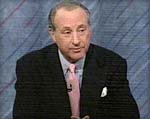
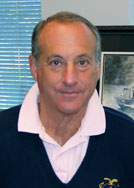
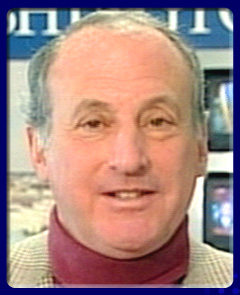
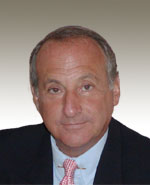
Dr. Harlan Kenneth Ullman

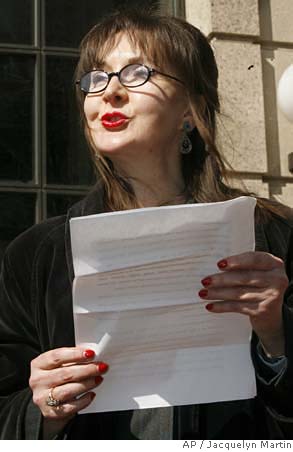
Madam Deborah Jean Palfrey

AP photo -Jacquelyn Martin


This hot story has been sizzling in the corporate media for the last 2 weeks - all the way from the"respectable" media to the porn sites. It's the brand, spanking new DC sex scandal. The government and corporate media served up Randall Tobias as Madam Palfrey's first victim. He was the head of foreign aid programs for the Bush regime who quit his job after the media revealed his name as a client of Madam Deborah Jean Palfrey's prostitution ring in Washington DC. Palfrey is accused of running her $400/Hr prostitution ring for over 13 years in Washington from her home in Vallejo, California. The ring has employed over 130 women. She's also been charged with a multiple-count racketeering and money-laundering indictment.

Yes, it's a bit tiresome, these crusty old politicians getting caught with their pants down again in the midst of carrying on the business of the world's "superpower". But there are a few trysts in this road that make it a little more interesting. The corporate media put Tobias on the block first but he wasn't the first to be named by Madam Palfrey.

According to court documents, Dr. Harlan K. Ullman was the first name provided to authorities by Madam Palfrey. It's little wonder if you've never heard of him. Harlan likes to work in the background and based upon our lengthy search for his photos, he appears to be a little camera-shy too.

Who is Dr. Harlan K. Ullman?

Mr. Shock & Awe

Ullman, Mr. "Shock and Awe" himself, is one of the Neoconservatives who planned the U.S. invasion of Iraq. He's a retired U.S. Naval Commander who is known as the mastermind behind the U.S. "Rapid Dominance" strategy used in the bombing of Iraq in April, 2003. Indeed, he coined the phrase, "Shock and Awe". He is a senior adviser at the Center for Strategic and International Studies (CSIS) and the Atlantic Council. One of his books, a product of the National Defense University, promotes the doctrine of shock and awe. It technically is known as "rapid dominance" and is a military doctrine based on the use of "overwhelming decisive force", "dominant battlefield awareness", "dominant maneuvers", and "spectacular displays of power" to "paralyze an adversary's preception of the battlefield and destroy its will to fight".

"Bloodless Victory"

According to Global Security, "Mr. Ullman says shock and awe and its use of targeted, finely orchestrated attacks on specific military targets is the way to take out the enemy leadership, which can lead to an early, relatively bloodless victory. He says we'll know soon enough whether this will happen with Operation Iraqi Freedom."

"Incomprehensible Destruction"

In his March 20, 2003 Incomprehensible Destruction, Sandy Tollman described Ullmann's plans for Iraq:

"The Pentagon's plan for these first 48 hours of strikes on Baghdad are expected to incorporate a military doctrine known as "Shock and Awe": an estimated 3000 bombs and missiles, nearly one every minute, streaking down on the Iraqi capital. The doctrine is fathered by Harlan Ullman, a veteran military strategist whose 1996 book, "Shock and Awe: Achieving Rapid Dominance", recommends 'nearly incomprehensible levels of massive destruction" to achieve an 'overwhelming level of Shock and Awe against an adversary on an immediate or sufficiently timely basis to paralyse its will to carry on'. The impact of the current strikes can be better understood through a close reading of the book, which cites the atomic bombs on Hiroshima and Nagasaki as successful past examples of "shock and awe".

"It suggests civilian casualties will be far higher than Pentagon officials had previously calculated. Moreover, it appears administration accusations against Saddam Hussein using "human shields" may be part of a campaign to shift the blame for a large civilian death toll in Iraq. And, it raises serious questions over the strategy of democracy by invasion: after such devastation, how would American troops be seen as liberators? In their 1996 book, published by the National Defence University, Ullman and co-author J P Wade lay the groundwork for the current Pentagon thinking on Iraq. The paralysis of the enemy's will, they write, would render him 'totally impotent and vulnerable' through 'total mastery achieved at extraordinary speed and across tactical, strategic, and political levels', which would 'destroy the will to resist'."

The "Hiroshima effect"

Veteran Journalist John Pilger wrote 3 months before the invasion of Iraq:

"A military strategist named Harlan Ullman told American television: 'There will not be a safe place in Baghdad. The sheer size of this has never been seen before, never been contemplated before.' The strategy is known as Shock and Awe and Ullman is apparently its proud inventor. He said: 'You have this simultaneous effect, rather like the nuclear weapons at Hiroshima, not taking days or weeks but minutes.' What will his "Hiroshima effect" actually do to a population of whom almost half are children under the age of 14? The answer is to be found in a 'confidential' UN document, based on World Health Organisation estimates, which says that 'as many as 500,000 people could require treatment as a result of direct and indirect injuries'."

A Member of the Club

Unlike Paul Wolfowitz, Richard Perle, Douglas Feith and the other neoconservatives who planned the invasion and occupation of Iraq, Harlan Ullman maintains a low profile when questions about Palestine are raised. Middle East Realities (MER), an analytical website on the state of Israel has this to say about Ullman:

"When it comes to situation with Israel Ullman treads very lightly. He hardly mentions Israel until near the end; and then he does so very much in the Kissinger/Brzezinski mold never even mentioning aid and arms to Israel or the Israeli/Jewish lobby; only hinting very obliquely at the need to bring Israel into line even with U.S. policies and interests while putting most of the burden on the occupied Palestinians and the Arab regimes to do what they are told and to accept whatever they are offered."

Indeed, Ullman's only strong opinion Palestine and Israel found in our extensive review of his writing was this:

"This is not a question of who is right and who is wrong. This is a question of preventing that part of the world from exploding. So that will require very aggressive, very forceful diplomacy in a country which is very much pro-Israel, in which Congress is very pro-Israel and in which the public is and so that is going to require a statement and a position which I think is going to be very difficult, if not impossible for the administration to be able to assume. So therefore while you say there is an opportunity, and I agree, the sort of aggressive dynamic diplomacy may be beyond any administration, and particularly this one."

"The harder they come"

Harlan K. Ullman,
Member of CSIS

No, there can be no doubt that he is a solid member of the neocon club that carefully laid the plans for the U.S. invasion dating back at least to the early-nineties. His bio reveals he is a senior fellow and director of the Center for Strategic and International Studies (CSIS); director of the Political-Military and Strategy Programs; consulted with a number of Fortune 100 companies; elected to the board of the Wall Street Fund; formed his own company, the Killowen Group, a consulting firm with broad financial interests; served on the boards of several related investment and venture capital companies with holdings in Asia; a senior partner and vice chairman of two companies in the high-technology area; currently chairman of the advisory board of two companies engaged in Smart Zone Management and homeland security; chairs the Senior Seminar at the Center for Naval Analyses; serves at the National Defense University and is on the Senior Advisory Board of the U.S. European Command and the NATO Defence College." The CSIS provides "Strategic Insights and Policy Solutions" to the U.S. government.

"The harder they fall"

Now it is Mr. Ullman who is experiencing his own little piece of "shock and awe" by the bomb Madam Palfrey dropped when she named him first and called him one of her "regular customers". Ullman's pain is of course, not to be compared with the brutality he inflicted upon the good people of Iraq; sufficient payback to this "gentleman" will forever be an impossibility.

Ullman denied being a client of Madam Palfrey
Ullman refused to talk about the Palfrey's revelation last week when he spoke with The Associated Press in a phone call. All he had to say was, "the allegations are beneath the dignity of a comment." Bush Whitehouse fake journalist and male prostitute, Jeff Gannon joined Harlan Ullman for the lunchtime "Q&A Cafe discussion series" at Nathan's Restaurant in Georgetown according to The Examiner in Washington. When asked about his use of Palfrey's prostitution service, Ullman told interviewer Carol Joynt: “The allegations are outrageous and do not dignify a response,” Ullman also told the crowd at Nathans, “My wife and I view this as most bizarre. ... It’s like being in a bad Franz Kafka novel.” When Joynt asked him if he'd ever met Palfrey, he replied, "absolutely not,” adding “I have no idea why lightning happened to strike me.” - The term, 'Kharma' comes to mind.

On March 22, 2007, the elitist The Denver Forum headlined, "The Denver Forum Proudly Presents Dr. Harlan Ullman" when Ullman spoke on "America's Promise Restored: Preventing Culture, Crusade and Partisanship from Wrecking Our Nation". The Corporate Sponsor of the event was Lockheed Martin.

Madam Palfrey says Ullman is "only one of dozens of such officials" who will be shocked and awed. Palfrey says she will expose dozens of officials and that she has "46 pounds of phone records that could expose thousands more clients" - as many as 10,000. Her attorney said that they turned the phone records over to ABC, seeking help in identifying her clients who might be called as witnesses. A search of ABC's website reveals many reports on Tobias, but only one report on Arlan Ullman. These reports are frequently updated on ABC and subject to change. Speaking of Tobias, Palfrey is quoted on ABC's website, "I'm sure as heck not going to be going to federal prison for one day, let alone four to eight years, because I'm shy about bringing in the deputy secretary of whatever. I'll bring in every last one of them in if necessary".

Perhaps Harlan Ullman can take a little solace in knowing that he is not alone among those names given up by Madam Palfrey. Perhaps he can even find some comfort in the damage control exercised by the corporate media. But he will never find refuge from a world that knows about the millions whose lives he has destroyed and all the misery and death his mind has wrought for generations to come.

© Copyright 2007 by AxisofLogic.com

Biography and additional essays by Les Blough