Showing posts with label Venezuela. Show all posts

Tuesday, May 1, 2007

Chavez says he will pull Venezuela out of IMF and World Bank

Canadian Press

CARACAS, Venezuela (AP) - President Hugo Chavez announced Monday he would formally pull Venezuela out of the World Bank and the International Monetary Fund, a largely symbolic move since the nation has already cancelled its debts to the lending institutions.

The leftist leader, who has long railed against the Washington-based lenders, said "we will no longer have to go to Washington, neither to the IMF nor the World Bank, not to anyone."

Chavez said he wanted to formalize Venezuela's exit from the IMF and World Bank "tonight and ask them to return what they owe us."

"We have a few bucks there," he said, referring to Venezuela's recent repayments of debts to the World Bank five years ahead of schedule, which saved the country US$8 million.

Venezuela paid off all its debts to the IMF shortly after Chavez first took office in 1999. The IMF closed its offices in Venezuela late last year.

Saturday, April 21, 2007

Hypocrisy: Thy Name Is Bush

Related
A terrorist walks
Luis Posada Carriles has boasted of bombing Havana hotels, yet American justice lets him go free.

LUIS POSADA CARRILES - THE DECLASSIFIED RECORD
---
consortiumnews.com

By Robert Parry (A Special Report)

George W. Bush likes to present the “war on terror” as a clear-cut moral crusade in which evildoers who kill innocent civilians must be brought harshly to justice, along with the leaders of countries that harbor terrorists. There are no grays, only blacks and whites.

But evenhanded justice is not the true core principle of the Bush Doctrine. The real consistency is hypocrisy: violence which Bush favors – no matter how wanton the slaughter of innocents – is justifiable, while violence that goes against Bush’s interests – even an insurgency against a foreign military occupation – must be punished without remorse as “terrorism.”

In other words, if Bush hates the perpetrators, they are locked up indefinitely without charge and, at his discretion, can be subjected to “alternative interrogation techniques,” what most of the world considers torture. The rule of law is out the window. Wild West hangin' justice is in. Even the ancient fair trial right of habeas corpus is discarded.

However, when the killers of civilians are on Bush’s side, they get the full panoply of legal protections – and every benefit of the doubt. Under this Bush double standard, therefore, right-wing Cuban terrorists Luis Posada Carriles and Orlando Bosch, though implicated in a string of murderous attacks on civilians, get the see-no-evil treatment.

On April 19, the 79-year-old Posada was released on bail from federal custody for an immigration violation and allowed to fly to Miami where he will live at home while his case winds its way through the U.S. courts. Bosch, too, has been allowed to live out his golden years in south Florida with the help and protection of the Bush family.

But the evidence in U.S. government files is overwhelming that Posada and Bosch were the architects of the 1976 mid-air bombing of a civilian Cubana airliner, killing 73 people, including young members of the Cuban national fencing team.

Since the conspiracy was hatched in Caracas, Venezuela, where Posada worked as a Venezuelan intelligence officer, the Venezuelan government has sought Posada’s extradition. However, when a Posada friend testified at Posada’s immigration hearing that Venezuela practices torture, Bush administration lawyers let the unverified claim go unchallenged, leading the judge to forbid Posada’s deportation there.

So, the Bush administration, which has subjected its own terrorism suspects to such practices as painful stress positions and simulated drowning by “water-boarding,” wasn’t willing to take the chance that Posada might be abused in Venezuela, even though there was no real evidence that he would be.

Justifying Terrorism

The Bush administration also took no note a year ago when Bosch publicly justified the 1976 mid-air bombing. The stunning TV interview of Bosch by reporter Juan Manuel Cao on Miami’s Channel 41 was cited in articles on the Internet by José Pertierra, a lawyer for the Venezuelan government. But Bosch’s comments caused him no further difficulty. [For Pertierra’s story, see Counterpunch, April 11, 2006]

“Did you down that plane in 1976?” Cao asked Bosch.

“If I tell you that I was involved, I will be inculpating myself,” Bosch answered, “and if I tell you that I did not participate in that action, you would say that I am lying. I am therefore not going to answer one thing or the other.”

But when Cao asked Bosch to comment on the civilians who died when the plane crashed off the coast of Barbados, Bosch responded, “In a war such as us Cubans who love liberty wage against the tyrant [Fidel Castro], you have to down planes, you have to sink ships, you have to be prepared to attack anything that is within your reach.”

“But don’t you feel a little bit for those who were killed there, for their families?” Cao asked.

“Who was on board that plane?” Bosch responded. “Four members of the Communist Party, five North Koreans, five Guyanese.” [Officials tallies actually put the Guyanese dead at 11.]

Bosch added, “Four members of the Communist Party, chico! Who was there? Our enemies…”

“And the fencers?” Cao asked about Cuba’s amateur fencing team that had just won gold, silver and bronze medals at a youth fencing competition in Caracas. “The young people on board?”

Bosch replied, “I was in Caracas. I saw the young girls on television. There were six of them. After the end of the competition, the leader of the six dedicated their triumph to the tyrant. … She gave a speech filled with praise for the tyrant.

“We had already agreed in Santo Domingo, that everyone who comes from Cuba to glorify the tyrant had to run the same risks as those men and women that fight alongside the tyranny.” [The comment about Santo Domingo was an apparent reference to a strategy meeting by a right-wing terrorist organization, CORU, which took place in the Dominican Republic in 1976.]

“If you ran into the family members who were killed in that plane, wouldn’t you think it difficult?” Cao asked.

“No, because in the end those who were there had to know that they were cooperating with the tyranny in Cuba,” Bosch answered.

In an article about Bosch’s remarks, lawyer Pertierra said the answers “give us a glimpse into the mind of the kind of terrorist that the United States government harbors and protects in Miami; terrorists that for the last 47 years have waged a bloody and ruthless war against the Cuban people.”

CIA Files

Beyond Bosch’s incriminating statements, the evidence of his and Posada’s guilt is overwhelming. Declassified U.S. documents show that soon after the Cubana Airlines plane was blown out of the sky on Oct. 6, 1976, the CIA, then under the direction of George H.W. Bush, identified Posada and Bosch as the masterminds of the bombing.

But in fall 1976, Bush’s boss, President Gerald Ford, was in a tight election battle with Democrat Jimmy Carter and the Ford administration wanted to keep intelligence scandals out of the newspapers. So Bush and other officials kept the lid on the investigations. [For details, see Robert Parry’s Secrecy & Privilege.]

Still, inside the U.S. government, the facts were known. According to a secret CIA cable dated Oct. 14, 1976, intelligence sources in Venezuela relayed information about the Cubana Airlines bombing that tied in anti-communist Cuban extremists Bosch, who had been visiting Venezuela, and Posada, who then served as a senior officer in Venezuela’s intelligence agency, DISIP.

The Oct. 14 cable said Bosch arrived in Venezuela in late September 1976 under the protection of Venezuelan President Carlos Andres Perez, a close Washington ally who assigned his intelligence adviser Orlando Garcia “to protect and assist Bosch during his stay in Venezuela.”

On his arrival, Bosch was met by Garcia and Posada, according to the report. Later, a fundraising dinner was held in Bosch’s honor during which Bosch requested cash from the Venezuelan government in exchange for assurances that Cuban exiles wouldn’t demonstrate during Andres Perez’s planned trip to the United Nations.

“A few days following the fund-raising dinner, Posada was overheard to say that, ‘we are going to hit a Cuban airplane,’ and that ‘Orlando has the details,’” the CIA report said.

“Following the 6 October Cubana Airline crash off the coast of Barbados, Bosch, Garcia and Posada agreed that it would be best for Bosch to leave Venezuela. Therefore, on 9 October, Posada and Garcia escorted Bosch to the Colombian border, where he crossed into Colombian territory.”

The CIA report was sent to CIA headquarters in Langley, Virginia, as well as to the FBI and other U.S. intelligence agencies, according to markings on the cable.

In South America, police began rounding up suspects. Two Cuban exiles, Hernan Ricardo and Freddy Lugo, who got off the Cubana plane in Barbados, confessed that they had planted the bomb. They named Bosch and Posada as the architects of the attack.

A search of Posada’s apartment in Venezuela turned up Cubana Airlines timetables and other incriminating documents.

Posada and Bosch were charged in Venezuela for the Cubana Airlines bombing, but the men denied the accusations. The case soon became a political tug-of-war, since the suspects were in possession of sensitive Venezuelan government secrets that could embarrass President Andres Perez.

Lost Interest

After the Reagan-Bush administration took power in Washington in 1981, the momentum for fully unraveling the mysteries of anti-communist terrorist plots dissipated. The Cold War trumped any concern about right-wing terrorism.

In 1985, Posada escaped from a Venezuelan prison, reportedly with the help of Cuban exiles. In his autobiography, Posada thanked Miami-based Cuban activist Jorge Mas Canosa for providing the $25,000 that was used to bribe guards who allowed Posada to walk out of prison.

Another Cuban exile who aided Posada was former CIA officer Felix Rodriguez, who was close to then-Vice President George H.W. Bush and who was overseeing secret supply shipments to the Nicaraguan contra rebels, a pet project of President Ronald Reagan.

After fleeing Venezuela, Posada joined Rodriguez in Central America and was assigned the job of paymaster for pilots in the White House-run contra-supply operation. When one of the contra-supply planes was shot down inside Nicaragua in October 1986, Posada was responsible for alerting U.S. officials to the crisis and then shutting down the operation’s safe houses in El Salvador.

Even after the exposure of Posada’s role in the contra-supply operation, the U.S. government made no effort to bring the accused terrorist to justice.

By the late 1980s, Orlando Bosch also was out of Venezuela’s jails and back in Miami. But Bosch, who had been implicated in about 30 violent attacks, was facing possible deportation by U.S. officials who warned that Washington couldn’t credibly lecture other countries about terrorism while protecting a terrorist like Bosch.

But Bosch got lucky. Jeb Bush, then an aspiring Florida politician, led a lobbying drive to prevent the U.S. Immigration and Naturalization Service from expelling Bosch. In 1990, the lobbying paid dividends when Jeb's dad, President George H.W. Bush, blocked proceedings against Bosch, letting the unapologetic terrorist stay in the United States.

In 1992, also during George H.W. Bush’s presidency, the FBI interviewed Posada about the Iran-Contra scandal for 6 ½ hours at the U.S. Embassy in Honduras.

Posada filled in some blanks about the role of Bush’s vice presidential office in the secret contra operation. According to a 31-page summary of the FBI interview, Posada said Bush’s national security adviser, Donald Gregg, was in frequent contact with Felix Rodriguez.

“Posada … recalls that Rodriguez was always calling Gregg,” the FBI summary said. “Posada knows this because he’s the one who paid Rodriguez’ phone bill.” After the interview, the FBI agents let Posada walk out of the embassy to freedom. [For details, see Parry’s Lost History: Contras, Cocaine, the Press & Project Truth.]

More Attacks

Posada soon returned to his anti-Castro plotting.

In 1994, Posada set out to kill Castro during a trip to Cartagena, Colombia. Posada and five cohorts reached Cartagena, but the plan flopped when security cordons prevented the would-be assassins from getting a clean shot at Castro, according to a Miami Herald account. [Miami Herald, June 7, 1998]

The Herald also described Posada’s role in a lethal 1997 bombing campaign against popular hotels and restaurants inside Cuba that killed an Italian tourist. The story cited documentary evidence that Posada arranged payments to conspirators from accounts in the United States.

“This afternoon you will receive via Western Union four transfers of $800 each … from New Jersey,” said one fax signed by SOLO, a Posada alias.

Posada landed back in jail in 2000 after Cuban intelligence uncovered a plot to assassinate Castro by planting a bomb at a meeting the Cuban leader planned with university students in Panama.

Panamanian authorities arrested Posada and other alleged co-conspirators in November 2000. In April 2004, they were sentenced to eight or nine years in prison for endangering public safety.

Four months after the sentencing, however, lame-duck Panamanian President Mireya Moscoso – who lives in Key Biscayne, Florida, and has close ties to the Cuban-American community and to George W. Bush’s administration – pardoned the convicts.

Despite press reports saying Moscoso had been in contact with U.S. officials about the pardons, the State Department denied that it pressured Moscoso to release the Cuban exiles. After the pardons and just two months before Election 2004, three of Posada’s co-conspirators – Guillermo Novo Sampol, Pedro Remon and Gaspar Jimenez – arrived in Miami to a hero’s welcome, flashing victory signs at their supporters.

While the terrorists celebrated, U.S. authorities watched the men – also implicated in bombings in New York, New Jersey and Florida – alight on U.S. soil. As Washington Post writer Marcela Sanchez noted in a September 2004 article about the Panamanian pardons, “there is something terribly wrong when the United States, after Sept. 11 (2001), fails to condemn the pardoning of terrorists and instead allows them to walk free on U.S. streets.” [Washington Post, Sept. 3, 2004]

Posada Arrives

Posada reportedly sneaked into the United States in early 2005 and his presence was an open secret in Miami for weeks before U.S. authorities did anything. The New York Times summed up Bush’s dilemma if Posada decided to seek U.S. asylum.

“A grant of asylum could invite charges that the Bush administration is compromising its principle that no nation should harbor suspected terrorists,” the Times wrote. “But to turn Mr. Posada away could provoke political wrath in the conservative Cuban-American communities of South Florida, deep sources of support and campaign money for President Bush and his brother, Jeb.” [NYT, May 9, 2005]

Only after Posada called a news conference to announce his presence was the Bush administration shamed into arresting him. But even then, the administration balked at sending Posada back to Venezuela where the government of Hugo Chavez – unlike some of its predecessors – was eager to prosecute.

At a U.S. immigration hearing in 2005, Posada’s defense attorney called as a witness a Posada friend who alleged that Venezuela’s government practices torture. Bush administration lawyers didn’t challenge the claim, leading the immigration judge to bar Posada’s deportation to Venezuela.

Venezuela’s Ambassador Bernardo Alvarez accused the Bush administration of applying “a cynical double standard” in the “war on terror.”

“The United States presents itself as a leader against terrorism, invades countries, restricts the civil rights of Americans in order to fight terrorism, but when it is about its own terrorists, it denies that they be tried,” Alvarez said.

As for the claim that Venezuela practices torture, Alvarez said, “There isn’t a shred of evidence that Posada would be tortured in Venezuela.” Alvarez added that the claim was particularly ironic given widespread press accounts that the Bush administration has abused prisoners at the U.S. military base in Guatanamo Bay, Cuba.

The Posada-Bosch cases point to one unavoidable and unpleasant conclusion: that the Bush family regards terrorism – defined as killing civilians for a political reason – as justified or at least tolerable in cases when their interests match those of the terrorists.

Terrorism is only a moral evil to the Bushes when the violence against civilians clashes with the Bush family’s interests.

This blatant hypocrisy often has been aided and abetted by the U.S. news media, which intuitively understands the double standard and acts accordingly. The U.S. press corps downplays or ignores cases in which terrorism has connections to U.S. government officials – and especially to the Bush family.

Robert Parry broke many of the Iran-Contra stories in the 1980s for the Associated Press and Newsweek. His latest book, Secrecy & Privilege: Rise of the Bush Dynasty from Watergate to Iraq, can be ordered at secrecyandprivilege.com.

Friday, April 20, 2007

Another Bush Releases Another Mass Murderer

Fri Apr 20th, 2007 at 04:02:12 AM EST

Terrorist Posada Arrives Home in Miami

by Meteor Blades
tleelange@hotmail.com

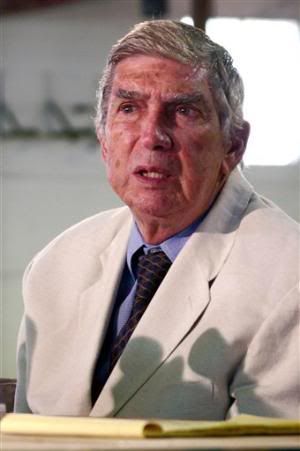
Looking fragile and tired in his off-white tropical suit, a grandfatherly Luis Posada Carriles was gently helped out of the car that delivered him to his wife's house in Miami Thursday as the sun went down. It will be the first time in 23 months that he has not spent the night in federal detention. So it was no surprise that, when asked how he felt, he replied, "Estoy muy contento," ("I'm very happy.") To the Cuban-American community he said, "I'm very grateful."

Happy and grateful and comfortably surrounded by his family, friends and fans while his victims spin in their graves. Except that many of his victims have no graves since they were killed by the bombing of Air Cubana Flight 455 in 1976 when it took off from Barbados. Not all the bodies could be recovered. Among those on board were many teenagers, members of the Cuban fencing team. Says Posada: "No one saw me make a bomb."


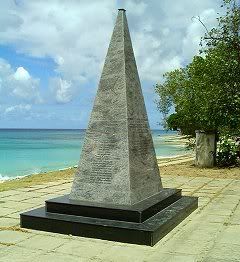
Barbados Monument to those killed in the 1976 bombing.

You may never have heard of Luis Posada Carriles. His is not exactly a household name even though he's a fugitive wanted in two countries for airline bombing and hotel bombing. Even though, before September 11, 2001, the downing of Flight 455 was the worst terrorist act in the Western Hemisphere. That's not all he did. Posada got around. He worked for the CIA, he worked for the Venezuelan secret police, he had ties to the Chilean secret police, he was connected to Operation Condor, he helped Oliver North distribute weapons to the terrorist contras of Nicaragua, weapons paid for by illegal sales of other weapons to America's very good friends, the Iranian ayatollahs. In the genocidal Guatemala of the 1980s, he worked as an "advisor" to counter-guerrilla operatives there.

Don't take my word for any of this (as if you would anyway). Read the declassified files on Posada held at the National Security Archives. Many files remain classified. A few critics claim other files have been destroyed, a charge impossible, of course, to prove.

No direct evidence exists, but there are suspicions Posada was assisted by high-level American officials in his escape from a Venezuelan jail in 1985. In 2001, he and others were convicted in connection with a bomb plot to kill Castro on the occasion of the old caudillo's visit to Panama. Posada and his fellow convicts served until 2004 when they were suddenly pardoned by Panamanian President Mireya Moscoso, who had close ties to the Bush Administration. She denied any political motivation. The Administration never condemned the plotters, even though innocents attending Castro's speech would certainly have been killed if Posada's terrorists had carried out their mission.

If the Administration had had its way, Posada would never have spent a day in the slammer. Indeed, he wasn't arrested until the afternoon of the day the Miami Herald published an interview with him that its reporters had undertaken through cloak-and-dagger means at a secret location. Moreover, if the Administration has its way, Posada will never pay for his crimes, never be brought to account, even though there is at least circumstantial evidence that one of his victims was an American citizen, Ronni Moffitt, murdered by a bomb along with the Allende-era Chilean diplomat, Orlando Letelier, in September 1976, on the streets of Washington, D.C.

Peter Kornbluth, director of the Cuba Documentation Project at the National Security Archive, said it best on All Things Considered:

His release sends a message to the world that the United States really is not serious in its war on terrorism. Here's a guy who has a lifelong résumé of violent acts, blowing up planes, bombing hotels, attempting to blow up ships, assassination efforts against Fidel Castro. ...

Here was a case where the Bush Administration could have employed the Patriot Act to hold Posada as a terrorist. All they had to do was certify that he was a terrorist or that his release would be detrimental to U.S. national security interests. And despite the fact that immigration and customs have said to him directly in letters your history of violence means you are a danger to the security of U.S. citizens, they have now let him go. ...

Luis Posada Carriles was a litmus test for the Bush Administration. ... Instead, they have let him return to his home in Miami where many of his supporters will gather and cheer.


Just about anyone who has lost kin or friends to acts of terror - whether by state-sponsored terror or the acts of free-lancers like Osama bin Laden - is well-acquainted with vengeful desires. For victims of such violence, nothing is too terrible a punishment for the perpetrators. But in a civilized society, that's what courts are for.

Or at least what courts were for before Mister Bush and his crew took over, came up with torture excuses, "enemy combatants," secret prisons and jurisdictional no-man's-lands like Guantánamo, the latter ironically based on the forcibly leased land of the longest surviving one-man dictatorship in the world.

A vengeful person would suggest that perhaps Señor Posada should spend an indefinite period of time there in a permanently lit cell, shackled to the floor, listening to high-decibel rap music instead of the boleros of his youth. Vengeance, however, isn't justice. And justice is what the old terrorist's victims cry out for. We are, in a sense, all of us his victims. Victims of a government that is itself above the law, that uses the "war on terror" as just more fuel for its spin machine, all but abandoning the hunt for some terrorists, while all but publicly embracing some others.

Given the number of people who cross the Mexican border illegally every year, it is ridiculous to be trying Luis Posada Carriles for illegally entering the United States. Especially since it's already been decided by the same federal judiciary that has released him on bail that he can't be deported either to Cuba or Venezuela - the two countries whose citizens suffered the most from his actions - because he might be tortured there. The ironies pile sky-high.

Another course of action remains. Release all the files on Posada and ship them and him to The Hague for trial under the crimes against humanity section of the Rome Statute of the International Criminal Court. That would be justice. And it will happen when pigs fly.

Most likely, Posada will settle down in Miami, with or without his electronic tracking bracelet, drinking piña coladas or peach daiquiris for the rest of his life. Perhaps he can drive over and play dominoes with his pal in Operation Condor, Orlando Bosch, the murderer and terrorist pardoned by George H.W. Bush in 1990.

Wednesday, February 21, 2007

London Mayor Signs Oil Deal With Chavez

Wednesday February 21, 2007 1:01 AM

By JENNIFER QUINN
Associated Press Writer

LONDON (AP) - London's socialist mayor signed an agreement Tuesday with Venezuela's state-owned oil company to provide discounted oil for the city's iconic red buses, praising the idea as the brainstorm of the country's leftist leader, Hugo Chavez.

Ken Livingstone - a committed socialist known locally as ``Red Ken'' - met with Chavez last year at City Hall to discuss the deal to provide cheap oil to London in exchange for advice on urban planning in Caracas, the Venezuelan capital.

Venezuela has signed similar agreements with cities in several other countries, including the United States. Critics call it ``oil diplomacy'' - and say it is designed to embarrass President Bush, whom Chavez has repeatedly mocked.

``This arose out of the suggestion of President Hugo Chavez, and builds on the work he is doing around the world to tackle the problem of poverty,'' Livingstone said.

The savings - which would cut fuel costs by 20 percent for the city and could amount to about $32 million - are to be directed toward cheaper bus travel for up to 250,000 Londoners living on income support. Those who qualify will get a half-price discount on bus fares.

Under the agreement, city officials in Caracas will receive recommendations from British experts for ``the urban reorganization'' of the capital, Venezuelan Foreign Minister Nicholas Maduro said in an interview broadcast on state-run television.

Conservatives on the London city council said in a statement that London shouldn't be doing business with ``third-rate South American dictators with an appalling human rights and democratic record.''

``Why does London, one of the richest capitals in the world, need to exploit a developing nation?'' asked Richard Barnes, deputy leader of the London Assembly Conservatives. ``This money would be better directed at the poor of Venezuela.''

The U.S. government and Chavez's opponents at home accuse him of undermining Venezuela's democratic institutions since he was first elected in 1998. Chavez, who was widely re-elected to a six-year term in December, says he is trying to remake an unjust system that sidelined the poor majority.

Livingstone, an advocate of green policies, said Venezuela and London were merely exchanging commodities.

Venezuela is the world's eighth-largest oil exporter.

London spends about $195 million a year on fuel for its fleet of 8,000 buses. The savings from the new oil agreement with Venezuela are equivalent to slightly less than 1 percent of the total cost of providing London's bus services, the mayor's office said.

Associated Press Writer Christopher Toothaker in Caracas, Venezuela, contributed to this report.

Tuesday, February 6, 2007

The USA and Saudi Arabia Combat the Axis of Oil - Iran, Russia and Venezuela

Commodities / Analysis & Strategy
Feb 05, 2007 - 01:27 AM

By Gary_Dorsch

Crude oil is the key weapon in the battle between Saudi Arabia, Kuwait, and the UAE, aligned with the United States, against the “Oil Axis” of Iran, Russia, and Venezuela. The Persian Gulf Oil kingdoms fear the emergence of a Tehran-led axis linking Iran, Iraqi Shiites, Syria, Lebanon's Hezbollah, Palestinian Hamas in Gaza, and Islamic militants linked to al Qaeda trying to topple the Saudi royal family.

Earlier this month, Riyadh fired the first shot in the war against Iran, by knocking the price of crude oil to as low as $50 per barrel. The goal is to squeeze Iran's budget and wreck havoc on its economy, as much as possible, before the Ayatollahs can get their hands on the nuclear bomb. According to a Jan 24th report in the UK Telegraph, that indicated North Korea is helping Iran to prepare an underground nuclear test similar to the one Pyongyang carried out last year.

Under the terms of a new understanding between the two countries, the North Koreans have agreed to share all the data and information they received from their successful test last October with Teheran's nuclear scientists, to assist Teheran's preparations to conduct its own test, possibly by the end of this year.

--MORE--

Thursday, January 18, 2007

Ahmadinejad be damned

While Iranian President Mahmud Ahmadinejad has been traipsing around South America hatching energy plots, all is not well on the home front. Ahmadinejad is subject to crossfire from conservatives and reformers alike, with the former particularly upset over his handling of the nuclear dossier and wanting to rein him in. Washington might need to start manufacturing another "new Hitler".

Jan 19, 2007

THE ROVING EYE

By Pepe Escobar

It's all over the Iranian press: President Mahmud Ahmadinejad, self-described "street cleaner of the people", is in deep political trouble at home, subjected to crossfire from conservatives and reformers alike. All the more ironic considering the biblical tsunami of Washington spin portraying Ahmadinejad as the newest "new Hitler" (Saddam Hussein, after all, fell victim to a lynch mob).

As far as geopolitical strategy is concerned, it's as if Ahmadinejad might be as clueless as his US counterpart, President George W Bush. Well, it's not that simple. The conservative Etemad e-Melli newspaper rhetorically asked what exactly the Iranian president was up to in Latin America while US Secretary of State Condoleezza Rice was lobbying dictatorial Arab regimes - from Egypt to Saudi Arabia - to deep-freeze Iran over alleged "interference" in Iraq.

Well, he was consolidating what the White House already regards as the new "axis of evil" - the strategic relationship between Iran and Venezuela, sealed last September during Ahmadinejad's first visit to Caracas, right inside what the US historically considered its "back yard".

The ultra-conservative Keyhan newspaper, very close to Iranian Supreme Leader Ayatollah Ali al-Khamenei, could not help but consider it "a great victory for the diplomacy of Ahmadinejad's government".

In the lightning-quick Latin America tour that took him to Venezuela, Nicaragua and Ecuador, meeting re-elected leftist stalwart Hugo Chavez, the recently elected former guerrillero Daniel Ortega, and US-educated economist Rafael Correa, the key Ahmadinejad stop was in Caracas. A joint Iran-Venezuela US$2 billion fund for myriad projects will also benefit other friendly developing countries in Latin America and Africa that, in Chavez' words, "are making efforts to liberate themselves from the imperialist yoke".

Both Iran and Venezuela are key members of the Organization of Petroleum Exporting Countries. Washington's nemesis Chavez once again was clear: "There's too much crude in the market." So both presidents agreed on Saturday to lobby OPEC for a further cut in production to boost crude-oil prices.

That's not what major OPEC producer Saudi Arabia wants - or what Washington "suggested" Riyadh not to want. OPEC had already reduced production by 1.2 million barrels a day in November and will reduce by another 500,000 barrels a day from February 1.

Both Chavez and Ahmadinejad want more - Chavez to fuel his ambitious domestic social programs, Ahmadinejad at least to start a few. Even if global oil prices fell sharply - an unlikely scenario - Venezuelan analysts project that Chavez would still proceed full speed ahead with oil at $30 a barrel. But for Iran, that would be an economic disaster.

To boost Washington's ire to stratospheric levels, Chavez once again stressed that the Bolivarian and the Islamic revolutions were "sisters" - a link impeccably translated by the official exchange of gifts: Ahmadinejad received a Persian translation of a book on Simon Bolivar, the great South American liberator, while Chavez received a Spanish translation of a book on ayatollah Ruhollah Khomeini, the leader of Iran's 1979 revolution.

Now shut up and work
Ahmadinejad being hailed as a post-modern co-liberator of South America was not enough to placate criticism back in his part of the world. For the conservative Iranian religious newspaper Jomhouri Islami - also very close to Khamenei - in an unusually blunt article, the president's non-stop interference with the nuclear dossier was viewed as ruining Iranian diplomacy (Ahmadinejad expelled experienced diplomats from the Foreign Office in 2005, sprinkling it with his Revolutionary Guard allies).

The article aptly translates the fierce battle going on in the opaque nationalist theocracy's corridors of power. And Ahmadinejad's faction appears to be losing the battle. The Supreme Leader - who is responsible for the nuclear dossier anyway - seems to have had enough, and has in essence ordered the president to shut up.

Khamenei and his supporters - the clerics' faction - believe that Ahmadinejad's explosive tirades have been used as firepower by the US to persuade the United Nations Security Council to impose sanctions on Iran. In addition, Ahmadinejad's faction - via his mentor Ayatollah Mesbah Yazdi - lost ground in last month's election to the Council of Experts, the only body that can hold the Supreme Leader to account. Victory went to perennial Machiavellian Hashemi Rafsanjani - who leads a moderate, semi-secular faction hostile to Ahmadinejad's.

There's now ample speculation in Tehran that new, Supreme Leader-appointed faces will shake up Iran's nuclear negotiation team. And in the middle of all this, eyebrows East and West were raised when Keyhan slipped in an editorial last Friday saying that Iran "is only a few steps away from becoming a nuclear power". Was that a fact, a warning, or a figure of speech?

Ahmadinejad anyway will have to shelve his rhetoric - and start delivering. A group of reformist and moderate Parliament members is signing petitions to force him to explain his (non-existent) policies. Jomhouri Islami even issued a prescription: "Speak about the nuclear issue only during important national occasions, stop provoking aggressor powers like the United States, and concentrate more on the daily needs of the people." Not to mention fulfilling electoral promises of fighting inflation, corruption and the oil mafia.

Keeping Ahmadinejad on a leash will be a crucial part of the nationalist theocracy's strategy of doing everything in its power not to incur further US wrath - as the Bush administration escalates its formidable array of acts of provocation. Ahmadinejad is now seen as too much of a loose cannon to be left to his own devices - especially when 45 centuries of accumulated Persian diplomacy can be effectively deployed.

Iran enjoys good political relations with the majority of countries around the world - especially in the South. The glaring exceptions are the US and Israel. Iran is not a backward, repressive regime like Saudi Arabia. The talk in Tehran is that the Supreme Leader and professional diplomats have concluded that the best course of action for Iran is to ride the tempest of provocations - sanctions, illegal raids on consulates, US intelligence infiltrating sensitive Khuzestan province, encirclement by nuclear-equipped aircraft carriers, propaganda over Iranian "networks" killing Americans in Iraq - while advancing Iran's interests in Lebanon, Central Asia, China, Russia and South America.

Washington might need to start manufacturing another "new Hitler".

Copyright 2007 Asia Times Online Ltd.

Saturday, January 13, 2007

Johnny got his gun

January 12, 2007
by William Blum


In the past year Iran has issued several warnings to the United States about the consequences of an American or Israeli attack. One statement, issued in November by a high Iranian military official, declared: "If America attacks Iran, its 200,000 troops and 33 bases in the region will be extremely vulnerable, and both American politicians and military commanders are aware of it."[1] Iran apparently believes that American leaders would be so deeply distressed by the prospect of their young men and women being endangered and possibly killed that they would forswear any reckless attacks on Iran. As if American leaders have been deeply stabbed by pain about throwing youthful American bodies into the bottomless snakepit called Iraq, or were restrained by fear of retaliation or by moral qualms while feeding 58,000 young lives to the Vietnam beast. As if American leaders, like all world leaders, have ever had such concerns.

Let's have a short look at some modern American history, which may be instructive in this regard. A report of the US Congress in 1994 informed us that:

Approximately 60,000 military personnel were used as human subjects in the 1940s to test two chemical agents, mustard gas and lewisite [blister gas]. Most of these subjects were not informed of the nature of the experiments and never received medical followup after their participation in the research. Additionally, some of these human subjects were threatened with imprisonment at Fort Leavenworth if they discussed these experiments with anyone, including their wives, parents, and family doctors. For decades, the Pentagon denied that the research had taken place, resulting in decades of suffering for many veterans who became ill after the secret testing.[2]

In the decades between the 1940s and 1990s, we find a remarkable variety of government programs, either formally, or in effect, using soldiers as guinea pigs -- marched to nuclear explosion sites, with pilots sent through the mushroom clouds; subjected to chemical and biological weapons experiments; radiation experiments; behavior modification experiments that washed their brains with LSD; widespread exposure to the highly toxic dioxin of Agent Orange in Korea and Vietnam ... the list goes on ... literally millions of experimental subjects, seldom given a choice or adequate information, often with disastrous effects to their physical and/or mental health, rarely with proper medical care or even monitoring.[3]

In the 1990s, many thousands of American soldiers came home from the Gulf War with unusual, debilitating ailments. Exposure to harmful chemical or biological agents was suspected, but the Pentagon denied that this had occurred. Years went by while the veterans suffered terribly: neurological problems, chronic fatigue, skin problems, scarred lungs, memory loss, muscle and joint pain, severe headaches, personality changes, passing out, and much more. Eventually, the Pentagon, inch by inch, was forced to move away from its denials and admit that, yes, chemical weapon depots had been bombed; then, yes, there probably were releases of deadly poisons; then, yes, American soldiers were indeed in the vicinity of these poisonous releases, 400 soldiers; then, it might have been 5,000; then, "a very large number", probably more than 15,000; then, finally, a precise number -- 20,867; then, "The Pentagon announced that a long-awaited computer model estimates that nearly 100,000 U.S. soldiers could have been exposed to trace amounts of sarin gas."[4]

If the Pentagon had been much more forthcoming from the outset about what it knew all along about these various substances and weapons, the soldiers might have had a proper diagnosis early on and received appropriate care sooner. The cost in terms of human suffering has been incalculable.

Soldiers have also been forced to take vaccines against anthrax and nerve gas not approved by the FDA as safe and effective; and punished, sometimes treated like criminals, if they refused. (During World War II, soldiers were forced to take a yellow fever vaccine, with the result that some 330,000 of them were infected with the hepatitis B virus.[5])

And through all the recent wars, countless American soldiers have been put in close proximity to the radioactive dust of exploded depleted uranium-tipped shells and missiles on the battlefield; depleted uranium has been associated with a long list of rare and terrible illnesses and birth defects. It poisons the air, the soil, the water, the lungs, the blood, and the genes. (The widespread dissemination of depleted uranium by American warfare -- from Serbia to Afghanistan to Iraq -- should be an international scandal and crisis, like AIDS, and would be in a world not so intimidated by the United States.)

The catalogue of Pentagon abuses of American soldiers goes on ... Troops serving in Iraq or their families have reported purchasing with their own funds bullet-proof vests, better armor for their vehicles, medical supplies, and global positioning devices, all for their own safety, which were not provided to them by the army ... Continuous complaints by servicewomen of sexual assault and rape at the hands of their male counterparts are routinely played down or ignored by the military brass ... Numerous injured and disabled vets from all wars have to engage in an ongoing struggle to get the medical care they were promised ... One should read "Army Acts to Curb Abuses of Injured Recruits" (New York Times, May 12, 2006) for accounts of the callous, bordering on sadistic, treatment of soldiers in bases in the United States ... Repeated tours of duty, which fracture family life and increase the chance not only of death or injury but of post-traumatic stress disorder (PTSD).[6]

National Public Radio's "All Things Considered", on December 4 and other days, ran a series on· Army mistreatment of soldiers home from Iraq and suffering serious PTSD. At Colorado's Ft. Carson these afflicted soldiers are receiving a variety of abuse and punishment much more than the help they need, as officers harass and punish them for being emotionally "weak."

Keep the above in mind the next time you hear a president or a general speaking on Memorial Day about "honor" and "duty" and about how much we "owe to the brave young men and women who have made the ultimate sacrifice in the cause of freedom and democracy."

And read "Johnny Got His Gun" by Dalton Trumbo for the ultimate abuse of soldiers by leaders of nations.


The conscience of our leaders
After he ordered the bombing of Panama in December 1989, which killed anywhere from 500 to a few thousand totally innocent people, guilty of no harm to any American, the first President George Bush declared that his "heart goes out to the families of those who have died in Panama".[7]

When asked by a reporter: "Was it really worth it to send people to their death for this? To get Noriega?", Bush replied: "Every human life is precious, and yet I have to answer, yes, it has been worth it."[8]

Speaking in November 1990 of his imminent invasion of Iraq, Bush, Sr. said: "People say to me: 'How many lives? How many lives can you expend?' Each one is precious."[9]

While his killing of thousands of Iraqis was proceeding merrily along in 2003, the second President George Bush was moved to say: "We believe in the value and dignity of every human life."[10]

In December 2006, the White House spokesman for Bush, Jr., commenting about American deaths reaching 3,000 in Iraq, said President Bush "believes that every life is precious and grieves for each one that is lost."[11]

Both father and son are on record expressing their deep concern for God and prayer both before and during their mass slaughters. "I trust God speaks through me," said Bush the younger in 2004. "Without that, I couldn't do my job."[12]

After his devastation of Iraq and its people, Bush the elder said: "I think that, like a lot of others who had positions of responsibility in sending someone else's kids to war, we realize that in prayer what mattered is how it might have seemed to God."[13]

God, one surmises, might have asked George Bush, father and son, about the kids of Iraq. And the adults. And, in a testy, rather ungodlike manner, might have snapped: "So stop wasting all the precious lives already!"

In the now-famous exchange on TV in 1996 between Madeleine Albright and reporter Lesley Stahl, the latter was speaking of US sanctions against Iraq, and asked the then-US ambassador to the UN, and Secretary of State-to-be: "We have heard that a half million children have died. I mean, that's more children than died in Hiroshima. And -- and you know, is the price worth it?" Replied Albright: "I think this is a very hard choice, but the price -- we think the price is worth it."[14]

Ten years later, Secretary of State Condoleezza Rice, continuing the fine tradition of female Secretaries of State and the equally noble heritage of the Bush family, declared that the current horror in Iraq is "worth the investment" in American lives and dollars.[15]

And don't forget that we can't pull out of Iraq now because it would dishonor the troops who haven't died yet.


The American media as the Berlin Wall
In December 1975, while East Timor, which lies at the eastern end of the Indonesian archipelago, was undergoing a process of decolonization from Portugal, a struggle for power took place. A movement of the left, Fretilin, prevailed and then declared East Timor's independence from Portugal. Nine days later, Indonesia invaded East Timor. The invasion was launched the day after US President Gerald Ford and Secretary of State Henry Kissinger had left Indonesia after giving President Suharto permission to use American arms, which, under US law, could not be used for aggression. But Indonesia was Washington's most valuable ally in Southeast Asia and, in any event, the United States was not inclined to look kindly on any government of the left.

Indonesia soon achieved complete control over East Timor, with the help of the American arms and other military aid, as well as diplomatic support at the UN. Amnesty International estimated that by 1989, Indonesian troops had killed 200,000 people out of a population of between 600,000 and 700,000, a death rate which is probably one of the highest in the entire history of wars.[16]

Is it not remarkable that in the numerous articles in the American daily press following President Ford's death last month, there was not a single mention of his role in the East Timor massacre? A search of the extensive Lexis-Nexis and other media databases finds mention of this only in a few letters to the editor from readers; not a word even in the reports of any of the news agencies, like the Associated Press, which generally shy away from controversy less than the newspapers they serve; nor a single mention in the mainstream broadcast news programs.

Imagine if following the recent death of Augusto Pinochet the media made no mention of his overthrow of the Allende government in Chile, or the mass murder and torture which followed. Ironically, the recent articles about Ford also failed to mention his remark a year after Pinochet's coup. President Ford declared that what the United States had done in Chile was "in the best interest of the people in Chile and certainly in our own best interest."[17]

During the Cold War, the American government and media never missed an opportunity to point out the news events embarrassing to the Soviet Union which became non-events in the communist media.


Man shall never fly
The Cold War is still with us. Because the ideological conflict that was the basis for it has not gone away. Because it can't go away. As long as capitalism exists, as long as it puts profit before people, as it must, as long as it puts profit before the environment, as it must, those on the receiving end of its sharp pointed stick must look for a better way.

Thus it is that when Venezuelan President Hugo Chávez announced a few days ago that he plans to nationalize telephone and electric utility companies to accelerate his "socialist revolution", the spokesperson for Capitalism Central, White House press secretary Tony Snow, was quick to the attack: "Nationalization has a long and inglorious history of failure around the world," Snow declared. "We support the Venezuelan people and think this is an unhappy day for them."[18]

Snow presumably buys into the belief that capitalism defeated socialism in the Cold War. A victory for a superior idea. The boys of Capital chortle in their martinis about the death of socialism. The word has been banned from polite conversation. And they hope that no one will notice that every socialist experiment of any significance in the past century has either been corrupted, subverted, perverted, or destabilized ... or crushed, overthrown, bombed, or invaded ... or otherwise had life made impossible for it, by the United States. Not one socialist government or movement -- from the Russian Revolution to Cuba, the Sandinistas in Nicaragua and the FMLN in Salvador, from Communist China to Grenada, Chile and Vietnam -- not one was permitted to rise or fall solely on its own merits; not one was left secure enough to drop its guard against the all-powerful enemy abroad and freely and fully relax control at home. Even many plain old social democracies -- such as in Guatemala, Iran, British Guiana, Serbia and Haiti, which were not in love with capitalism and were looking for another path -- even these too were made to bite the dust by Uncle Sam.

It's as if the Wright brothers' first experiments with flying machines all failed because the automobile interests sabotaged each test flight. And then the good and god-fearing folk of America looked upon this, took notice of the consequences, nodded their collective heads wisely, and intoned solemnly: Man shall never fly.

Tony Snow would have us believe that the government is no match for the private sector in efficiently getting large and important things done. But is that really true? Let's clear our minds for a moment, push our upbringing to one side, and remember that the American government has landed men on the moon, created great dams, marvelous national parks, an interstate highway system, the peace corps, built up an incredible military machine (ignoring for the moment what it's used for), student loans, social security, Medicare, insurance for bank deposits, protection of pension funds against corporate misuse, the Environmental Protection Agency, the National Institutes of Health, the Smithsonian, the G.I. Bill, and much, much more. In short, the government has been quite good at doing what it wanted to do, or what labor and other movements have made it do, like establishing worker health and safety standards and requiring food manufacturers to list detailed information about ingredients.

When George W. took office one of his chief goals was to examine whether jobs done by federal employees could be performed more efficiently by private contractors. Bush called it his top management priority. By the end of 2005, 50,000 government jobs had been studied. And federal workers had won the job competitions more than 80 percent of the time.[19]

We have to remind the American people of what they've instinctively learned but tend to forget when faced with statements like that of Tony Snow -- that they don't want more government, or less government; they don't want big government, or small government; they want government on their side.

And by the way, Tony, the great majority of the population in the last years of the Soviet Union had a much better quality of life, including a longer life, under their "failed nationalized" economy, than they have had under unbridled capitalism.

None of the above, of course, will deter The World's Only Superpower from continuing its jihad to impose capitalist fundamentalism upon the world.


Unwelcome guests at the table of the respectable folk
Sen. Joseph Biden, Democrat from Delaware, the new chairman of the Senate Foreign Relations Committee, has announced four weeks of hearings focused on every aspect of US policy in Iraq. He really wants to get to the bottom of things, find out how and why things went so wrong, who are the ones responsible, hold them accountable, and what can be done now. The committee will hear the testimony of top political, economic and intelligence experts, foreign diplomats, and former and current senior US officials, like Condoleezza Rice, Brent Scowcroft, Samuel Berger, Zbigniew Brzezinski, Henry Kissinger, Madeleine Albright and George Shultz.[20] All the usual suspects.

But why not call upon some unusual suspects? Why do congressional committees and committees appointed by the White House typically not call experts who dissent from the official explanations? Why not hear from people who had the wisdom to protest the invasion of Iraq and condemn it in writing before it even began? People who called the war illegal and immoral, said we should never start it, and predicted much of the horrible outcome. Surely they may have some insights and analyses that will not be heard from the mouths of the usual suspects.

Likewise, why didn't the September 11 Committee, or any of the congressional committees dealing with the terrorist attack, call upon any of the numerous 9-11 experts who have done extensive research and who question various aspects of the official story?

Traditionally, of course, such committees have been formed to put a damper on dissident questioning of official stories, to ridicule them as "conspiracy theorists", not to give the dissidents a larger audience.

Speaking engagements
January 25 -- Flagstaff, AZ
March 9 -- Venice, CA
March 10 -- Irvine, CA
March 17 or 18 -- Columbus, OH

See www.killinghope.org for the details


NOTES

[1] Fars News Agency, November 21, 2006

[2] Senate Committee on Veterans' Affairs, "Is Military Research Hazardous to Veterans' Health? Lessons Spanning Half a Century", December 8, 1994, p.5

[3] Ibid., passim

[4] Washington Post, October 2 and 23, 1996 and July 31, 1997 for the estimated numbers of affected soldiers.

[5] "Journal of the American Medical Association", September 1, 1999, p.822

[6] Washington Post, December 20, 2006, p.19

[7] New York Times, December 22, 1989, p.17

[8] New York Times, December 22, 1989, p.16

[9] Los Angeles Times, December 1, 1990, p.1

[10] Washington Post, May 28, 2003

[11] Washington Post, January 1, 2007, p.1

[12] Washington Post, July 20, 2004, p.15, statement attributed to President Bush in the Lancaster (Pa.) New Era newspaper from a private meeting with Amish families on July 9. The White House later said Bush said no such thing. Yes, we know how the Amish lie.

[13] Los Angeles Times, June 7, 1991, p.1

[14] CBS "60 Minutes", May 12, 1996

[15] Associated Press, December 22, 2006

[16] National Security Archive -- www.gwu.edu/~nsarchiv/ -- Search ; William Blum, Rogue State, p.188-9

[17] New York Times, September 17, 1974, p.22

[18] Washington Post, January 10, 2007, p.7

[19] Washington Post, March 23, 2006, p.21

[20] Washington Post, January 5, 2007

William Blum is the author of:
Killing Hope: US Military and CIA Interventions Since World War 2
Rogue State: A Guide to the World's Only Superpower
West-Bloc Dissident: A Cold War Memoir
Freeing the World to Death: Essays on the American Empire
Portions of the books can be read, and copies purchased, at www.killinghope.org

Monday, December 18, 2006

Venezuela, Oil Producers Buy Euro as Dollar, Oil Fall

(Update1)

By Agnes Lovasz and Daniel Kruger

Dec. 18 (Bloomberg) -- Venezuelan leader Hugo Chavez is directing a growing share of the country's oil profits into euros as the dollar and crude prices fall.

The dollar, down 9.5 percent against the euro this year, may face more pressure in 2007 because Venezuela and oil producers from the United Arab Emirates to Indonesia plan to funnel more money into the single European currency.

``The U.S. dollar has suffered a long process of deterioration,'' Domingo Maza Zavala, one of seven board members at the central bank of Venezuela, said in a Dec. 14 interview. ``The diversification strategy started this year.''

Banco Central de Venezuela has slashed the percentage of its $35.9 billion worth of reserves invested in dollars and gold to 80 percent from 95 percent a year ago, said Maza Zavala. The country, the world's fifth-largest oil supplier, has boosted its euro holdings to 15 percent, from less than 5 percent in the same period.

The dollar has slumped against the European currency in 2006 as growth in the euro region outpaced the U.S. for the first time in five years. The dollar today fell against the euro to $1.3094 as of 6:55 a.m. in New York. The U.S. currency is little changed versus the yen this year, and currently trading at 117.81 yen.

Indonesia Buys Euros

Bank Indonesia is boosting euro holdings, said Senior Deputy Governor Miranda S Goeltom in a Dec. 13 interview in Jakarta. Indonesia has $39.9 billion in reserves. Sultan Bin Nasser al- Suwaidi, the governor of the Central Bank of the UAE, last month said he was considering when to shift as much as 8 percent of the nation's $24.9 billion in reserves into euros.

The central banks are changing policy ``because the oil price has come down a long way and the U.S. dollar has been declining,'' said Michael Derks, chief markets strategist at Arch Financial Products LLP, a London-based hedge fund. ``The euro stands to benefit.''

The Organization of Petroleum Exporting Countries, which produces 40 percent of the world's crude oil, said at a Dec. 14 meeting in Abuja, Nigeria, that it would cut output by 500,000 barrels a day to boost prices. Crude oil for January delivery fell 36 cents, or 0.6 percent, to $63.07 a barrel in after-hours electronic trading on the New York Mercantile Exchange. Prices have fallen from a high of $78.40 in mid-July.

Crude is priced in dollars and the U.S. is the biggest consumer, importing around $400 million worth of the fuel a day in 2005, according to data from BP Plc, Europe's second-biggest oil company.

Political Opposition

The share of foreign-exchange deposits held in dollars by OPEC members and Russia, the largest non-OPEC oil exporter, fell to a two-year low of 65 percent during the second quarter, from 67 percent during the previous three months, Bank for International Settlements figures released last week show.

Venezuela may also be motivated by animosity toward the U.S., said Rick Arney, chief currency strategist in San Francisco at Barclays Global Investors, which manages $1.7 trillion in assets.

``There is a political overlay to all of this,'' said Arney. ``Buying the dollar is not politically popular for some of these folks.''

Chavez, re-elected as President for six years on Dec. 3, told the UN General Assembly on Sept. 20 that the U.S. is ``the greatest threat'' to the planet, and has repeatedly described U.S. President George W. Bush as ``the devil.'' He also says Bush's administration is trying to have him killed.

Greenspan Comments

Chavez called on OPEC to sell oil denominated in euros rather than dollars at a meeting of the group in Caracas on June 1, supporting a proposal made by Iran.

Some analysts said the shift by oil-producing nations into euros is unlikely to weaken the dollar. OPEC nations reduced their dollar deposits by $5.3 billion in the second quarter, compared with holdings of $632 billion overall, according to data compiled by the BIS.

``It seems to be inconsequential in the large scheme of things,'' said Marc Chandler, global head of foreign-exchange strategy at Brown Brothers Harriman & Co. in New York. ``If anything, we should be surprised how small the outflow is.''

The euro climbed as much as 0.5 percent on Dec. 11, the most in a more than a week, when former Federal Reserve Chairman Alan Greenspan said there are signs OPEC nations are switching their reserves out of dollars.

`At the Start'

``A rising euro is a source of capital gain for central banks and a source for offsetting the capital loss created by the dollar'' decline, said Bankim Chadha, Deutsche Bank AG's head of macro foreign-exchange in New York and a former International Monetary Fund official. This gives ``an incentive to buy euros.''

OPEC members and Russia increased the percentage of their foreign-exchange deposits held in euros to 22 percent in the second quarter from 20 percent, the BIS said. By contrast, the global average is about a third, according to the Basel, Switzerland-based bank.

Oil states will probably buy the European currency at a faster rate to bring their reserves closer in line with other nations, according to David Durrant at Julius Baer Investment Management in New York.

``They've done very little diversification in the past,'' said Durrant, an investment strategist at Julius Baer, which oversees about $40 billion. ``We're at the start.''

To contact the reporters on this story: Agnes Lovasz in London at alovasz@bloomberg.net ; Daniel Kruger in New York at dkruger1@bloomberg.net .

Last Updated: December 18, 2006 06:59 EST

Thursday, December 7, 2006

Chavez uses petro-dollars to help the poor - in America

Sheldon Alberts
CanWest News Service

Tuesday, December 05, 2006

CARACAS, Venezuela - Hugo Chavez coasted to another six-year term as Venezuela's president on the strength of petro-dollars and promises to spread more of his country's oil wealth to the poor.

But as Chavez struggles to alleviate poverty for eight million of his own citizens, the 52-year-old leftist leader is using his oil riches in an unlikely way - by paying the winter heating bills for hundreds of thousands of underprivileged Americans.

Even as Chavez demonized the United States as an evil imperialist empire during campaign events leading to his re-election Sunday, Venezuela's state-owned oil company renewed a deal to provide 40 per cent discounts on furnace oil to 400,000 people in 15 U.S. states and the District of Columbia.

The act of generosity is dismissed by Chavez's critics as pure propaganda - an attempt to embarrass the Bush administration - and it is drawing mixed reaction among Venezuelans.

''I think he is just giving the money away,'' huffs Carmen Herrara, a retiree who lives in a suburb of east Caracas. ''There is a lot of poverty in this country that needs to be solved first.''

The heating-oil program offered by Venezuelan-owned Citgo is but one element of an incredibly complex, carrot-and-stick relationship Chavez and the U.S. have with each other, one revolving predominantly around the politics and economics of oil.

Chavez won Sunday with 61 per cent of the vote.

In Washington, the Bush administration expressed hope the U.S. could improve relations with Venezuela even though Chavez called his victory another "defeat for the devil."

Sean McCormack, the State Department spokesman, said "we hope that we could have a positive constructive relationship" with Chavez in the future.

"There are, of course, well-reported frictions on some issues. From our standpoint, there don't have to be any frictions," said McCormack, who added the U.S. was awaiting reports from international election observers before passing final judgement on the election.

Chavez had rankled President George W. Bush in August 2005 when he offered to ship emergency fuel supplies to New Orleans in the wake of Hurricane Katrina.

He followed up by personally endorsing a plan by Citgo, the U.S. subsidiary of state-owned Petroleos de Venezuela S.A., to offer the heating oil discounts through a non-profit Massachusetts-based group called Citizen's Energy Corp.

The latest public-relations bonanza from that venture was a splashy press conference two weeks ago at the home of 75-year-old widow Matilda Winslow in Dorchester, a hardscrabble neighbourhood of Boston.

With Venezuelan officials present, Winslow took delivery of a winter's worth of heating oil.

''No matter the differences we might have, there is always room for co-operation,'' said Bernardo Alvarez, the Venezuelan ambassador to the U.S.

In a telephone interview Monday, Winslow said she had no qualms about accepting discounted oil from a country whose leader called Bush ''Mr. Danger'' following Sunday's elections.

''Bush bothers me, not Chavez,'' said Winslow, who has survived on Social Security since the death of her husband five years ago. ''I figure that Bush should wake up and think about the elderly and low-income people out here.''

American critics of Chavez are not as impressed.

In an editorial last week, the Wall Street Journal questioned Chavez's motives. The Venezuelan leader ''is trying to shape U.S. public opinion in the hope that more gringos will come to see the Chavez government as benevolent,'' the newspapers said.

But Brian O'Connor, a spokesman for Citizens Energy, said the Venezuelan oil is vital to low-income families because funds for a U.S. government heating-fuel assistance program have failed to grow in line with rising energy costs.

''It's about need, not politics,'' said O'Connor, who said Citgo was the only major company to respond to appeals for assistance to poor U.S. families.

Despite the political differences between governments in Washington and Caracas, Venezuela and the U.S. have a mutually dependent relationship.

Venezuela exported almost 560-million barrels of oil and petroleum products to America last year - not only from Citgo but from U.S. companies such as Chevron and Exxon, which have major operations here.

''What Citgo is doing is providing 2.4-million barrels, which is one half of one per cent of all the oil products sold into the U.S. from Venezuela,'' said O'Connor. ''So how do you criticize that tiny fraction that is used to help the poor?''

Chavez's anti-U.S. rhetoric, however, is threatening to damage his nation's oil industry.

After the Venezuelan president called Bush ''the devil'' at the United Nations in September, the 7-Eleven convenience store chain announced it was dropping Citgo as the gasoline supplier to more than 2,000 stations across the U.S.

''Regardless of politics, we sympathize with many Americans' concerns over the derogatory comments about our country and its leadership,'' 7-Eleven said in a statement.

Citgo's heating-oil subsidies in the U.S. are modeled after Chavez's PetroCaribe program, which provides oil to a dozen Caribbean nations, including Cuba. The program, which allows countries to defer payments for 25 years on low interest, has helped Chavez gain influence over the U.S. in Latin America.

Venezuelans benefit too - gasoline here sells at about 17 cents a gallon thanks to government price controls.

But some domestic opponents say Chavez's penchant for peddling discount oil comes at the expense of Venezuelans.

An estimated 33 per cent of the country's 25 million residents live in poverty.

Chavez has also used oil revenues to pay for infrastructure in countries such as Bolivia and Uruguay.

''He has been using very audaciously money from oil to buy support, in the same imperial way of the United States,'' says Teodoro Petkoff, editor of Caracas' Tal Cual newspaper and a senior opposition party strategist.

''This country can afford to be generous. But if you give money for a hospital in Uruguay when the majority of Venezuelan hospitals are worth nothing, then people resent that.''

But not everyone.

In Caracas neighbourhoods such as Petare, a sprawling hillside barrio, many residents approve of Chavez selling low-cost oil, even to the richest nation in the world.

''He is not giving it to the government of the United States,'' says Manuel Jose Petate, 46. ''He is giving it to poor people who need it, who live in poor neighbourhoods like this. If it is necessary, then I think it is good that some of these Americans have it.''

CanWest News Service

EDs: Updated with U.S. reaction to Chavez win in firstoptional cut

© CanWest News Service 2006

Monday, December 4, 2006

Chavez wins re-election by a wide margin

By CHRISTOPHER TOOTHAKER, Associated Press WriterMon Dec 4, 6:55 AM ET

Emboldened by a resounding re-election, President Hugo Chavez pledged to shake up Venezuela with a more radical version of socialism and forge a wider front against the United States in Latin America.

Opposition contender Manuel Rosales accepted defeat Sunday night, but promised to continue countering a leader whom he accuses of becoming increasingly authoritarian.

Touting his victory in a speech to thousands, Chavez said Venezuelans should expect an "expansion of the revolution" aimed at redistributing the country's oil wealth among the poor.

"Long live the revolution!" Chavez shouted from the balcony of the presidential palace. "Venezuela is demonstrating that a new and better world is possible, and we are building it."

With 78 percent of voting stations reporting, Chavez had 61 percent of the vote, to 38 percent for Rosales.

Chavez has won a loyal following among the poor through multibillion-dollar social programs including subsidized food, free university education and cash benefits for single mothers.

Chavez, who says he sees Fidel Castro as a father, dedicated his victory to the ailing 80-year-old Cuban leader, and called it a blow against President Bush.

"It's another defeat for the devil, who tries to dominate the world," Chavez told the crowd of red-shirted supporters, who listened to him under pouring rain. "Down with imperialism. We need a new world."

Even before polls closed, Chavez supporters celebrated in the streets, setting off fireworks and cruising Caracas honking horns and shouting "Chavez isn't going anywhere!"

Since he first won office in 1998, Chavez has increasingly dominated all branches of government, and his allies now control congress, state offices and the judiciary. Current law prevents him from running again in 2012 but he has said he plans to seek constitutional reforms that would include an end to presidential term limits.

Chavez has posed a growing challenge to the United States while leading a widening bloc of Latin American leftists, influencing elections across the region, and allying himself with U.S. opponents like Iran and Syria.

The United States remains the top buyer of Venezuelan oil, but Chavez has sought to gradually diversify to new clients in Latin America and as far away as China.

Partial results from Sunday's vote showed Chavez had nearly 6 million votes versus 3.7 million for Rosales. Final turnout figures among the 15.9 million eligible voters weren't available but an official bulletin of partial results showed turnout at more than 70 percent.

"We recognize that today they defeated us," Rosales told cheering supporters at his campaign headquarters. "We will continue in this struggle."

Some aides wept. Others were angry.

"We have to do something," said 36-year-old Dona Bavaro. "My country is being stolen. This is the last chance we have. Communism is coming here."

Rosales, a cattle rancher who is now expected to return to his post of governor of the western state of Zulia, called the election a choice between freedom and increasing state control of people's lives. He also decried rampant crime and corruption, widely seen as Chavez's main vulnerabilities.

Venezuela is the world's fifth largest oil exporter and soaring oil prices have made it the continent's fastest-growing economy — a fact that some voters said helped tilt them toward Chavez.

Many who voted for the president said they think the leader's oil-funded social programs are making a difference.

"We're here to support our president, who has helped us so much," said Jose Domingo Izaguirre, a factory worker who lined up to vote and whose family recently moved into new government housing.

Some Venezuelans had predicted street protests and possibly violence after the vote, but Rosales' quick concession appeared to defuse tensions. Venezuelan society remains sharply divided along class lines, with many middle- and upper-class Chavez opponents saying they fear what may be next in the president's play book.

Conflict and ambition have marked the rise of Chavez, 52, from a boy selling homemade sweets in a dusty backwater to a failed coup commander in 1992, and now a leader who could set the tone of Latin American politics for years to come.

Constitutional reforms he oversaw in 1999 triggered new elections the following year that he easily won. Loyalists helped him survive a 2002 coup, a subsequent general strike and a 2004 recall referendum.

The president insists he is a democrat and will continue to respect private property — though he has boosted state control over the oil industry and has said he might nationalize utilities.

Sunday, November 26, 2006

From the Venezuelan Heart to the U.S. Hearths

Last update: November 24, 2006 – 10:11 PM

Chippewa Tribe accepts free heating oil from Citgo
The tribe said it would be foolish to refuse the offer from the Venezuelan-owned firm despite political controversy.

Archie Ingersoll, Associated Press


When the Venezuelan-owned Citgo Petroleum Corp. approached the Minnesota Chippewa Tribe with a gift of about $1.7 million in heating assistance, members of the tribe's six bands raised a collective eyebrow.

"There are a lot of people who offer things to Indians," said Winona LaDuke, a member of the White Earth Band and director of the White Earth Land Recovery Project. "I see a lot of snake oil salesmen coming to Indian country."

But the deal proved genuine: Texas-based Citgo dispensed millions of gallons of heating oil last year to roughly 181,000 American households in need in the Northeast and is expanding the program this winter, according to the company's website. LaDuke now is a facilitator for Citgo's program in Minnesota.

Still, there were the political connotations of accepting fuel from a firm owned by Venezuela's state oil company. The firm has a direct link to President Hugo Chavez, who famously called President Bush "the devil" in September during a speech at the United Nations.

Citgo's program, called "From the Venezuelan Heart to the U.S. Hearths," has been widely viewed as an effort by Chavez to embarrass the U.S. government. A few native villages in Alaska recently rejected Citgo's offer.

Wayne Bohn, an attorney for the Leech Lake Band, said the politics of the deal were "hotly debated," but the tribe didn't see the point in rejecting the offer.

"To us, it would be a foolish move. We're not a wealthy tribe," Bohn said. "We could make a political statement, but making a political statement while your people freeze is not very wise."

Citgo will donate a lump sum to each of the six bands based on how many members are eligible for state heating assistance. Those band members will receive direct credits on their heating bills through Citgo's program, said Gary Frazer, the tribe's executive director.

Citgo has allotted 250 gallons of heating oil or the equivalent for each household. With Citgo figuring that each gallon is worth $2.25, the donation is $562.50 per household, about a 40 percent discount on most winter heating bills for homes on Chippewa reservations. The program runs from Nov. 15 until March 15.

Based on last year's state heating-assistance rolls, the tribe estimates that more than 2,700 households will be eligible for aid. Tribal day-care facilities for children and the elderly will also get a discount on heating fuel.

The Minnesota Chippewa Tribe -- an umbrella group that includes Bois Forte, Fond du Lac, Grand Portage, Leech Lake, Mille Lacs and White Earth bands -- plans to distribute money to the bands in the coming weeks.

http://www.startribune.com/462/story/833632.html