Showing posts with label Dick Cheney. Show all posts

Sunday, March 25, 2007

Why Dick and Nancy Will Never be President via Impeachment

Sunday, March 25, 2007

One argument I hear over and over when I talk about the need to impeach President Bush for high crimes against the Constitution is that it can never happen because "then we'd have Dick Cheney for president."

A second argument is that impeachment could never happen because even if Bush and Cheney were removed, it would mean Nancy Pelosi would become president, and Republicans would never allow this to happen.

Some who raise these issues may be genuinely horrified at the prospect of a Cheney presidency (though we really already have that), and may also be genuine in thinking that there could never be an impeachement that would change control of the White House from one party to the other. But I get the feeling that many of those who raise these objections to impeachment simply don't want to deal with impeaching the president. Certainly the Cheney canard has been quietly raised by many in the Democratic leadership to explain their shameful inaction in defense of the Constitution in the face of Bush's many grave crimes and abuses of power.

So let me knock these two bogus concerns down once and for all.

First Cheney. There is a precedent here. Richard Nixon, as he faced impeachment, also had what many said was a kind of impeachment insurance: Spiro Agnew. Agnew was in some ways like Cheney--a hard-right, money-grubbing, small-minded proto-fascist. He was also different in that Cheney is embedded in the highest reaches of the corporate petro-war machine, while Agnew was a political light-weight. Cheney also seems to have a Machevellian cleverness that Agnew never had. That said, both have in common that they are profoundly disliked by the vast majority of Americans--Cheney even more so than Agnew, who at least had a robust following among the yahoo, know-nothing crowd (that's pre-Yahoo yahoo usage).

In any event, when it became clear that Nixon was going to go down, Republican Party leaders looked aghast at the prospect of facing the voters with Agnew as the face of the Republican Party. They found a way out, by having the Justice Department indict Agnew on bribery charges. He was gone in a flash, and thus they were able, with Democratic Congressional support, to put a safe, uncontroversial place-holder into the vice president's office, Gerald Ford, who was at the time the minority leader of the House. It made a certain sense given that had Republicans been in control of the House, Ford would have been the next in line for the presidency.

If impeachment hearings made it clear that Bush's days in office were numbered, as I believe would certainly be the case, Republicans would be at least as concerned about being stuck with Cheney as their party leader heading into 2008 as their forebears were of having Agnew in that position. I have no doubt but that they would push him or threaten him or drive him out of office in the same way that they eliminated Agnew. They'd have several ways to do that. Cheney, who has myriad health problems, including a bionic heart and thrombosis, could simply push a little emergency escape button on his life-support system and claim he was having some heart problems and had to leave for health reasons. If he didn't do that, there is no doubt a file lodged in the FBI somewhere with enough serious dirt on Cheney's financial chicanery to pull him down with an indictment. He knows that, and so would almost certainly cut a deal that would allow him to skate away free. In any event, he'd be gone.

In the unlikely event that he chose to ignore the pressure, and managed to intimidate his party colleagues and the attorney general's office into not indicting him, the other problem for Cheney is that he is so intricately involved in all of Bush's impeachable offenses that he would surely be impeached along with the president or more likely indicted by a special prosecutor long before the president resigned or was thrown out of office.

As for Pelosi becoming president, I think it is impossible for two reasons. Firstly, if Democrats ever develop the courage and sense of principle to initiate impeachment hearings into Bush's crimes, they, like their predecessors in 1974, will want to gain at least some Republican backing, and they could never do this if Republicans thought they might be handing the White House over early to them. Clearly they would want to make it plain that they had no intention of installing Pelosi in the White House via impeachment. I suspect that the same kind of arrangement would be made in Bush's case as was made in Nixon's: Republicans would be able to pick an uncontroversial, lackluster replacement for Cheney--probably someone like House Minority Leader John Boehner (R-OH)--to take over from Cheney. (Boehner is in many ways a Gerald Ford clone--undistinguished politically and intellectually, and unlikely to win should he run for president on his own right. There is also the delightful way that his official bio is so quick to explain that his name is pronounced "Bay-nor," and not the way one might expect it to be pronounced, which would be certain to make him the butt of late-night TV jokes the same way Ford was.)

The main thing is that it is simply not correct that the fear of a Cheney or a Pelosi presidency provides Bush with some kind of insurance against impeachment.

The only insurance Bush has against the impeachment he so richly deserves, and that a majority of Americans devoutly wish to see him receive, is a craven Democratic Party leadership, which because of a profound lack of principle, an excess of self-interested political calculation, and an astonishing misreading of the popular will, is going to any lengths to avoid doing what the Constitution demands it to do: impeach a president who poses a clear and present danger to the survival of Constitutional government and the rule of law in America.

7:44 am pst

Tuesday, March 20, 2007

When Less Is Best: RORY STEWART - Afghanistan

Editor's note: I am posting at a NEW site: http://mparent7777-3.blogspot.com/
(also see new articles below). The new site is strictly for overflow. The software at my 2 present sites won't let me post for the next couple of hours. I maybe back posting at the site you are now looking at later today.
---
THE COMPLETE ARTICLE
THE NEW YORK TIMES
GUEST COLUMNIST

When Less Is Best

By RORY STEWART
Published: March 20, 2007

The United States needs to be honest about what it wants from Afghanistan and what it can achieve.


Why are we in Afghanistan? Vice President Cheney talks terror, Britain focuses on narcotics. The European Union talks ‘state-building,’ others gender. On a different day, the positions seem interchangeable. Five years ago, we had a clear goal. Now we seem to be pursuing a bundle of objectives, from counterinsurgency to democratization and development, which are presented as uniform but which are in fact logically distinct and sometimes contradictory.

Finance officers in Kabul and shepherds in Kandahar want to know what we did with the $10 billion we spent in the last four years. So do any number of commentators on Afghan TV and radio. And when Helmand villagers see soldiers from countries thousands of miles away carrying guns and claiming to be only building schools, they don’t believe them.

I have noticed that many Afghans now simply assume we are engaged in a grand conspiracy. Nothing else in their minds can explain the surreal gap between our language and performance. The United States needs to be honest about what it wants from Afghanistan and what it can achieve.

--MORE--

Iran’s Operative in the White House: NICHOLAS KRISTOF - Dick Cheney

THE COMPLETE ARTICLE
THE NEW YORK TIMES
OP-ED COLUMNIST

Iran’s Operative in the White House

By NICHOLAS D. KRISTOF
Published: March 20, 2007

Is Dick Cheney an Iranian mole?

f an 18-year-old American soldier were caught slipping obscure military paperwork to Iranian spies, he would be arrested, pilloried in the news media and tossed into prison for years.

But in fact there’s an American who has provided services of incalculably greater value to Iran in recent years. So you have to wonder: Is Dick Cheney an Iranian mole?

Consider that the Bush administration’s first major military intervention was to overthrow Afghanistan’s Taliban regime, Iran’s bitter foe to the east. Then the administration toppled Iran’s even worse enemy to the west, the Saddam Hussein regime in Iraq.

You really think that’s just a coincidence? That of all 193 nations in the world, we just happen to topple the two neighboring regimes that Iran despises?

Moreover, consider how our invasion of Iraq went down. The U.S. dismantled Iraq’s army, broke the Baath Party and helped install a pro-Iranian government in Baghdad. If Iran’s ayatollahs had written the script, they couldn’t have done better — so maybe they did write the script …

We fought Iraq, and Iran won. And that’s just another coincidence?

--MORE--

Friday, March 16, 2007

The Last Days of Constitutional Rule?

March 16, 2007

By Paul Craig Roberts

The Bush administration's greatest success is its ability to escape accountability for its numerous impeachable offenses.

The administration's offenses against US law, the US Constitution, civil liberties, human rights, and the Geneva Conventions, its lies to Congress and the American people, its vote-rigging scandals, its sweetheart no-bid contracts to favored firms, its political firing of Republican US Attorneys, its practice of kidnapping and torturing people in foreign hellholes, and its persecution of whistle blowers are altogether so vast that it is a major undertaking just to list them all.

Bush admits that he violated the Foreign Intelligence Surveillance Act and spied on US citizens without warrants, a felony under the Act. Bush has shown total disrespect for civil liberty and the Constitution and has suffered rebukes from the Supreme Count. The evidence is overwhelming that the Bush administration manufactured false "intelligence" to justify military aggression against Iraq. The Halliburton contract scandals are notorious, as is the use of electronic voting machines programmed to miscount the actual vote.

The chief-of-staff to Vice President Cheney has been convicted for obstructing justice in the outing of a covert CIA officer. Proof of torture is overwhelming, and the Bush administration has even had the temerity to have permissive legislation passed after the fact that permits it to continue to torture "detainees." The Sibel Edmonds and other whistle blower cases are well known. The Senate Judiciary Committee has just issued subpoenas to Justice (sic) Dept. officials involved in the scandalous removal of US Attorneys who refused to be politicized.

Yet the Democrats have taken impeachment "off the table." Many Democrats and Republicans and a great many Christians can contemplate illegal military aggression against Iran, but not the impeachment of the greatest criminal administration in US history. Far from being scandalized by what the entire world views as an unjust invasion and occupation of Iraq by the US, leading Democratic and Republican candidates for the 2008 presidential nomination rushed to inform the Israel Lobby, AIPAC, that they, if elected, will keep US troops in Iraq.

The previous occupant of the White House could not escape being impeached by the House of Representatives for lying about a consensual Oval Office sexual affair. President Nixon and his vice president, a saintly pair compared to Bush-Cheney, were both driven from office for offenses that are inconsequential by comparison. Liberals branded Ronald Reagan the "Teflon President," but the neoconservatives' Iran-Contra scandal was a mere dress rehearsal for their machinations in the Bush regime.

What explains Bush-Cheney invulnerability to accountability?

Perhaps the answer is that Bush has desensitized us. Like kids desensitized to violence by violent video games and movies and pornography addicts desensitized to sex, we have become desensitized by the avalanche of Bush-Cheney crimes, lies, and disdain for Congress, courts, and public opinion.

Our elected representatives, if not the American people, now regard as normal such heinous actions as war crimes, the rape of the Constitution, self-serving use of government office, and the constant stream of lies and propaganda from the highest offices of the executive branch.

Perhaps that is what disillusioned foreigners, who once looked with hope to America, mean when they say that America does not exist anymore.

If the notion has departed that the highest political offices in the land are supposed to be occupied by people who are honest and faithful to their oath to the Constitution, then we are far advanced on the road to tyranny.

In future history books, will Bush-Cheney mark the transition of the United States from constitutional rule to the unaccountable rule of the unitary executive who cancels out Congress with signing statements and silences critics with the police state means that are now part of the US legal code?

The Last Days of Constitutional Rule?

March 16, 2007

By Paul Craig Roberts

The Bush administration's greatest success is its ability to escape accountability for its numerous impeachable offenses.

The administration's offenses against US law, the US Constitution, civil liberties, human rights, and the Geneva Conventions, its lies to Congress and the American people, its vote-rigging scandals, its sweetheart no-bid contracts to favored firms, its political firing of Republican US Attorneys, its practice of kidnapping and torturing people in foreign hellholes, and its persecution of whistle blowers are altogether so vast that it is a major undertaking just to list them all.

Bush admits that he violated the Foreign Intelligence Surveillance Act and spied on US citizens without warrants, a felony under the Act. Bush has shown total disrespect for civil liberty and the Constitution and has suffered rebukes from the Supreme Count. The evidence is overwhelming that the Bush administration manufactured false "intelligence" to justify military aggression against Iraq. The Halliburton contract scandals are notorious, as is the use of electronic voting machines programmed to miscount the actual vote.

The chief-of-staff to Vice President Cheney has been convicted for obstructing justice in the outing of a covert CIA officer. Proof of torture is overwhelming, and the Bush administration has even had the temerity to have permissive legislation passed after the fact that permits it to continue to torture "detainees." The Sibel Edmonds and other whistle blower cases are well known. The Senate Judiciary Committee has just issued subpoenas to Justice (sic) Dept. officials involved in the scandalous removal of US Attorneys who refused to be politicized.

Yet the Democrats have taken impeachment "off the table." Many Democrats and Republicans and a great many Christians can contemplate illegal military aggression against Iran, but not the impeachment of the greatest criminal administration in US history. Far from being scandalized by what the entire world views as an unjust invasion and occupation of Iraq by the US, leading Democratic and Republican candidates for the 2008 presidential nomination rushed to inform the Israel Lobby, AIPAC, that they, if elected, will keep US troops in Iraq.

The previous occupant of the White House could not escape being impeached by the House of Representatives for lying about a consensual Oval Office sexual affair. President Nixon and his vice president, a saintly pair compared to Bush-Cheney, were both driven from office for offenses that are inconsequential by comparison. Liberals branded Ronald Reagan the "Teflon President," but the neoconservatives' Iran-Contra scandal was a mere dress rehearsal for their machinations in the Bush regime.

What explains Bush-Cheney invulnerability to accountability?

Perhaps the answer is that Bush has desensitized us. Like kids desensitized to violence by violent video games and movies and pornography addicts desensitized to sex, we have become desensitized by the avalanche of Bush-Cheney crimes, lies, and disdain for Congress, courts, and public opinion.

Our elected representatives, if not the American people, now regard as normal such heinous actions as war crimes, the rape of the Constitution, self-serving use of government office, and the constant stream of lies and propaganda from the highest offices of the executive branch.

Perhaps that is what disillusioned foreigners, who once looked with hope to America, mean when they say that America does not exist anymore.

If the notion has departed that the highest political offices in the land are supposed to be occupied by people who are honest and faithful to their oath to the Constitution, then we are far advanced on the road to tyranny.

In future history books, will Bush-Cheney mark the transition of the United States from constitutional rule to the unaccountable rule of the unitary executive who cancels out Congress with signing statements and silences critics with the police state means that are now part of the US legal code?

Tuesday, March 6, 2007

Libbygate: Now to the Real Story

Tuesday, March 6, 2007

So Scooter Libby has taken the fall.

Three and a half years and a long bloody war after he and a gang of war-mongers in the White House and Blair House, including President Bush and Vice President Cheney, set out to undermine and trash the reputation of an Iraq war critic, former ambassador Joseph Wilson, Libby has been found guilty of perjury, lying to the FBI and obstruction of justice by a Washington jury.

Now maybe special counsel Patrick Fitzgerald and what passes for journalists in the mainstream media can get down to the real business of finding out just why the entire White House smear operation was unleashed upon a minor state department official and why they went so far as to violate federal law and expose his CIA-operative wife, Valerie Plame, in the process destroying her entire network of contacts for monitoring the spread of nuclear weapons in the Middle East.

Because that's what this whole Libby story is really about.

The whole focus of the media in this case has been on the narrow, inside-the-Beltway question of who leaked information about Plame to the media.

Entirely forgotten or ignored has been what this leak was all about to begin with.

For that, you have to go back and look at what Wilson did in the first place that so enraged or frightened the Vice President and the President.

And that was to go to Niger, one of the poorest nations in Africa, to prove conclusively that there was no truth to a set of forged notes on the letterhead of the Niger embassy in Rome, purporting to be receipts for 400 tons of Niger uranium ore allegedly being sought by Iraq's Saddam Hussein.

Wilson knew those documents were cheap forgeries--the name of the mines official on the papers was someone who hadn't been in office for years--but he went to Niger anyhow, just to make doubly certain that no such purchase attempt had been made.

None had.

So the real question then is, who is behind those forged documents?

There is an interesting story here--and an important mystery to be solved.

As it happens, way back in early 2001 there was a pair of burglaries at the Niger Embassy in Rome and at the home of the Niger ambassador. Police investigating the crimes found that the only things stolen were official stationery and some official stamps, used to make documents official. A cleaning lady and a former member of Italy's intelligence service were arrested for the crimes. They were odd burglaries to be sure, since there is precious little one could use, or sell, such documents for, given the country involved. I mean, it might make sense to steal official stationery from the French Embassy in Rome, which a thief might use to finagle a pass to the Cannes Festival. But Niger?

Jump to October 2001. A few weeks after the 9-11 attacks, Italian Prime Minister Silvio Berlusconi, accompanied by his ministers of defense and intelligence, made a visit to the White House. There he reportedly handed over the forged Niger documents (they were on Niger government stationary, and had Niger government stamps!), which appeared to be receipts for uranium ore, made out to Saddam Hussein. Now forget the matter of why either Hussein or Niger's government would want paper receipts for such an illegal transaction, and forget the matter of how Hussein would have transported 400 tons of yellow dust across the Sahara to his country without somebody noticing. The simple fact is that Bush's own intelligence experts at the CIA and State Department promptly spotted the forgeries, and they were dumped.

We know this because we know, from the likes of onetime National Security Council counterterrorism head Richard Clarke and former Treasury Secretary Paul O'Neill, that Bush was pushing for war with Iran almost as soon as he finished reading My Pet Goat following the attack on the Twin Towers. Surely if the White House had even thought those Niger documents might be legit, they would have leaked or broadcast them all over creation.

They didn't. The documents were deep-sixed, and mentioned to no one.

But according to some dedicated investigative reporters at the respected Italian newspaper La Repubblica, they resurfaced before long at a very suspicious meeting. This meeting occurred in December 2001 in Rome, and included Michael Ledeen, an associate of Defense Department Undersecretary for Policy Douglas Feith and a key figure in the White House's war-propaganda program, Larry Franklin, a top Defense Intelligence Agency Middle East analyst who later pleaded guilty to passing classified information to two employees of the America Israel Public Affairs Committee (AIPAC), convicted Iraqi bank swindler Ahmed Chalabi, then head of the CIA-created Iraqi National Congress, and Harold Rhode of the sinister Defense Department Office of Special Plans, that office set up by the White House and Defense Secretary Donald Rumsfeld under Feith's direction to manufacture "evidence" to justify a war on Iraq. Also at this peculiar meeting were the heads of the Italian Defense Department and of SISMI, the Italian intelligence agency.

According to La Repubblica, it was at that meeting that a plan was hatched to resurrect the forged Niger documents, and to give them credibility by recycling them through British intelligence.

And that is what Bush was referring to when, in his 2003 State of the Union address, he famously frightened a nation by declaring, "The British government has learned that Saddam Hussein recently sought significant quantities of uranium from Africa."

Bush lyingly implied that this was new information, when in fact he knew--had to know--that the "evidence" in British hands was the same set of documents he had been offered by Berlusconi almost a year and a half earlier, which had been declared to be bogus.

No mainstream American media organization has pursued this story, or even published the details as reported in Italy. Most Americans, consequently, don't even know what a grand lie Bush and the White House perpetrated upon them and the Congress in order to win approval for an attack on Iraq.

Perhaps now that Libby has gone down for his part in this grotesque crime, some editor will ask the obvious question: Why did the White House and the Office of Vice President go to such extraordinary lengths to attack Wilson and his wife? And more importantly, who was behind those Niger embassy burglaries and the forged uranium ore sale documents? And what was OSP doing meeting in Rome in December 2001 with the head of Italian intelligence?

Make no mistake: this whole story has the odor of a "black op" designed to target the American people.

If so it was an act of high treason.

It is not just Libby who should go to jail for this crime. It is the president and vice president.

At this point, what should happen is that Fitzgerald, with Libby in the bag, would take the next step and hold the prospect of a lengthy prison sentence recommendation over the convict's head in order to try and win from him a promise of cooperation with the prosecution. Because Libby knows who was behind all this.

That's the way prosecutors go after criminal syndicates and conspiracies, but Fitzgerald has folded his tent, reportedly saying that he plans no further prosecutions.

That means it's up to Congress, which should take the cue and initiate impeachment proceedings against Bush and Cheney based on the evidence of crimes and obstruction that came out during the Libby trial testimony.

And of course, it's up to the media, which if they were still doing their job, would be all over this story.

11:29 am pst

Lewis "Scooter" Libby is a felon

The criminal conviction of one of the Bush administration's most powerful figures is a victory for the rule of law, and a warning that no official is invulnerable.

By Glenn Greenwald

Mar. 06, 2007 | A unanimous federal jury today found former Cheney Chief of Staff Lewis "Scooter" Libby guilty of four of the five felonies for which he was indicted. Libby was convicted of two counts of perjury, one count of obstruction of justice and one false statement, all of which arise out of the lies he told to the FBI and grand jury as it investigated the "outing" of CIA operative Valerie Plame. What had appeared for several years to be a powerful shield possessed by top Bush officials against being held accountable under the law looks much less powerful today. Dick Cheney's most trusted advisor is now a convicted felon.

The implications of this trial are likely to be far-reaching and long-lasting. There were few officials with greater influence or power during the first four years of the Bush administration than Libby. He was not only the vice president's chief of staff, but also assistant to the president himself in national security matters. But Libby's importance in the Bush administration is reflected by far more than his formal titles.

He has long been one of the most well-connected neoconservatives in the country. Along with Cheney, Donald Rumsfeld, Paul Wolfowitz, Jeb Bush and Norman Podhoretz, Libby was one of the 25 signatories to the founding statement of Bill Kristol's empire-embracing Project for a New American Century in 1997. PNAC called for an invasion of Iraq long before the 9/11 attack was seized on as the "justification" for that invasion. When it comes to the political movement that has dominated the American government for the last six years, Scooter Libby was at its very crux, a close intimate of America's most powerful political officials.

Today's event sends a potent and unmistakable message, one that is absolutely reverberating in the West Wing: If Libby can be convicted of multiple felonies, then any Bush official who has committed crimes can be as well. Not only are Bush officials subject to the rule of law (their radical theories of executive power to the contrary notwithstanding), they are also vulnerable to legal consequences (the defeatist beliefs of some Bush critics notwithstanding). Having the nation watch this powerful Bush official be declared a criminal -- despite having been defended by the best legal team money can buy -- resoundingly reaffirms the principle that our highest political officials can and must be held accountable when they break the law.

Some of the future events in the Libby case are easy to foresee, while others are more uncertain. Almost immediately after the verdict was announced, Libby's counsel, Theodore Wells, vowed that Libby would request a new trial and if that is unsuccessful (as it likely will be), he will appeal the conviction. Those are routine steps in a case of this magnitude. What is both less routine and less certain is the question of whether prosecutor Patrick Fitzgerald is planning to leverage this conviction in order to secure additional indictments against other possible defendants, possibly the vice president himself. Fitzgerald stressed after the verdict that he had "no expectations" of further indictments, but he left open that possibility in the event that new information came to light that warranted further proceedings.

The Bush administration has no good options for how to respond to this conviction politically. The seriousness of the charges is manifest. Libby was accused, and now found guilty of, obstructing justice in connection with an FBI investigation into the disclosure of a covert CIA operative. Unlike, say, defenders of Bill Clinton during his perjury impeachment trial in the Senate, the administration cannot plausibly make the claim -- though its proxies in the conservative blogosphere continue to do so -- that the underlying investigation that Libby obstructed was not serious. And the endless parade of emphatic speeches delivered by top Republicans about the Seriousness of Perjury during the Clinton impeachment proceedings somewhat hamstrings the ability of Republicans to be dismissive of the importance of these crimes.

Nor are potential Libby defenders able to depict Fitzgerald as some sort of partisan, out-of-control Ken Starr figure. Fitzgerald was appointed as special counsel by the Bush Justice Department, and has no Starr-like history of partisan affiliations one way or the other. By refusing to indict Karl Rove and other Bush officials who were almost certainly indictable -- a decision that disappointed most Bush critics following this case -- Fitzgerald has revealed himself to be a model of prosecutorial restraint. He is also now a vindicated prosecutor.

While Libby associates will undoubtedly unleash all sorts of smears on Fitzgerald in order to discredit the conviction, there are simply no effective weapons against what ought to be the serious political damage resulting from this trial. Whatever one wants to say about Fitzgerald, the jury, after lengthy deliberations, has spoken.

It is worth noting, perhaps most important, that there is a whole array of other pending judicial matters that, either directly or implicitly, entail accusations against high Bush officials, including the president himself, of engaging in serious criminal behavior. Last August, a federal district judge, Anna Diggs Taylor, ruled that President Bush's warrantless eavesdropping program violated not only the Constitution but also FISA, a criminal statute making it a federal felony to eavesdrop on Americans without judicial warrants and imposing punishments of five years' imprisonment for each offense and fines up to $10,000.

Also last fall, the U.S. Supreme Court in the Hamdan case rejected the Bush administration's principal defense for its violations of the Geneva Conventions not only with regard to military commissions, but also generally. By holding that Common Article 3 of the Conventions applies to all detainees, and by emphasizing that a failure to treat detainees in compliance with Common Article 3 constitutes "war crimes," the Supreme Court effectively found that Bush officials have authorized and engaged in what clearly could be construed to be felony violations of the War Crimes Act (18 U.S.C. sec. 2241), which makes it a federal crime to violate war treaties such as the Geneva Conventions. Though the administration succeeded in inducing the Republican-led Congress to enact the Military Commissions Act as a shield against retroactive criminal liability, the constitutionality of that law, and the efficacy of the criminal shield provisions, are far from certain.

Beyond these known areas of potential criminal liability, the control of Congress that Democrats have now been given enables them to conduct probing investigations in order to finally penetrate the unprecedented wall of secrecy behind which the Bush administration has operated. Meaningful investigations will almost certainly generate additional sources of potential criminality on the part of this government.

There have been times in American history when it appeared as though certain political leaders were too powerful to be held legally accountable for their actions. Yet the rule of law in this country -- as slow, imperfect and endangered as it sometimes may be -- typically prevails over a particular elected official or political movement. Richard Nixon was reelected in 1972 with the largest landslide in American history, but he spent the next two years watching as his closest aides were hauled off to criminal proceedings and convicted, and in 1974, Nixon himself was forced from office, dependent upon Gerald Ford's pardon in order to avoid being imprisoned himself.

This administration has concocted all sorts of radical theories to justify its transgressions and outright violations of the law. It began that behavior at a time when it appeared that it was invulnerable and too politically powerful to be held accountable. After today's conviction of one of its own, it most assuredly sees things differently.

Thursday, March 1, 2007

Does Cheney 'Validate' al-Qaeda?

Vice President Dick Cheney says he stands by his accusation that House Speaker Nancy Pelosi’s plan for withdrawing U.S. troops from Iraq would “validate the al-Qaeda strategy.” And he apparently thinks he got the better of this latest war of words.

However, if Pelosi ever goes beyond complaining that Cheney is impugning her “patriotism” – while Cheney counters that he is only questioning her “judgment” – she might point out that it is the Bush administration that has “validated” al-Qaeda’s 9/11 strategy over the past five years.

Captured al-Qaeda documents reveal that Osama bin Laden’s principal goal in the 9/11attacks was to lure the United States into a clumsy counterattack in the Middle East that would alienate Muslims, help al-Qaeda recruit more jihadists and bog down the American military in a no-win war.

Though bin Laden was mistaken in believing that Afghanistan would become the central front, he was right in pretty much every other part of his plan. At the time of 9/11, al-Qaeda was a fringe player in the Muslim world, with its leaders driven into exile and holed up in the mountains of Afghanistan.

Bin Laden understood that his movement had little hope if it couldn’t sharpen the animosities between the West and Islam – and force Muslims to pick sides between the U.S. “crusaders” and the “defenders of Islam.” He sought to position his terrorist movement as the chief beneficiary of that dividing line.

But bin Laden’s gamble over 9/11 was that al-Qaeda’s leadership might not survive a precise blow by the Americans.

According to Ron Suskind’s book, The One Percent Doctrine, bin Laden almost miscalculated by underestimating the ferocity and effectiveness of the original U.S. offensive in fall 2001. As he found himself cornered in the mountains of Tora Bora, bin Laden apologized to his followers for bringing them to the edge of destruction.

But then, in what may go down as one of the biggest military blunders in U.S. history, President George W. Bush failed to deploy American troops to block bin Laden’s escape routes, relying instead on Pakistani forces that were slow to move into place. Bin Laden and some of his top lieutenants escaped on horseback.

Bush then compounded his error by redirecting the focus of U.S. Special Forces from Afghanistan to Iraq. Al-Qaeda and the Taliban were badly bloodied but survived – and began to regroup.

By switching the central front from Afghanistan to Iraq in 2003, Bush even may have accelerated al-Qaeda’s progress.

Bush’s invasion of Iraq vitiated the international goodwill that surrounded the United States after the 9/11 attacks. It also eliminated one of bin Laden’s chief Arab rivals, the secular Saddam Hussein, while letting al-Qaeda exploit the chaos by attracting thousands of young jihadists to Iraq.

‘Mission Accomplished’

In spring 2003, however, Bush was basking in his acclaim as the “liberator” of both Afghanistan and Iraq. On May 1, 2003, he flew onto the deck of the USS Abraham Lincoln and addressed the nation under the banner, “Mission Accomplished.”

In those heady days, Bush’s neoconservative advisers joked about whether they should attack Syria or Iran next, with the punch line: “Real men go to Tehran.” It was like they were reliving the days of Alexander the Great, conquering one country of the ancient world after another.

A different reality, however, was taking shape across the Middle East. The Arab street was turning decisively against Bush, Cheney and the United States. The Bush-Cheney arrogance and aggressiveness made bin Laden seem, to some, almost a prophet.

Scandals over Guantanamo Bay detentions, Abu Ghraib abuses and secret CIA prisons further fueled Islamic extremism and gave new political life to the 9/11 masterminds. Al-Qaeda’s ranks were swelling, both in Iraq and at new bases set up inside Pakistan.

Meanwhile, Bush, the self-proclaimed “war president,” refused to acknowledge the growing seriousness of an Iraqi insurgency. As the death toll mounted, however, Bush’s popularity within the United States slipped.

In 2004, Bush found himself locked in a close race with Democrat John Kerry, who despite a lackluster campaign was running neck and neck with the incumbent President. The prospect of a Kerry victory – and a possible reversal of Bush’s policies – represented a threat to al-Qaeda’s rebound.

So, on the Friday before the Nov. 2, 2004, election, bin Laden broke nearly a year of silence to release a videotape denouncing Bush. Bush’s supporters quickly spun bin Laden’s tirade as an “endorsement” of Kerry and pollsters recorded a jump of several percentage points for Bush, from nearly a dead heat to a five- or six-point lead.

Four days later, Bush hung on to win a second term by an official margin of less than three percentage points. [See Consortiumnews.com’s “The Bush-Bin Laden Symbiosis.”]

CIA Analysis

The intervention by bin Laden – essentially urging Americans to reject Bush – had the predictable effect of driving voters to the President. After the videotape appeared, senior CIA analysts concluded that ensuring a second term for Bush was precisely what bin Laden intended.

“Bin Laden certainly did a nice favor today for the President,” said deputy CIA director John McLaughlin in opening a meeting to review secret “strategic analysis” after the videotape had dominated the day’s news, according to Suskind’s The One Percent Doctrine, which draws heavily from CIA insiders.

Suskind wrote that CIA analysts had spent years “parsing each expressed word of the al-Qaeda leader and his deputy, [Ayman al] Zawahiri. What they’d learned over nearly a decade is that bin Laden speaks only for strategic reasons. … Today’s conclusion: bin Laden’s message was clearly designed to assist the President’s reelection.”

Jami Miscik, CIA deputy associate director for intelligence, expressed the consensus view that bin Laden recognized how Bush’s heavy-handed policies were serving al-Qaeda’s strategic goals.

“Certainly,” Miscik said, “he would want Bush to keep doing what he’s doing for a few more years.”

As their internal assessment sank in, the CIA analysts were troubled by the implications of their own conclusions. “An ocean of hard truths before them – such as what did it say about U.S. policies that bin Laden would want Bush reelected – remained untouched,” Suskind wrote.

Even Bush recognized that his struggling campaign had been helped by bin Laden. “I thought it was going to help,” Bush said in a post-election interview about the videotape. “I thought it would help remind people that if bin Laden doesn’t want Bush to be the President, something must be right with Bush.”

Bin Laden, a well-educated Saudi and a keen observer of U.S. politics, appears to have recognized the same point in cleverly tipping the election to Bush.

Prolonging the War

Al-Qaeda’s leaders recognized that their greatest strategic vulnerability would come from the United States withdrawing its forces from Iraq. Not only would that deny al-Qaeda its chief recruitment attraction but it could free up American troops for a renewed offensive against al-Qaeda and the Taliban in Afghanistan and elsewhere.

It was as if al-Qaeda had its own version of Bush’s line about fighting the terrorists in Iraq so we don’t have to fight them in America, except al-Qaeda’s version was that it was best to keep U.S. troops tied down in Iraq so they couldn’t fight al-Qaeda in Afghanistan.

Plus, there was concern about an al-Qaeda collapse inside Iraq if the Americans departed too quickly and the young jihadists gave up the fight and went home.

According to a captured July 9, 2005, letter, attributed to Zawahiri, al-Qaeda leaders fretted that a sudden U.S. withdrawal from Iraq might touch off the disintegration of their operations there.

“The mujahaddin must not have their mission end with the expulsion of the Americans from Iraq, and then lay down their weapons, and silence the fighting zeal,” said the “Zawahiri letter,” according to a text released by the office of the U.S. Director of National Intelligence.

In another captured letter, dated Dec. 11, 2005, another senior al-Qaeda operative, known as “Atiyah,” wrote that “prolonging the war [in Iraq] is in our interest.” [For details, see Consortiumnews.com’s “Al-Qaeda’s Fragile Foothold.”]

Al-Qaeda’s “Bush-second-term” strategy now appears to be paying big dividends. Al-Qaeda’s Taliban allies are back on their feet and back on the offensive in Afghanistan. New al-Qaeda units also are undergoing training in Pakistan.

In Iraq, al-Qaeda still makes up only a small percentage of the armed insurgency – probably less than five percent – but it benefits from the arrival of new recruits and the opportunity to test out military tactics against the Americans.

Plus, al-Qaeda has been rebuilding its command-and-control structure.

“American officials said there was mounting evidence that Osama bin Laden and his deputy, Ayman al-Zawahiri, had been steadily building an operations hub in the mountainous Pakistani tribal area of North Waziristan,” the New York Times reported on Feb. 19.

“As recently as 2005, American intelligence assessments described senior leaders of al-Qaeda as cut off from their foot soldiers and able only to provide inspiration for future attacks. But more recent intelligence describes the organization’s hierarchy as intact and strengthening,” the Times wrote.

The Times quoted one American government official as saying “the chain of command has been reestablished” and that al-Qaeda’s “leadership command and control is robust.” [NYT, Feb. 19, 2007]

Whose Validation?

This al-Qaeda comeback was the backdrop for Cheney’s recent trip to the Middle East during which he accused Speaker Pelosi of playing into al-Qaeda’s hands by advocating a phased U.S. withdrawal from Iraq.

“Al Qaeda functions on the basis that they think they can break our will,” Cheney said. “That’s there fundamental underlying strategy: that if they can kill enough Americans or cause enough havoc, create enough chaos in Iraq, then we’ll go home. …

“If we adopt the Pelosi policy, that then we will validate the strategy of al-Qaeda.”

After Pelosi protested to the White House, Cheney responded, “She accused me of questioning her patriotism. I didn’t question her patriotism. I questioned her judgment.” [Washington Post, Feb. 24, 2007]

Later, in a thinly disguised background briefing attributed only to a “senior administration official,” Cheney told reporters along on his trip, “I was very careful” in choosing the words used to criticize Pelosi. [Washington Post, March 1, 2007]

However, the larger question is whether the U.S. intelligence analysts are right about al-Qaeda’s desire for Bush and Cheney to continue their war policies in Iraq – or whether Bush and Cheney are right that al-Qaeda really wants U.S. forces out of Iraq.

At this point, the evidence – and the results of five years of the Bush-Cheney policies – would seem to support a conclusion that al-Qaeda is just delighted for the U.S. occupation of Iraq to continue indefinitely.

That disastrous war, more than anything, has validated al-Qaeda’s bloodthirsty 9/11 strategy.

Robert Parry broke many of the Iran-Contra stories in the 1980s for the Associated Press and Newsweek. His latest book, Secrecy & Privilege: Rise of the Bush Dynasty from Watergate to Iraq, can be ordered at secrecyandprivilege.com. It's also available at Amazon.com, as is his 1999 book, Lost History: Contras, Cocaine, the Press & 'Project Truth.'

To comment at Consortiumblog, click here. To comment to us by e-mail, click here.

Monday, February 26, 2007

Ex-Congressional Aide: Karl Rove Personally Received (And Ignored) Iranian Peace Offer in 2003

Related
Will Surge Hurt US More Than Sanctions Hurt Iran? - by Trita Parsi
---
Monday, February 26th, 2007


Listen to Segment || Download Show mp3
Watch 128k stream Watch 256k stream

As Seymour Hersh reports the Pentagon has created a special panel to plan a bombing attack on Iran, we examine how the Bush administration ignored a secret offer to negotiate with Iran in 2003. We speak with the National Iranian American Council's Trita Parsi, a former aide to Republican congressman Bob Ney. [includes rush transcript]
While the Bush administration continues to insist it has no plans to go to war with Iran, the New Yorker magazine is reporting the Pentagon has created a special panel to plan a bombing attack on Iran that could be implemented within 24 hours of getting the go-ahead from President Bush. According to investigative journalist Seymour Hersh, the planning group was established within the office of the Joint Chiefs of Staff in recent months.

In response to the report, Pentagon spokesman Bryan Whitman denied the US was planning to go to war with Iran and said "To suggest anything to the contrary is simply wrong, misleading and mischievous." Whitman went on to say the White House is continuing to address concerns in the region through diplomatic efforts.

This comes against the backdrop of last week's allegation that Bush's chief advisor Karl Rove personally received a copy of a secret offer from the Iranian government to hold negotiations four years ago. The Bush administration decided to ignore the grand bargain offer. Secretary of State Condoleeza Rice recently claimed she had never even seen the document. At the time Iran said it would consider far-reaching compromises on its nuclear program, relations with Hezbollah and Hamas and support for a Palestinian peace agreement with Israel.

Rove's involvement was revealed by an aide to former Republican congressman Bob Ney. The aide, Trita Parsi, said Ney was chosen by the Swiss Ambassador in Tehran to carry the Iranian proposal to the White House because he knew the Ohio Congressman to be the only Farsi-speaking member of Congress and particularly interested in Iran.

Trita Parsi joins me now from Washington DC. He is the President of the National Iranian American Council, the largest Iranian-American organization in the US. His forthcoming book is "Treacherous Triangle - The Secret Dealings of Iran, Israel and the United States."

  • Trita Parsi, president of the National Iranian American Council (NIAC), the largest Iranian-American organization in the US. He is author of the forthcoming book "Treacherous Triangle - The Secret Dealings of Iran, Israel and the United States."


RUSH TRANSCRIPT

AMY GOODMAN: Trita Parsi joins me now from Washington, D.C. He is president of the National Iranian American Council, the largest Iran American organization in the United States. His forthcoming book is called Treacherous Triangle: The Secret Dealings of Iran, Israel and the United States. Welcome to Democracy Now!

TRITA PARSI: Thank you for having me, Amy.

AMY GOODMAN: Explain exactly what this memo, this proposal was, coming from Iran, and how you say it made its way to the highest levels of the US government.

TRITA PARSI: Well, this is back in May 2003. The United States had just defeated Saddam in less than three weeks, and I think there were a lot of feelings inside Iran that they needed to present some sort of a negotiation deal with the United States. But what they presented was quite similar to many things that they had communicated verbally to the United States over the last couple of years. Basically, they said the United States has a couple of aims, Iran has a couple of aims, and there is a process to be able to proceed with the negotiations.

And what the Iranians agreed to discuss as a framework of the negotiations was how to disarm the Hezbollah, how to end support to Hamas and Islamic Jihad, how to open up the nuclear program, how to help the United States stabilize Iraq, and, in short, that the government there would not along sectarian lines, and also how to sign onto the Beirut Declaration, which is basically a former recognition of the two-state solution. These are far-reaching compromises that Iran potentially would have agreed to in the negotiations, but the Bush administration, as you reported, decided simply not to respond to the proposal.

AMY GOODMAN: Can you explain how it made its way from Iran to the US government?

TRITA PARSI: The United States, back in 1991, established the Swiss embassy in Iran as a go-between between the United States and Iran. The US needed a channel of communication, a reliable channel of communication between the two countries just to ensure that the war in Iraq back in 1991 would not cause any misunderstandings between Iran and the United States that could be dangerous. That channel was then afterwards in existence, and the Swiss ambassador to Iran is a person that usually visits the US every six months and gives a report to the United States to State Department, sometimes to Congress, about what the situation in Iran is, mindful of the fact that the US itself does not have any diplomats in Iran. So this channel has been used on numerous occasions by the United States and by Iran to be able to send messages to each other.

And this time around, the Iranians gave a proposal to the Swiss ambassador that he then sent to the Swiss foreign ministry in Bern, who faxed it onto the State Department, but the Swiss ambassador also made a personal visit to Washington, D.C. to brief the State Department about the proposal, and he also made sure that he met with Congressman Ney, who has been a longtime advocate for negotiations and dialogue between the United States and Iran, and he handed him the proposal, as well.

AMY GOODMAN: Now, the Swiss ambassador was Tim Guldimann?

TRITA PARSI: Correct.

AMY GOODMAN: And he then got this proposal to the man you worked for, Congressmember Ney?

TRITA PARSI: Exactly. I was an advisor to Bob Ney at the time. And Tim met with Bob and handed over the proposal to him. And Bob afterwards sent it to be hand-delivered to the White House to Karl Rove, and Karl Rove called back within two hours, and they had a brief discussion about the proposal.

AMY GOODMAN: And what did Karl Rove say?

TRITA PARSI: Well, he basically said that it was an intriguing proposal. He first wanted to know if it authentic, and the congressman assured him that it was, according to what the Swiss ambassador had said. And we have to remember, the Swiss ambassador would not be handing over proposals to the United States unless they were authentic. The Swiss ambassador’s work has been requested by the US, not by the Iranians. So he is basically fulfilling a mission that has been given to him by the United States.

AMY GOODMAN: We’re going to break, then come back to you, Trita Parsi, president of the National Iranian American Council, was the former consultant for, aide for Congressmember Bob Ney. This is Democracy Now! Stay with us.

[break]

AMY GOODMAN: We are talking to Trita Parsi, president of the National Iranian American Council, largest Iranian American group in the United States, author of the forthcoming book, Treacherous Triangle: The Secret Dealings of Iran, Israel and the United States, saying that the Bush administration, Karl Rove, received a memo in 2003 that Iranian leaders backed comprehensive negotiations with the United States. Now, Trita Parsi, Condoleezza Rice, the Secretary of State, was questioned about this document several weeks ago on Capitol Hill. She said she didn't recall seeing it when she was National Security Advisor. “I just don't remember ever seeing any such thing,” she said. Your response?

TRITA PARSI: Well, I think part of the reason why the Secretary of State currently is using the terminology of saying that she doesn't recall seeing it may be because the Bush administration senses that it may be forced to negotiate with Iran down the road, particularly if this surge policy is a failure, which a lot of people predict that it will be. And as a result, they don't want the negotiations, the potential future negotiations, with Iran to be compared to what they could have achieved with Iran back in 2003, because clearly the United States is in a much weaker position today than it was back then. And I think it would look bad for the administration to come to a deal with Iran now that would be substantially worse than the deal they could have achieved back in 2003. And I think they want to avoid that type of a comparison.

AMY GOODMAN: Can you talk about this proposal that came to the US? You have Karl Rove who knew, the very close relationship between -- well, it was Karl Rove and Condoleezza Rice who went with President Bush to South Korea, just them together. Do you have any awareness or knowledge of President Bush knowing about this?

TRITA PARSI: Well, according to many people that I have interviewed in the Bush administration, they did have a discussion about this at the highest level in the Bush administration, and basically the hard line of the Dick Cheney and Rumsfeld basically ensured that they would not proceed with the negotiations. In fact, they actually reprimanded the Swiss ambassador for having delivered it.

And the argument by the hardliners, the hawks in the Washington -- in the White House at the time was basically that Iran is weak and it’s giving this proposal precisely because of the fact that it is fearful of the United States and that the US can achieve more by taking on the Iranian regime and just removing it than by negotiating. So we had this situation in which, back then, because of America's strength, the Bush administration argued that it could not negotiate.

And we have the opposite situation right now. Now, the Bush administration is saying that because it’s weak, it cannot negotiate. But if you can’t negotiate when you’re strong, because you’re strong, and you can’t negotiate when you’re weak, because you’re weak, that basically means that you’re not interested in negotiations at all.

AMY GOODMAN: I wanted to read you a clip by Gareth Porter, “Rove Said to Have Received 2003 Iranian Proposal.” And it says that “the identification of Rove as a recipient of the secret Iranian proposal throws new light on the question of who in the Bush administration was aware of the Iranian proposal at the time. Secretary of State Condoleezza Rice denied in Congressional testimony [last week] that she had seen the Iranian offer in 2003 and even chastised former State Department, National Security Council and [Central Intelligence Agency] official Flynt Leverett for having failed to bring it to her attention at the time.

“At a Capital Hill conference on U.S.-Iran relations Wednesday, sponsored by the New America Foundation and [your organization, Trita Parsi] NIAC, Leverett responded to Rice's criticism by saying it was ‘unthinkable that it would not have been brought to her attention’ and [demanding] an apology from her.”

TRITA PARSI: Well, I would agree that it is absolutely unthinkable that a proposal of this importance would not have reached the Secretary of State or at the time the National Security Advisor, particularly mindful of the fact that Flynt Leverett, who was at the NSC at the time, did see it -- his wife Hillary Mann, who was also at the NSC, did see it -- who had a discussion with Colin Powell about it, according to his testimony at our conference two weeks ago. So I find it highly unlikely that they did not see it. I frankly believe that it’s beyond unlikely that they didn't see.

But, again, I think it’s partly because of the fact that they’re fearful that if there are going to be any negotiations down the road, not negotiations that they themselves choose to have, but they’re basically forced to have, that they don't want the result of those negotiations to be compared to what they could have achieved back in 2003.

AMY GOODMAN: What has Ney said about this -- I mean, now disgraced, involved with the Abramoff scandal, in jail -- what are his comments?

TRITA PARSI: Well, I can't speak for him, but I think there may be some indications from him in which he will come out with his side of the story, as well.

But let me say one thing about the impact that this has had on the Iranians, because I was in Iran back in 2004, doing interviews for my book, which has a lot of details about this proposal. And what was really interesting is that when the Iranians put this on the table and they were basically offering significant policy modifications in the hope that this would be able to open up a new chapter in the relationship with the United States, when the United States, when the Bush administration did not even respond to it, that left Tehran with the impression that the US does not necessarily have problems with Iranian policies. What the US’s problem lies is with Iran's power. So if you can’t give any concessions to the Bush administration that would be able to change the nature of this relationship, then why give concessions to begin with? And that is part of the reason why Iran's position has strengthened and hardened so much over the last couple of years. It’s mainly because of the failure of the Iranian government to be able to reach an understanding with the United States by offering concessions. So now they’re trying to do the same by playing it very, very tough.

AMY GOODMAN: I wanted to get your response, Trita Parsi, to Seymour Hersh’s piece in The New Yorker, that the Pentagon has established a special planning group within the Office of the Joint Chiefs of Staff to plan an attack on Iran.

TRITA PARSI: Well, I think that these are things that we’ve been hearing quite a lot here in Washington for quite some time now. And it is quite likely -- it is also quite likely that the Bush administration is using the revelation of this and this flourishing of articles saying that the Bush administration is about to strike as a pressuring tactic against Tehran, this psychological warfare that seems to be going on right now. But one of the elements that I think we’ve seen very clear evidence for is this shift in the US's policy in the Middle East, in which it is now increasingly siding with the Sunni states and even turning a blind eye to their extensive support for al-Qaeda and jihadist groups, including in Iraq, groups that are killing Americans far more than the Shiites are, and pursuing that, not in order to stabilize Iraq, but in order to weaken Iran and re-establish the type of balance in the region that they feel is more beneficial to the United States, but is also the same balance that has been creating a war in the Middle East every five to ten years over the last fifty years.

AMY GOODMAN: Let me follow up on this point, because it is certainly a key one. Seymour Hersh, in The New Yorker magazine, reporting that the Bush administration and Saudi Arabia are pumping money for covert operations in many areas of the Middle East, including Lebanon, Syria and Iran, in an effort to strengthen Saudi-sported Sunni Islam group and weaken Iranian-backed Shias. Some of the covert money has been given to jihadist groups in Lebanon with ties to al-Qaeda. So, supporting the Sunnis over the Shia and working with Saudi Arabia to funnel that money.

TRITA PARSI: And basically says that the United States is not trying to resolve the civil war in Iraq. Rather, it’s taking sides in the civil war. And ironically, it’s taking the same side as al-Qaeda is doing.

AMY GOODMAN: And the second part of the story, that John Negroponte, Seymour Hersh reports, may well have resigned his post as National Intelligence director, because of his discomfort that the administration's covert actions in the Middle East so closely echoed the Iran-Contra scandal of the 1980s.

TRITA PARSI: I think one thing to keep in mind in all of this is that the United States does have legitimate grievances with the Iranian government and the policies that they have been pursuing. But the problem is that the line that the Bush administration is pursuing is only making matters worse in the region right now. It is further destabilizing the region. It’s further making it more difficult to be able to find a solution to Iraq. The only solution that I can see is to actually bring all the parties to the table. And that, of course, also includes not only the Iranians, but also the Saudis.

Part of the fear that countries, such as Saudi Arabia and Israel have, is that if the United States strikes a bilateral deal with Iran, it will come at the expense of countries such as Saudi Arabia and Israel. And that’s what they’re trying to prevent at this stage. But it’s only adding more fuel to the tensions in the region. And that’s why I think the Iraq Study Group's recommendation was the most effective one, the most successful one, if the United States can bring all the parties to the table in order to find a multilateral solution to the problems in the region.

AMY GOODMAN: Trita Parsi, why come out with these documents right now? This is years later. This is, what, some three, four years later.

TRITA PARSI: Well, I was holding this document for quite some time. I did not come out with it until I saw that Flynt Leverett had, because Flynt was in the White House at the time, and I was basically someone who was an advisor to a congressman and I happened to see it. Part of the reason why I decided to come out, speak about it and also provide a document to a lot of journalists was because I was very fearful last year that the Bush administration was getting very close to military conflict with Iran and that the talk in town was that the Iranians are not interested in a deal, that the Iranians would never negotiate, a lot of these false assumptions about Iran that I felt was just helping hawks being able to bring this situation closer to closer to war. And I wanted to make sure that people knew that there have been substantial negotiation proposals, negotiation proposals that could be pursued once more in order to be able to find a peaceful solution to what is taking place between the United States and Iran. And I did so, mindful of the fact that there seems to be a lot of people in the White House that have the military option as their first option, not as their last option.

AMY GOODMAN: Trita Parsi, I want to thank you very much for being with us. Trita Parsi is president of the National Iranian American Council and is author of the forthcoming book, Treacherous Triangle: The Secret Dealings of Iran, Israel and the United States.

Every time Cheney opens his twisted lip the dollar takes a powder

Related
Bush Snr's major involvement in the gold business
---
Feb 26, 2007

That's Just My Opinion

By Mike Whitney

Gold traders love Dick Cheney. Every time he opens his twisted lip and barks out another threat to Iran, the dollar takes a powder while gold futures shoot to the moon. Maybe that’s the way Cheney likes it. After all, he dumped about $25 million in euro-bonds before he took office. Judging by the way he and brother-Bush have flogged dollar, he must have doubled his investment by now.

The old greenback has dropped nearly 35% in the last 6 years while gold has just about tripled. In 2000 the dollar was a trim, sinewy pillar of strength. It entered the ring like a young Mohammed Ali; darting to and fro while pummeling ihis prey with quick laser-like blows that were barely visible. Now, the greenback plods along like a 60 year old Rocky Balboa, wheezing heavily and reeling with every punch; waiting for the one roundhouse that will leave him staring up from the canvas, spitting up broken teeth and blood.

Ooooh; that hurts.

The dollar’s in a heap o’ trouble and Cheney is doing his level-best to make sure that it hits the skids before he leaves office. Just yesterday the snappish Vice President said, "It would be a serious mistake if a nation like Iran were to become a nuclear power. Then he added ominously, "All options are still on the table."

That oughta put the dollar on life support, eh?

At present, the rest of the world is really wondering if dollar’s going to pull through. Central banks in Europe, Japan, and China have increased money supply and kept rates low in order to prop up the droopy greenback. But that won’t last. Eventually, they’ll all have to raise rates to slow inflation and stop equity bubbles from going haywire. (The Chinese stock market increased by a whopping 140% in one year. They probably don’t want a Dot.com-type meltdown like we had in the US.) Regrettably, once interest rates start to rise, the dollar slip quickly from view leaving only fetid trail of vapor behind.

It’s astonishing how cavalier Cheney and the gaggle of racketeers at the Federal Reserve have been regarding the dollar. After all, why kill the goose that lays the golden egg?

As the world’s “reserve currency” the fed can simply print out a couple trillion whenever it comes up short and bring back boatloads of sleek, Chinese manufactured goods or tankers weighed down with petroleum to power our boxcar-sized SUVs. Or, maybe, Bernanke would rather crank-out another $12 billion in crisp $100 bills, shrink-wrapped and loaded onto pallets and sent off to Iraq where they can vanish in the black hole of corporate malfeasance.

No prob-Bob.

But what happens when the rest of the world sees that the “stewards of the global economic system” (that’s us) are nothing but a bunch of Texas yahoos, religious zealots, and war-mongering boneheads?

See, the funny thing about money is that it requires confidence in the provider that he will honor his part of the deal and operate in good faith. Otherwise, no one would dream of exchanging valuable resources and manufactured goods for silly, green tokens of credit-based fiat money with squiggly writing and funny looking men in powdered wigs on it.

We all expect money to have value, and yet, the Bush team continue to sabotage the currency with their unfunded tax cuts, their $9 per month war in Iraq, and their 35% expansion of the federal government. (Remember when Clinton said the “era of big government is over”?) The result of this craziness was thoroughly predictable; central banks are running for the exits.

Last Firday, the government reported that net capital inflows reversed from the requisite $70 billion to AN OUTFLOW OF $11 BILLION!

The current account deficit (which includes the trade deficit) is running at roughly $800 billion per year, which means that the US must attract about $70 billion per month of foreign investment (US Treasuries or securities) to compensate for America's extravagant spending. When foreign investment stumbles, as it did in December, it puts downward pressure on the dollar.

So what does it all mean?

It means they don’t want our stinking greenbacks. And, if they don’t resume purchasing our debt (US Treasuries or securities) the dollar will join Rocky Balboa on the canvas peering up blankly at the klieg lights.

“The full faith and credit” of the USA does not mean what it did 6 years ago. That’s a fact.

The Bush-Cheney-Federal Reserve axis believe they can keep this ponzi-scheme going by cornering the oil market (attacking Iran) and forcing the oil-thirsty world to accept our feeble banknotes. But that’s just nuts. The Chinese are already killing us by buying up oil and natural gas leasing rights around the world WITH OUR OWN DOLLARS!

It wasn’t supposed to work that way. We thought we were being clever by destroying the American labor movement and shipping our industry to China. We figured we could vanquish the middle class at home while we put the “fear o’ god” in the Chinese with our “shock and awe military” that was supposed to be out of Iraq in 3 years at the most.

How’d that work out?

Now the housing-bubble millstone is pulling millions of home owners beneath the waves while the maxed American consumer is down to his last credit card. In other words, the $11 trillion of new debt that was cleverly engineered through Greenspan’s low interest rate bonanza is about to detonate and bring the whole, wretched tower of American debt crashing to earth.

The US economy hasn’t depended on productivity for years, even though the American people work harder and longer than their better-paid counterparts in Europe. This entire mess was brought on by stagnant wages, the wealth gap, and a system that rewards the villaso-raptures at the top of the economic food-chain. Like Cheney, they believe they can keep this scam going on forever; forcing the world to take worthless sheets green scrip that’s backed up by $8.7 trillion of debt and wouldn’t even make good bird-cage liner.

But, then, that’s just my opinion.


Mike Whitney lives in Washington state. He can be reached at: fergiewhitney@msn.com

Friday, February 23, 2007

The prospect of war on Iran

Related
Dear Vice President Cheney: Shut Up
---
Atlantic Unbound | February 22, 2007

Fallows@Large | by James Fallows

Am I Being Too Rational?

.....

S tarting late in 2004, I have been writing that the United States could not rationally comtemplate attacking Iran. (For reasons laid out in 2004, 2006, and 2007.) Through that time I have been arguing with friends, adversaries, and people I do not know, all of whom keep saying: rational or not, it’s coming!
This dispute is strange in one obvious way. In saying that the United States might huff and puff but finally not go to war, I have had the impossible challenge of proving a negative. Sure, the United States hasn’t attacked up until today. But that’s no proof that it won’t attack tomorrow! All I have on my side is the long list of past “crying wolf” predictions, especially the flurry of warnings last summer that the Bush Administration was “sure” to attack by October to save its party in the mid-term elections.

But there is a deeper strangeness that I worry about at 2 a.m. Am I guilty of projecting my own assumptions about rationality onto the Administration?

Based on everything I have learned through reporting, or simply read and thought, an attack on Iran would be unique in modern American history — perhaps in the entirety of American history. American leaders have made a lot of mistakes in 200-plus years. (Plus made a lot of inspired, far-seeing decisions.) But they have rarely done things that were simply insane.

Example one: the deepening commitment in Vietnam was a horrible strategic error for the United States. But at every step of the way someone offered seemingly-logical reasons to take another step. (This was the point of Leslie Gelb’s and Richard Betts’ book, The Irony of Vietnam: The System Worked.)

Example two: the invasion of Iraq and the deepening commitment there amount to a horrible strategic error for the United States. But at least in the early stages people offered seemingly-logical reasons for going ahead. The judgments based on these reasons were wrong, and should have been seen as such at the time. But they were not simply nuts. (I say this even remembering the way I quoted a British spy in the Atlantic, six months before the war. He called the dreams of democratizing Iraq “the ruminations of insane people.”) The mismanagement of the occupation reflected grievous incompetence, carelessness, and self-delusion, but, again, not insanity.

Examples three and four: If Richard Nixon had tried to seize control of the military rather than leave office in 1974, or if Dwight Eisenhower had said “bombs away!” to General Curtis LeMay’s suggestions in the 1950s that the Soviet Union should be attacked before it got too strong, the American leadership could have been considered insane. But neither of those things occurred.

Launching a discretionary war against Iran would be insane. Every one of the elements of long-term American strength and self-interest would be jeopardized: Economic, grand-strategic, diplomatic, military, moral. There would be damage in the short run—stepped-up attacks in Iraq, chaos in the oil market—and worse damage for decades to come.

For all these reasons, I have not quite believed that even an administration as guilty of misjudgments as this one would actually go ahead and start such a suicidal war. I know that I said something slightly different recently — “no one can any longer trust the Administration to recognize and defend America's rational self-interest,” and so on — but, down deep, I haven’t been willing to think that people in positions of responsibility would take such a forseeably irresponsible step. That is, I have thought that George Bush and Dick Cheney were as decent as Richard Nixon.

Am I the irrational one here, in assuming others’ rationality? I hope not — and I still think not. But just in case I’m wrong, the Congress should get moving and pass that “no funds for war with Iran” measure without delay.

Why the Presidential Race Is So Premature; and What Bush Can Do About It

Everyone is stunned that a process that should be occurring 9 months to a year from now is occurring now: the race for the Democratic presidential nomination. It is completely premature. And now the Republicans seem to be following in this daffodils-in-winter behavior. The cable stations are talking about Giuliani's numbers against McCain.

The prematurity has a simple explanation: We want the election to happen now; no one wants George Bush to be president any more. He is a disgrace and a failure. While Cheney is just crazy. It is truly scary to have this kind of leadership. If you polled the elite, I venture that most of them are actually frightened; and that few have any confidence in Bush. He is not a lame duck. He's a mad duck. (And I am someone who gives Bush credit for the fact that there have been no terrorist attacks in nearly 6 years...)

Yet impeachment (which I favor) is obviously unpopular. Wise men don't seem to think it is a good idea. We are in some kind of war, these are dangerous times. Impeachment is enormously disruptive.

The answer is obvious. Bush and Cheney should both resign. Bush would cement his legacy. He would show that he is actually, as he claims, a spiritual man, who did not want to sacrifice one more American life to his obstinate pride. And he would do something historic and great (and thumb his nose at the Clintons one more time): make Pelosi President.

FILE UNDER: Politics, Culture

Posted by Phil Weiss on February 17, 2007 11:09 AM |


Wednesday, February 21, 2007

Scooter Libby and World War III

February 21, 2007

How the Libby trial could impact US foreign policy
by Justin Raimondo

Cowed into funding a war neither they nor the majority of Americans believe in, congressional Democrats are taking the line that what's needed are some "benchmarks" – well-defined criteria by which to assess whether our efforts are paying off. The idea is to make continued U.S. support contingent on the Iraqis measuring up to these benchmarks. Hillary Clinton even says we should withdraw aid providing for the security of elected Iraqi political leaders if they fail to make the grade. Now that's a way to kill someone off without leaving any fingerprints! (And a good lesson to any other would-be U.S. sock puppets who think they can take the money and run.)

The big problem with this approach, however, is that it fails to understand the dynamics of our continued presence in Iraq. In testimony before the Senate Foreign Relations Committee given on Feb. 1, Zbigniew Brzezinski, the hawkish former national security adviser to Jimmy Carter, made a statement that should have set off alarm bells and sent everyone rushing for the lifeboats:

"If the United States continues to be bogged down in a protracted bloody involvement in Iraq, the final destination on this downhill track is likely to be a head-on conflict with Iran and with much of the world of Islam at large. A plausible scenario for a military collision with Iran involves Iraqi failure to meet the benchmarks; followed by accusations of Iranian responsibility for the failure; then by some provocation in Iraq or a terrorist act in the U.S. blamed on Iran; culminating in a 'defensive' U.S. military action against Iran that plunges a lonely America into a spreading and deepening quagmire eventually ranging across Iraq, Iran, Afghanistan, and Pakistan."

Every moment we stay in Iraq increases the likelihood of war with Iran – that, in my view, is the most powerful argument, aside from this one, for a rapid withdrawal. No sooner had Brzezinski uttered these words than the administration began a concerted campaign to blame the Iranians for U.S. failure in Iraq, and accused Tehran of having a direct hand in the killing of American troops.

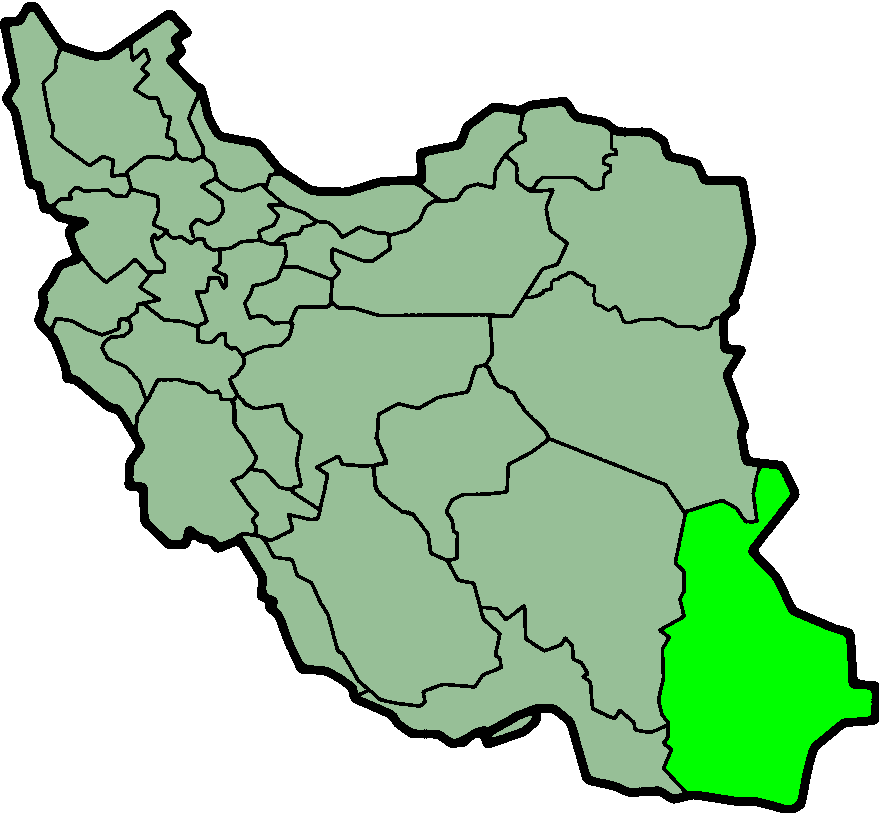
We hear much about these accusations on the front pages of American newspapers, but what we don't hear about are acts of terrorism directed at both civilian and military targets by Iranian "dissidents," who are reportedly receiving covert U.S. assistance. These groups include the Jundallah organization in Baluchistan, said to be affiliated with al-Qaeda, and the sinister, cult-like Mujahideen-e-Khalq (MEK), a shadowy Marxoid group that was supported by Saddam Hussein and still maintains a presence at Camp Ashraf [.pdf] in Iraq, as well as enjoying a wide array of bipartisan support in Congress.

Jundallah recently struck southeastern Iran, in Sistan-Baluchistan, with a series of attacks, including a car bomb in the provincial capital of Zahedan. The Iranians claim that the Jundallah militants are trained in Pakistan, and Iran has displayed samples of alleged captured armaments with "Made in USA" stamped all over them. The leader of Jundallah reportedly announced the attacks on MKO-TV, the satellite television station run out of Great Britain by the MEK, a few minutes before they started.

In an interview with the Telegraph, a Jundallah guerrilla fighter sounded very much like he was advertising his services to U.S. policymakers:

"Asked whether the satellite telephone he was holding might not lead to his being located, he allowed himself a smile. 'We are not fighting against America,' he said. Support for Jundallah was growing, he said. 'There are hundreds of others who are desperate to sign in, but we ask them to wait because we do not have enough weapons or camps.'"

That was last year: surely by this time the Jundallah "freedom fighters" have more than enough weapons and camps, courtesy of Uncle Sam. Scott Ritter, in his book Target Iran: The Truth About the White House's Plans for Regime Change, has described CIA-MEK cross-border operations, in which the Americans – and the Israelis – are conducting provocations that could lead to an open conflict with Iran. The focus of these efforts, he says, is on Baluchistan and Khuzestan.

With strong bipartisan support, Congress recently appropriated millions of dollars in aid to Iranian "resistance" groups, with practically no oversight as to how that money is being used – and the scramble for American gold is on. The American front group for the MEK, the National Council of Resistance, has plenty of high-level contacts in Washington, just as Ahmed Chalabi did in the run-up to war with Iraq. The MEK and other Iranian exile groups are busily lobbying for a similar gig as the administration escalates its plans for "regime change" in Tehran.

The Iraqi government has recently reiterated its position that the MEK is a terrorist organization, an opinion shared by the European Union and the U.S. Department of State. However, not everyone in the U.S. administration agrees. And what are we to make of the near-total redaction of a mysterious document that came to light in the Libby trial – a memo to Libby from John Hannah detailing "views of MEK leaders on continuing role in Iraq"? That's all we're allowed to know: aside from a reference to MEK briefing slides, the rest is blanked out.

The Office of the Vice President (OVP), which sponsored Chalabi, is just as intimately connected to the campaign to gin up a war with Iran as it was with the effort to lie us into war with Iraq. It is reasonable to assume the OVP is just as supportive of the MEK, and may even be directing its activities in collusion with its allies in the Pentagon.

Given that U.S. foreign policy is, to a large degree, driven by domestic politics, the motive on the part of the administration to escalate provocative covert actions inside Iran has never been greater. With Scooter Libby likely to be convicted and Fitzgerald's sights increasingly turned on Cheney, the War Party, cornered, has every reason to lash out in one last desperate bid to save its political skin.

Fitzgerald, by all indications, is coming for Cheney. After the trial but before the sentencing, Fitz will make a strenuous effort to "flip" Scooter and use his testimony to target the vice president. Murray Waas reports in the National Journal that Cheney wasn't taken in with Libby's Tim Russert fabrication for a moment:

"At the time that Libby offered his explanation to Cheney, the vice president already had reason to know that Libby's account to him was untrue, according to sources familiar with still-secret grand jury testimony and evidence in the CIA leak probe."

The Fitzgerald probe is a dagger pointed at the dark heart of the administration, the OVP, and the climactic moment of this epic battle is fast approaching. In the early days of the investigation, left-liberal bloggers were exulting in the possibility that they would see Karl Rove frog-marched out of the White House, but the trial has shown that Rove and Libby were antagonists rather than allies. Before it's all over we may yet see the vice president frog-marched out of the White House – at least metaphorically, in the form of an indictment with Dick Cheney's name on it.

What better way to distract attention away from this coming political bombshell than by dropping some real bombs on Iran?

In the midst of the regional conflagration feared by Brzezinski, prosecuting the Vice President for obstruction of justice and/or perjury would be problematic, at best. In any case, the widening of the war would drive the story off the front pages – think of this as a grand-scale version of Clinton's bombing of the Sudanese pharmaceutical factory just as the Monica Lewinsky was returning to the grand jury.

U.S. war plans against Iran have apparently been in the making for quite some time, but the ratcheting-up of both the rhetoric and the actual war preparations indicates a new level of seriousness on the part of this administration. While most reports reassure us that the decision to go to war has not yet been made, one wonders what turn of events would push the key decision-makers, Bush and Cheney, over the line. A direct threat to one – or both – of them coming out of the Libby trial may be all the impetus they need. A cornered rat is dangerous.